



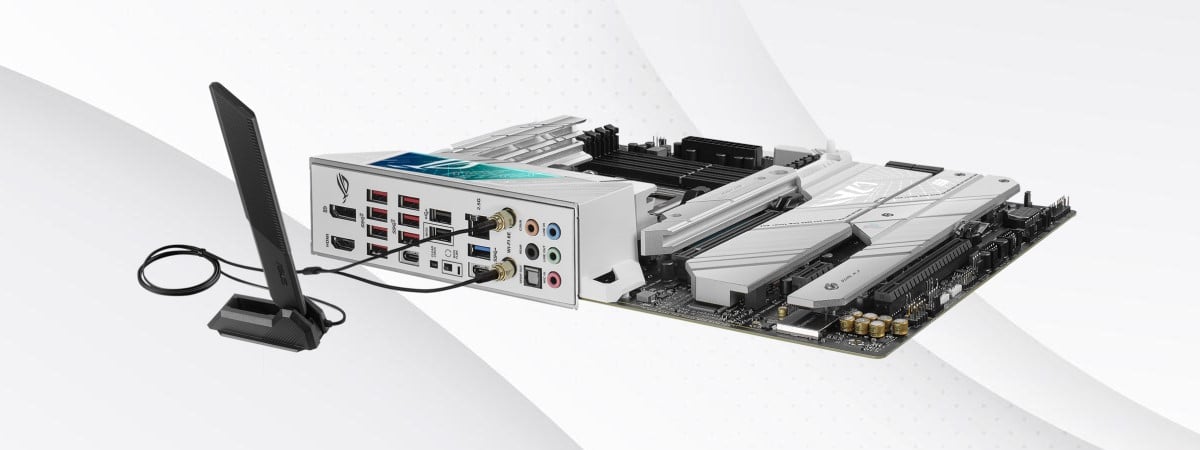
If you already have or plan to get a modern AMD Ryzen processor from the 9000, 8000, or 7000 series, you might be wondering which motherboard to choose. If you’re a gamer looking for gaming hardware, you might have stumbled upon the ASUS ROG Strix X670E-A Gaming WiFi, a high-end motherboard packed with features like PCI Express 5.0 x16 for the fastest graphic cards and PCI Express 5.0 M.2 slots for the speediest storage available. It promises top-level performance and it looks good, but is it the right choice for your next PC build? In this review, I’ll tell you what this motherboard offers, in order to help you decide if it’s the best fit for your gaming computer.
![Verdict]()

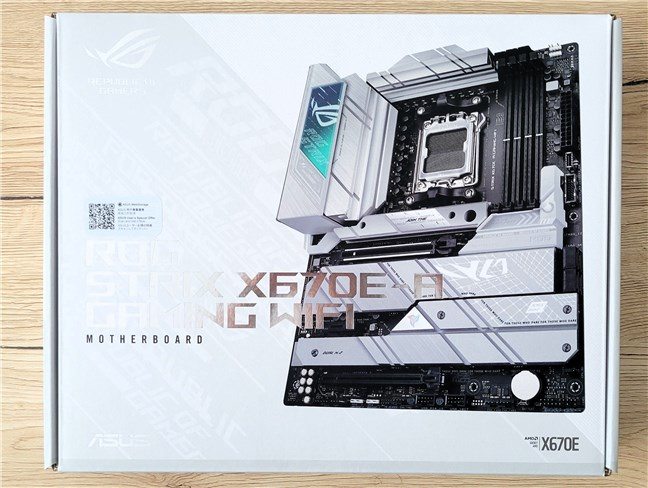
 The packaging for ASUS ROG Strix X670E-A Gaming WiFi looks good
The first thing you see when opening the box is the beautiful motherboard. And underneath it, you find a generous amount of additional components and accessories: two SATA 6Gb/s cables, a thermal pad for an M.2 solid-state drive, an ASUS Wi-Fi moving antenna, a pack of cable ties, a package of M.2 Q-Latches, a package of M.2 Q-Latches backplates, two rubber packages for M.2, a rubber package for M.2 backplates, an ROG key chain, a ROG Strix sticker, a ROG Strix thank you card, and the motherboard’s user guide. If you’ve counted how many times I’ve mentioned M.2 and you don’t know what that is, I encourage you to read this article, which explains everything: M.2 vs. NVMe: What is the difference when it comes to SSDs? 🙂
The packaging for ASUS ROG Strix X670E-A Gaming WiFi looks good
The first thing you see when opening the box is the beautiful motherboard. And underneath it, you find a generous amount of additional components and accessories: two SATA 6Gb/s cables, a thermal pad for an M.2 solid-state drive, an ASUS Wi-Fi moving antenna, a pack of cable ties, a package of M.2 Q-Latches, a package of M.2 Q-Latches backplates, two rubber packages for M.2, a rubber package for M.2 backplates, an ROG key chain, a ROG Strix sticker, a ROG Strix thank you card, and the motherboard’s user guide. If you’ve counted how many times I’ve mentioned M.2 and you don’t know what that is, I encourage you to read this article, which explains everything: M.2 vs. NVMe: What is the difference when it comes to SSDs? 🙂
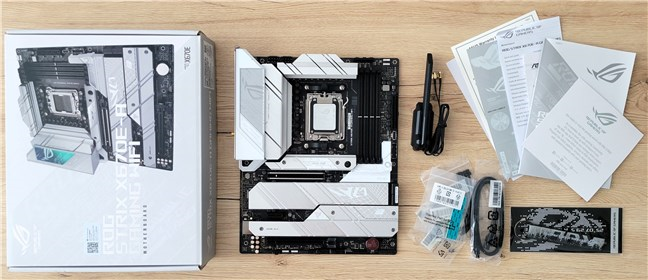
 Unboxing the motherboard reveals these items
When unboxing the ASUS ROG Strix X670E-A Gaming WiFi motherboard, the attention to detail tells you right from the start that you’re in for a high-end product experience.
Unboxing the motherboard reveals these items
When unboxing the ASUS ROG Strix X670E-A Gaming WiFi motherboard, the attention to detail tells you right from the start that you’re in for a high-end product experience.
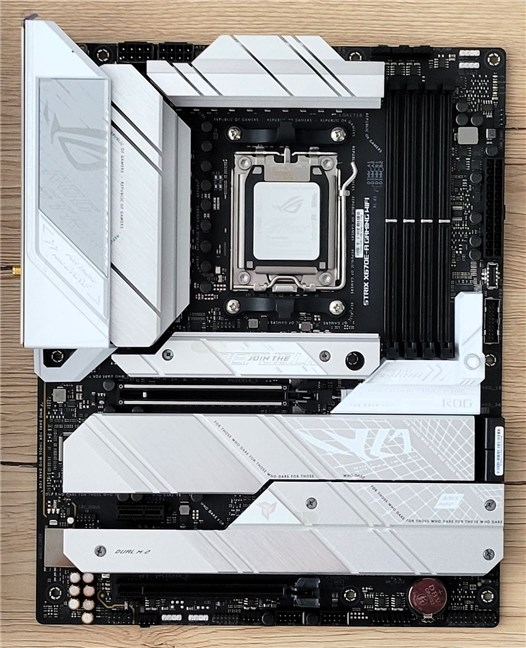
 The ASUS ROG Strix X670E-A Gaming WiFi motherboard
Among the first things you’ll notice are the massive heatsinks covering the voltage regulator module (VRM). This ensures that the motherboard can handle the power demands of even the most powerful AMD Ryzen processors.
The ASUS ROG Strix X670E-A Gaming WiFi motherboard
Among the first things you’ll notice are the massive heatsinks covering the voltage regulator module (VRM). This ensures that the motherboard can handle the power demands of even the most powerful AMD Ryzen processors.
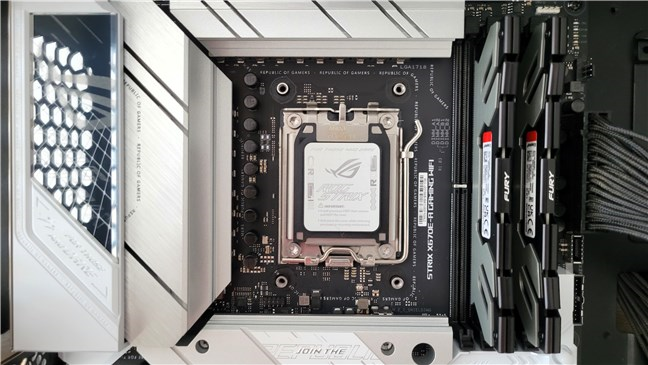
 The VRM is solid
Power delivery is robust, with 16 + 2 + 2 power stages, allowing the motherboard to rapidly respond to the processor’s load changes. There are three EPS connectors: a standard 24-pin ATX main power connector near the DIMM slots and two 8-pin connectors in the top-left corner.
The VRM is solid
Power delivery is robust, with 16 + 2 + 2 power stages, allowing the motherboard to rapidly respond to the processor’s load changes. There are three EPS connectors: a standard 24-pin ATX main power connector near the DIMM slots and two 8-pin connectors in the top-left corner.
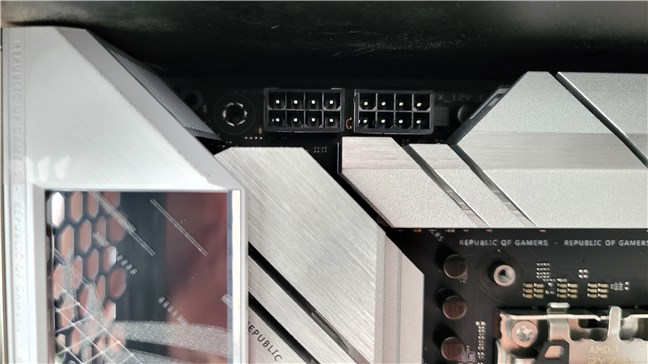
 The motherboard offers 16+2+2 power stages
The ASUS ROG Strix X670E-A Gaming WiFi is built for the latest AMD Zen 5 and Zen 4 processors, using the AM5 socket. It supports AMD Ryzen 9000, 8000, and 7000 series CPUs, making it an excellent choice for high-performance builds.
The motherboard offers 16+2+2 power stages
The ASUS ROG Strix X670E-A Gaming WiFi is built for the latest AMD Zen 5 and Zen 4 processors, using the AM5 socket. It supports AMD Ryzen 9000, 8000, and 7000 series CPUs, making it an excellent choice for high-performance builds.
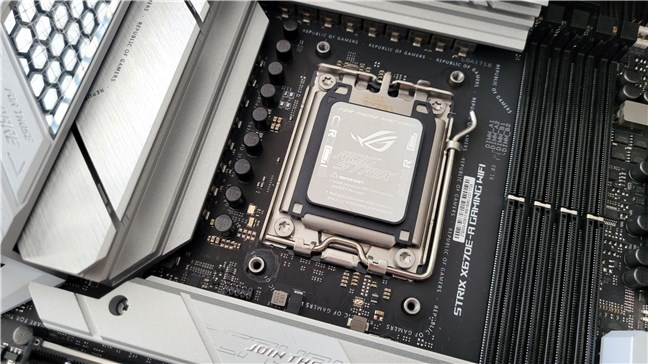 This motherboard supports AMD Ryzen 7000, 8000, and 9000 series
In terms of memory compatibility and options, the ASUS ROG Strix X670E-A Gaming WiFi supports DDR5 RAM and comes with four DIMM slots allowing up to 192 GB of RAM. It officially supports memory frequencies of 4800, 5000, and 5200 MT/s (mega transfers per seconds), with overclocking capabilities ranging from 5400 to an impressive 8000 MT/s, depending on your setup.
This motherboard supports AMD Ryzen 7000, 8000, and 9000 series
In terms of memory compatibility and options, the ASUS ROG Strix X670E-A Gaming WiFi supports DDR5 RAM and comes with four DIMM slots allowing up to 192 GB of RAM. It officially supports memory frequencies of 4800, 5000, and 5200 MT/s (mega transfers per seconds), with overclocking capabilities ranging from 5400 to an impressive 8000 MT/s, depending on your setup.
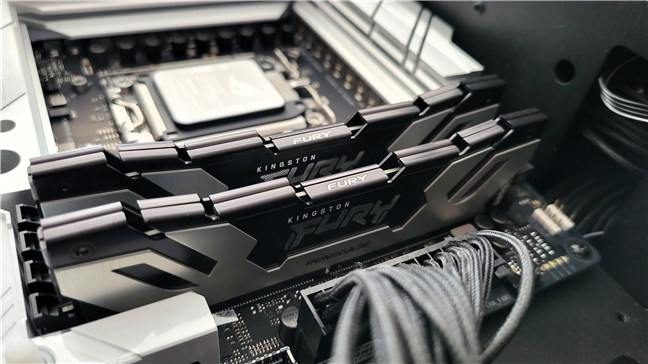 The motherboard supports fast DDR5
The chipset inside the ROG Strix X670E-A Gaming WiFi motherboard offers support for PCI Express 4.0, but depending on the processor you use, you can also get PCI Express 5.0 via the CPU lanes. The graphics slot will work in PCIe 5.0 x16 mode if you mount an AMD Ryzen 9000 or 7000 processor, or PCIe 4.0 x16 (supports x8/x4 modes) if you use an AMD Ryzen 8000 processor. Additionally, the chipset on the motherboard gives you one PCIe 4.0 x16 slot (supports x4 mode) and one PCIe 3.0 x1 slot.
For storage, you get two M2 slots that support PCIe 5.0 in x4 mode if you mount an AMD Ryzen 9000 or 7000 processor, or PCIe 4.0 (one slot in x4 mode, one slot in x4 or x2 mode) if you mount an AMD Ryzen 8000 processor. The motherboard’s chipset gives you two additional M2 slots with support for PCIe 4.0 in x4 mode, and four SATA 6Gb/s ports.
The motherboard supports fast DDR5
The chipset inside the ROG Strix X670E-A Gaming WiFi motherboard offers support for PCI Express 4.0, but depending on the processor you use, you can also get PCI Express 5.0 via the CPU lanes. The graphics slot will work in PCIe 5.0 x16 mode if you mount an AMD Ryzen 9000 or 7000 processor, or PCIe 4.0 x16 (supports x8/x4 modes) if you use an AMD Ryzen 8000 processor. Additionally, the chipset on the motherboard gives you one PCIe 4.0 x16 slot (supports x4 mode) and one PCIe 3.0 x1 slot.
For storage, you get two M2 slots that support PCIe 5.0 in x4 mode if you mount an AMD Ryzen 9000 or 7000 processor, or PCIe 4.0 (one slot in x4 mode, one slot in x4 or x2 mode) if you mount an AMD Ryzen 8000 processor. The motherboard’s chipset gives you two additional M2 slots with support for PCIe 4.0 in x4 mode, and four SATA 6Gb/s ports.
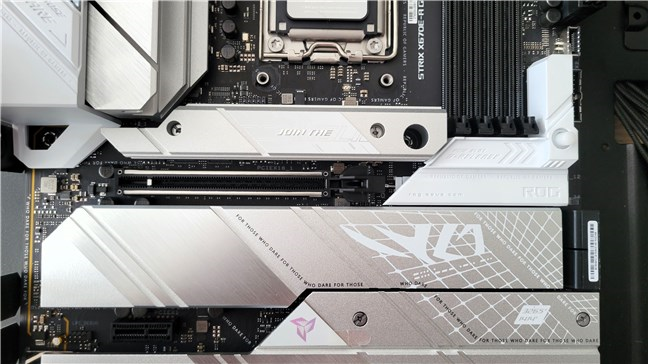 The graphics slot supports PCI Express 5.0
The ASUS ROG Strix X670E-A Gaming WiFi is equipped with an Intel 2.5 Gb Ethernet card that features ASUS ROG LANGuard tech for protection against power spikes and fewer data transmitting errors, plus a 2x2 MU-MIMO Wi-Fi 6E (802.11 a/b/g/n/ac/ax) wireless network chip that supports the 2.4, 5, and 6 GHz frequency bands, coupled with Bluetooth 5.2 connectivity.
Again, if you need some help with all these technicalities, I recommend our guides which explain everything in simple terms, for everyone to understand:
Audio-wise, the motherboard features ASUS’ ROG SupremeFX 7.1 Surround Sound High Definition Audio CODEC ALC4080, which supports stereo playback at up to 32-bit/384 kHz and up to 120 dB SNR (Signal-To-Noise ratio), 113 dB SNR recording input.
Besides network and audio ports, on the input/output panel, you also get one USB 3.2 Gen 2x2 Type-C port, seven USB 3.2 Gen 2 Type-A ports, one USB 3.2 Gen 2 Type-C port, one USB 3.2 Gen 1 Type-A port, two USB 2.0 Type-A ports, one DisplayPort, and one HDMI 2.1 port. You also have a BIOS FlashBack and a Clear CMOS button. The former helps you update or recover the UEFI without having to boot into the operating system, while the latter lets you clear the changes you’ve made in UEFI and reboot using default settings.
The graphics slot supports PCI Express 5.0
The ASUS ROG Strix X670E-A Gaming WiFi is equipped with an Intel 2.5 Gb Ethernet card that features ASUS ROG LANGuard tech for protection against power spikes and fewer data transmitting errors, plus a 2x2 MU-MIMO Wi-Fi 6E (802.11 a/b/g/n/ac/ax) wireless network chip that supports the 2.4, 5, and 6 GHz frequency bands, coupled with Bluetooth 5.2 connectivity.
Again, if you need some help with all these technicalities, I recommend our guides which explain everything in simple terms, for everyone to understand:
Audio-wise, the motherboard features ASUS’ ROG SupremeFX 7.1 Surround Sound High Definition Audio CODEC ALC4080, which supports stereo playback at up to 32-bit/384 kHz and up to 120 dB SNR (Signal-To-Noise ratio), 113 dB SNR recording input.
Besides network and audio ports, on the input/output panel, you also get one USB 3.2 Gen 2x2 Type-C port, seven USB 3.2 Gen 2 Type-A ports, one USB 3.2 Gen 2 Type-C port, one USB 3.2 Gen 1 Type-A port, two USB 2.0 Type-A ports, one DisplayPort, and one HDMI 2.1 port. You also have a BIOS FlashBack and a Clear CMOS button. The former helps you update or recover the UEFI without having to boot into the operating system, while the latter lets you clear the changes you’ve made in UEFI and reboot using default settings.

 The I/O panel on the ASUS ROG Strix X670E-A Gaming WiFi motherboard
There are also additional USB headers available on the motherboard: one USB 3.2 Gen 2x2 connector that supports USB Type-C, one USB 3.2 Gen 1 header that supports two additional USB 3.2 Gen 1 ports, and two USB 2.0 headers that support four additional USB 2.0 ports. In terms of fans and cooling, the motherboard has one 4-pin CPU Fan header, one 4-pin CPU OPT Fan header, one 4-pin AIO Pump header, and five 4-pin Chassis Fan headers. If you’re a fan of RGB lighting effects, you get one Aura RGB header and three addressable Gen 2 headers.
The I/O panel on the ASUS ROG Strix X670E-A Gaming WiFi motherboard
There are also additional USB headers available on the motherboard: one USB 3.2 Gen 2x2 connector that supports USB Type-C, one USB 3.2 Gen 1 header that supports two additional USB 3.2 Gen 1 ports, and two USB 2.0 headers that support four additional USB 2.0 ports. In terms of fans and cooling, the motherboard has one 4-pin CPU Fan header, one 4-pin CPU OPT Fan header, one 4-pin AIO Pump header, and five 4-pin Chassis Fan headers. If you’re a fan of RGB lighting effects, you get one Aura RGB header and three addressable Gen 2 headers.
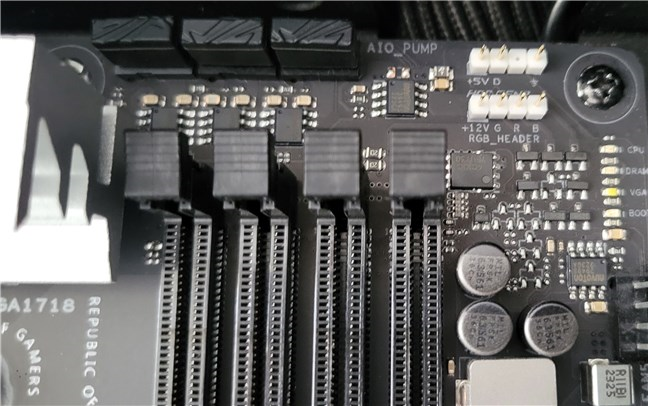
 There are many headers on the motherboard
For more detailed information, visit the official product page of the ASUS ROG Strix X670E-A Gaming WiFi.
The ASUS ROG Strix X670E-A Gaming WiFi is a high-end motherboard that not only looks impressive but should also deliver exceptional performance. It’s packed with the latest technologies, including support for all modern AMD Ryzen processors, PCIe 5.0 slots, and high-speed DDR5 memory.
There are many headers on the motherboard
For more detailed information, visit the official product page of the ASUS ROG Strix X670E-A Gaming WiFi.
The ASUS ROG Strix X670E-A Gaming WiFi is a high-end motherboard that not only looks impressive but should also deliver exceptional performance. It’s packed with the latest technologies, including support for all modern AMD Ryzen processors, PCIe 5.0 slots, and high-speed DDR5 memory.
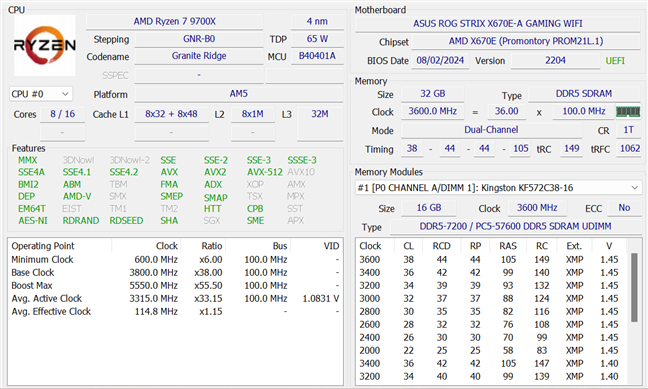
 Details about the PC build where I used this motherboard
First things first, I have to say that mounting the motherboard in my computer case was easy and straightforward, thanks to its well-designed layout. The AM5 socket supports the latest AMD Ryzen 9000 and 8000 series processors, as well as previous-gen Ryzen 7000 CPUs. While the tests you’ll see later in this review are done with the AMD Ryzen 7 9700X, you must know that the motherboard performed admirably with an AMD Ryzen 5 9600X, an AMD Ryzen 5 7600X, and an AMD Ryzen 9 7900X also. Pair any of these CPUs with a high-end graphics card, and the ASUS ROG Strix X670E-A Gaming WiFi motherboard will show its true potential in no time.
Details about the PC build where I used this motherboard
First things first, I have to say that mounting the motherboard in my computer case was easy and straightforward, thanks to its well-designed layout. The AM5 socket supports the latest AMD Ryzen 9000 and 8000 series processors, as well as previous-gen Ryzen 7000 CPUs. While the tests you’ll see later in this review are done with the AMD Ryzen 7 9700X, you must know that the motherboard performed admirably with an AMD Ryzen 5 9600X, an AMD Ryzen 5 7600X, and an AMD Ryzen 9 7900X also. Pair any of these CPUs with a high-end graphics card, and the ASUS ROG Strix X670E-A Gaming WiFi motherboard will show its true potential in no time.
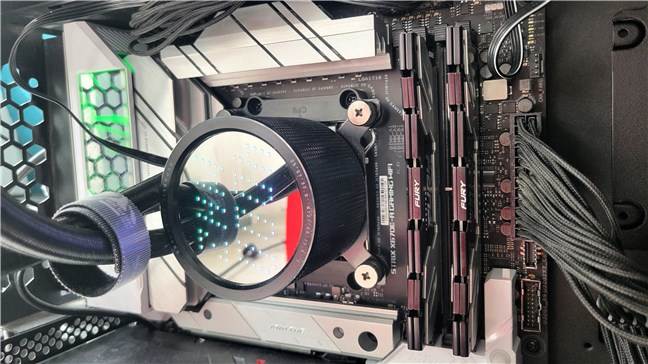 A look at the motherboard and the other components
While testing processors meant using low graphics settings in games, in real life, I don’t do that. I prefer high graphics quality, just like anybody else… 🙂 And one of the first things I noticed was that the computer I’ve assembled managed to deliver excellent frame rates in Horizon Forbidden West and Assassin’s Creed Mirage, the games I play currently. Full 4K resolution, maxed visuals, yet smooth performance. The motherboard’s robust build and features meant that the graphics card could operate at full capacity, delivering crisp, detailed visuals without any noticeable lag or stuttering.
A look at the motherboard and the other components
While testing processors meant using low graphics settings in games, in real life, I don’t do that. I prefer high graphics quality, just like anybody else… 🙂 And one of the first things I noticed was that the computer I’ve assembled managed to deliver excellent frame rates in Horizon Forbidden West and Assassin’s Creed Mirage, the games I play currently. Full 4K resolution, maxed visuals, yet smooth performance. The motherboard’s robust build and features meant that the graphics card could operate at full capacity, delivering crisp, detailed visuals without any noticeable lag or stuttering.
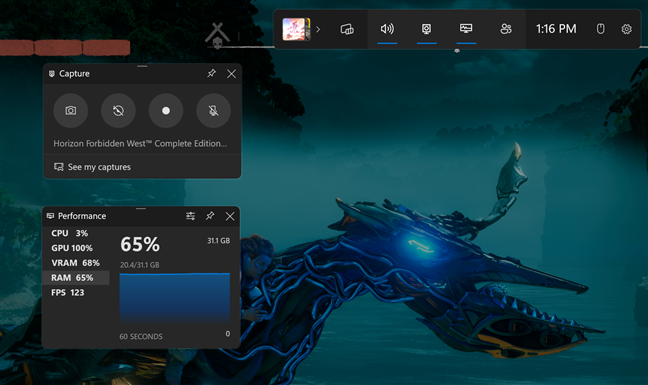
 Playing Horizon Forbidden West was flawless
Thanks to the fast M.2 slots on the motherboard, the games installed on my PCIe 4.0 NVMe SSD also loaded incredibly fast. Whether it was loading a saved game or fast-traveling inside the games, the wait times were significantly low.
Playing Horizon Forbidden West was flawless
Thanks to the fast M.2 slots on the motherboard, the games installed on my PCIe 4.0 NVMe SSD also loaded incredibly fast. Whether it was loading a saved game or fast-traveling inside the games, the wait times were significantly low.
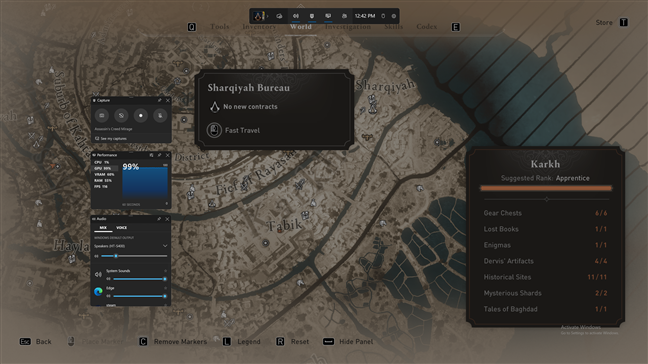 Loading games and saves was fast
Last but not least, the Wi-Fi 6E support of the motherboard is another thing I love. The wireless connection I benefited from was as fast and stable as a wired Ethernet connection, and I admit that I dislike having cables running across the room. Wireless is always better and this motherboard has it out of the box.
Loading games and saves was fast
Last but not least, the Wi-Fi 6E support of the motherboard is another thing I love. The wireless connection I benefited from was as fast and stable as a wired Ethernet connection, and I admit that I dislike having cables running across the room. Wireless is always better and this motherboard has it out of the box.
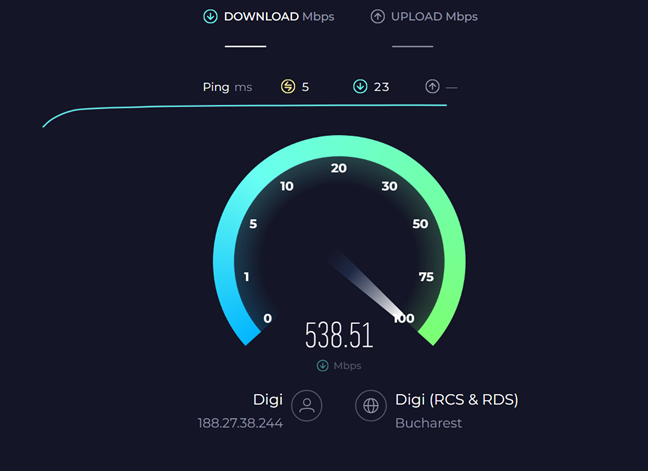
 The motherboard offers support for Wi-Fi 6E
Using the ASUS ROG Strix X670E-A Gaming WiFi motherboard was a neat experience. Its performance is top-notch, offering the perfect layout for getting stable and high frame rates in your favorite games, as well as quick loading times. That’s pretty much everything a gamer could ask for, right? 🙂
Turn the page to find out the results of an AMD Ryzen 7 9700X on a desktop computer based on the ASUS ROG Strix X670E-A Gaming WiFi motherboard versus an identical PC based on an ASUS Prime X670E-Pro WiFi motherboard. The latter uses the same high-end chipset but caters to a slightly different audience. While the ASUS ROG Strix X670E-A Gaming WiFi is made with gamers in mind, the Prime has a more understated and professional look, and it costs less.
The motherboard offers support for Wi-Fi 6E
Using the ASUS ROG Strix X670E-A Gaming WiFi motherboard was a neat experience. Its performance is top-notch, offering the perfect layout for getting stable and high frame rates in your favorite games, as well as quick loading times. That’s pretty much everything a gamer could ask for, right? 🙂
Turn the page to find out the results of an AMD Ryzen 7 9700X on a desktop computer based on the ASUS ROG Strix X670E-A Gaming WiFi motherboard versus an identical PC based on an ASUS Prime X670E-Pro WiFi motherboard. The latter uses the same high-end chipset but caters to a slightly different audience. While the ASUS ROG Strix X670E-A Gaming WiFi is made with gamers in mind, the Prime has a more understated and professional look, and it costs less.
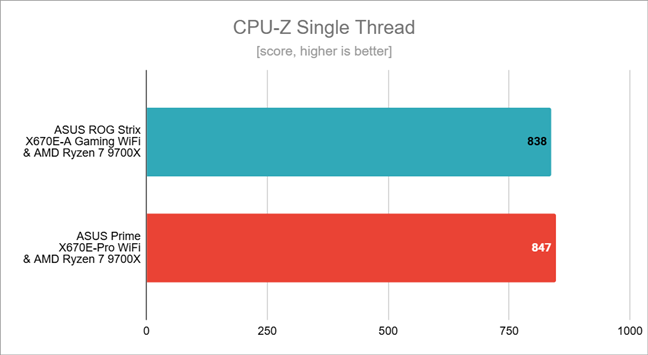
 Benchmark results in CPU-Z Single Thread
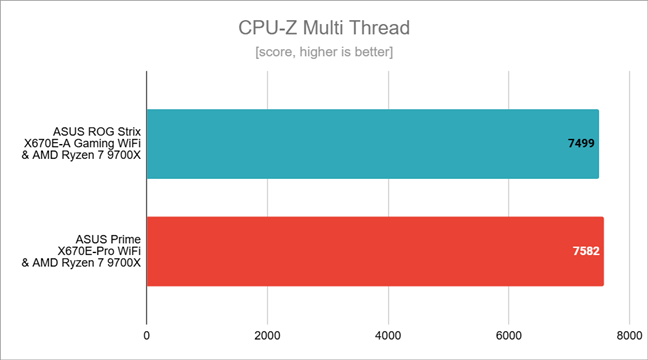
In CPU-Z’s Multi-Thread test, which measures the all-core performance of the processor, the Ryzen 9 7900X got a slightly higher score on the ASUS Prime X670E-Pro WiFi. Another close result, with a difference of just 1% between the two motherboards.
Benchmark results in CPU-Z Single Thread
In CPU-Z’s Multi-Thread test, which measures the all-core performance of the processor, the Ryzen 9 7900X got a slightly higher score on the ASUS Prime X670E-Pro WiFi. Another close result, with a difference of just 1% between the two motherboards.
 Benchmark results in CPU-Z Multi Thread
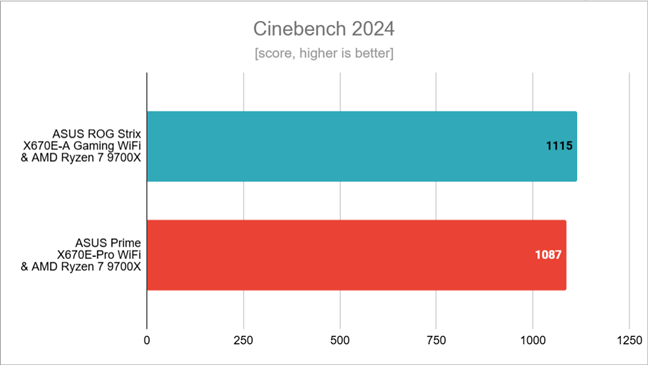
I’ve had similar results with both mainboards in Cinebench 2024 too.
However, in this rendering benchmark, the processor was a bit faster on the ASUS ROG Strix X670E-A Gaming WiFi motherboard (by 2%). Still, both motherboards appear to help the Ryzen 9 7900X reach its maximum potential.
Benchmark results in CPU-Z Multi Thread
I’ve had similar results with both mainboards in Cinebench 2024 too.
However, in this rendering benchmark, the processor was a bit faster on the ASUS ROG Strix X670E-A Gaming WiFi motherboard (by 2%). Still, both motherboards appear to help the Ryzen 9 7900X reach its maximum potential.
 Benchmark results in Cinebench 2024
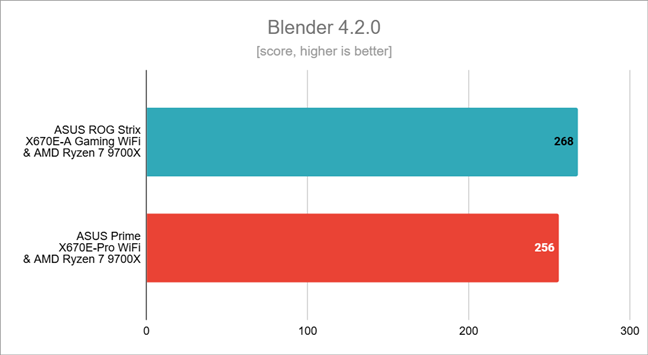
Blender was the second rendering benchmark I ran, and the AMD Ryzen 7 9700X performed noticeably better when paired with the ASUS ROG Strix X670E-A Gaming WiFi motherboard. The improvement in its performance was about 4.7% compared to the same setup using the ASUS Prime X670E-Pro WiFi mainboard.
Benchmark results in Cinebench 2024
Blender was the second rendering benchmark I ran, and the AMD Ryzen 7 9700X performed noticeably better when paired with the ASUS ROG Strix X670E-A Gaming WiFi motherboard. The improvement in its performance was about 4.7% compared to the same setup using the ASUS Prime X670E-Pro WiFi mainboard.
 Benchmark results in Blender 4.2.0
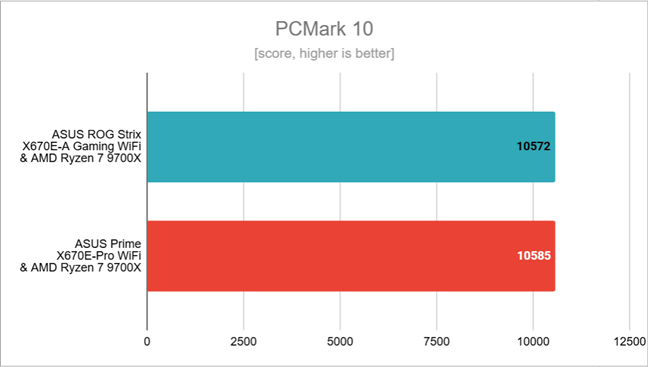
Next up was the PCMark 10 benchmark, which evaluates a computer’s performance across various everyday tasks, such as web browsing, video conferencing, productivity work, and digital content creation. Unsurprisingly, the Ryzen 7 9700X processor delivered nearly identical results (with a difference of just 0.1%) on both motherboards.
Benchmark results in Blender 4.2.0
Next up was the PCMark 10 benchmark, which evaluates a computer’s performance across various everyday tasks, such as web browsing, video conferencing, productivity work, and digital content creation. Unsurprisingly, the Ryzen 7 9700X processor delivered nearly identical results (with a difference of just 0.1%) on both motherboards.
 Benchmark results in PCMark 10
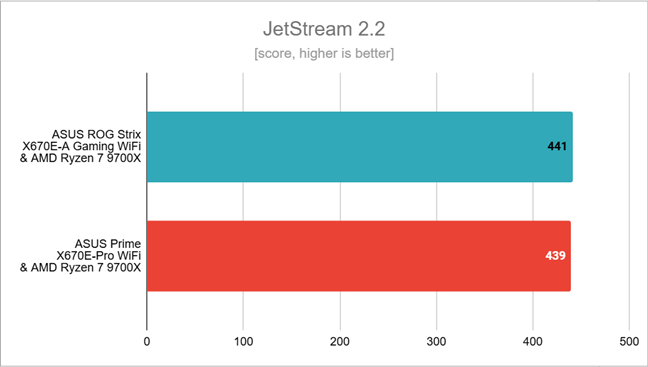
In JetStream 2.2, I got almost identical scores with both motherboards. The difference is again lower than 1%, so I can say that the processor performs just as well on the ASUS ROG Strix X670E-A Gaming WiFi as it does on the ASUS Prime X670E-Pro WiFi.
Benchmark results in PCMark 10
In JetStream 2.2, I got almost identical scores with both motherboards. The difference is again lower than 1%, so I can say that the processor performs just as well on the ASUS ROG Strix X670E-A Gaming WiFi as it does on the ASUS Prime X670E-Pro WiFi.
 Benchmark results in JetStream 2.2
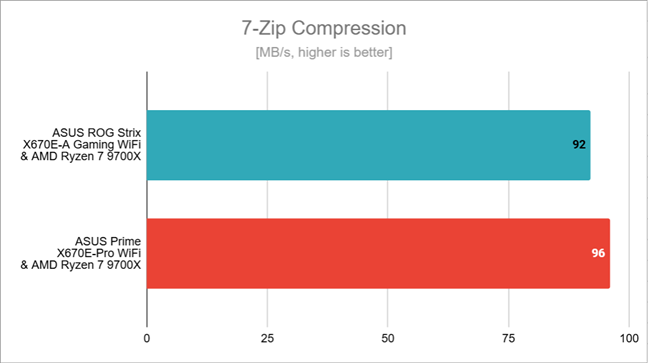
In 7-Zip’s benchmark tool, I got mixed results. The compression speed was higher (by 4.35%) when using the ASUS Prime X670E-Pro WiFi...
Benchmark results in JetStream 2.2
In 7-Zip’s benchmark tool, I got mixed results. The compression speed was higher (by 4.35%) when using the ASUS Prime X670E-Pro WiFi...
 Compression speed in 7-Zip
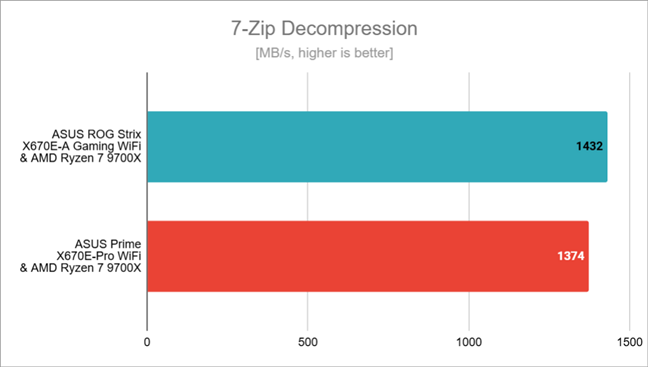
… but the decompression was faster on the ASUS ROG Strix X670E-A Gaming WiFi (by 4.22%).
Compression speed in 7-Zip
… but the decompression was faster on the ASUS ROG Strix X670E-A Gaming WiFi (by 4.22%).
 Decompression speed in 7-Zip
Next, I tested a few games, keeping the resolution at 1080p and setting the graphics quality to the lowest level to prevent any potential bottlenecks from my AMD Radeon RX 7900 XT graphics card.
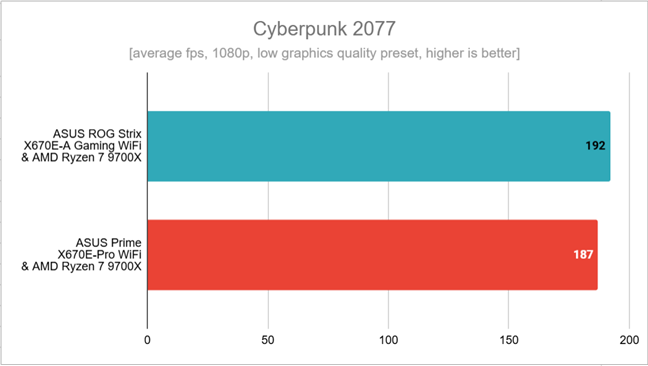
In Cyberpunk 2077, using the ASUS ROG Strix X670E-A Gaming WiFi motherboard, I got 5 frames per second more than I did when using the ASUS Prime X670E-Pro WiFi. When looking at such high numbers, 5 fps are irrelevant, but you could say that the ASUS ROG Strix X670E-A Gaming WiFi is a bit better nonetheless.
Decompression speed in 7-Zip
Next, I tested a few games, keeping the resolution at 1080p and setting the graphics quality to the lowest level to prevent any potential bottlenecks from my AMD Radeon RX 7900 XT graphics card.
In Cyberpunk 2077, using the ASUS ROG Strix X670E-A Gaming WiFi motherboard, I got 5 frames per second more than I did when using the ASUS Prime X670E-Pro WiFi. When looking at such high numbers, 5 fps are irrelevant, but you could say that the ASUS ROG Strix X670E-A Gaming WiFi is a bit better nonetheless.
 Benchmark results in Cyberpunk 2077
I saw the same thing in Assassin’s Creed Mirage. The two configurations offered similar results, but you could say that the build using the ASUS ROG Strix X670E-A Gaming WiFi was a bit faster (by 8 fps or 3.21%).
Benchmark results in Cyberpunk 2077
I saw the same thing in Assassin’s Creed Mirage. The two configurations offered similar results, but you could say that the build using the ASUS ROG Strix X670E-A Gaming WiFi was a bit faster (by 8 fps or 3.21%).

 Benchmark results in Assassin's Creed Mirage
In Remnant II, the average framerate I recorded was again similar. The Ryzen 7 9700X paired with the ASUS ROG Strix X670E-A Gaming WiFi offered 5 frames per second more than it did with the ASUS Prime X670E-Pro WiFi (a 2.94% fps increase).
Benchmark results in Assassin's Creed Mirage
In Remnant II, the average framerate I recorded was again similar. The Ryzen 7 9700X paired with the ASUS ROG Strix X670E-A Gaming WiFi offered 5 frames per second more than it did with the ASUS Prime X670E-Pro WiFi (a 2.94% fps increase).

 Benchmark results in Remnant II
Finally, there’s Horizon Forbidden West, a game that pushes your hardware to its limits, requiring top-notch performance. With the ASUS ROG Strix X670E-A Gaming WiFi, I saw an increase of 6 frames per second compared to the ASUS Prime X670E-Pro WiFi (translating in a 4.51% boost).
Benchmark results in Remnant II
Finally, there’s Horizon Forbidden West, a game that pushes your hardware to its limits, requiring top-notch performance. With the ASUS ROG Strix X670E-A Gaming WiFi, I saw an increase of 6 frames per second compared to the ASUS Prime X670E-Pro WiFi (translating in a 4.51% boost).
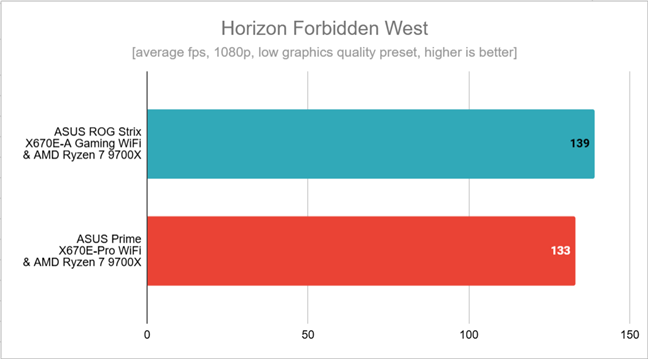 Benchmark results in Horizon Forbidden West
The benchmarks reveal that the ASUS ROG Strix X670E-A Gaming WiFi is an exceptional motherboard. It’s stable and delivers all the power your components require. When combined with a powerful processor, it can easily handle any workload, from digital content creation to gaming.
Benchmark results in Horizon Forbidden West
The benchmarks reveal that the ASUS ROG Strix X670E-A Gaming WiFi is an exceptional motherboard. It’s stable and delivers all the power your components require. When combined with a powerful processor, it can easily handle any workload, from digital content creation to gaming.
 Armoury Crate lets you customize your motherboard experience
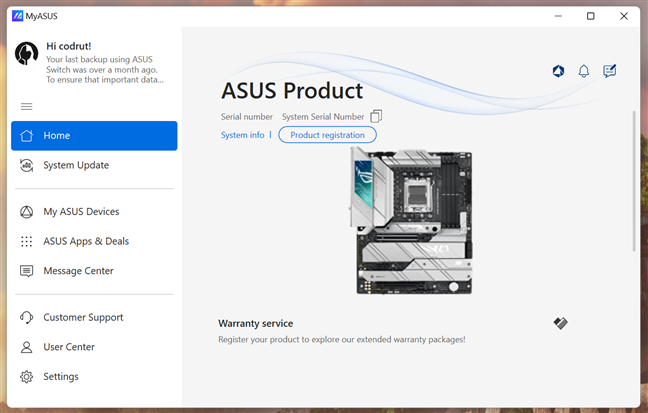
MyASUS, the other utility that comes bundled with the ASUS ROG Strix X670E-A Gaming WiFi motherboard, offers a couple of tools for system optimization, troubleshooting, and customer support. You get easy access to system diagnostics, which can help identify and resolve hardware issues quickly. Just like Armoury Crate, you can use this tool also to update your system drivers and your motherboard’s UEFI.
Armoury Crate lets you customize your motherboard experience
MyASUS, the other utility that comes bundled with the ASUS ROG Strix X670E-A Gaming WiFi motherboard, offers a couple of tools for system optimization, troubleshooting, and customer support. You get easy access to system diagnostics, which can help identify and resolve hardware issues quickly. Just like Armoury Crate, you can use this tool also to update your system drivers and your motherboard’s UEFI.
 The My ASUS application for Windows
Overall, both Armoury Crate and MyASUS can be useful, as they both centralize tools for system management and customization.
The My ASUS application for Windows
Overall, both Armoury Crate and MyASUS can be useful, as they both centralize tools for system management and customization.
ASUS ROG Strix X670E-A Gaming WiFi: Who is it good for?
The ASUS ROG Strix X670E-A Gaming WiFi is the right motherboard for you if:- You want a high-end motherboard for your AMD Ryzen 9000, 8000, or 7000 series processor
- You’re building a white-themed desktop, as its design is perfect for that
- You’re a gamer or enthusiast who appreciates the quality and style of ASUS’ Republic of Gamers (ROG) lineup
Pros and cons
These are the best things about the ASUS ROG Strix X670E-A Gaming WiFi:
- Uses the powerful X670E chipset, which offers excellent performance and future-proofing
- Has PCI Express 5.0 support, which ensures compatibility with the latest and fastest graphics cards and solid-state drives
- Supports extremely fast DDR5 memory
- Has lots of USB, M.2, and SATA ports
- Features 2.5 Gigabit Ethernet and Wi-Fi 6E for fast and reliable connectivity
- Premium build and design, with RGB lighting
- It’s pricier than alternatives from other brands
Verdict
The ASUS ROG Strix X670E-A Gaming WiFi is an exceptional choice for anyone looking to build a high-performance PC with an AMD Ryzen 7000, 8000, or 9000 series processor. It offers top-notch performance and features, including PCI Express 5.0, support for DDR5 RAM, and a host of excellent connectivity options. If you’re aiming for a top-of-the-line build and are willing to invest in quality, I highly recommend this motherboard. It manages to offer an excellent mix of performance, sleek design, and reliability that you’ll definitely appreciate.Unboxing the ASUS ROG Strix X670E-A Gaming WiFi
As the ROG Strix X670E-A Gaming WiFi is a high-end motherboard, its packaging looks premium and is made of high-quality materials. Painted white, the box showcases a large image of the motherboard on its top cover.Hardware specifications and design
From the moment you lay eyes on the ASUS ROG Strix X670E-A Gaming WiFi, it’s clear that this is a premium motherboard. ASUS’ engineers have focused on both aesthetics and performance, with large heatsinks and protective plates that not only enhance the motherboard’s look but also ensure optimal thermal performance. The motherboard’s PCB (Printed Circuits Board) is black, complemented by metallic white surfaces that make it ideal for a white-themed build. The illuminated acrylic panel on the top left, covering the rear ports, further adds to the motherboard’s high-tech appearance.Using the ASUS ROG Strix X670E-A Gaming WiFi motherboard
If you’re a gamer, you know that finding the perfect motherboard is one of the most important things of the whole “build your gaming rig” process. After spending quite a long time with a desktop computer powered by the ASUS ROG Strix X670E-A Gaming WiFi motherboard, mainly because I used it for reviewing not one or two but four processors until now, I can confidently say that this motherboard is great. It delivers top-tier performance and a number of features that make it a perfect choice for many gamers. In case you’re wondering, when writing this particular review for the ASUS ROG Strix X670E-A Gaming WiFi motherboard, I used the following hardware and software:- Processor: AMD Ryzen 7 9700X
- Cooler: ASUS ROG Ryuo III 240 ARGB
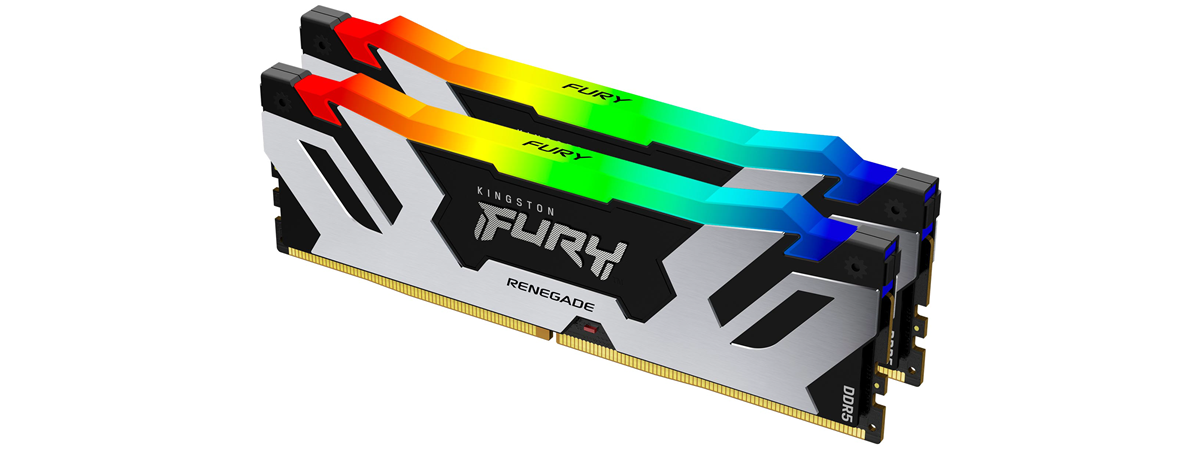
- Memory: Kingston FURY Renegade 32GB DDR5 7200MT/s
- Graphics Card: AMD Radeon RX 7900 XT
- Storage: Kingston KC3000 PCIe 4.0 NVMe M.2 SSD 2TB
- Monitor: ASUS ROG Strix XG32UQ (4K UHD)
- PSU: Seasonic Focus GX-1000
ASUS ROG Strix X670E-A Gaming WiFi - Benchmark results
First, I ran the benchmark tool offered by CPU-Z. In the Single-Thread test, I got an almost identical average score for the AMD Ryzen 7 9700X with both the ASUS Prime X670E-Pro WiFi and the ASUS ROG Strix X670E-A Gaming WiFi motherboard. The difference between the two was only 1%.Software bundled with the ASUS ROG Strix X670E-A Gaming WiFi
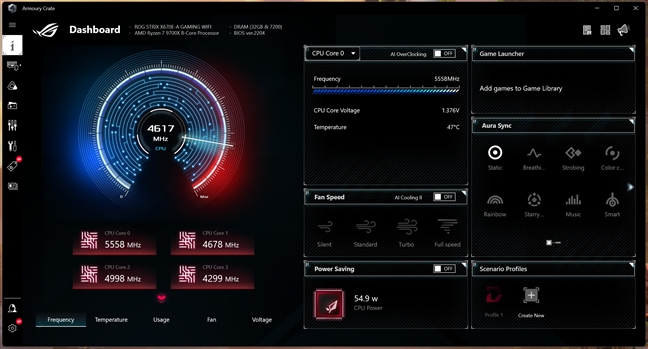
Together with the ASUS ROG Strix X670E-A Gaming WiFi motherboard, ASUS offers you two apps: Armoury Crate and MyASUS. Armoury Crate is an all-in-one software suite that allows you to manage, monitor, and customize your motherboard and any other ASUS hardware you may have. It includes features like real-time system monitoring so you can keep track of your processor, graphics card, and memory usage, temperatures, and fan speeds. It also provides tools to customize your system, such as adjusting fan speeds, managing RGB lighting through Aura Sync, and overclocking components. Additionally, Armoury Crate can also help you with updating your drivers and BIOS.
Discussion (0)
Comments are closed.