



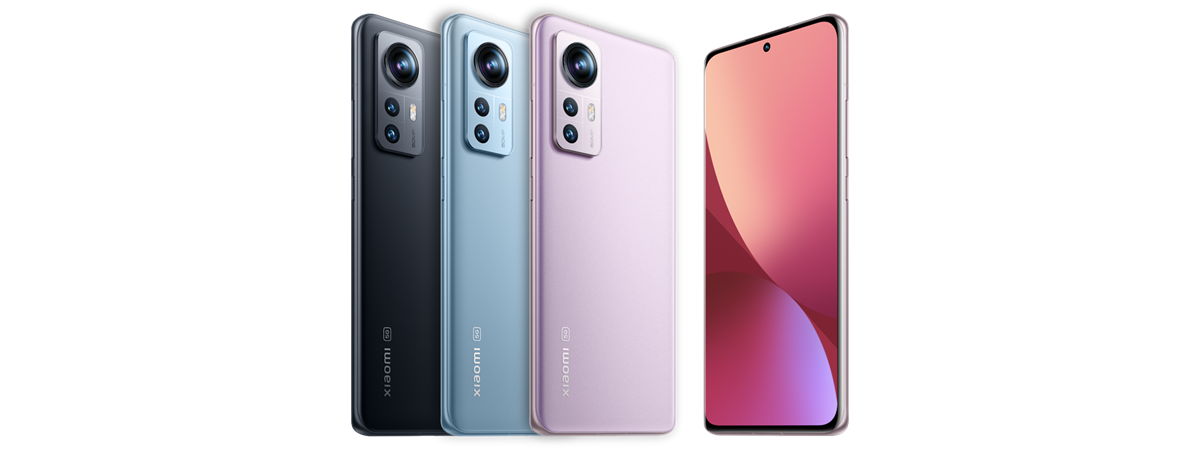
Stores everywhere seem to be filled with devices made and sold by Xiaomi. The company has become one of the biggest players in the tech world, and the Android market is one of its main targets. On top of price-accessible phones, Xiaomi also offers high-end, premium smartphones. And one of the best, at least on paper and in advertisements, is their latest Xiaomi 12. In this review, I will tell you what to expect from it in real life. If you’re curious to learn more, read on:
![Verdict]()

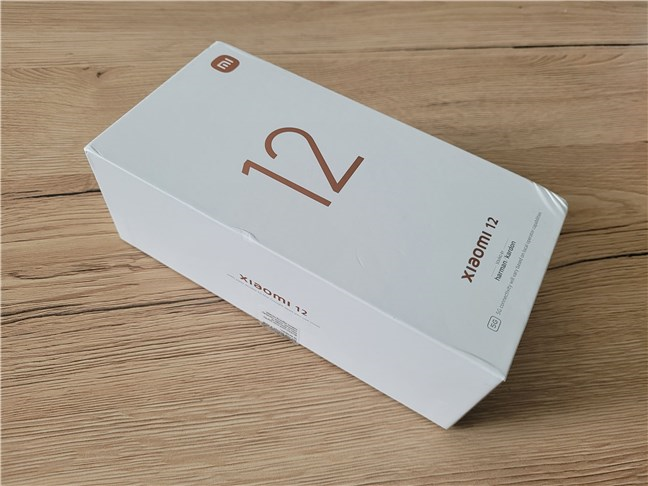
 The package of the Xiaomi 12
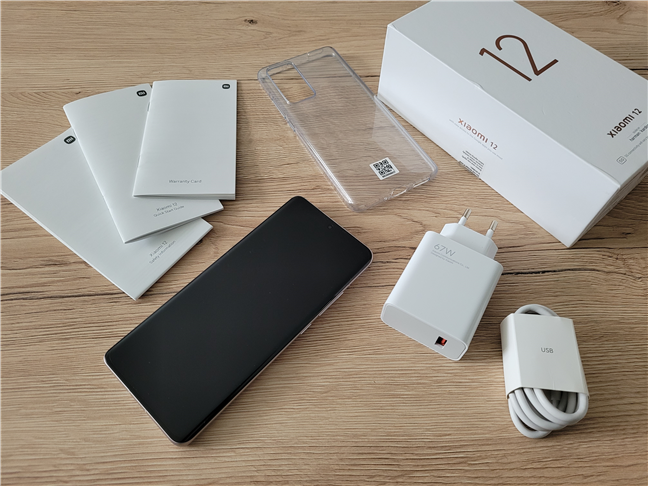
Inside the box, you’ll find the Xiaomi 12 smartphone (with a pre-applied screen protector), a fast 67W charger and a USB-A to C cable, a transparent silicon cover, a SIM ejection tool, and some documents (user manual, warranty, safety information).
The package of the Xiaomi 12
Inside the box, you’ll find the Xiaomi 12 smartphone (with a pre-applied screen protector), a fast 67W charger and a USB-A to C cable, a transparent silicon cover, a SIM ejection tool, and some documents (user manual, warranty, safety information).
 Unboxing the Xiaomi 12
 smartphone is a pleasant experience, as the package contains everything you need to get it up and running. I appreciate the fact that, besides the essentials, Xiaomi also bundled a fast charger and a silicon case.
Unboxing the Xiaomi 12
Unboxing the Xiaomi 12 smartphone is a pleasant experience, as the package contains everything you need to get it up and running. I appreciate the fact that, besides the essentials, Xiaomi also bundled a fast charger and a silicon case.
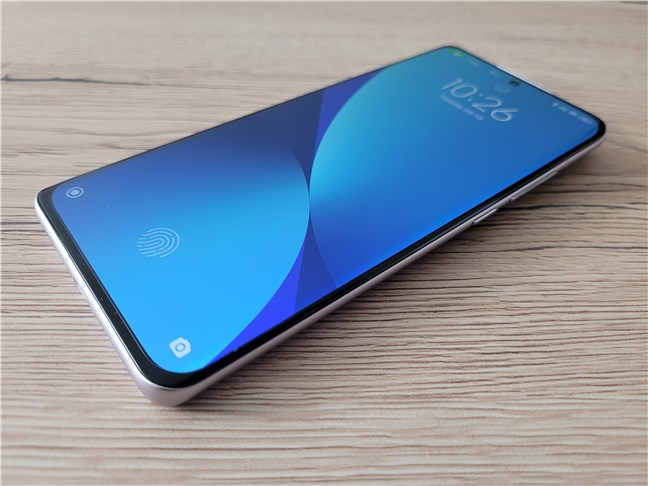 Xiaomi 12 is protected by Corning Gorilla Glass Victus
The speakers are positioned on the top and bottom sides of the phone, not on the bezels. On the top, you also get the infrared sensor towards the right, and what looks like a small microphone together with a sound by harman\kardon inscription.
Xiaomi 12 is protected by Corning Gorilla Glass Victus
The speakers are positioned on the top and bottom sides of the phone, not on the bezels. On the top, you also get the infrared sensor towards the right, and what looks like a small microphone together with a sound by harman\kardon inscription.
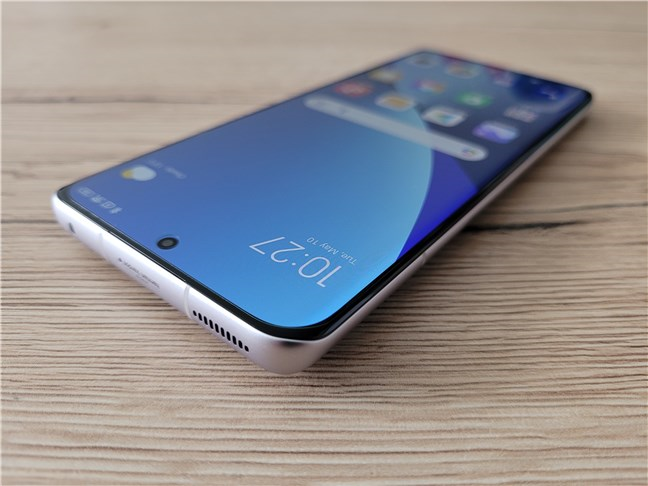 A look at the Xiaomi 12
On the bottom edge, there’s a speaker, a USB-C port, a small microphone, and the SIM tray. A small detail I like: both speakers have beautifully designed grilles.
A look at the Xiaomi 12
On the bottom edge, there’s a speaker, a USB-C port, a small microphone, and the SIM tray. A small detail I like: both speakers have beautifully designed grilles.
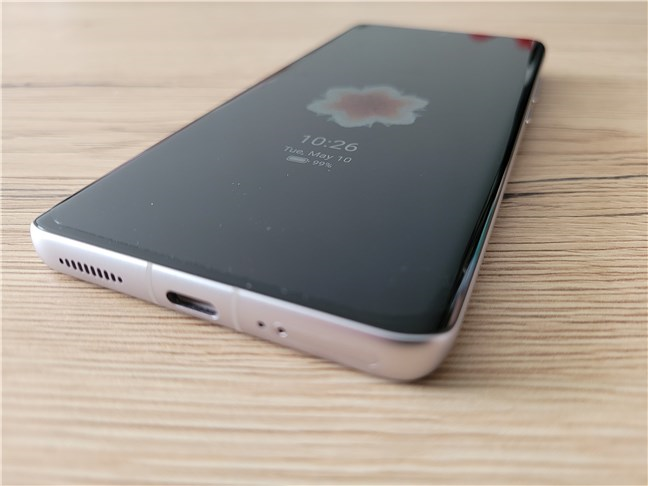 A look at the bottom edge of the Xiaomi 12
The back of the smartphone is also covered by glass, but this time it’s Corning Gorilla Glass 5. It’s not glossy glass, though. It’s somehow brushed, which can make you think that it’s some sort of plastic, but it’s not. And that’s actually a good thing, as it’s not a fingerprint magnet at all, and it’s also not going to slide on a table using telekinesis. 🙂
A look at the bottom edge of the Xiaomi 12
The back of the smartphone is also covered by glass, but this time it’s Corning Gorilla Glass 5. It’s not glossy glass, though. It’s somehow brushed, which can make you think that it’s some sort of plastic, but it’s not. And that’s actually a good thing, as it’s not a fingerprint magnet at all, and it’s also not going to slide on a table using telekinesis. 🙂
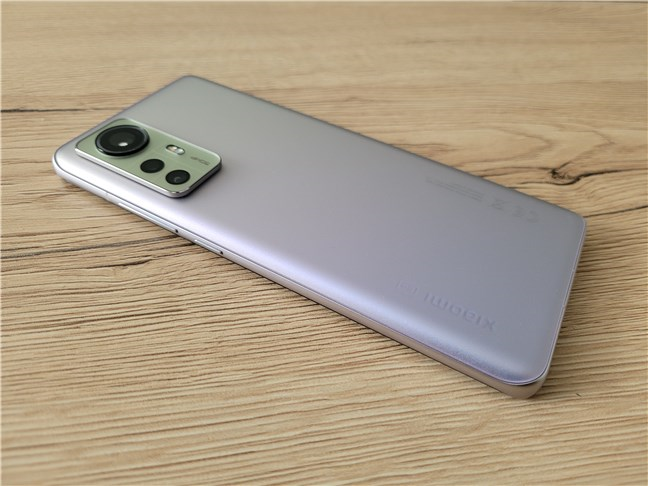 The back of the Xiaomi 12 is protected by Gorilla Glass 5
The main camera system is large, and Xiaomi designed it to have slightly rounded corners but sharp edges too. I like how it looks, but I found it to be quite protruding. Unless you use a smartphone case, the Xiaomi 12 will wobble on any plane surface because of that.
The back of the Xiaomi 12 is protected by Gorilla Glass 5
The main camera system is large, and Xiaomi designed it to have slightly rounded corners but sharp edges too. I like how it looks, but I found it to be quite protruding. Unless you use a smartphone case, the Xiaomi 12 will wobble on any plane surface because of that.
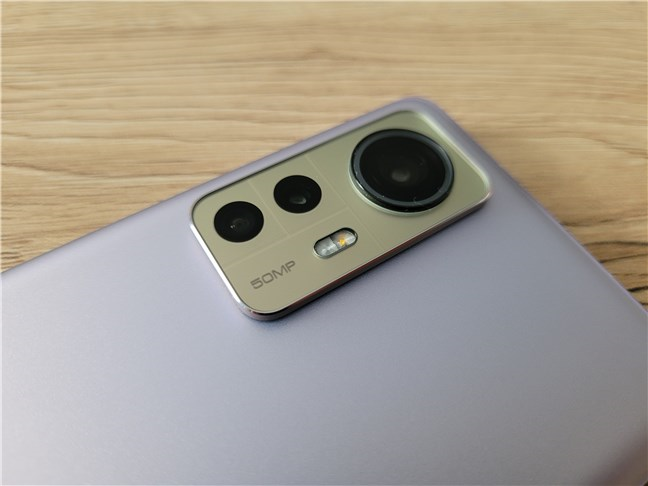 The main cameras system on the Xiaomi 12
Next, the left and right edges of the smartphone. The left one is completely empty. The right one, however, holds the power button and the volume rocker, all towards the top of the smartphone.
The main cameras system on the Xiaomi 12
Next, the left and right edges of the smartphone. The left one is completely empty. The right one, however, holds the power button and the volume rocker, all towards the top of the smartphone.
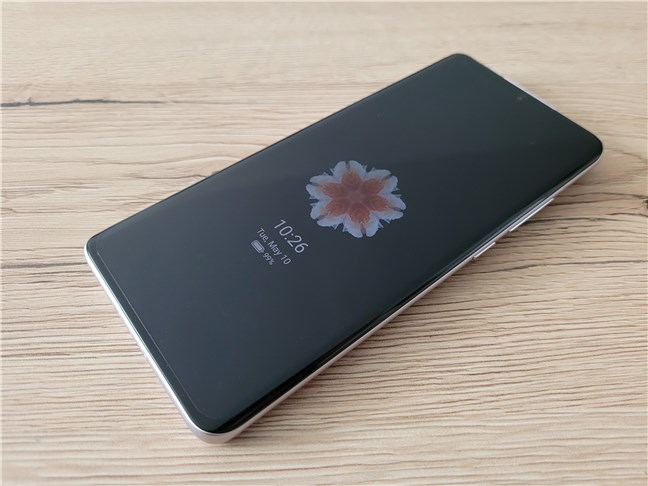 The power and volume buttons are on the top-right edge
Last but not least, colors. The Xiaomi 12 can be found in three colors: Gray, Blue, and Purple. The one I tested was the purple one, as you’ve surely noticed in the photos. Here’s what the others look like:
The power and volume buttons are on the top-right edge
Last but not least, colors. The Xiaomi 12 can be found in three colors: Gray, Blue, and Purple. The one I tested was the purple one, as you’ve surely noticed in the photos. Here’s what the others look like:
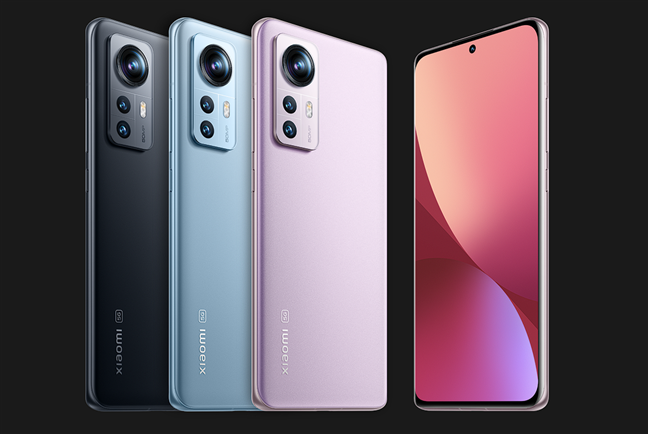
 The colors available for Xiaomi 12
I like the way the Xiaomi 12 looks, and I appreciate its compact size and ergonomics. It feels great in hand, and its design, although not revolutionary, is very well thought out.
The colors available for Xiaomi 12
I like the way the Xiaomi 12 looks, and I appreciate its compact size and ergonomics. It feels great in hand, and its design, although not revolutionary, is very well thought out.
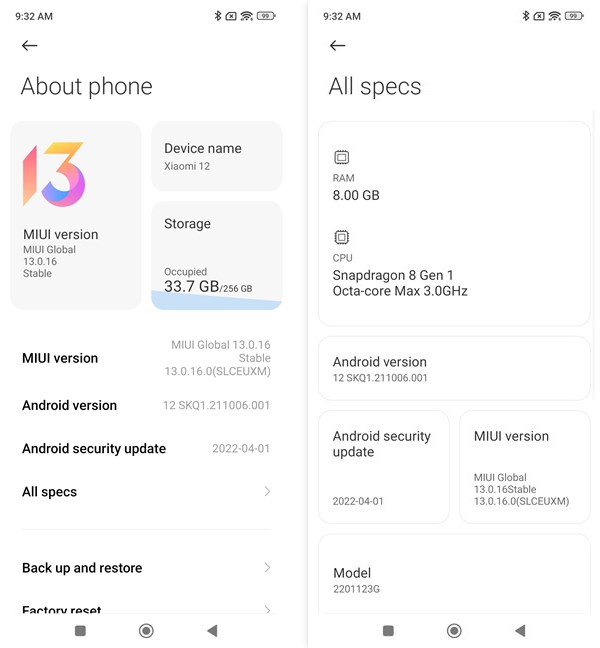
 The specs of the Xiaomi 12
Out of the entire storage space, 230 GB are available to use as you see fit, to fill with apps, games, photos, and whatnot. The rest (about 25 GB) are occupied by the operating system and default apps bundled by Xiaomi. Unfortunately, the smartphone doesn’t include a microSD card slot, so you can’t expand its storage space. That’s not something unexpected, to be honest, as most high-end Android devices don’t have one. On the other hand, the Xiaomi 12 is a 5G smartphone that can use two nano-SIM cards at the same time in dual standby mode.
The specs of the Xiaomi 12
Out of the entire storage space, 230 GB are available to use as you see fit, to fill with apps, games, photos, and whatnot. The rest (about 25 GB) are occupied by the operating system and default apps bundled by Xiaomi. Unfortunately, the smartphone doesn’t include a microSD card slot, so you can’t expand its storage space. That’s not something unexpected, to be honest, as most high-end Android devices don’t have one. On the other hand, the Xiaomi 12 is a 5G smartphone that can use two nano-SIM cards at the same time in dual standby mode.
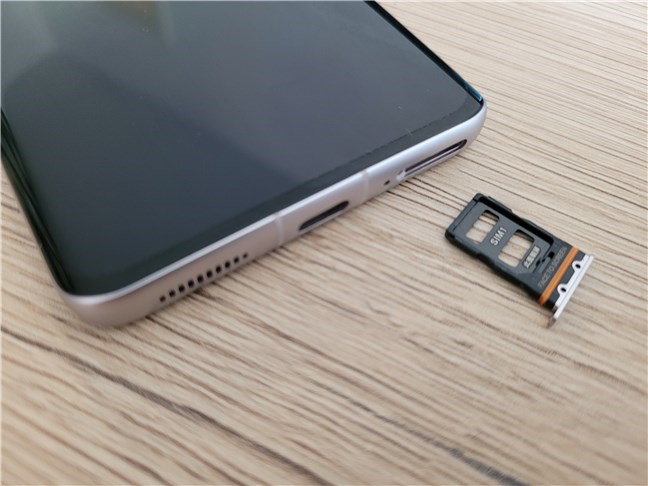 Xiaomi 12 is a dual SIM Android smartphone
As we’re talking about a high-end device, the Xiaomi 12 smartphone doesn’t compromise on display quality. It uses a relatively compact 6.28 inch AMOLED screen with a resolution of 1080 by 2400 pixels, translating into an excellent pixel density of about 419 ppi. The display offers a high (dynamic) refresh rate of 120 Hz and a touch sampling rate of no more, no less than 480 Hz. These are excellent specs that tell us that the visuals and interaction with the screen will feel natural and smooth. Furthermore, Xiaomi 12’s screen is also very bright (up to 1100 nits), supports HDR10+, and is protected by the latest Corning Gorilla Glass Victus.
Xiaomi 12 is a dual SIM Android smartphone
As we’re talking about a high-end device, the Xiaomi 12 smartphone doesn’t compromise on display quality. It uses a relatively compact 6.28 inch AMOLED screen with a resolution of 1080 by 2400 pixels, translating into an excellent pixel density of about 419 ppi. The display offers a high (dynamic) refresh rate of 120 Hz and a touch sampling rate of no more, no less than 480 Hz. These are excellent specs that tell us that the visuals and interaction with the screen will feel natural and smooth. Furthermore, Xiaomi 12’s screen is also very bright (up to 1100 nits), supports HDR10+, and is protected by the latest Corning Gorilla Glass Victus.
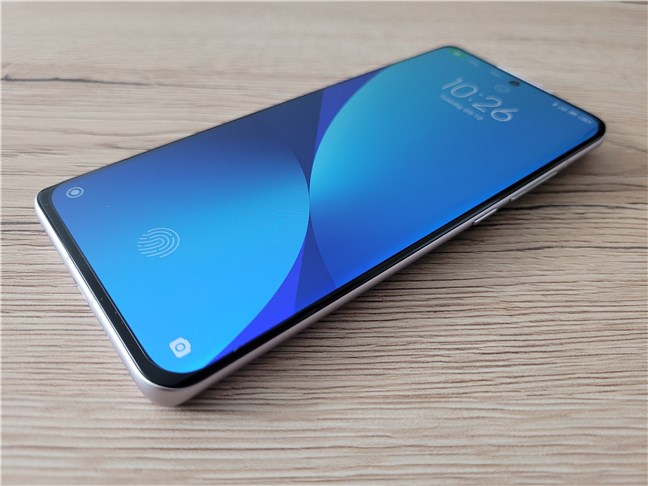 Xiaomi 12 features a bright AMOLED display
Moving on to the camera system, here’s what you get on the Xiaomi 12:
Xiaomi 12 features a bright AMOLED display
Moving on to the camera system, here’s what you get on the Xiaomi 12:
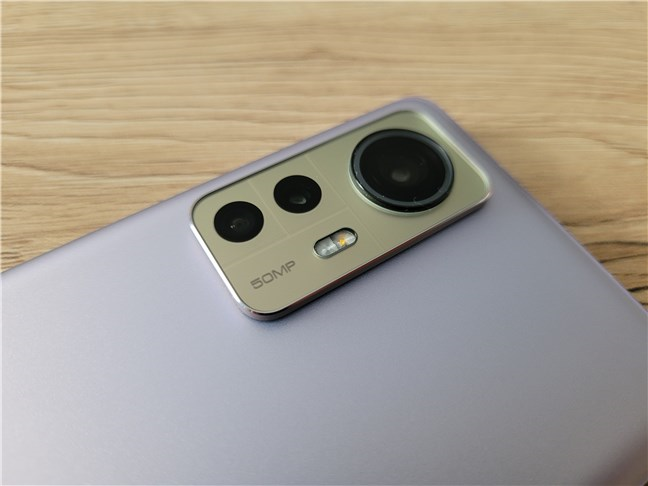 The cameras on the Xiaomi 12
Autonomy is delivered by a non-removable Li-Po battery with a large capacity of 4500 mAh. Xiaomi 12 supports fast wireless charging at 67 Watts (the appropriate charger is bundled in the package) and is advertised to go from 0 to 100% in 39 minutes. Additionally, the smartphone can also fast charge wirelessly (50W - full charge in 53 minutes) and supports reverse wireless charging (10W). All this is possible thanks to the Power Delivery 3.0 and Quick Charge 4+ technologies used on the Xiaomi 12.
The cameras on the Xiaomi 12
Autonomy is delivered by a non-removable Li-Po battery with a large capacity of 4500 mAh. Xiaomi 12 supports fast wireless charging at 67 Watts (the appropriate charger is bundled in the package) and is advertised to go from 0 to 100% in 39 minutes. Additionally, the smartphone can also fast charge wirelessly (50W - full charge in 53 minutes) and supports reverse wireless charging (10W). All this is possible thanks to the Power Delivery 3.0 and Quick Charge 4+ technologies used on the Xiaomi 12.
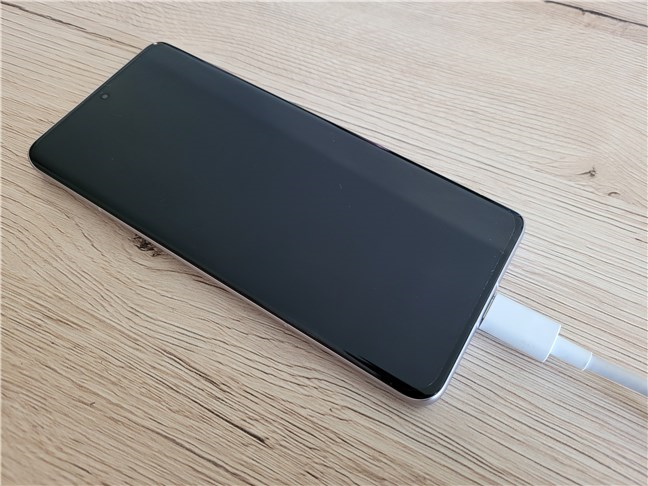 Charging the Xiaomi 12
Communication and connectivity-wise, Xiaomi 12 has everything you’d expect from a high-end Android smartphone. It supports dual-band (2.4 and 5GHz) Wi-Fi 6 or 6e (depending on your region), Bluetooth 5.2, GPS, NFC (also depending on your region), and there’s even an infrared port. The optical fingerprint sensor is found under the screen, and in terms of sensors, you get all the essentials: accelerometer, gyro, compass, and color spectrum.
If you want to see the complete list of features and technical specifications, visit this webpage: Xiaomi 12 - Specs.
On the next page of this review, you can read more about the user experience offered by the Xiaomi 12, its camera quality, performance in benchmarks, and bundled software.
Charging the Xiaomi 12
Communication and connectivity-wise, Xiaomi 12 has everything you’d expect from a high-end Android smartphone. It supports dual-band (2.4 and 5GHz) Wi-Fi 6 or 6e (depending on your region), Bluetooth 5.2, GPS, NFC (also depending on your region), and there’s even an infrared port. The optical fingerprint sensor is found under the screen, and in terms of sensors, you get all the essentials: accelerometer, gyro, compass, and color spectrum.
If you want to see the complete list of features and technical specifications, visit this webpage: Xiaomi 12 - Specs.
On the next page of this review, you can read more about the user experience offered by the Xiaomi 12, its camera quality, performance in benchmarks, and bundled software.
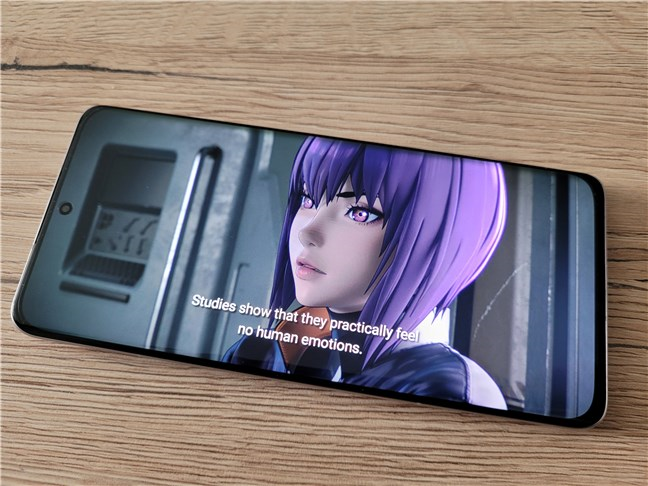 Watching movies on the Xiaomi 12 is a delight
Sound-wise, the audio quality is excellent too. The two stereo speakers are well-calibrated and also quite loud. And I kind of like their positioning. Found on the top and bottom sides of the phone’s body, they are not facing you directly, making it feel like the sound is a bit wider than on other smartphones. However, the not-so-good aspect is that you can easily cover the speakers with your palms if you hold the phone in landscape orientation.
I’ve also played several games that demand powerful hardware to run well. To name just two of them: The Elder Scrolls: Blades and Asphalt 9. The performance offered by the Xiaomi 12 was top-notch - visuals maxed out, and no lags. Furthermore, the smartphone only got mildly warm, not hot, even after playing for long periods of time.
Watching movies on the Xiaomi 12 is a delight
Sound-wise, the audio quality is excellent too. The two stereo speakers are well-calibrated and also quite loud. And I kind of like their positioning. Found on the top and bottom sides of the phone’s body, they are not facing you directly, making it feel like the sound is a bit wider than on other smartphones. However, the not-so-good aspect is that you can easily cover the speakers with your palms if you hold the phone in landscape orientation.
I’ve also played several games that demand powerful hardware to run well. To name just two of them: The Elder Scrolls: Blades and Asphalt 9. The performance offered by the Xiaomi 12 was top-notch - visuals maxed out, and no lags. Furthermore, the smartphone only got mildly warm, not hot, even after playing for long periods of time.
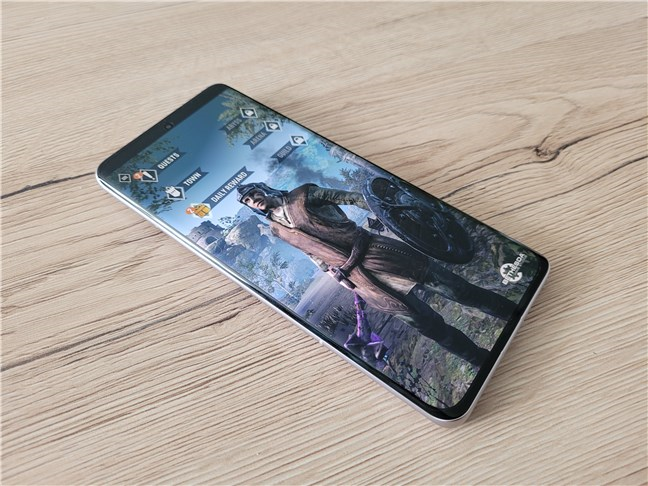 Gaming is excellent on the Xiaomi 12
I’m also quite satisfied with the overall user experience offered by the Xiaomi 12. The operating system, user interface, and apps work flawlessly and without any kind of stuttering or lags. The fingerprint sensor and face unlocking features are fast and accurate, and the battery life is OK. To elaborate a bit on the latter, I’m not what you’d call a heavy user of the smartphone. I do spend a couple of hours each day browsing the web, reading news, and watching videos, but I’m not glued to the smartphone’s screen. So, except for the day in which I benchmarked and played games on the Xiaomi 12, its battery managed to last for about one and a half to two days on a charge.
Which brings us to the next and one of the most important features of the Xiaomi 12 in my opinion: charging times. It’s fast! Using the 67W charger bundled with the smartphone, the Xiaomi 12 got from 0 to 100% battery in about 40 minutes!
Gaming is excellent on the Xiaomi 12
I’m also quite satisfied with the overall user experience offered by the Xiaomi 12. The operating system, user interface, and apps work flawlessly and without any kind of stuttering or lags. The fingerprint sensor and face unlocking features are fast and accurate, and the battery life is OK. To elaborate a bit on the latter, I’m not what you’d call a heavy user of the smartphone. I do spend a couple of hours each day browsing the web, reading news, and watching videos, but I’m not glued to the smartphone’s screen. So, except for the day in which I benchmarked and played games on the Xiaomi 12, its battery managed to last for about one and a half to two days on a charge.
Which brings us to the next and one of the most important features of the Xiaomi 12 in my opinion: charging times. It’s fast! Using the 67W charger bundled with the smartphone, the Xiaomi 12 got from 0 to 100% battery in about 40 minutes!
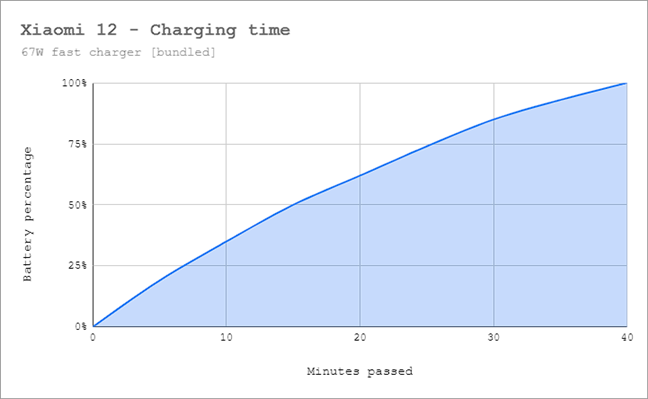
 Xiaomi 12: Battery charging time chart
I loved using the Xiaomi 12 as my main smartphone for as long as I had it in testing. The performance it offers in everyday use and in games is excellent, and so is its connectivity, display and audio are great, and charging is very fast.
Xiaomi 12: Battery charging time chart
I loved using the Xiaomi 12 as my main smartphone for as long as I had it in testing. The performance it offers in everyday use and in games is excellent, and so is its connectivity, display and audio are great, and charging is very fast.
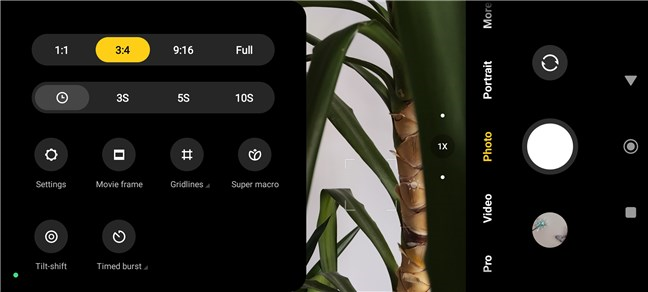
 The Camera app on the Xiaomi 12
By default, the Xiaomi 12 main camera shoots photos in 12 megapixels. Although the sensor has 50 MP and the Camera app has a mode for that, I don’t recommend using it too often, as the photo quality is actually not better, losing some sharpness and appearing to be softer, all for just a tiny bit of added detail. If the lighting conditions are good, on a sunny day, for example, the main camera takes excellent photos: high dynamic range, plenty of detail, good contrast, and natural colors. Here’s an example:
The Camera app on the Xiaomi 12
By default, the Xiaomi 12 main camera shoots photos in 12 megapixels. Although the sensor has 50 MP and the Camera app has a mode for that, I don’t recommend using it too often, as the photo quality is actually not better, losing some sharpness and appearing to be softer, all for just a tiny bit of added detail. If the lighting conditions are good, on a sunny day, for example, the main camera takes excellent photos: high dynamic range, plenty of detail, good contrast, and natural colors. Here’s an example:
 A photo shot with the Xiaomi 12
Here’s what the same scene looks like in 2x zoom:
A photo shot with the Xiaomi 12
Here’s what the same scene looks like in 2x zoom:
 A 2x-zoom photo captured with the Xiaomi 12
The ultrawide camera is also surprisingly good. It manages to capture good detail, and, except for the usual wide-angle distortion, contrast and colors are very close to the ones you get from the main camera.
A 2x-zoom photo captured with the Xiaomi 12
The ultrawide camera is also surprisingly good. It manages to capture good detail, and, except for the usual wide-angle distortion, contrast and colors are very close to the ones you get from the main camera.
 Ultrawide photograph shot with the Xiaomi 12
The dedicated 5 MP macro camera is also much better than the usual 2-megapixel ones I’ve seen on many smartphones. I find it to offer good exposure and contrast, as well as adequate detail:
Ultrawide photograph shot with the Xiaomi 12
The dedicated 5 MP macro camera is also much better than the usual 2-megapixel ones I’ve seen on many smartphones. I find it to offer good exposure and contrast, as well as adequate detail:
 Macro photo quality is actually good
What about low-light photos, more exactly night photographs? The Night mode on the Xiaomi 12 is possibly the fastest one I’ve seen. It only takes a second or two, and the phone captures the photo. The results are great: there is only a little bit of noise, while the images have plenty of detail and good contrast.
Macro photo quality is actually good
What about low-light photos, more exactly night photographs? The Night mode on the Xiaomi 12 is possibly the fastest one I’ve seen. It only takes a second or two, and the phone captures the photo. The results are great: there is only a little bit of noise, while the images have plenty of detail and good contrast.
 Xiaomi 12 takes excellent night photos
Videos are also of good quality: detailed and with excellent color reproduction. Take a look below to see what a daylight video looks like when using the Camera app on default settings - 1080p at 30 frames per second (fps):
The Xiaomi 12 can record in up to 8K resolution if you’re OK with 24 fps, but, if you want something smoother, 4K in 60 fps is what I recommend. The level of detail is excellent, and colors are well represented, though anything above 1080p looks a bit softer:
The slow-motion modes are also amazing. The Xiaomi 12 can record at a speed of up to 960 fps in 1080p resolution and up to 1920 fps in 720p. Here’s a sample recorded at maximum speed:
The cameras on the Xiaomi 12 are some of the best I’ve seen and I believe this smartphone deserves its place among the best camera-phones out there. The only thing missing is a telephoto camera; 2x zoom might be too small for some people.
Xiaomi 12 takes excellent night photos
Videos are also of good quality: detailed and with excellent color reproduction. Take a look below to see what a daylight video looks like when using the Camera app on default settings - 1080p at 30 frames per second (fps):
The Xiaomi 12 can record in up to 8K resolution if you’re OK with 24 fps, but, if you want something smoother, 4K in 60 fps is what I recommend. The level of detail is excellent, and colors are well represented, though anything above 1080p looks a bit softer:
The slow-motion modes are also amazing. The Xiaomi 12 can record at a speed of up to 960 fps in 1080p resolution and up to 1920 fps in 720p. Here’s a sample recorded at maximum speed:
The cameras on the Xiaomi 12 are some of the best I’ve seen and I believe this smartphone deserves its place among the best camera-phones out there. The only thing missing is a telephoto camera; 2x zoom might be too small for some people.
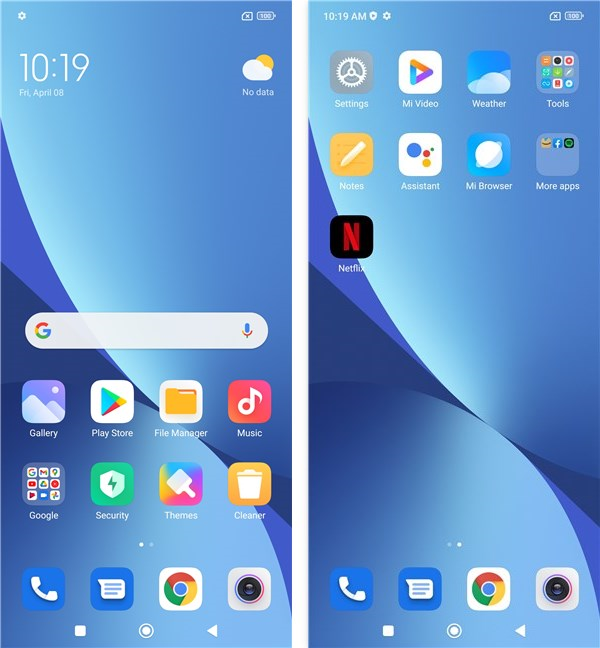 Apps installed on the Xiaomi 12
Besides all the regular apps from Google and the standard ones in Android 12, Xiaomi 12 also bundles the following apps:
Apps installed on the Xiaomi 12
Besides all the regular apps from Google and the standard ones in Android 12, Xiaomi 12 also bundles the following apps:
 Xiaomi 12: Geekbench 5 benchmark results
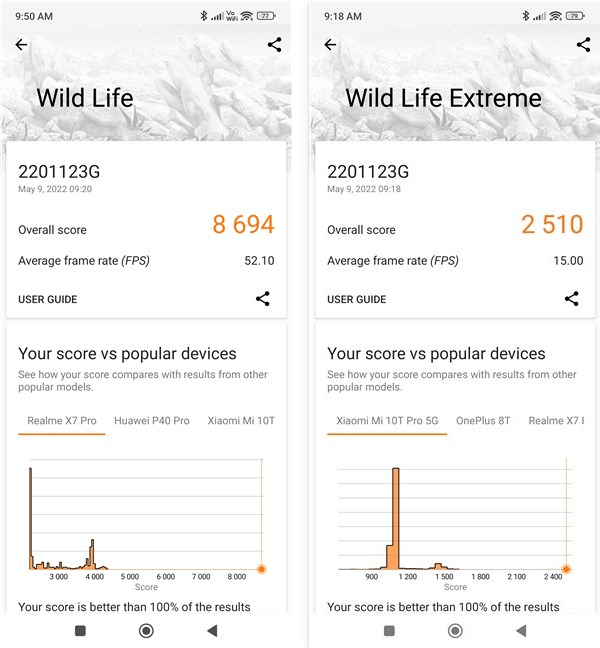
Next, I wanted to see how powerful the Xiaomi 12 is in terms of graphics. For that, I ran 3DMark’s Wild Life and Wild Life Extreme. To be noted, I also tested the phone Sling Shot and Sling Shot Extreme, but the results were so good that they maxed out. 🙂 In Wild Life, Xiaomi 12 managed a score of 8694 points, and in Wild Life Extreme, 2510 points. Amazing results, in my opinion. For the sake of comparison, the Samsung Galaxy S22 (Exynos) is able to deliver only about 80~83 levels of performance compared to the Xiaomi 12!
Xiaomi 12: Geekbench 5 benchmark results
Next, I wanted to see how powerful the Xiaomi 12 is in terms of graphics. For that, I ran 3DMark’s Wild Life and Wild Life Extreme. To be noted, I also tested the phone Sling Shot and Sling Shot Extreme, but the results were so good that they maxed out. 🙂 In Wild Life, Xiaomi 12 managed a score of 8694 points, and in Wild Life Extreme, 2510 points. Amazing results, in my opinion. For the sake of comparison, the Samsung Galaxy S22 (Exynos) is able to deliver only about 80~83 levels of performance compared to the Xiaomi 12!
 Xiaomi 12: 3DMark benchmark results
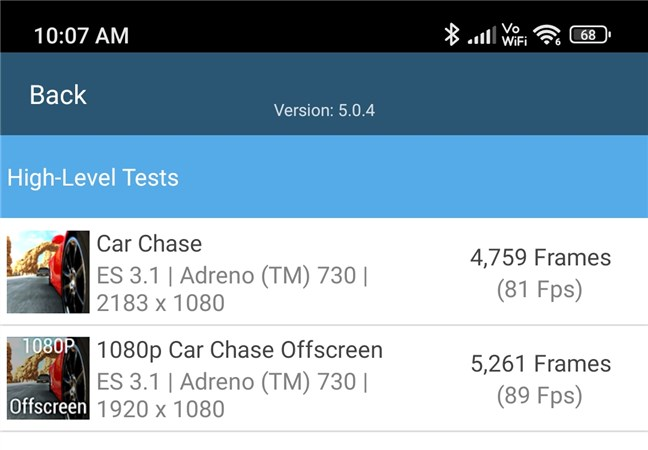
Also on the graphics side of things, I decided to test the Xiaomi 12 with another benchmark: GFXBench. I chose the Car Chase and 1080p Car Chase Offscreen tests, and the number of fps (frames per second) rendered by the Xiaomi 12 was extremely impressive in both. It manages to render more than 26% fps compared to a Samsung Galaxy S22 (Exynos)!
Xiaomi 12: 3DMark benchmark results
Also on the graphics side of things, I decided to test the Xiaomi 12 with another benchmark: GFXBench. I chose the Car Chase and 1080p Car Chase Offscreen tests, and the number of fps (frames per second) rendered by the Xiaomi 12 was extremely impressive in both. It manages to render more than 26% fps compared to a Samsung Galaxy S22 (Exynos)!
 Xiaomi 12: GFXBench results
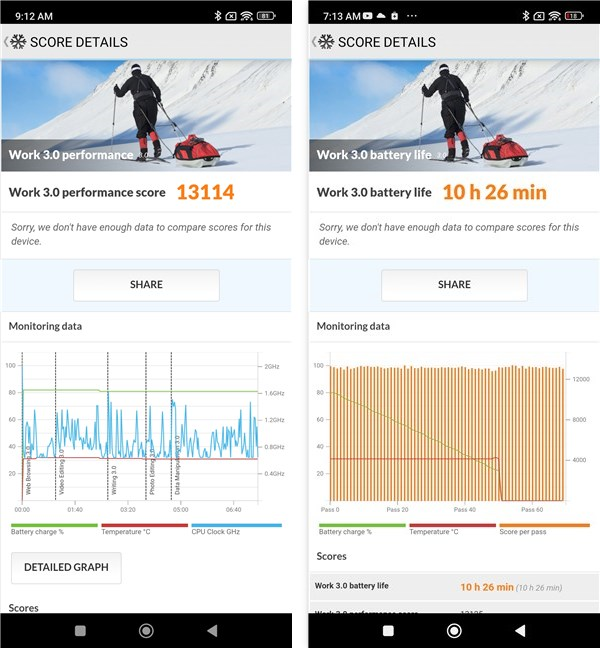
Next, I turned to PCMark for Android, which can test both performance and battery life in real-world scenarios. Xiaomi 12 scored 13114 points in the Work 3.0 performance test and managed a runtime of 10 hours and 26 minutes in the Work 3.0 battery life test. The performance score is excellent, and the battery results are good. Better than what you get from a Samsung Galaxy S22 but not as enduring as the Samsung Galaxy S22+. Maybe a future update will improve the battery life? Let’s hope so.
Xiaomi 12: GFXBench results
Next, I turned to PCMark for Android, which can test both performance and battery life in real-world scenarios. Xiaomi 12 scored 13114 points in the Work 3.0 performance test and managed a runtime of 10 hours and 26 minutes in the Work 3.0 battery life test. The performance score is excellent, and the battery results are good. Better than what you get from a Samsung Galaxy S22 but not as enduring as the Samsung Galaxy S22+. Maybe a future update will improve the battery life? Let’s hope so.
 Xiaomi 12: PCMark performance and battery life scores
Unfortunately, I can’t test 5G connection speeds as my mobile provider doesn’t offer coverage in my area. However, I can test Wi-Fi 6 speeds. I have a 1Gbps internet connection that, in real life, usually goes up to 750Mbps. Using Ookla’s Speedtest, the Xiaomi 12 managed up to 718Mbps for download and 617Mbps for upload.
Xiaomi 12: PCMark performance and battery life scores
Unfortunately, I can’t test 5G connection speeds as my mobile provider doesn’t offer coverage in my area. However, I can test Wi-Fi 6 speeds. I have a 1Gbps internet connection that, in real life, usually goes up to 750Mbps. Using Ookla’s Speedtest, the Xiaomi 12 managed up to 718Mbps for download and 617Mbps for upload.
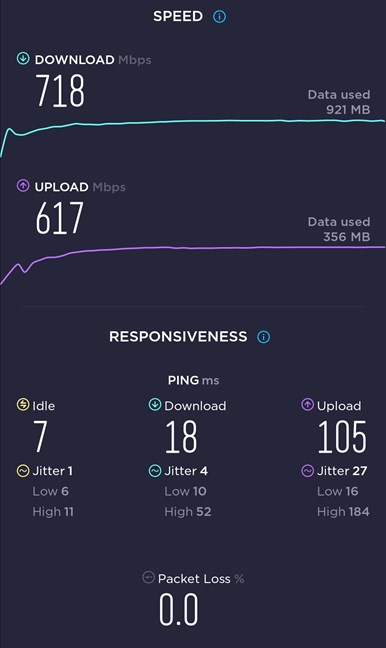
 Xiaomi 12: SpeedTest results on WiFi 6
The Xiaomi 12 offers incredible performance in benchmarks, taking its rightful place among the best Android smartphones of 2022. It’s fast and powerful, able to run any app or game without any kind of issue, and at the highest quality. The only thing holding it back a little is battery life.
Xiaomi 12: SpeedTest results on WiFi 6
The Xiaomi 12 offers incredible performance in benchmarks, taking its rightful place among the best Android smartphones of 2022. It’s fast and powerful, able to run any app or game without any kind of issue, and at the highest quality. The only thing holding it back a little is battery life.
Xiaomi 12: Who is it good for?
This smartphone is an excellent choice if you:- Want one of the best Android smartphones available on the market today
- Prefer a more compact smartphone and dislike huge screens
- Are looking for high-end performance, a device that can run any app or game flawlessly
- Don’t like charging your phone for hours - the Xiaomi 12 goes from 0 to 100% in about 40 minutes
Pros and cons
There are a lot of things I like about the Xiaomi 12:
- Its AMOLED screen is very bright, has excellent color reproduction (12-bit), a fast refresh rate of 120 Hz, and supports both HDR10+ and Dolby Vision
- The camera system is top-notch, able to shoot high-quality photographs and videos both in good light and during the night
- The chipset is very powerful and can run any app or game without any kind of issue
- Solid build quality with Gorilla Glass Victus on the display and Gorilla Glass 5 on the back
- It’s a rather compact phone, one that you can use with one hand
- Audio quality is excellent, and the loudspeakers are good
- It charges super-fast, in 40 minutes or so, and the appropriate 67W charger is bundled with the phone
- It also supports fast wireless charging (50 Watts)
- It has no telephoto camera, meaning that you don’t get a real optical zoom; 2x-only
- It has no IP rated protection against dust or water
- The battery life could be further improved
Verdict
In my opinion, the Xiaomi 12 is one of the best Android smartphones today. It comes with a high-end Qualcomm chipset that can easily handle anything you throw at it, whether that’s a demanding app or a great-looking, fast-paced action game. 🙂 I love the quality of the photos and videos it shoots, and I like the rather compact size of the phone. It’s a great Android smartphone that you should definitely keep an eye on. The only thing that holds me back from giving it a full five-star rating is the lack of a real telephoto camera.Unboxing the Xiaomi 12
The Xiaomi 12 Android smartphone arrives in a relatively simple white box that features a minimalistic design. On it, you can see the name of the device and the Mi logo, as well as a couple of important characteristics like the fact that this is a 5G smartphone and that its sound is backed by Harman Kardon. On one of the sides, there’s also a sticker with more technical details like the phone’s name, version, serial numbers, and package contents.Design and build quality
The Xiaomi 12 is a smartphone that I’d call compact - not too large, but not too small either. Measuring 152.7 mm (6.01 inches) in length, 69.9 mm (2.75 inches) in width, and 8.2 mm (0.32 inches) in thickness, the Xiaomi 12 feels great in your hand. Its body’s ergonomics are almost perfect. The screen glass - Corning Gorilla Glass Victus - is subtly curved on the edges, and its very slim bezels contribute to the sleek design. The smartphone’s weight is definitely noticeable, but I like that: it feels like you get a solid, well-built, and powerful device. The only thing disrupting the smooth look of the front of the smartphone, but not necessarily in a bad way, is the selfie camera. It's under a tiny hole found at the top center area of the display.Hardware specifications
The Xiaomi 12 Android smartphone uses the latest and most powerful mobile chipset today: the Qualcomm SM8450 Snapdragon 8 Gen 1. This SoC (System on a Chip) is built on a 4 nm manufacturing process and bundles an impressively fast octa-core processor (one 3GHz Cortex-X2 core, three 2.50GHz Cortex-A710 cores, and four 1.80GHz Cortex-A510 cores) with an Adreno 730 graphics chip, powerful enough to support Unreal Engine 5! To match all this, Xiaomi also equips its flagship with generous amounts of memory. Xiaomi 12 is available with 8 GB of RAM and fast UFS 3.1, 128 or 256 GB of internal storage space, and there’s also a premium version with 12 GB of RAM and 256 GB of flash storage. For this review, we tested the model featuring 8 GB of RAM and 256 GB of storage.- A main 50 MP camera based on the Sony IMX766 sensor with a wide aperture of f/1.9, large 1.0µm pixels, phase-detection autofocus (PDAF), and OIS (Optical Image Stabilization).
- A secondary ultrawide camera 13 MP camera (OmniVision OV13B10) with an f/2.4 aperture and a field of view of 123 degrees.
- A third 5 MP telephoto (2x) macro camera based on the Samsung S5K5E9 sensor.
The smartphone experience on the Xiaomi 12
In terms of phone call quality and mobile connectivity, the Xiaomi 12 is loud and clear for both persons on the line. In 99% of the cases, I had no issues with signal reception. There was only one phone call that got dropped, but I can’t blame that on the smartphone itself. I was using VoWiFi (Voice over Wi-Fi), and the wireless network the Xiaomi 12 was using had issues. I’ll continue by acknowledging the fact that this smartphone’s screen is amazing. As you know by now, the Xiaomi 12 uses an AMOLED display, which says a lot right from the start: bright whites and deep blacks are ensured by that. But that’s not all; the colors are also more than impressive, as this is one of the few Android devices out there that supports 12-bit color depth. That translates into 68 billion colors! I used the Xiaomi 12 to watch more than just a few movies and, obviously, YouTube videos, and I did that not only inside during evenings but also outside on sunny days. Suffice to say, the screen was able to compensate for brightness and look gorgeous even in direct bright sunlight.The camera experience on the Xiaomi 12
NOTE: For optimization purposes, the pictures in this review are resized. If you want to see the full-sized original photos and videos I shot with the Xiaomi 12, open this gallery: The camera system on the Xiaomi 12 is one of the best ones I’ve seen lately. The main camera is especially good, and the ultrawide, macro, and selfie are also better than most. The obvious thing missing here is a telephoto camera, which unfortunately can’t be replaced by the 2x zoom offered by the main camera. Taking a peek first at the Camera app, there’s nothing out of the ordinary here. It’s the same app found on other Xiaomi smartphones, with all the standard options and shooting modes such as HDR, AI, Super Macro, Night, 50MP, or Slow Motion. To get to some of the available modes, you’ll have to tap the More button.Android 12 and bundled apps
The Xiaomi 12 runs on MIUI 13, the company’s own flavor of Android 12. According to its policy, the Chinese manufacturer will offer three Android updates and four years of security updates on the phones it has released since September 2021. That includes the Xiaomi 12. Moving on to the actual operating system and installed software, what you should know is that MIUI 13 showcases a beautiful user interface with many customization options and small tricks to make it more useful than the default Android 12 one.- Amazon Shopping - the app of the largest online store in the Western world
- Compass - useful for finding out where the North is, as well as measuring elevation and atmospheric pressure
- Facebook - the social network we all love to hate
- File Manager - useful for working with the files and folders on your Xiaomi 12
- Mi Browser - a web browser made by Xiaomi
- Mi Remote - allows you to control various devices using the smartphone’s built-in infrared sensor
- Mi Video - an app that you can use to watch videos, both offline and online
- Music - an audio player app that you can also use to stream music
- Netflix - one of the most popular movies and TV series streaming service
- Notes - a simple note-taking app
- Recorder - a voice recording app
- Scanner - a QR scanning app
- Security - Xiaomi’s app for actions regarding your phone’s security and management
- Services & feedback - Xiaomi’s app for submitting feedback and getting help
- Spotify - the mobile app of the popular music and podcast streaming service
- ShareMe - can help you transfer files using Bluetooth and Wi-Fi without having to connect to the internet
- Weather - shows you the weather using data collected mainly from Accuweather
Performance in benchmarks
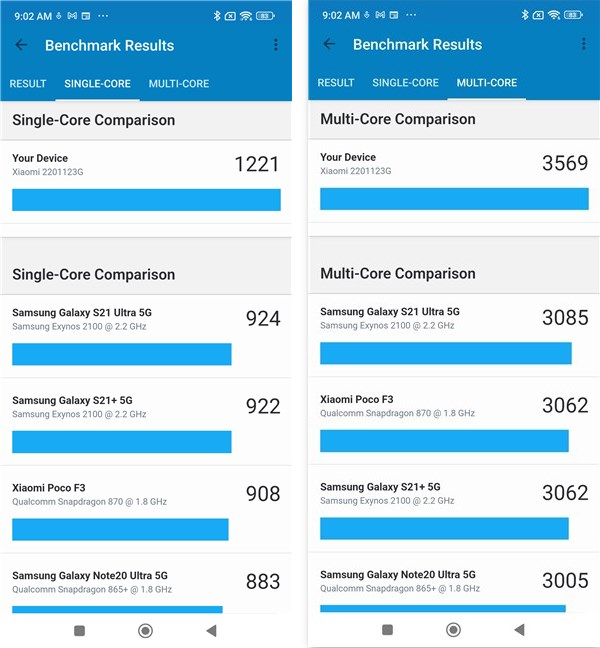
Personal opinions about performance are subjective ones. That’s why every review needs to include benchmarks too. Here’s the story they tell about the Xiaomi 12: I started with Geekbench: Xiaomi 12 scored 1221 points in the Single-Core test and 3569 points in Multi-core. Both numbers are excellent, similar, but a bit higher than what you get from a Samsung Galaxy S22+ and better than what a Samsung S22 (Exynos) can deliver.
Discussion (0)
Comments are closed.