



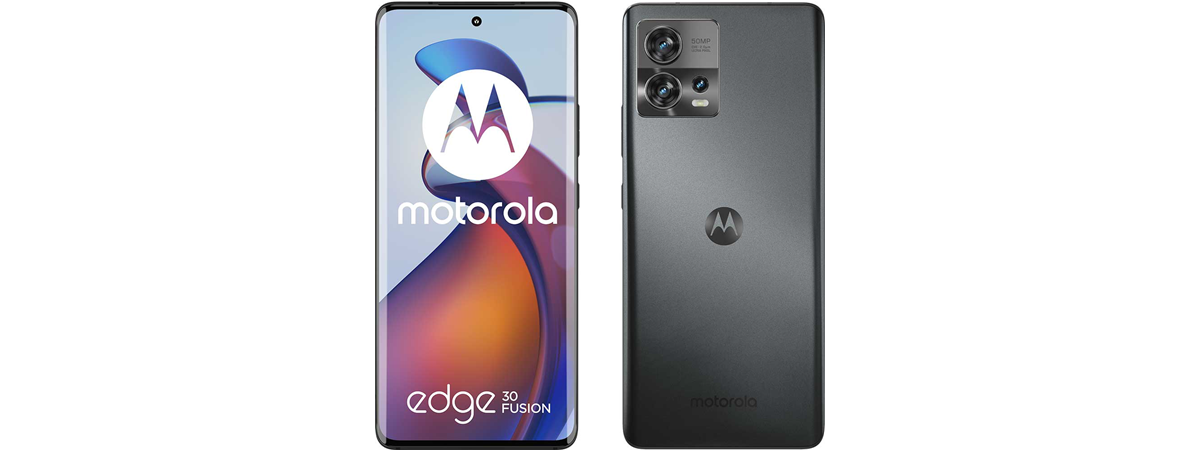
Not too long ago, Motorola launched a series of three new Android smartphones from their Edge 30 family: the Neo, the Fusion, and the Ultra. After reviewing the entry-level Edge 30 Neo, it was time to also look at their mid-ranger, Motorola Edge 30 Fusion. Promising to offer a beautiful body, a clean Android user experience, good cameras, and a powerful chipset, this smartphone looks like it could make many people happy. After using it daily for almost a month, I’m now ready to tell you more about the Motorola Edge 30 Fusion and why you should take it into account if you’re looking for a new Android smartphone:
![Verdict]()

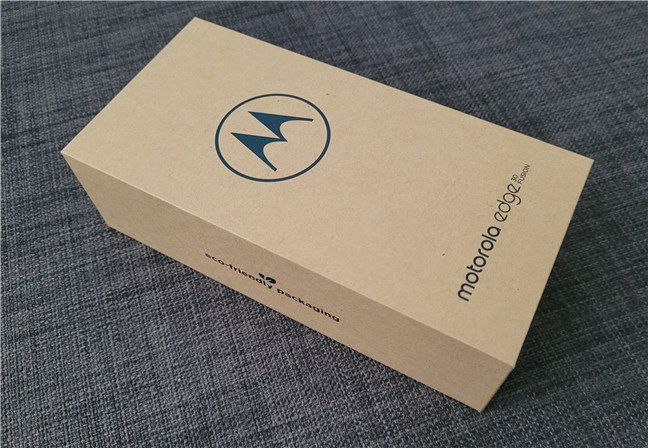
 The packaging for the Motorola Edge 30 Fusion is environmentally friendly
Inside the box, there’s the Motorola Edge 30 Fusion smartphone accompanied by a generous bundle of accessories: a 68W fast charger, a USB Type-C to Type-C cable, a transparent silicon cover, a SIM ejection tool, and a series of documents (user manual, warranty, safety information).
The packaging for the Motorola Edge 30 Fusion is environmentally friendly
Inside the box, there’s the Motorola Edge 30 Fusion smartphone accompanied by a generous bundle of accessories: a 68W fast charger, a USB Type-C to Type-C cable, a transparent silicon cover, a SIM ejection tool, and a series of documents (user manual, warranty, safety information).
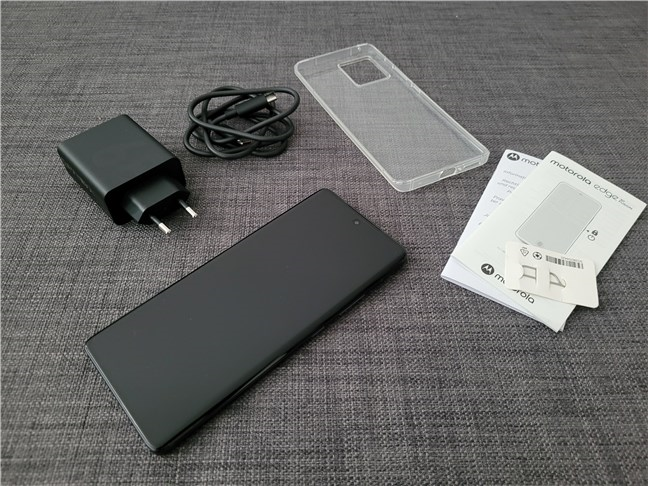
 Unboxing the Motorola Edge 30 Fusion
 smartphone is a satisfying experience. There are two things I appreciate most: the packaging is recycled and recyclable, and you also get a (very) fast 68 Watts charger.
Unboxing the Motorola Edge 30 Fusion
Unboxing the Motorola Edge 30 Fusion smartphone is a satisfying experience. There are two things I appreciate most: the packaging is recycled and recyclable, and you also get a (very) fast 68 Watts charger.
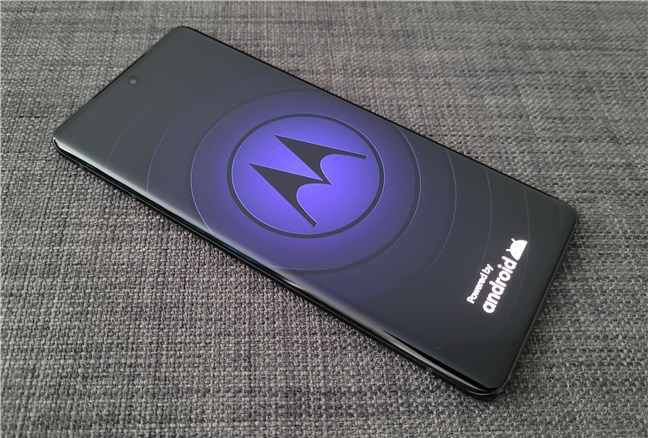
 The front of the Motorola Edge 30 Fusion
Some time ago, I reviewed the Motorola Edge 30 Neo, the smaller sibling of the Edge 30 Fusion. While that smartphone looks like a good choice for young people, with its Pantone colors and design, the Edge 30 Fusion is quite the opposite. This one looks more like a device for “adults” and even the color options underline that feeling. There are four of them: Neptune Blue, Cosmic Grey, Solar Gold, and Aurora White. The one I received in testing was the Cosmic Grey variant.
The front of the Motorola Edge 30 Fusion
Some time ago, I reviewed the Motorola Edge 30 Neo, the smaller sibling of the Edge 30 Fusion. While that smartphone looks like a good choice for young people, with its Pantone colors and design, the Edge 30 Fusion is quite the opposite. This one looks more like a device for “adults” and even the color options underline that feeling. There are four of them: Neptune Blue, Cosmic Grey, Solar Gold, and Aurora White. The one I received in testing was the Cosmic Grey variant.
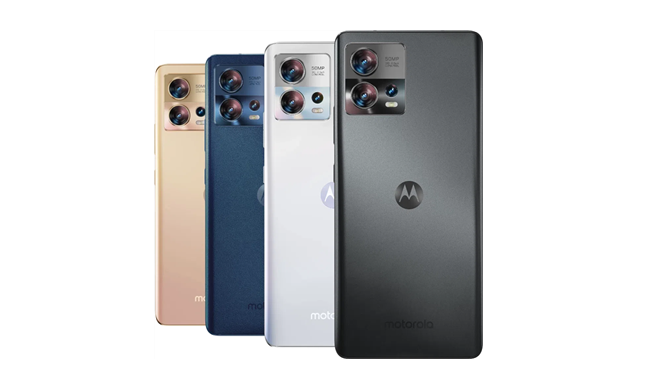
 Color options available for the Motorola Edge 30 Fusion
The only things breaking the stillness of the smartphone’s back are a small Motorola logo etched in the middle, the Motorola brand name towards the bottom, and the main camera system protruding at the top. The cameras are all found inside a relatively average-sized rectangle, divided into two distinct areas. The upper part holds the main 50 MP camera, while the bottom one is home to the ultrawide and depth cameras, as well as the LED flash.
Color options available for the Motorola Edge 30 Fusion
The only things breaking the stillness of the smartphone’s back are a small Motorola logo etched in the middle, the Motorola brand name towards the bottom, and the main camera system protruding at the top. The cameras are all found inside a relatively average-sized rectangle, divided into two distinct areas. The upper part holds the main 50 MP camera, while the bottom one is home to the ultrawide and depth cameras, as well as the LED flash.
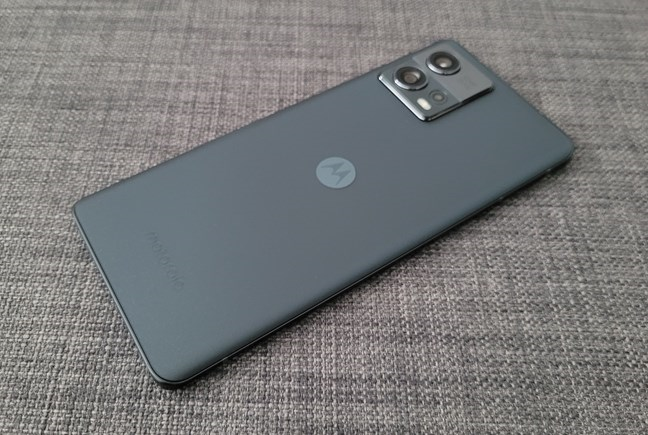
 The back of the Motorola Edge 30 Fusion
The screen uses a beautiful pOLED panel capable of displaying over one billion colors, and its brightness is quite impressive. Both the screen and the back of the smartphone are covered and protected by Corning Gorilla Glass 5, and both sides are symmetrically curved inwards, falling into a thin frame made of aluminum.
The back of the Motorola Edge 30 Fusion
The screen uses a beautiful pOLED panel capable of displaying over one billion colors, and its brightness is quite impressive. Both the screen and the back of the smartphone are covered and protected by Corning Gorilla Glass 5, and both sides are symmetrically curved inwards, falling into a thin frame made of aluminum.
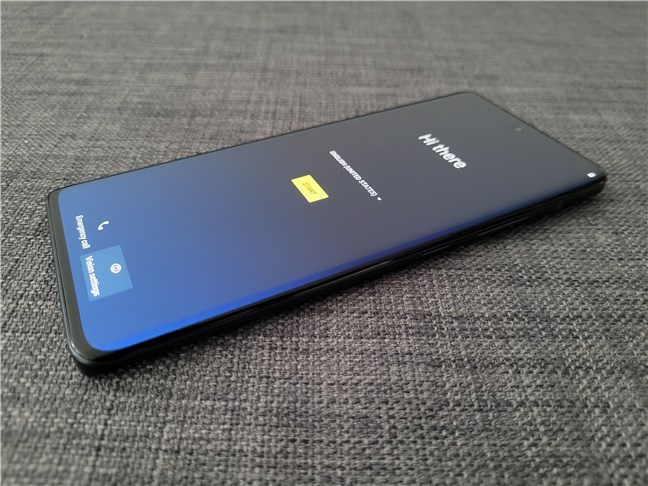 The screen of the Motorola Edge 30 Fusion
The screen has a small hole in the top middle area, where the front camera resides. Nearby, on the top edge between the frame and the screen, you also find a wide and thin cutout for the ear speaker. On the frame, there’s a small microphone hole (this is the secondary mike) and a subtle Dolby Atmos inscription.
The screen of the Motorola Edge 30 Fusion
The screen has a small hole in the top middle area, where the front camera resides. Nearby, on the top edge between the frame and the screen, you also find a wide and thin cutout for the ear speaker. On the frame, there’s a small microphone hole (this is the secondary mike) and a subtle Dolby Atmos inscription.
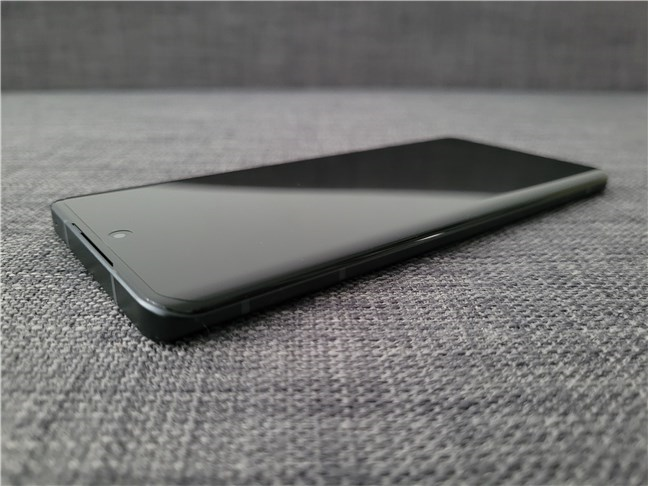 The top edge of the Motorola Edge 30 Fusion
The bottom edge of the smartphone is home to the main (loud) speaker, the USB Type-C port, a microphone, and the SIM tray.
The top edge of the Motorola Edge 30 Fusion
The bottom edge of the smartphone is home to the main (loud) speaker, the USB Type-C port, a microphone, and the SIM tray.
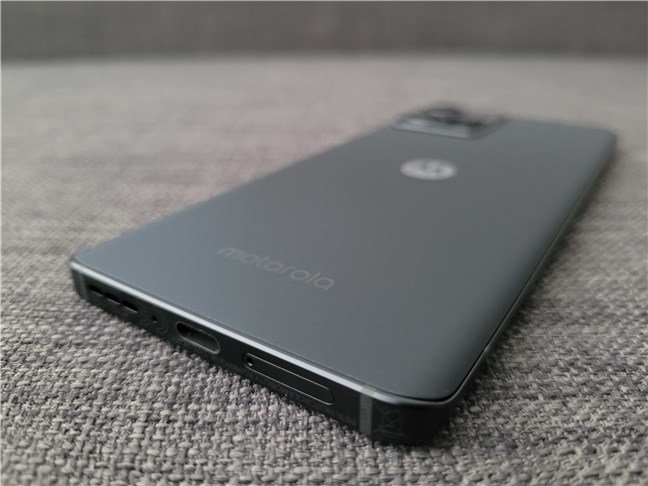 The bottom edge of the Motorola Edge 30 Fusion
While the left side of the frame is devoid of any buttons or ports, on the right of the Motorola Edge 30 Fusion, you’ll find the Power button and the Volume rocker.
The bottom edge of the Motorola Edge 30 Fusion
While the left side of the frame is devoid of any buttons or ports, on the right of the Motorola Edge 30 Fusion, you’ll find the Power button and the Volume rocker.
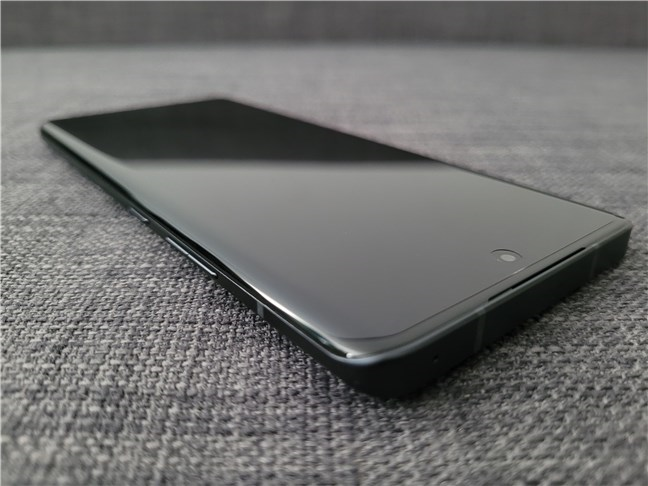 The right-side edge of the Motorola Edge 30 Fusion
The Motorola Edge 30 Fusion is an Android smartphone that’s stylish and sophisticated at the same time. It looks great and can be the right smartphone for anyone who likes elegant devices.
The right-side edge of the Motorola Edge 30 Fusion
The Motorola Edge 30 Fusion is an Android smartphone that’s stylish and sophisticated at the same time. It looks great and can be the right smartphone for anyone who likes elegant devices.
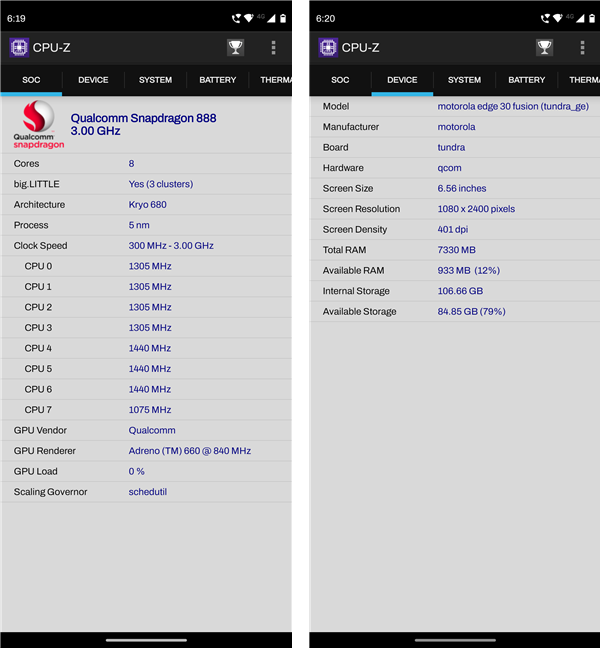
 Hardware specifications for the Motorola Edge 30 Fusion
Regarding memory, Motorola offers the Edge 30 Fusion in no more no less than four different variants. You can get it with 8 GB of RAM and 128 or 256 GB of storage space, or you can choose to go premium with 12 GB of RAM and 256 or 512 GB of flash storage. However, note that the smartphone has no memory card slot, so you won’t be able to expand the amount of flash storage later on. The sample I tested had 8 GB of RAM and 128 GB of storage space.
Hardware specifications for the Motorola Edge 30 Fusion
Regarding memory, Motorola offers the Edge 30 Fusion in no more no less than four different variants. You can get it with 8 GB of RAM and 128 or 256 GB of storage space, or you can choose to go premium with 12 GB of RAM and 256 or 512 GB of flash storage. However, note that the smartphone has no memory card slot, so you won’t be able to expand the amount of flash storage later on. The sample I tested had 8 GB of RAM and 128 GB of storage space.
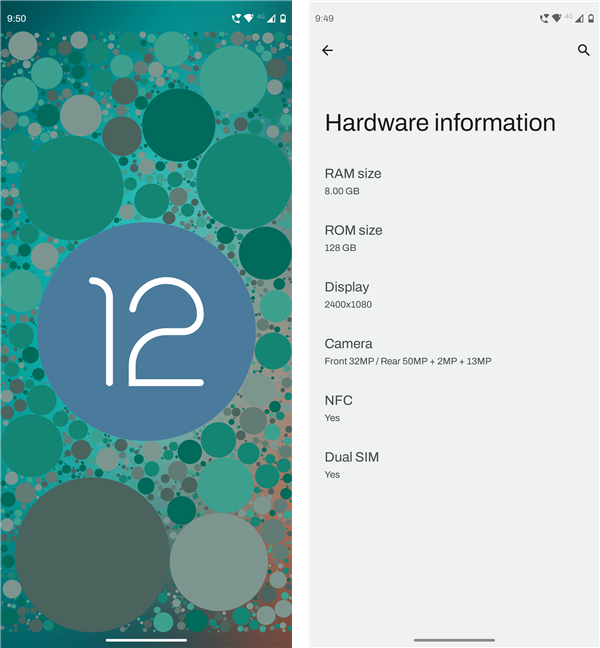 Motorola Edge 30 Fusion comes with Android 12
As it’s using a Snapdragon 888+ 5G chipset, the Motorola Edge 30 Fusion is compatible with 4G LTE and 5G networks. Furthermore, depending on your region, the smartphone can also be dual SIM (nano), which means that you can use two phone numbers simultaneously with it.
Motorola Edge 30 Fusion comes with Android 12
As it’s using a Snapdragon 888+ 5G chipset, the Motorola Edge 30 Fusion is compatible with 4G LTE and 5G networks. Furthermore, depending on your region, the smartphone can also be dual SIM (nano), which means that you can use two phone numbers simultaneously with it.
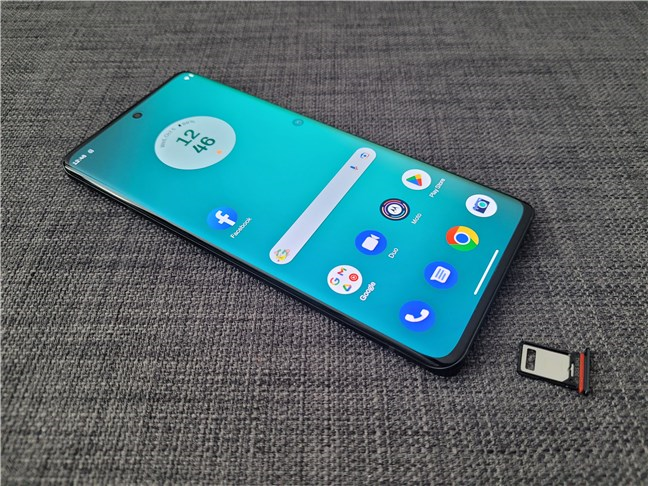 The SIM card tray of the Motorola Edge 30 Fusion
With a diagonal size of 6.55 inches and a pOLED screen (plastic-OLED) panel, Motorola Edge 30 Fusion’s display is top-notch. It can show over one billion colors at a peak brightness of 1100 nits. Its resolution is FHD+ (1080 by 2400 pixels), the refresh rate is high (144 Hz), and the pixel density is great (402 ppi or pixels per inch).
The SIM card tray of the Motorola Edge 30 Fusion
With a diagonal size of 6.55 inches and a pOLED screen (plastic-OLED) panel, Motorola Edge 30 Fusion’s display is top-notch. It can show over one billion colors at a peak brightness of 1100 nits. Its resolution is FHD+ (1080 by 2400 pixels), the refresh rate is high (144 Hz), and the pixel density is great (402 ppi or pixels per inch).
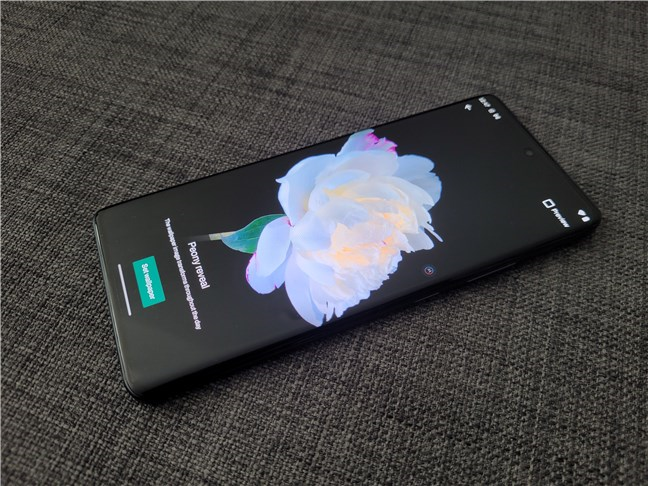 Motorola Edge 30 Fusion uses a pOLED display
The Motorola Edge 30 Fusion is also well prepared for photography and video recording. You get:
Motorola Edge 30 Fusion uses a pOLED display
The Motorola Edge 30 Fusion is also well prepared for photography and video recording. You get:
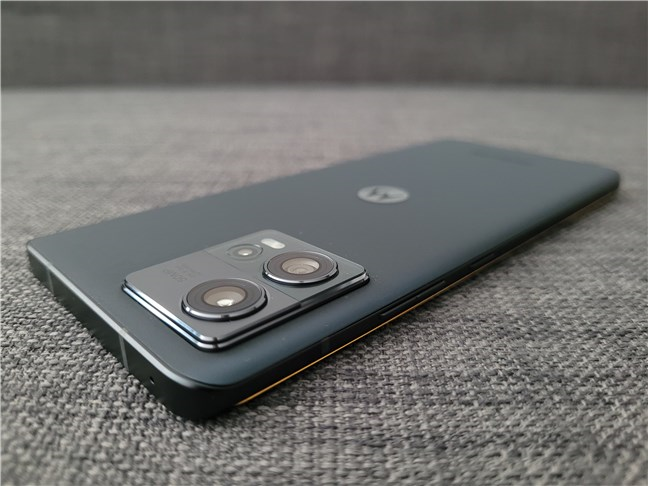 The main camera setup on the rear of the Motorola Edge 30 Fusion
TIP: If you’re interested in the best settings for recording videos, you’ll find this article interesting: Smartphone video recording in 1080p, 4K, 8K: How much is too much?
The autonomy of the Motorola Edge 30 Fusion is delivered by a large 4400 mAh Li-Po battery that’s non-removable. As you’ve probably guessed from the unboxing section of this review, when I mentioned the charger bundled with the smartphone, the Motorola Edge 30 Fusion supports fast charging at 68 Watts. Theoretically, plugging in the phone for 10 minutes will give you enough battery juice for a day of use.
On the connectivity side, the Motorola Edge 30 Fusion features support for tri-band Wi-Fi 6e (802.11ax on the 2.4, 5, and 6 GHz bands), Bluetooth 5.2 with LE, GPS, and NFC. Last but not least, you also get an optical fingerprint sensor under the display and all the other essential sensors, such as an accelerometer, gyro, proximity, and compass.
If you want to check the full features and technical specifications list, visit this webpage: Motorola Edge 30 Fusion.
Turn the page to see what my experience using the Motorola Edge 30 Fusion was like and learn more about the camera quality, performance in benchmarks, and bundled software.
The main camera setup on the rear of the Motorola Edge 30 Fusion
TIP: If you’re interested in the best settings for recording videos, you’ll find this article interesting: Smartphone video recording in 1080p, 4K, 8K: How much is too much?
The autonomy of the Motorola Edge 30 Fusion is delivered by a large 4400 mAh Li-Po battery that’s non-removable. As you’ve probably guessed from the unboxing section of this review, when I mentioned the charger bundled with the smartphone, the Motorola Edge 30 Fusion supports fast charging at 68 Watts. Theoretically, plugging in the phone for 10 minutes will give you enough battery juice for a day of use.
On the connectivity side, the Motorola Edge 30 Fusion features support for tri-band Wi-Fi 6e (802.11ax on the 2.4, 5, and 6 GHz bands), Bluetooth 5.2 with LE, GPS, and NFC. Last but not least, you also get an optical fingerprint sensor under the display and all the other essential sensors, such as an accelerometer, gyro, proximity, and compass.
If you want to check the full features and technical specifications list, visit this webpage: Motorola Edge 30 Fusion.
Turn the page to see what my experience using the Motorola Edge 30 Fusion was like and learn more about the camera quality, performance in benchmarks, and bundled software.
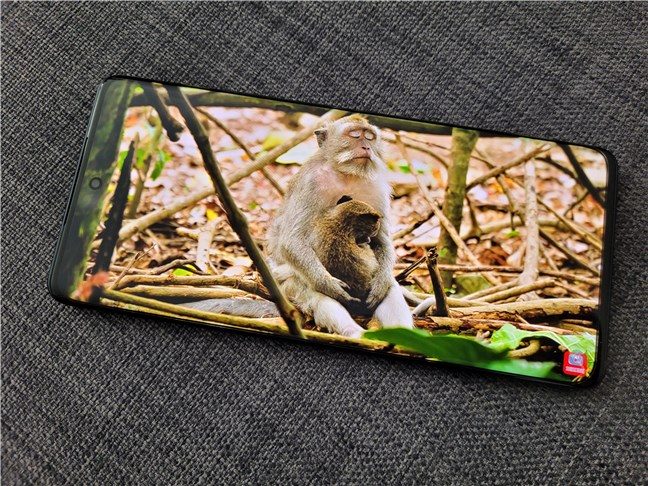 Watching videos on the Motorola Edge 30 Fusion
The audio is another aspect that impressed me. Considering that the Edge 30 Fusion is not Motorola’s flagship (that’s the Edge 30 Ultra), I expected to get an average listening experience from it. However, that couldn’t have been further from the truth. The Edge 30 Fusion is quite outstanding: the maximum volume is very loud, but neither the bottom loudspeaker nor the top ear speaker distorts the sound. For a smartphone, this is as good as it gets.
Playing games on the Motorola Edge 30 Fusion was also a very satisfying experience. The Snapdragon 888+ chipset is one of the best for that, offering excellent performance even in the most demanding mobile games. I’ve tried The Elder Scrolls: Blades, Asphalt 9, and Diablo Immortal. Even on the highest available graphics quality settings, I didn’t notice any lag or stuttering, and the number of frames per second was high enough for everything to look smooth.
Watching videos on the Motorola Edge 30 Fusion
The audio is another aspect that impressed me. Considering that the Edge 30 Fusion is not Motorola’s flagship (that’s the Edge 30 Ultra), I expected to get an average listening experience from it. However, that couldn’t have been further from the truth. The Edge 30 Fusion is quite outstanding: the maximum volume is very loud, but neither the bottom loudspeaker nor the top ear speaker distorts the sound. For a smartphone, this is as good as it gets.
Playing games on the Motorola Edge 30 Fusion was also a very satisfying experience. The Snapdragon 888+ chipset is one of the best for that, offering excellent performance even in the most demanding mobile games. I’ve tried The Elder Scrolls: Blades, Asphalt 9, and Diablo Immortal. Even on the highest available graphics quality settings, I didn’t notice any lag or stuttering, and the number of frames per second was high enough for everything to look smooth.
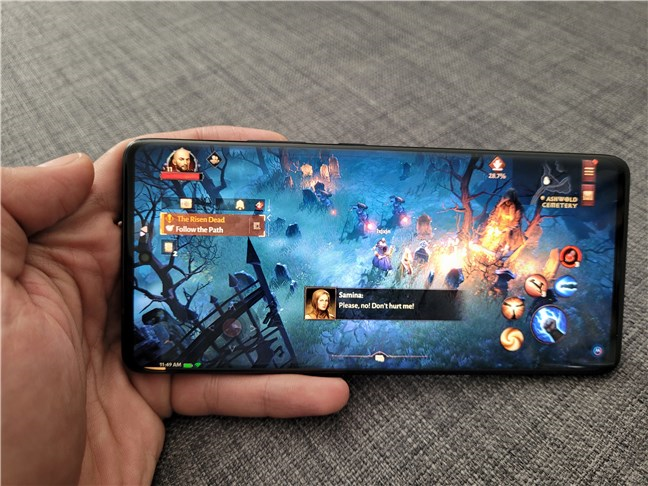 Playing games on the Motorola Edge 30 Fusion is a pleasure
Navigating through the user interface was a fine experience, too. The powerful chipset paired with the adaptive refresh rate of the display makes everything smooth and fluent. Just like in games, there’s no lag or stuttering whatsoever. Launching apps is fast, as is switching between them.
The optical fingerprint sensor found under the display is also excellent: fast and accurate. Unlike other phones, the Edge 30 Fusion never asked me to press my finger longer to recognize the fingerprint.
Last but not least, battery life is good too: its 4400 mAh managed to keep me going for about a day and a half. However, you should know that I’m not an avid consumer of mobile content, meaning I don’t regularly use my smartphone for gaming or permanently staying online on social networks, for example. My routine involves reading news and other articles, chatting, and speaking with family and friends. If you’re playing mobile games or watching videos often, the battery endurance will be lower, but it should get you through a whole day. And, if you think about how fast charging the Edge 30 Fusion is, things look great. I’ve measured the time it takes to fully charge it with the bundled 68 Watts charger, and I found out that it only needs 42 minutes!
Playing games on the Motorola Edge 30 Fusion is a pleasure
Navigating through the user interface was a fine experience, too. The powerful chipset paired with the adaptive refresh rate of the display makes everything smooth and fluent. Just like in games, there’s no lag or stuttering whatsoever. Launching apps is fast, as is switching between them.
The optical fingerprint sensor found under the display is also excellent: fast and accurate. Unlike other phones, the Edge 30 Fusion never asked me to press my finger longer to recognize the fingerprint.
Last but not least, battery life is good too: its 4400 mAh managed to keep me going for about a day and a half. However, you should know that I’m not an avid consumer of mobile content, meaning I don’t regularly use my smartphone for gaming or permanently staying online on social networks, for example. My routine involves reading news and other articles, chatting, and speaking with family and friends. If you’re playing mobile games or watching videos often, the battery endurance will be lower, but it should get you through a whole day. And, if you think about how fast charging the Edge 30 Fusion is, things look great. I’ve measured the time it takes to fully charge it with the bundled 68 Watts charger, and I found out that it only needs 42 minutes!
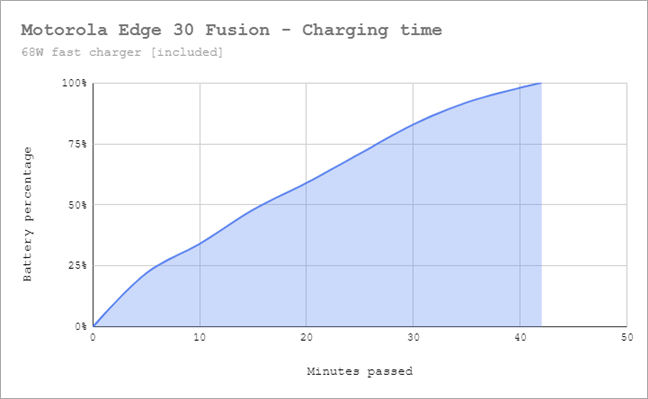
 Motorola Edge 30 Fusion 68W fast charging (100% in 42 minutes)
The Motorola Edge 30 Fusion is not just an average mid-range smartphone; it’s an excellent one! The display is beautiful and very responsive, and the last generation flagship-level chipset is really powerful, making the smartphone great not only for daily use, as well as for demanding apps and games.
Motorola Edge 30 Fusion 68W fast charging (100% in 42 minutes)
The Motorola Edge 30 Fusion is not just an average mid-range smartphone; it’s an excellent one! The display is beautiful and very responsive, and the last generation flagship-level chipset is really powerful, making the smartphone great not only for daily use, as well as for demanding apps and games.
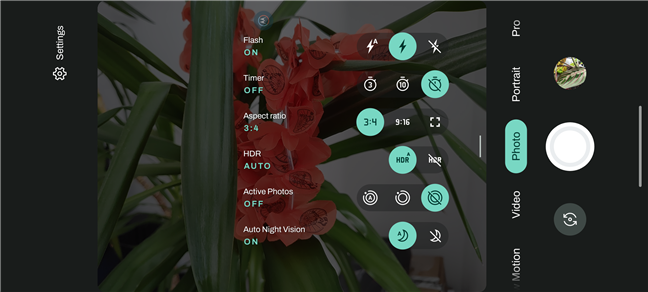
 The Camera app on the Motorola Edge 30 Fusion
Moving on to the photo quality, the main camera is excellent for a smartphone with this price tag. In daylight or anywhere else where the lighting conditions are great, both the main wide camera and the ultrawide one shoot perfectly acceptable photographs. With the main one, the details are plenty, and the colors look natural. With the ultrawide camera, which is also used for macro photography, I noticed a bit more noise, and the colors are not an exact match to what you get from the main camera. Also, with the latter, the colors seem a bit less vivid. However, in the end, both cameras are excellent for a mid-range device such as this one.
The Camera app on the Motorola Edge 30 Fusion
Moving on to the photo quality, the main camera is excellent for a smartphone with this price tag. In daylight or anywhere else where the lighting conditions are great, both the main wide camera and the ultrawide one shoot perfectly acceptable photographs. With the main one, the details are plenty, and the colors look natural. With the ultrawide camera, which is also used for macro photography, I noticed a bit more noise, and the colors are not an exact match to what you get from the main camera. Also, with the latter, the colors seem a bit less vivid. However, in the end, both cameras are excellent for a mid-range device such as this one.
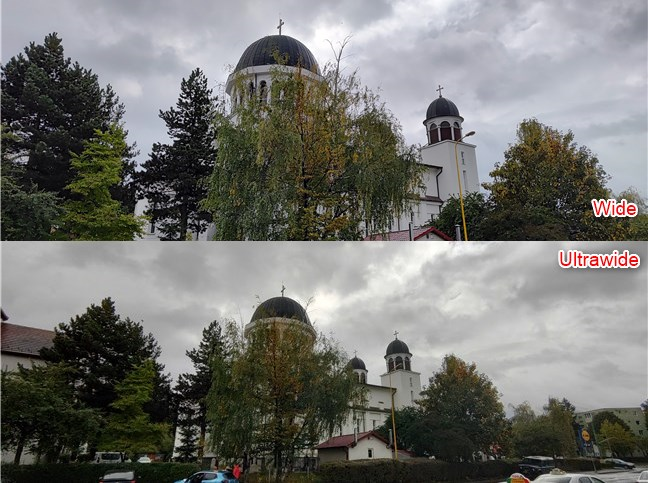
 Wide vs. ultrawide camera photo comparison
Low-light photography is also relatively OK. Contrast and detail are good, especially where lights are involved, but could be better in the darker areas of the shots captured. On the other hand, the noise level is acceptable for a mid-range smartphone such as the Motorola Edge 30 Fusion.
Wide vs. ultrawide camera photo comparison
Low-light photography is also relatively OK. Contrast and detail are good, especially where lights are involved, but could be better in the darker areas of the shots captured. On the other hand, the noise level is acceptable for a mid-range smartphone such as the Motorola Edge 30 Fusion.
 Low-light photo sample took with the Motorola Edge 30 Fusion
Selfies are of good quality, both the skin tone and texture being fairly accurate and with good detail.
Low-light photo sample took with the Motorola Edge 30 Fusion
Selfies are of good quality, both the skin tone and texture being fairly accurate and with good detail.

 Selfie sample shot with the Motorola Edge 30 Fusion
The Motorola Edge 30 Fusion does well in terms of video recording too. The colors look natural, the contrast is good, and image stabilization works as it should. The smartphone can go up to 4K and 60 frames per second using both OIS (Optical Image Stabilization) and EIS (Electronic Image Stabilization). OIS is available on the main camera, while the others use EIS. The main camera can go even higher in terms of recording resolution, up to 8K, but only at 30 fps. Here’s a relatively static video I took in 8K resolution:
And here’s a sample of a video with movement, that I recorded in 4K at 60 frames per second with image stabilization turned on:
The cameras offered by the Motorola Edge 30 Fusion are excellent for a mid-range Android device. The photographs you take with it are great in daylight and above average in low light. The smartphone also does quite well when recording videos, offering high resolution and a high number of frames per second without compromising image quality.
Selfie sample shot with the Motorola Edge 30 Fusion
The Motorola Edge 30 Fusion does well in terms of video recording too. The colors look natural, the contrast is good, and image stabilization works as it should. The smartphone can go up to 4K and 60 frames per second using both OIS (Optical Image Stabilization) and EIS (Electronic Image Stabilization). OIS is available on the main camera, while the others use EIS. The main camera can go even higher in terms of recording resolution, up to 8K, but only at 30 fps. Here’s a relatively static video I took in 8K resolution:
And here’s a sample of a video with movement, that I recorded in 4K at 60 frames per second with image stabilization turned on:
The cameras offered by the Motorola Edge 30 Fusion are excellent for a mid-range Android device. The photographs you take with it are great in daylight and above average in low light. The smartphone also does quite well when recording videos, offering high resolution and a high number of frames per second without compromising image quality.
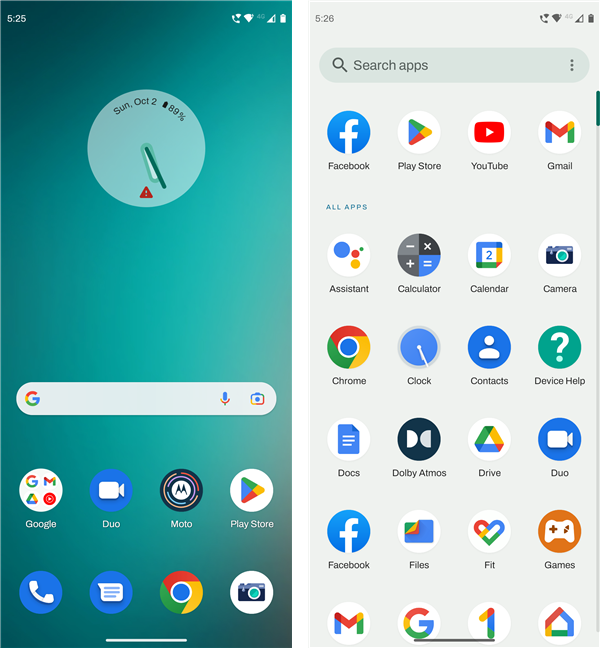 User interface and apps on the Motorola Edge 30 Fusion
In addition to the default Google apps, the Motorola Edge 30 Fusion also comes with the following apps:
User interface and apps on the Motorola Edge 30 Fusion
In addition to the default Google apps, the Motorola Edge 30 Fusion also comes with the following apps:
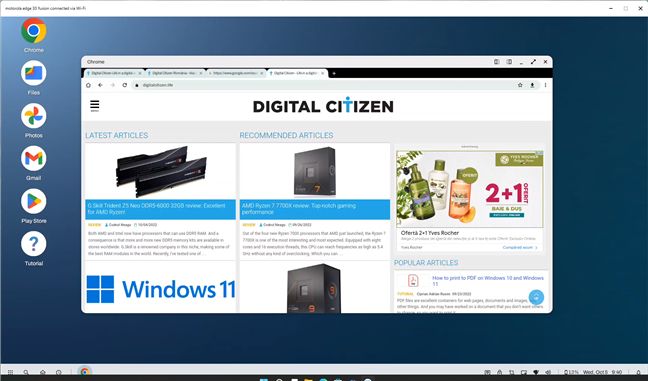
 Using the Motorola Edge 30 Fusion on a Windows 11 PC
The Motorola Edge 30 Fusion is one of the few smartphones on the market that gives you a clean user interface that’s as close to stock Android as you can get. I like that, and I appreciate the fact that there aren’t many bundled apps on it. Also, the Ready For feature is excellent and can prove useful to many people.
Using the Motorola Edge 30 Fusion on a Windows 11 PC
The Motorola Edge 30 Fusion is one of the few smartphones on the market that gives you a clean user interface that’s as close to stock Android as you can get. I like that, and I appreciate the fact that there aren’t many bundled apps on it. Also, the Ready For feature is excellent and can prove useful to many people.
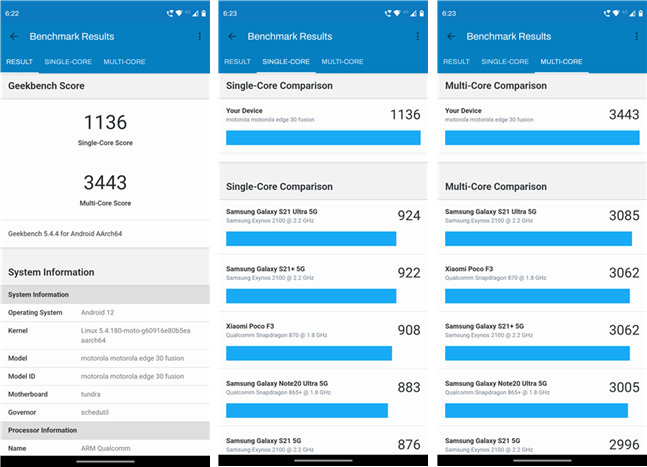
 Motorola Edge 30 Fusion benchmark results in Geekbench 5
Next, I ran 3DMark’s Wild Life and Sling Shot tests to see how good the Motorola Edge 30 Fusion is for gaming. In Wild Life, it scored 5848 points, while in Sling Shot, it maxed out. These are again impressive results, showing that the smartphone can run any game without issues, even at maxed graphics settings. Although it’s behind the Samsung Galaxy S22, the scores show that the Motorola Edge 30 Fusion is slightly better than a Samsung Galaxy S21 FE 5G.
Motorola Edge 30 Fusion benchmark results in Geekbench 5
Next, I ran 3DMark’s Wild Life and Sling Shot tests to see how good the Motorola Edge 30 Fusion is for gaming. In Wild Life, it scored 5848 points, while in Sling Shot, it maxed out. These are again impressive results, showing that the smartphone can run any game without issues, even at maxed graphics settings. Although it’s behind the Samsung Galaxy S22, the scores show that the Motorola Edge 30 Fusion is slightly better than a Samsung Galaxy S21 FE 5G.
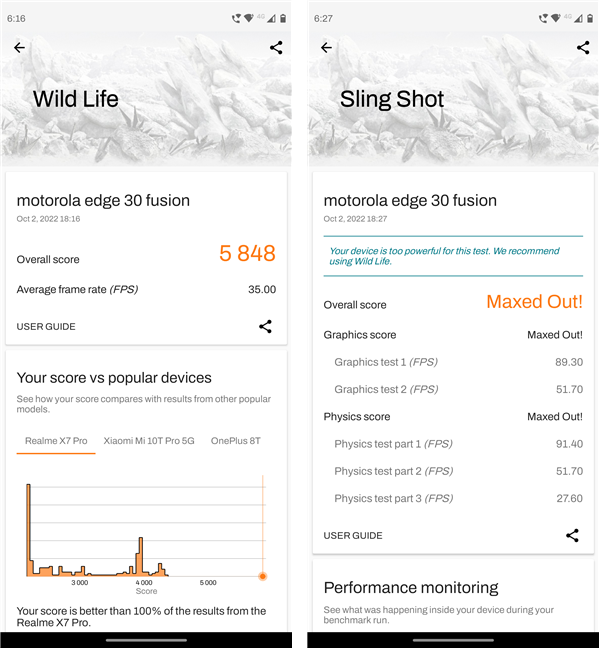 Motorola Edge 30 Fusion benchmark results in 3DMark
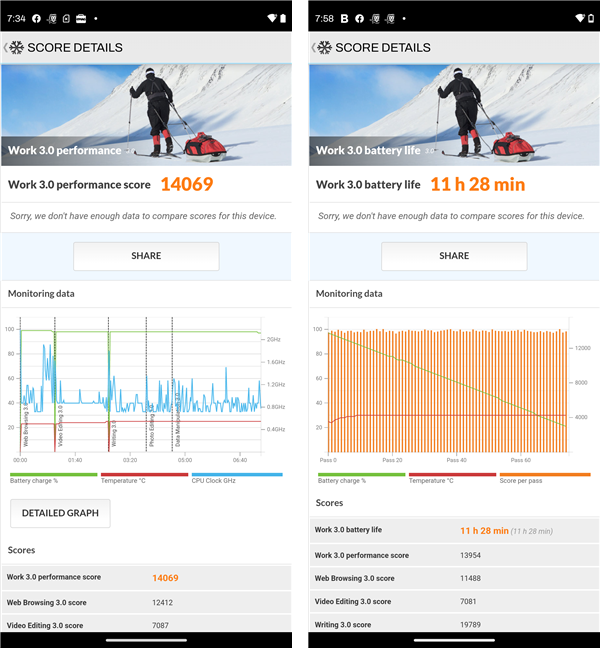
Next, I moved on to PCMark for Android. This app can measure the performance and battery life in real-world scenarios when using your smartphone to browse the web, work with Office apps, and so on. The Motorola Edge 30 Fusion scored 14069 points in the Work 3.0 performance test and could run the Work 3.0 battery life for 11 hours and 28 minutes. Excellent result for performance and above average in terms of battery life.
Motorola Edge 30 Fusion benchmark results in 3DMark
Next, I moved on to PCMark for Android. This app can measure the performance and battery life in real-world scenarios when using your smartphone to browse the web, work with Office apps, and so on. The Motorola Edge 30 Fusion scored 14069 points in the Work 3.0 performance test and could run the Work 3.0 battery life for 11 hours and 28 minutes. Excellent result for performance and above average in terms of battery life.
 Motorola Edge 30 Fusion benchmark results in PCMark
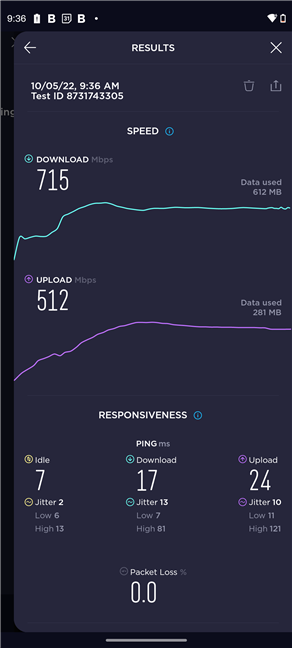
In the end, I wanted to see how fast the Motorola Edge 30 Fusion is when transferring data over Wi-Fi. I own a 1 Gbps internet connection, but it only gets to about 750 Mbps in reality, both on Wi-Fi 6 and on Ethernet. I’ve tested the Motorola Edge 30 Fusion using Ookla’s Speedtest, and the result was a download speed of 715 Mbps and a 512 Mbps upload speed. These are outstanding results!
Motorola Edge 30 Fusion benchmark results in PCMark
In the end, I wanted to see how fast the Motorola Edge 30 Fusion is when transferring data over Wi-Fi. I own a 1 Gbps internet connection, but it only gets to about 750 Mbps in reality, both on Wi-Fi 6 and on Ethernet. I’ve tested the Motorola Edge 30 Fusion using Ookla’s Speedtest, and the result was a download speed of 715 Mbps and a 512 Mbps upload speed. These are outstanding results!
 Motorola Edge 30 Fusion benchmark result in Speedtest
The Motorola Edge 30 Fusion is one of the best Android smartphones you can get today. Although positioned as a mid-ranger, the truth is that it offers performance similar to or not far behind many flagships.
Motorola Edge 30 Fusion benchmark result in Speedtest
The Motorola Edge 30 Fusion is one of the best Android smartphones you can get today. Although positioned as a mid-ranger, the truth is that it offers performance similar to or not far behind many flagships.
Motorola Edge 30 Fusion: Who is it good for?
This smartphone is an excellent choice if you:- Want an elegant smartphone with a beautiful screen
- Need a powerful Android smartphone that can run any app or game flawlessly
- Are on the lookout for a smartphone that can charge extremely fast
Pros and cons
Here’s what I like about the Motorola Edge 30 Fusion:
- Beautiful pOLED screen with high brightness and refresh rate (144 Hz)
- Classy looks, stylish body, and elegant color options
- Very fast charging via the bundled Motorola 68W TurboPower charger
- A user interface that’s close to the stock Android and no bloatware
- Competent cameras able to capture good-quality photos and high-resolution videos
- IP52 protection against dust and dripping water
- You can’t charge it wirelessly
- It has no telephoto camera
Verdict
Regardless of how you look at it, the Motorola Edge 30 Fusion is an outstanding Android smartphone. For a reasonable price, you get an elegant device with a beautiful screen, good cameras, and an excellent chipset that features a powerful processor and a capable graphics unit. Not to mention how fast you can charge it; few can measure against it. I believe that you should definitely take a look at the Motorola Edge 30 Fusion if you’re looking for a balanced Android device that can do it all while still looking good. 🙂Unboxing the Motorola Edge 30 Fusion
The Motorola Edge 30 Fusion is shipped in a robust box made of thick recycled cardboard. On the top cover, you get to see the Motorola logo and the name of the Android smartphone inside the box. Then, on the side, Motorola proudly announces to you that the packaging is eco-friendly. That’s a nice thing to see and a practice more manufacturers should adhere to. On a side sticker and on the bottom of the box, you find more details about the smartphone.Design and build quality
The Motorola Edge 30 Fusion is an elegant, stylish Android smartphone. Although I wouldn’t call it a compact phone, it’s not too big either. Measuring 158.48 mm (6.24 inches) in length, 71.99 mm (2.83 inches) in width, and 7.45 mm (0.29 inches) in thickness, the Edge 30 Fusion should be a good fit for anyone except people with very small hands or short fingers. Furthermore, it's also a lightweight device at 175 grams (5.93 oz).Hardware specifications
The Motorola Edge 30 Fusion is powered by a powerful Qualcomm SM9350 Snapdragon 888+ 5G chipset. This SoC (System on a Chip) is built on a 5-nanometer manufacturing process and features a powerful octa-core processor (a Cortex-X1 core running at 2.99 GHz, three Cortex-A78 cores running at 2.42 GHz, and four Cortex-A55 cores running at 1.80 GHz) together with an Adreno 660 graphics unit.- A main 50 MP (wide) camera with an aperture of f/1.8, 1.0 µm pixels, multi-directional phase-detection autofocus (PDAF), and OIS (Optical Image Stabilization).
- A secondary (ultrawide) 13 MP camera with an f/2.2 aperture, a 120 degrees field of view, 1.12 µm pixels, and autofocus.
- A 2 MP depth camera with an aperture of f/2.4.
- A front selfie (wide) camera with 32 megapixels, an aperture of f/2.5, 0.8 µm pixels, and autofocus.
The smartphone experience on the Motorola Edge 30 Fusion
Using the Motorola Edge 30 Fusion proved to be an excellent experience for me, personally. Starting from the basics, this is a really good phone: all the calls I initiated or received were of top-notch quality. The signal reception was good, and the voices of those with whom I was talking were clear and loud. I didn’t have any complaints from them either. I have only good things to say about the screen. It’s an exquisite piece of technology, and everything on it looks beautiful. As far as I can tell, the pOLED display used by the Motorola Edge 30 Fusion is one of the best I’ve seen, and it’s comparable to the ones found on even the most expensive flagships. The billion-plus colors are vivid, and the contrast is excellent in any condition. Furthermore, the maximum brightness can reach a very high level, making the screen visible even in direct sunlight. Oh, and if you’re watching videos and movies on your smartphone, you should know that the panel used by the Edge 30 Fusion supports HDR10+, making everything look nicer but also more realistic.The camera experience on the Motorola Edge 30 Fusion
NOTE: For optimization purposes, the pictures in this review are resized. If you want to see the full-sized original photos and videos I shot with the Motorola Edge 30 Fusion, open this gallery: The Camera app offered by Motorola is well organized and easy to use. Just like on all other Motorola phones, the app gives you access to all the standard shooting modes such as HDR, Portrait, Macro, Night vision, Panorama, or Pro (including settings for white balance, ISO mode, shutter speed, etc.). You can swiftly switch between all the common shooting modes by swiping on the screen, and you can also access the more specialized ones by going to the More section. Furthermore, you can further adjust each shooting mode by dragging a small line-shaped button on the viewfinder.Android 12 and bundled apps
Motorola Edge 30 Fusion comes with Android 12 and a user interface that’s largely unchanged from the standard set by Google for this operating system. There are just a few, let’s say significant, changes to the default Android interface. They include a series of personalized themes and widgets, some new fonts, and a couple of additional icon shapes. In short, if you want something very similar to the stock version of Android, but Google’s Pixel phones are not to your liking, the Motorola Edge 30 Fusion will certainly be. In terms of manufacturer support and updates, Motorola says that it will deliver up to two operating system updates and three years of security updates. That theoretically means that, although the Edge 30 Fusion is shipped with Android 12, it will get Android 13 and Android 14 during its lifetime.- Device Help - gives you hints and tips on how to use the smartphone and helps you fix potential issues you might encounter.
- Games - a gaming hub that lists all your games and allows you to customize some settings while playing, like what notifications you get, whether phone calls are blocked, or what gestures are disabled.
- Interactive wallpapers - gives you access to some dynamic wallpapers created by Motorola.
- Moto - helps you configure and customize your Motorola Edge 30 Fusion.
- Motorola Notifications - useful if you want to subscribe or unsubscribe from Motorola notifications about special offers, news, troubleshooting tips, etc.
- Ready For - a feature of select Motorola Android devices that lets you connect your smartphone to a screen or computer using Wi-Fi. Similar to Samsung DEX, Motorola’s Ready For lets you access and use your smartphone as a desktop PC, stream apps, share files, and so on.
Performance in benchmarks
In this review, we’ve seen how the Motorola Edge 30 Fusion looks, what it’s like using it, and what software it offers. We also got an idea about how powerful it is, but we didn’t yet see exactly how much performance you really get from it. For that, we have benchmarks: The first one I ran was Geekbench, a benchmark that measures the processor's performance both on single-core and multi-core. The Motorola Edge 30 Fusion got impressive results: the Single-Core score was 1136 points, and the Multi-Core one was 1797 points. These numbers are huge, putting the Motorola Edge 30 Fusion on the same step of the ranking ladder as the Samsung Galaxy S22!
Discussion (0)
Comments are closed.