



Huawei has received lots of positive press for its Huawei P20 Pro launch, and many have stated that it is the best smartphone for photography. Alongside the Huawei P20 Pro, the company has launched a cheaper version, named the Huawei P20, with almost identical looks, and hardware, and two rear cameras instead of three. People who cannot afford the more expensive model, but want a great photography experience, will be interested in Huawei P20, and what it has to offer. We tested this smartphone for three weeks, and this is our impression of it:
Huawei P20: Who is it good for?
The Huawei P20 is a great smartphone for:
- Users who want great photography and do not want to pay the premium price of the Huawei P20 Pro
- People who want a beautiful smartphone
- Users who want smartphones with powerful hardware
Pros and cons
These are the positive features of the Huawei P20:
- It offers an excellent experience for photography
- It is a beautiful smartphone with pleasant shape, that is comfortable to hold
- It offers top-notch processing power, that makes all apps and games run smoothly
- The battery life is excellent
- Fast unlocking through face detection and the fingerprint sensor
- It comes with the latest Android 8.1 Oreo installed
- The EMUI 8.1.0 user interface looks good and offers plenty of customization options
There are some weak spots too:
- The display uses an IPS LCD panel, instead of AMOLED
- It offers a lower IP53-rating for moderate dust and light-splash resistance
- The unusual 18.7:9 aspect ratio generates some minor visual artifacts in a few apps and games
- It has a notch on the top of the screen, just like the iPhone X. Luckily, it can be hidden by the software
- It does not have wireless charging
Verdict
The Huawei P20 is a well-rounded smartphone, that offers many of the strengths of its more expensive brother, for a more affordable price. However, competitors with a similar price tend to offer a better display, and water resistance. These two are the most important weaknesses of Huawei P20. If you can live with them, you get to enjoy an excellent camera that takes beautiful shots almost every time, high-end performance, and responsiveness. Couple these strengths with its beautiful looks, and Huawei P20 might be your next favorite smartphone. We definitely enjoyed using it.
Unboxing the Huawei P20
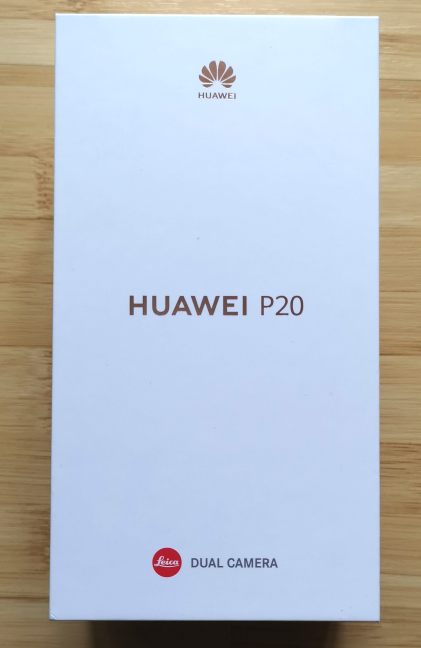
The Huawei P20 smartphone comes in a simple white box, with Huawei's logo on the top, the name of the device in the middle, and with a mention of its Leica dual camera system.
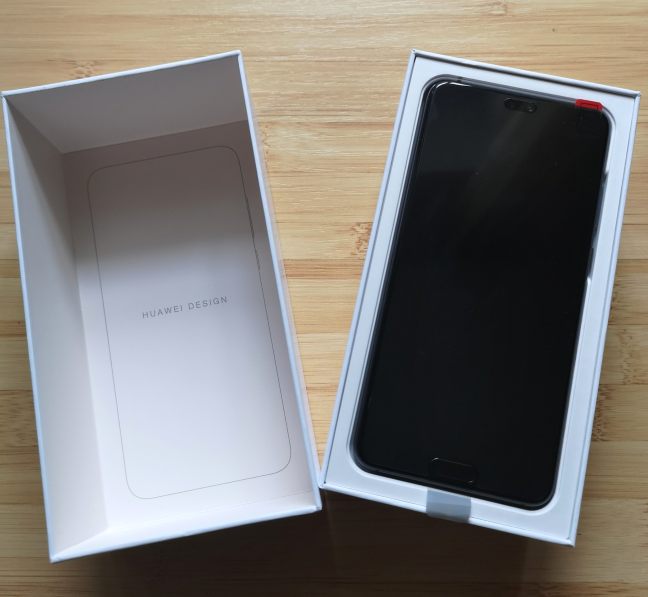
On the back on the sides, are a few stickers with information about who manufactured the device, where, and what is inside the packaging. When you open the box, you immediately see the smartphone.
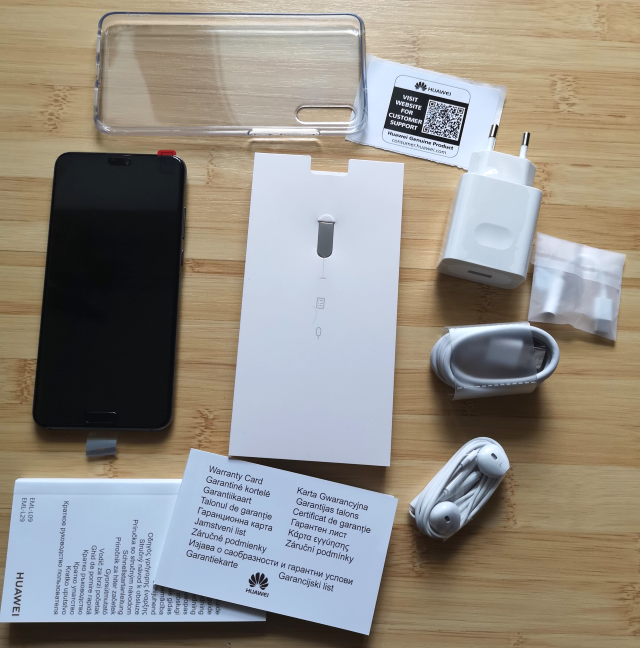
After you unpack everything, you find the following elements: the Huawei P20 smartphone, its charger, a USB to USB Type C cable, a pair of USB Type C headphones, a small USB Type-C to 3.5 mm headphone jack adapter, a small pin for ejecting the SIM tray, a soft silicone case, the warranty and the quick start guide.
If you want to see a video of the whole unboxing experience, watch the YouTube clip below.
The unboxing experience you get from Huawei P20 is a pleasant one, and the packaging used is identical to that of the P20 Pro, including all the accessories you get.
Design and build quality
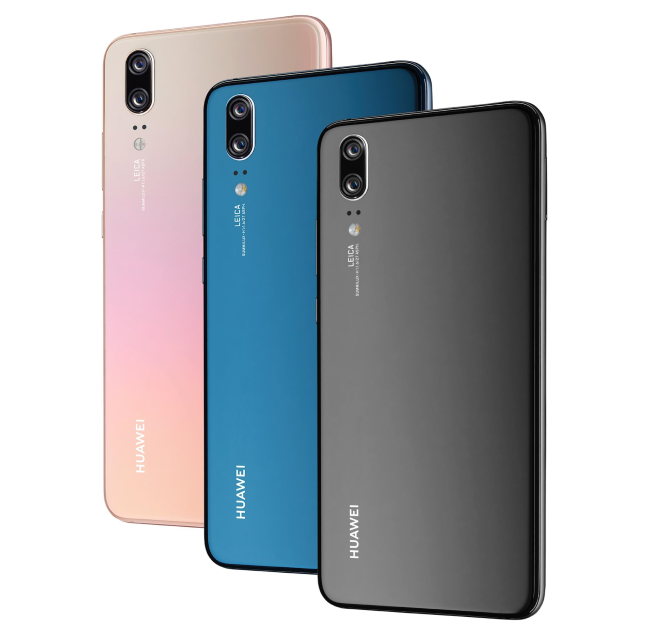
The Huawei P20 is available in three color variants: Black, Midnight Blue, and Pink Gold. Huawei mentions the other two color variants on their website (Twilight and Champagne Gold), but we have not seen them in stores, yet. Luckily, all the colors look great, but we like the midnight blue variant best. It is also the version that we had for testing.
Huawei P20 has a curved glass unibody that is a magnet for fingerprints. Because of that, the back is not detachable, and you cannot easily replace the battery or other components. The design itself is not that different from what you see on other 2018 smartphones, but the unique colors and the glass body make this smartphone stand out.
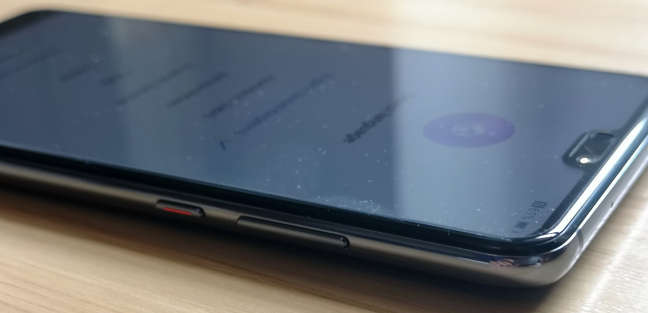
The frames on the sides of the Huawei P20 are made of metal, and they look smooth and polished. However, they are slippery, just like the rest of this smartphone. On the right side, you find the Power button and the Volume rocker. A nice touch is the fact that the Power button has a different color, and a slightly different texture, making it easy to identify both when you look at the smartphone, and when you do not, and you hold it into your hand.
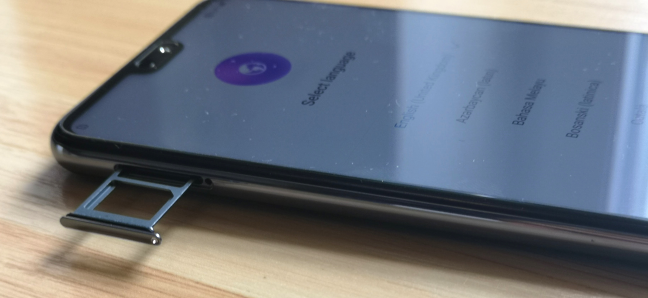
On the left side of the P20, there is the tray for the SIM card, which can be ejected quickly using the pin that is provided with the smartphone.
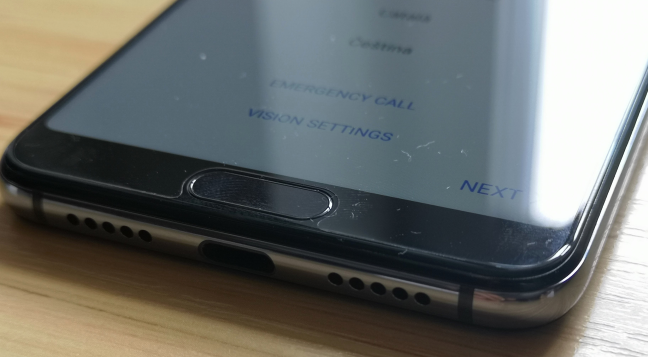
On the bottom of the phone, there is the USB Type C port for charging, and for connecting a pair of headphones, when needed. Near it, you have the speaker. Unfortunately, the audio jack is gone, just like on the Huawei P20 Pro. On the bottom of the screen, you also see the fingerprint sensor, which can also be used for navigation, using gestures, if you want to.
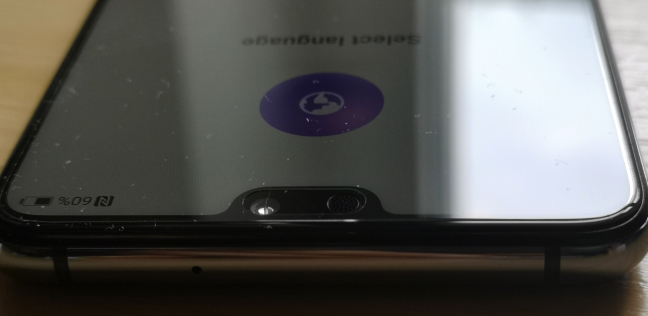
On the top side of the phone, you have the notch, which includes the front selfie camera, sensors for unlocking the smartphone using your face, and a receiver.
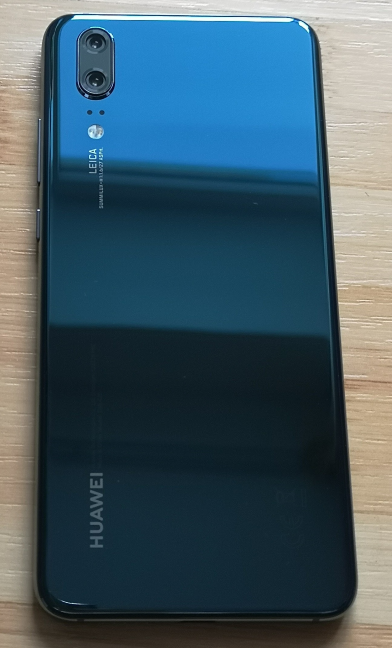
The back of the Huawei P20 is all made of glass. As you can see below, it looks beautiful, and it is also very reflective. On it, there is the Huawei logo, the Leica dual-lens camera system, and its flash.
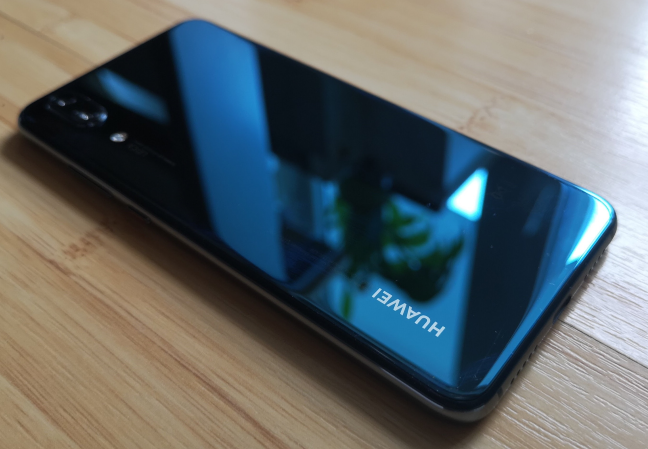
Design-wise, Huawei P20 looks great, and it is almost identical to its more expensive brother, the P20 Pro. However, it does have a few downsides, like its lower IP53-rating for moderate dust and light-splash resistance. Also, the glass used is hardened glass, but not Gorilla Glass. This also lowers the durability of this smartphone. Therefore, we recommend that you buy yourself a screen protector and use the cover that Huawei bundles with the P20, or buy yourself a sturdier one.
The design and the looks of the Huawei P20 are spectacular. Huawei's designers did a great job, and all the color variants are beautiful. To deliver a good-looking smartphone, Huawei has sacrificed the durability of this device. The build quality of the Huawei P20 is slightly inferior to that of other smartphones with similar pricing.
Hardware specifications
The hardware of the Huawei P20 is similar to that of the Huawei P20 Pro. For example, the processor is the same octa-core Hisilicon Kirin 970, with four cores running at 2.4 GHz, and another four running at 1.8 GHz. The graphics chip is a Mali-G72 MP12. Huawei P20 has generous storage with a capacity of 128GB, and 4GB of RAM. In contrast, Huawei P20 Pro has 6GB of RAM. Also, both smartphones do not have microSD support, not even in their Dual SIM versions.
The display is inferior to its more expensive brother, being a 5.8-inch screen, with an LTPS IPS LCD panel, 16 million colors, a resolution of 1080 x 2240 pixels, and an unusual aspect ratio of 18.7:9. The pixel density is of 429 Pixels Per Inch (ppi). The screen-to-body ratio is 80.4%.
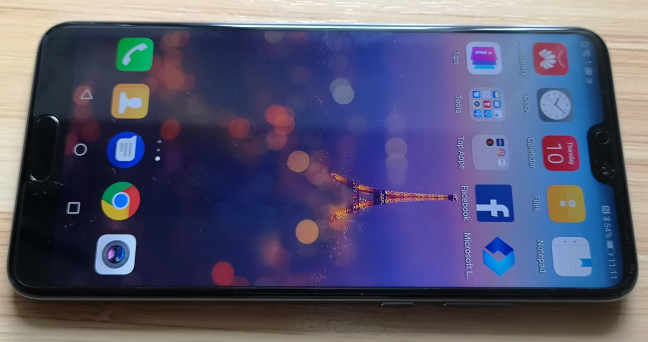
The high point of this smartphone is the camera system. On the back, Huawei P20 has a dual-system camera powered by Leica optics, with 2x lossless zoom, phase detection, and laser autofocus, and LED flash. One of the two cameras has 12 megapixels, it is RGB, and has an aperture of f/1.8. The second camera is monochrome, with 20 megapixels, and has an aperture of f/1.6. The front camera has 24 megapixels, f/2.0 aperture, with fixed focal length.
Huawei P20 comes with a Bluetooth 4.2 chip. Unfortunately, it does not support Bluetooth 5 as other flagships do. It also offers NFC support, and a wireless chip that supports the 802.11a/g/n/ac standards, and a GPS chip. It also has several useful sensors: fingerprint, gyroscope, proximity sensor, compass, color temperature sensor, gravity sensor, ambient light sensor, and a hall sensor.
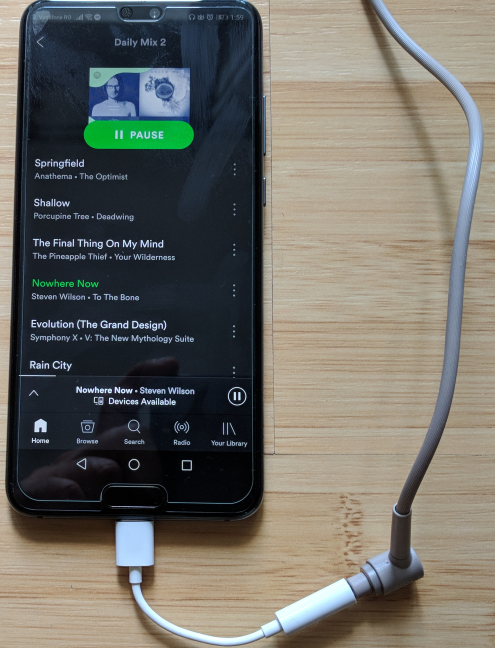
Huawei P20 has no audio jack, but you can still use headphones through the USB Type-C port. A welcome addition is the bundled USB Type-C to 3.5 mm headphone jack adapter, which allows you to connect traditional headphones to your smartphone. The speaker on this smartphone is not stereo, like on the Huawei P20 Pro.
Huawei P20 has a non-removable Li-Po 3400 mAh battery, which provides plenty of juice. The smartphone and it lacks an infrared port. Therefore, you cannot use it to remote control other devices (like TVs), as you can with Huawei P20 Pro. Also, there is no wireless charging available on this smartphone. Luckily, Huawei P20 offers fast charging with the help of its SuperCharge adapter. If you want to read the official specifications of this smartphone, go to this page: Huawei P20 Specifications.
If you would like to know more about the smartphone experience offered by the Huawei P20, its cameras, bundled apps, and performance in benchmarks, read the second page of this review.
The smartphone experience on the Huawei P20
Huawei P20 performs very well on all kinds of tasks: productivity, browsing the web, social media, multimedia content, as well as gaming. Its high-end hardware delivers at all times and never lets you disappointed. Apps start fast, and the user interface is fast and responsive.
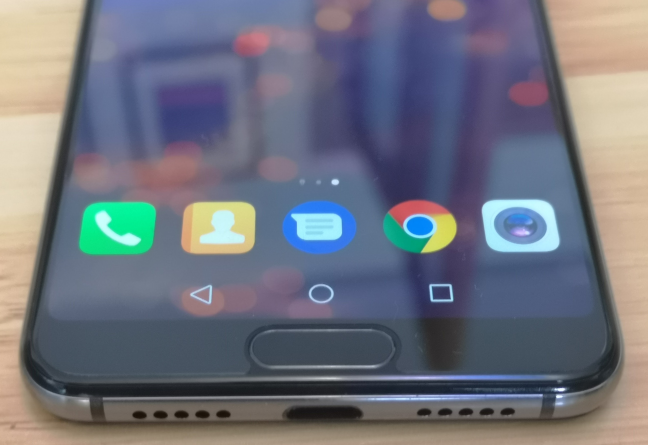
Huawei P20 weighs 5.8 ounces, and 165 grams, almost the same as the Samsung Galaxy S9. It is pleasant to hold in your hands. The lateral buttons, as well as the fingerprint sensor, are easy to reach with one hand. The face detection works great during the day, and it unlocks the smartphone in just one second. However, during the night, it is not as effective, and you need to use the fingerprint sensor for fast unlocking.
The only less ideal aspect is the display of the Huawei P20. It uses an IPS LCD panel, and this translates into average outdoors visibility (when compared to other flagships), decent contrast ratios, and blacks that have a light bleed. Another minor downside is the unusual 18.7:9 aspect ratio coupled with the notch on the top side of the screen, which generates some unnecessary black spaces, in some apps. However, you can manually switch apps to use the full screen.
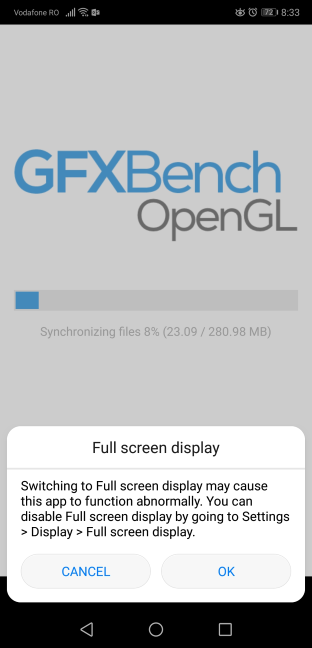
Most times, this switch works well, but in some apps, it leads to some minor visual artifacts or ugly black margins. Games tend to suffer more from the issue, than Android apps that most people use. What we did like about the screen of the Huawei P20, is the color accuracy, which is excellent for an LCD panel.

Audio quality is excellent when calling people on this smartphone. We had no issues with the signal strength, no matter where we used the Huawei P20. We could always clearly hear the people we called, and they heard us well too. One minor issue is that the speaker on the Huawei P20 can be too loud if you leave it close to its maximum volume, and everyone in the same room with you can hear that the person you are calling is saying back to you.
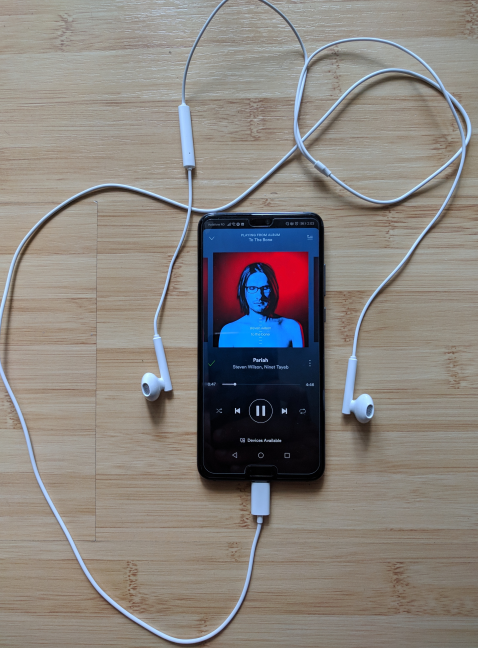
Huawei brags about its Dolby Atmos sound system on the Huawei P20, and its intelligent sound equalizer. We found that, when paired with the headset that is bundled with the smartphone, it gave good results, without being the best. You have an enjoyable experience, with clear sounds, and no distortions, both when listening to music and when watching movies. However, do not expect to be amazed, especially if you are an audiophile. The external mono speaker performs well too, with little distortions even on maximum volume, but that's because it has average loudness. Other flagship smartphones tend to come with stereo speakers which deliver superior loudness and slightly better sound quality.
The autonomy of the Huawei P20 is as you expect from a flagship. This smartphone lasts most times for a full day, even if you take lots of pictures or perform other activities that demand more energy than casual tasks. When the going gets tough, you will appreciate its Ultra battery saver, which is very aggressive in killing non-essential apps and services, so that your smartphone's battery lasts as long as possible.
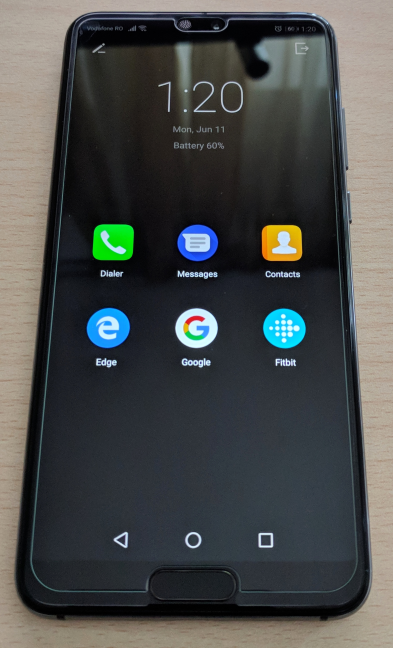
The Huawei P20 is a smartphone with excellent performance. The phone calls you make are of high quality regardless of the network signal strength, and its hardware is more than enough to power any activities, from browsing to social media to gaming or productivity. The only minor downside is that some apps and games need updating, to better support the screen's 18.7:9 aspect ratio, as well as the notch. Also, the display uses an IPS LCD panel, which is inferior to other flagships that use AMOLED, with superior contrast, outdoor visibility, and clear blacks.
The camera experience on the Huawei P20
The dual camera system on the back of the smartphone can take pictures with the following characteristics:
- 20 megapixels, and a resolution of 5120 x 3840 pixels
- 12 megapixels, and a resolution of 3968 x 2976 pixels
- 9 megapixels, and a resolution of 2976 x 2976 pixels
- 8 megapixels, and a resolution of 3968 x 1984 pixels
The autofocus is fast and reliable, and the Master AI does a great job of detecting and configuring the scene that you are photographing. Configuring the cameras and the whole experience of taking pictures is fast, fluid, and satisfying.
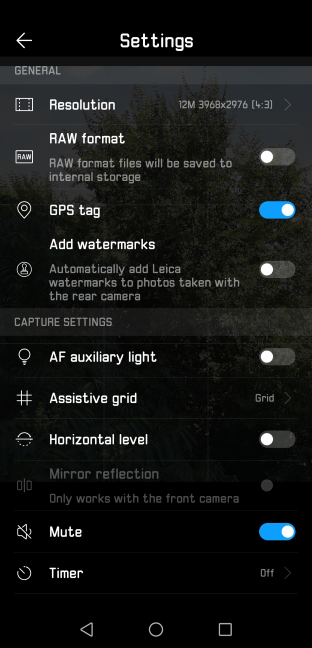
If you use the Pro mode, you can even save pictures using the RAW format, and set parameters like the ISO (up to 3200), the shutter speed (from 1/4000 to 30 seconds), exposure compensation, the focus mode, and the white balance. However, most users will stick to the automated mods of taking pictures which deliver excellent results for casual photographers.
The front camera does not allow users to change the resolution or use the RAW format. However, it does allow them to turn on an Artistic Bokeh mode or beautification effects (they are turned off by default).
The pictures you take with the Huawei P20 look great in almost all situations. The colors are vivid, the images high contrast, and the dynamic range is excellent. We enjoyed taking close-ups and shooting nature landscapes. There is no noticeable noise in most pictures, and the bokeh effect for portraits delivers pleasing results. Huawei P20 offers excellent results in low-light environments also. There is a bit of noise in low-light pictures, but it is nowhere near to what other smartphones give you in similar conditions.
To get a better idea of the camera experience, browse the gallery below, which includes pictures taken with Huawei P20. We took various shots, in different lighting conditions, and also a few selfies:
Huawei P20 can shoot videos in up to 4K UHD resolution at 3840 x 2160 pixels but without optical image stabilization. If you want this feature to work though, you must use a Full HD resolution of 1080p, and 30 frames per second (at 60 fps you still do not get image stabilization). The recorded audio is stereo with a bitrate of 192kbps.
A new feature is that the Huawei P20 can shoot 720p slow-mo videos at 960fps, which leads to some interesting results, in some situations. You can see a demo in the video below:
The image stabilization works well, and the colors you get in your videos are pleasant, with good color reproduction and white balance. However, the 2x zoom shows its limitations. In the sample video below, we recorded a beautiful panorama. Towards the end of the clip, we zoomed in at long range. This resulted in a blurry and grainy image. See for yourself:
We also filmed moving subjects, like this wildlife clip in a windy day, featuring two frogs during their mating season. The colors and the dynamic range were good, but some frames were a bit noisy. See below for details:
Photography is a strength of Huawei P20, as it captures images with a high level of detail and low noise levels, in all lighting conditions. Recording video is also a pleasant experience that delivers good results, but not as consistently as when taking pictures.
Android 8.1 Oreo, EMUI 8.1.0 and bundled apps
The Huawei P20 has the latest Android operating system from Google: Android 8.1.0 Oreo. Their EMUI user interface has also reached version 8.1.0, and compared to previous versions, it is more beautiful and easy to use than ever. One positive feature is that you can disable the notch on the top side of the screen, where the front camera resides, and mask it with a black status bar. However, because the screen uses an IPS LCD display, instead of an AMOLED display, the blacks are not as clear, and the masking is less elegant than on the Huawei P20 Pro.
EMUI 8.1.0 also lets you change the way the buttons from the navigation bar are displayed and used. For example, you can set it so that you see the Home, Back and Recent apps buttons always displayed on the bottom of the screen. Alternatively, you can hide them and use the fingerprint reader instead, by making different gestures on it, like tap and hold to go Home, tap once to go Back and swipe to show the Recent apps that you have used.
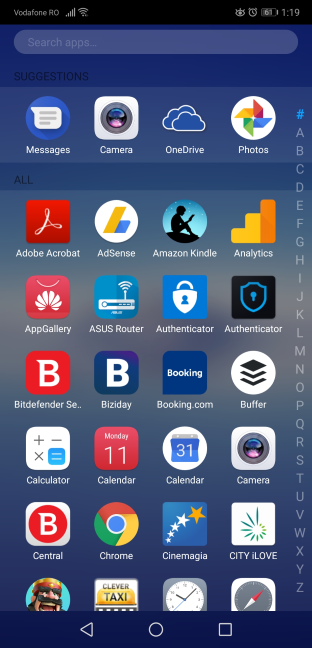
One downside that we do not like about the EMUI 8.1.0 user interface is the fact that it does not allow users to save screenshots using the PNG format. You have to install a third-party app for taking screenshots using this format.
Huawei P20 comes with many pre-installed apps. Luckily, many of them are useful:
- AppGallery - is Huawei's Play Store. You have to connect to your Huawei account (or create one first), and then you can access a curated store of apps recommended by Huawei.
- Backup - helps you back up personal data such as contacts, messages, call logs, apps and also multimedia content. You can save this data to your computer or on a USB storage device.
- Booking.com - the official app for the popular travel service. If you are not interested in using it, you can uninstall it.
- Clock - an app that shows you the time and also gives you access to setting alarms, a stopwatch, and a timer.
- Calculator - a simple and easy to use a calculator.
- Calendar - lets you manage your time and schedule events. However, we prefer other apps for this task.
- Compass - a simple compass app that tells you the cardinal points.
- eBay - the app for the popular online marketplace.
- Email - an email app that lets you connect email accounts from Gmail, Hotmail, Yahoo, Exchange or other similar services.
- Facebook - the official app of the Facebook social network. If you do not want it, you can uninstall it.
- Files - your primary file manager for Android. It is easy to use and useful.
- Flashlight - a flashlight that can be useful at times.
- Gallery - this is Huawei's reinterpretation of the Google Photos app, which is also bundled with your smartphone. Even though it is a well-built app, we prefer Google Photos.
- HiCare - a support app that provides you with customer care services. You can use it to find information such as the nearest service center, read the warranty policy, check your warranty status, read the manuals and so on.
- Health - provides information about health activities such as the steps you have taken or the calories you have burned.
- Mirror - while a mirror is not always at hand, your smartphone is, and you can use it to see how you look.
- Music - a simple music player.
- Netflix - a popular movie-streaming app and service.
- Notepad - a simple note-taking app.
- Phone Clone - lets you move data such as contacts, call log, messages, calendar events, Wi-Fi, multimedia files, app data, browser and content owned by you, from an old device to your new smartphone, via Wi-Fi.
- Phone Manager - cleans your smartphone of junk files, cache, and malware, and shows details about the mobile data you used, the app permissions you gave and so on. It is worth mentioning that Avast powers the antivirus.
- Recorder - a basic voice recorder that can be useful when you need to make an audio recording.
- Themes - a portal for discovering and installing themes and wallpapers. It works only if you log in with a Huawei ID.
- Tips - shows you tips on how to get the most out of your new smartphone.
- Translator - is an app developed by Microsoft that lets you translate voice and text in real-time.
- Video - a movie player for viewing the movies that are stored on your smartphone.
- Wallet - with it you can store credit or debit cards details and use them to make purchases from your smartphone.
- Weather - gives you the weather forecast for your location and the places you choose.
Besides all the above apps, Huawei P20 also comes with the standard apps from Google: Google, Gmail. Maps, YouTube, Drive, Play Music, Duo, Photos, Docs, Sheets, Slides, and Chrome.
We like that the Huawei P20 uses the latest version of Android, and we enjoy the new version of EMUI too. Huawei invested effort in making it more beautiful and customizable than its previous versions. Also, with a few exceptions, most of the bundled apps are useful, so you will probably not uninstall or disable them.
Performance in benchmarks
The hardware on inside the Huawei P20 is almost identical to that of the Huawei P20 Pro. Therefore, it should deliver very similar performance, including in benchmarks. To test whether this is true, we ran some of the most common benchmark apps for Android:
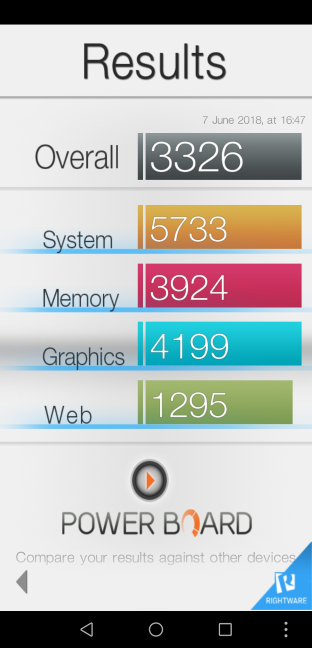
First, we ran the Basemark OS Platform Benchmark, an all-in-one benchmarking tool for measuring the average performance of Android smartphones and tablets. Huawei P20 has had an overall score of 3326 points, which is almost identical to what you get with a Samsung Galaxy S9 Plus, and the same as on the Huawei P20 Pro. You can also see individual scores for working with the memory, the graphics chip or the web, in the screenshot below.
Next, we used Geekbench 4 to see how well Huawei P20 uses its processor cores. The single-core test is relevant because some apps do not know how to take advantage of a multicore processor, and some games also need high single core speed to work well. Huawei P20 had a score of 1889 points. You can see that this score is somewhere between that of a Samsung Galaxy S8 and a Google Pixel 2.
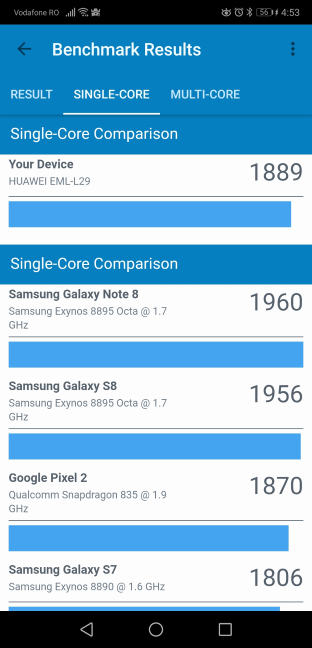
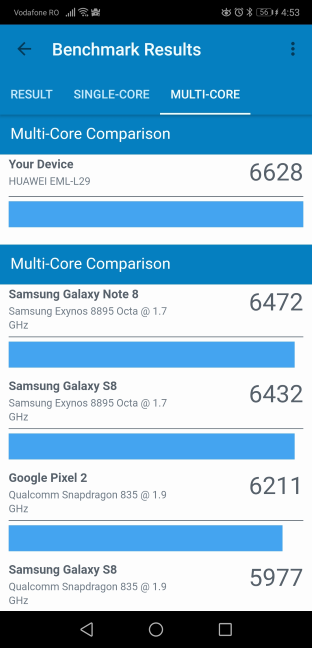
The multi-core test revealed a score of 6628 points. This test set assesses the processor's speed when running multiple tasks simultaneously, and using multiple cores. You can see a comparison between Huawei P20 and other smartphones in the screenshot below. This time, its score was higher than that of Samsung Galaxy S8 and Google Pixel 2.
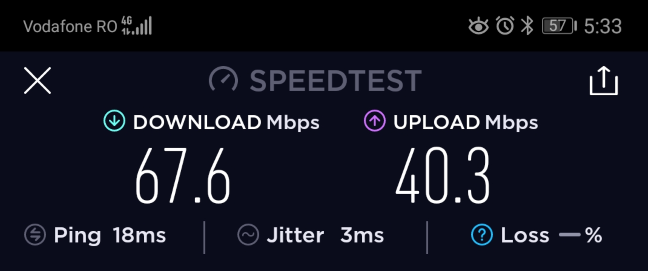
Huawei P20 works well with 4G LTE mobile data connections, so we also measured its performance in this area too. We used Speedtest, an app which tests how fast your internet connection is. The results were excellent and similar to what you get with other high-end smartphones in the same area.
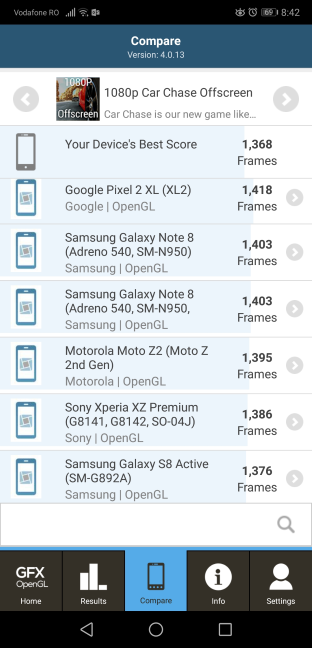
We then ran some gaming benchmarks, to see how good the Huawei P20 is in games. We used GFXBench GL Benchmark. We only took into consideration the results measured in the 1080p Car Chase Offscreen, 1080p Manhattan 3.1 Offscreen and 1080p T-Rex Offscreen tests. We choose only the 1080p tests because their resolution is standardized at 1080p and the results can be compared with other smartphones, even if their screen resolutions differ.
In the 1080p Car Chase Offscreen test, Huawei P20 rendered 1368 frames. This is a good result for users who are interested in gaming on their smartphone, even though other flagships can deliver even higher scores in this test.
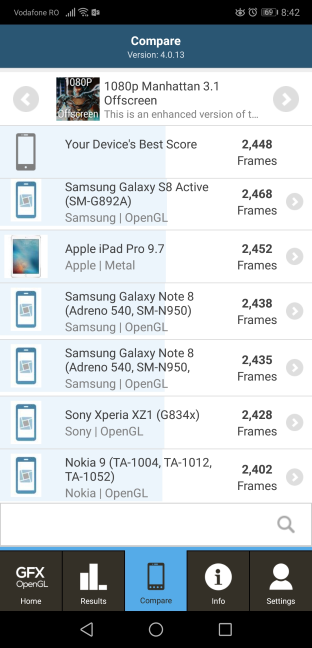
In the second gaming test that we ran, which was 1080p Manhattan 3.1 Offscreen, the Huawei P20 managed to render 2448 frames. You can see how it compares to other smartphones in the screenshot below.
The third gaming test that we ran, 1080p T-Rex Offscreen, showed that the Huawei P20 fares well in older games with fewer visual details, too. It managed to display 5808 frames, which similar to what you get on a Samsung Galaxy S8.
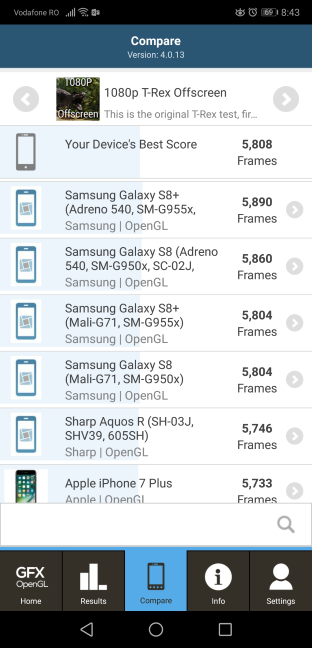
We conclude that if you want an Android device for gaming, Huawei P20 is a good choice that can run anything at the maxed graphical quality and high framerates. However, other flagships might perform slightly better.
For the final test, we used PCMark's Work 2.0 battery life test to measure the autonomy of the battery when running normal daily activities such as browsing the web, editing documents and photos. Huawei P20 managed to last for more than 10 hours in these tests. It is an excellent result, even when compared to other flagships. For example, in this benchmark, the Samsung Galaxy S9 Plus lasts a bit more than 8 hours.
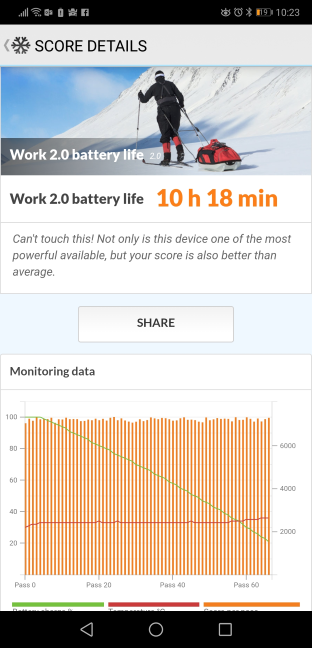
Huawei P20 delivers excellent performance, worthy of an Android flagship. The only area where it is slightly behind the competition is its performance in gaming.
Do you like the Huawei P20?
As you have seen, Huawei P20 is a high-end smartphone, with excellent performance, and a great camera system. There are a few minor quibbles too, but overall Huawei has done an excellent job. Before closing this review, tell us your opinion about this smartphone and whether you consider it worth buying or not. Comment below and let's discuss.
Discussion (0)
Comments are closed.