



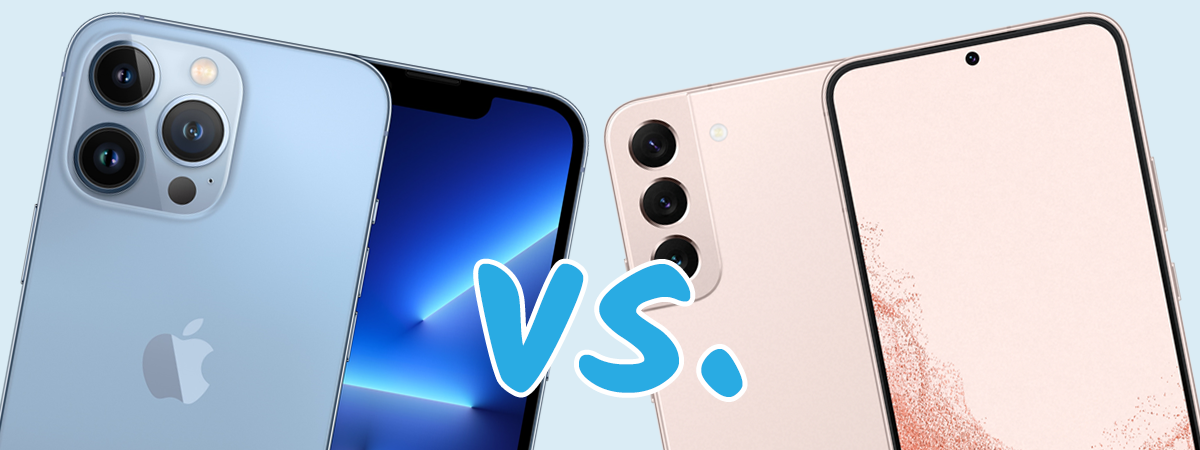
Which are better: iPhones or Android smartphones? The debate never ends, and most people choose to be either iOS or Android fans, no matter what. I’ve owned several iPhones and at least ten Android smartphones in the last decade, and I’m not even counting the ones I review regularly for my job. While I will try not to pick a winner and a loser in this article, here are the main differences between iPhones and Android smartphones that I noticed:
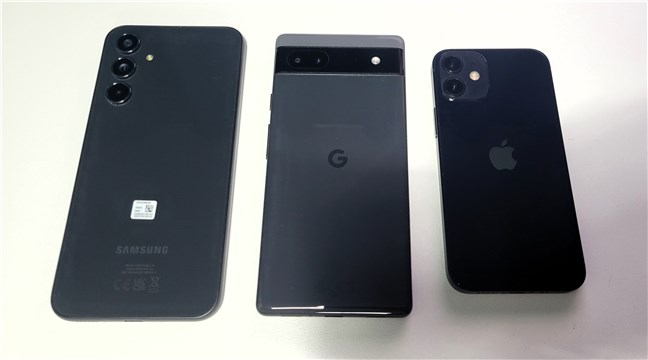
 For each iPhone model, there are more than a hundred Android phones launched each year
Furthermore, since Apple is not interested in competing in the entry-level market, if you want a brand-new smartphone but can’t afford the 429 USD for an iPhone SE (2022), your options are limited to Android smartphones only. Don’t worry, though. Over 300 Android models below 400 USD were launched in 2023 alone, so there’s a large pool to choose from.
Regarding actual device design, Android smartphones are starting to follow the same pattern: a volume rocker, a power button, and that’s it. Only some enthusiast smartphones have additional buttons, like a camera shutter button. iPhones are even more strict: after removing the Home button, every iPhone has followed the same recipe: a Power button (or Side button), a volume rocker, and a rather vestigial Silent switch.
But while the iPhone buttons rarely change position from generation to generation, there’s more variety in terms of button positioning and size on Android phones, especially since some of them use the Power button as a fingerprint reader.
For each iPhone model, there are more than a hundred Android phones launched each year
Furthermore, since Apple is not interested in competing in the entry-level market, if you want a brand-new smartphone but can’t afford the 429 USD for an iPhone SE (2022), your options are limited to Android smartphones only. Don’t worry, though. Over 300 Android models below 400 USD were launched in 2023 alone, so there’s a large pool to choose from.
Regarding actual device design, Android smartphones are starting to follow the same pattern: a volume rocker, a power button, and that’s it. Only some enthusiast smartphones have additional buttons, like a camera shutter button. iPhones are even more strict: after removing the Home button, every iPhone has followed the same recipe: a Power button (or Side button), a volume rocker, and a rather vestigial Silent switch.
But while the iPhone buttons rarely change position from generation to generation, there’s more variety in terms of button positioning and size on Android phones, especially since some of them use the Power button as a fingerprint reader.
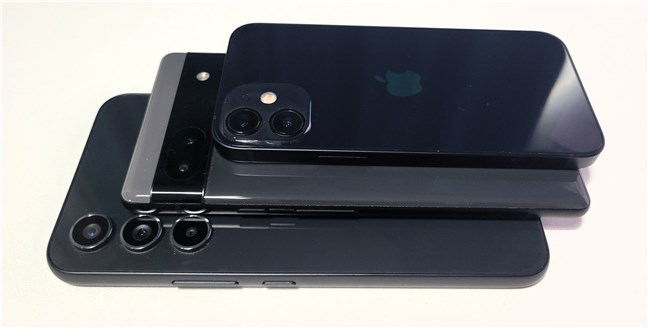
 Button position varies more on Android phones
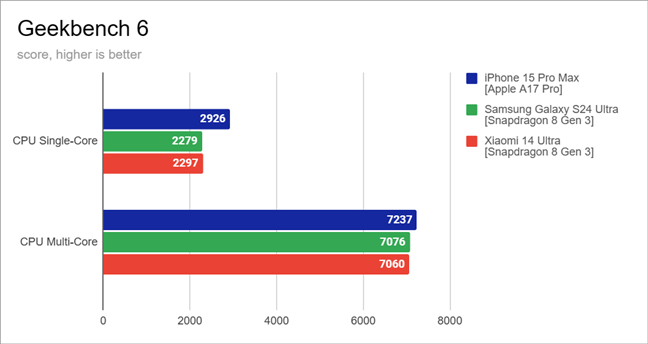
 Geekbench scores for iPhone 15 Pro Max, Samsung Galaxy S24 Ultra, and Xiaomi 14 Ultra
This is somewhat offset by the fact that iPhones have lower-capacity batteries. This was especially true before the iPhone 13 series. For example, the iPhone 12 had a 2815 mAh battery, compared to the 4000 mAh of the Samsung Galaxy S21. The trend is reversing, though. While many users complained about the iPhone’s battery life, this is no longer true with the iPhone 15 range. The smallest battery in this lineup has a capacity of 3349 mAh, while the largest is 4441 mAh, getting closer to the 5000 mAh you find on Android flagships such as the Samsung Galaxy S24 Ultra.
Geekbench scores for iPhone 15 Pro Max, Samsung Galaxy S24 Ultra, and Xiaomi 14 Ultra
This is somewhat offset by the fact that iPhones have lower-capacity batteries. This was especially true before the iPhone 13 series. For example, the iPhone 12 had a 2815 mAh battery, compared to the 4000 mAh of the Samsung Galaxy S21. The trend is reversing, though. While many users complained about the iPhone’s battery life, this is no longer true with the iPhone 15 range. The smallest battery in this lineup has a capacity of 3349 mAh, while the largest is 4441 mAh, getting closer to the 5000 mAh you find on Android flagships such as the Samsung Galaxy S24 Ultra.
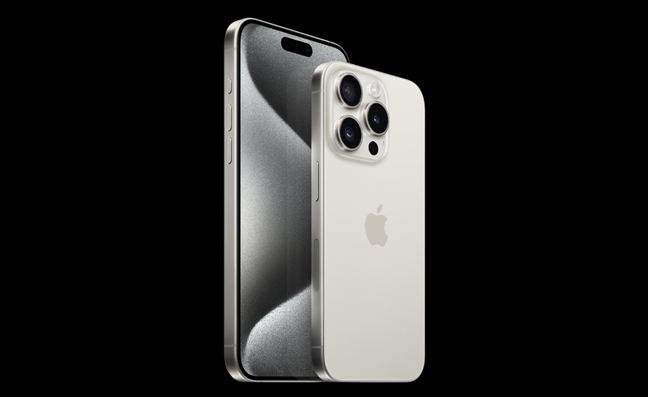
 The iPhone didn't get 120Hz displays until 2021
While iPhone users might feel deprived, this kind of delay also ensures a much better implementation of any particular feature. For example, the first iteration of Samsung’s foldable display was terrible in terms of durability and life expectancy, and only now, with the fifth generation of Galaxy Z Fold, can we say we’re comfortable with the technology. With iPhones, you don’t have to fear that experimental features will ruin your experience.
The iPhone didn't get 120Hz displays until 2021
While iPhone users might feel deprived, this kind of delay also ensures a much better implementation of any particular feature. For example, the first iteration of Samsung’s foldable display was terrible in terms of durability and life expectancy, and only now, with the fifth generation of Galaxy Z Fold, can we say we’re comfortable with the technology. With iPhones, you don’t have to fear that experimental features will ruin your experience.
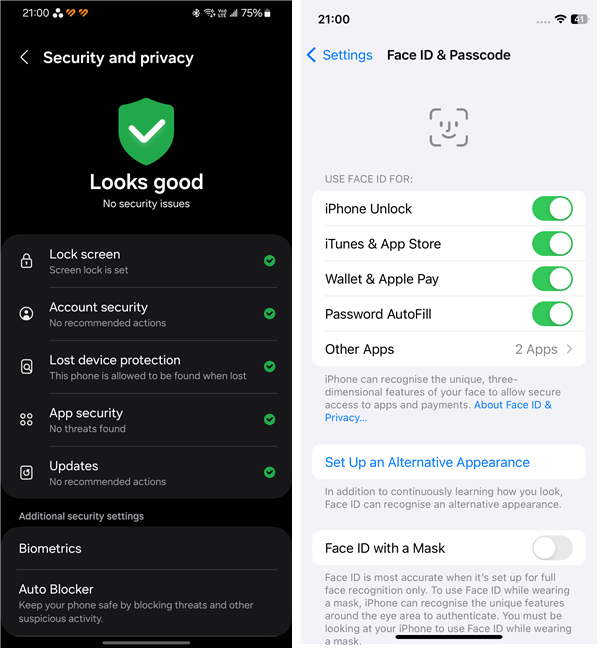
 Security and biometrics on a Samsung Galaxy vs an iPhone
Coming from an Android device, the lack of a fingerprint reader might seem odd at first, but once you experience and get used to the brilliant implementation of face recognition on iPhones, you’ll most likely never feel like going back to fingerprint authentication.
Security and biometrics on a Samsung Galaxy vs an iPhone
Coming from an Android device, the lack of a fingerprint reader might seem odd at first, but once you experience and get used to the brilliant implementation of face recognition on iPhones, you’ll most likely never feel like going back to fingerprint authentication.
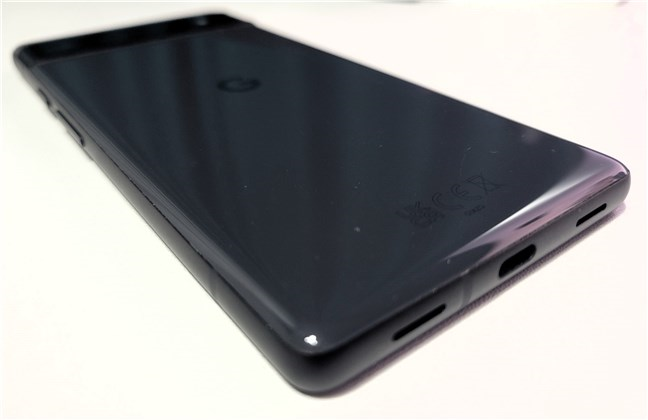
 USB-C is standard on Androids but only recently came to iPhones
As for infrared blasters, iPhones never even bothered to have them in the first place. The reason for this attitude towards connectivity is kind of logical if you read the next difference between Android smartphones and iPhones:
USB-C is standard on Androids but only recently came to iPhones
As for infrared blasters, iPhones never even bothered to have them in the first place. The reason for this attitude towards connectivity is kind of logical if you read the next difference between Android smartphones and iPhones:
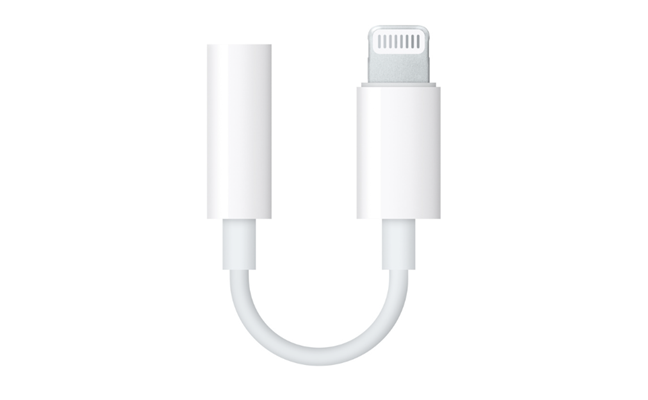
 Original Apple accessories are very expensive
Do you want to buy a third-party charging cable after your cat chewed through the one that came with the device? For Android phones, you can find a USB-C cable literally everywhere for a few bucks, and most of them will be compatible with your device. The proprietary Lightning port only accepts a small selection of third-party cables on iPhones, and USB-C cables for iPhone 15s are expensive. If you buy an uncertified cable, you get a “This Cable or Accessory Is Not Certified” error message. What is the cost of an original Apple cable? 19 USD, thank you very much - again.
Original Apple accessories are very expensive
Do you want to buy a third-party charging cable after your cat chewed through the one that came with the device? For Android phones, you can find a USB-C cable literally everywhere for a few bucks, and most of them will be compatible with your device. The proprietary Lightning port only accepts a small selection of third-party cables on iPhones, and USB-C cables for iPhone 15s are expensive. If you buy an uncertified cable, you get a “This Cable or Accessory Is Not Certified” error message. What is the cost of an original Apple cable? 19 USD, thank you very much - again.
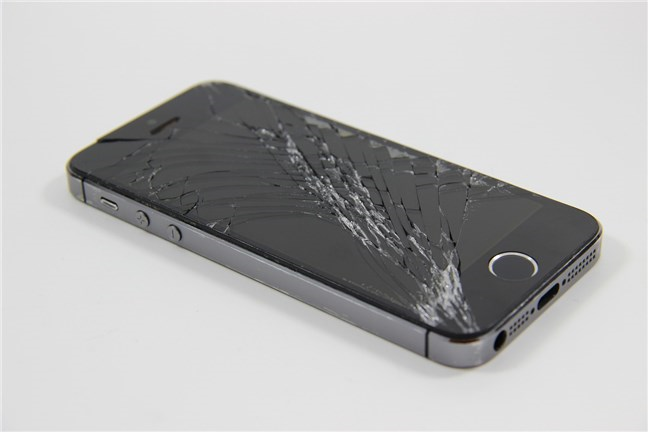
 Broken iPhone? Most of the time, the repair costs are not worth it
The lifespan of iPhones is longer than that of similar Android smartphones, thanks to the higher quality of materials, better engineering, and better software support. However, battery life declines rapidly after 2-3 years of heavy usage, no matter what smartphone you buy. That being said, some Android manufacturers like Google and Samsung are also coming about and started offering up to seven years of updates for their devices.
Broken iPhone? Most of the time, the repair costs are not worth it
The lifespan of iPhones is longer than that of similar Android smartphones, thanks to the higher quality of materials, better engineering, and better software support. However, battery life declines rapidly after 2-3 years of heavy usage, no matter what smartphone you buy. That being said, some Android manufacturers like Google and Samsung are also coming about and started offering up to seven years of updates for their devices.
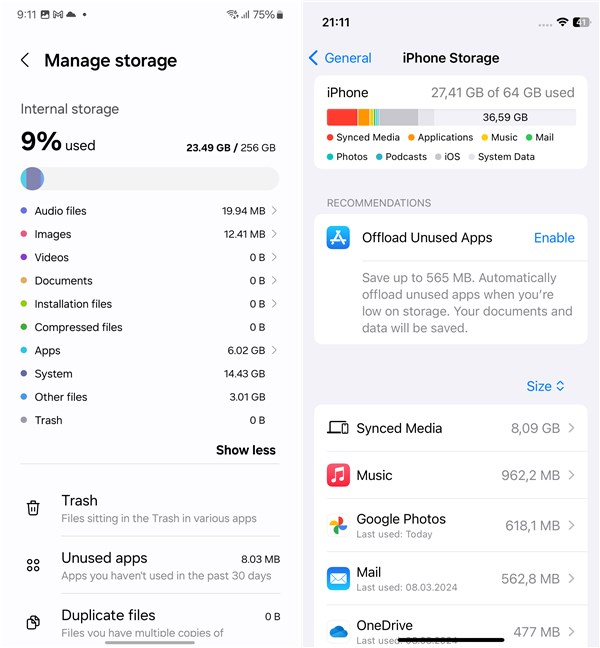 Storage can be expanded on many Android phones, as opposed to iPhones
Of course, you can download your media files to a computer periodically, but as you’ll see in the next section (Software), even that isn’t as straightforward on iPhones.
Storage can be expanded on many Android phones, as opposed to iPhones
Of course, you can download your media files to a computer periodically, but as you’ll see in the next section (Software), even that isn’t as straightforward on iPhones.
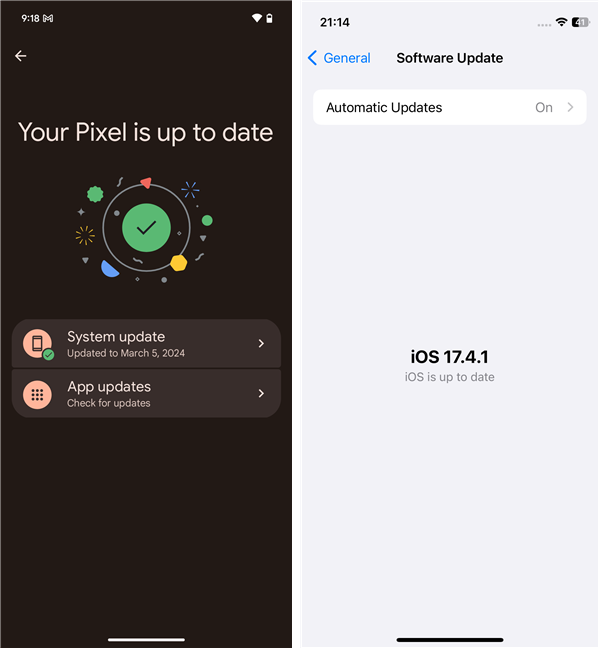 Only Google Pixel smartphones get the latest updates as quickly as the iPhones
The process is simpler and more strict for iPhones: security updates are rarer and are pushed to all supported iPhones simultaneously. As for operating system updates, they are available at the same time for all supported iPhones as well.
Only Google Pixel smartphones get the latest updates as quickly as the iPhones
The process is simpler and more strict for iPhones: security updates are rarer and are pushed to all supported iPhones simultaneously. As for operating system updates, they are available at the same time for all supported iPhones as well.
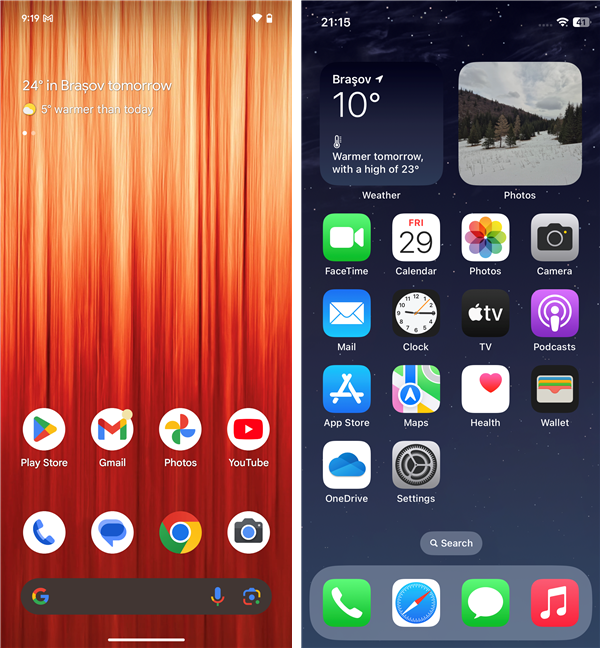 The Home Screen on Android smartphones is much more customizable than the one on iPhones
Sure, there is an App Library, but it’s still clunky and hard to access compared to the simple app drawer present on almost all Android smartphones.
The Home Screen on Android smartphones is much more customizable than the one on iPhones
Sure, there is an App Library, but it’s still clunky and hard to access compared to the simple app drawer present on almost all Android smartphones.
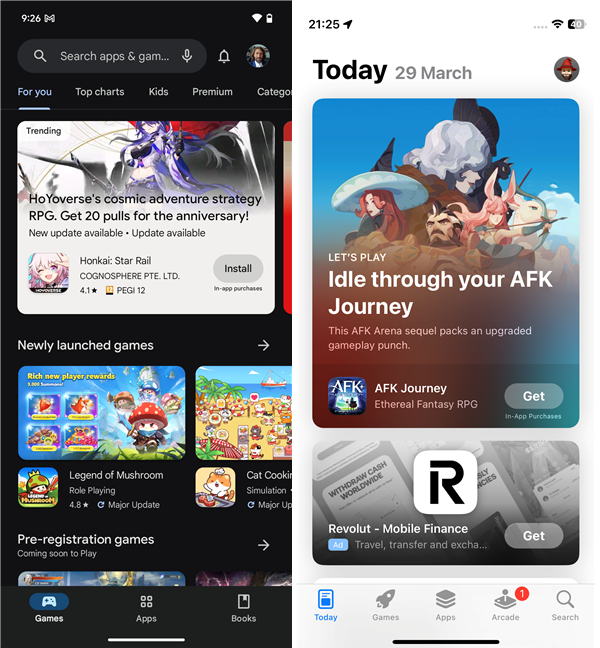 The app stores differ on iPhone vs. Android phones
Lastly, sideloading apps is almost impossible on iPhones, while on Android all you have to do to install an app that’s not in Google Play is to toggle a switch and confirm your installation.
The app stores differ on iPhone vs. Android phones
Lastly, sideloading apps is almost impossible on iPhones, while on Android all you have to do to install an app that’s not in Google Play is to toggle a switch and confirm your installation.
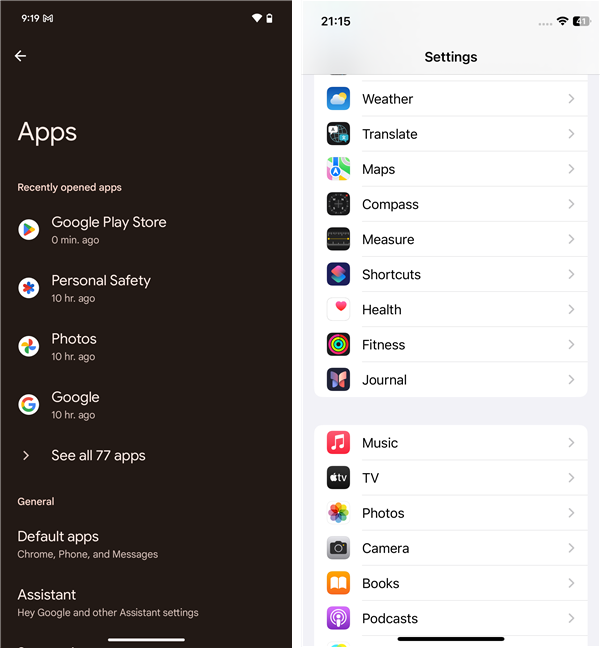 The number of apps bundled with Android smartphones varies a lot depending on the manufacturer
The number and quality of default apps preinstalled on Android smartphones vary wildly, from the minimum required to a huge amount of bloatware. The apps that come with every iPhone, while arguably less refined than their Google counterparts (Chrome versus Safari, Google Maps versus Apple Maps), are still excellent and perfectly integrated with the operating system.
The number of apps bundled with Android smartphones varies a lot depending on the manufacturer
The number and quality of default apps preinstalled on Android smartphones vary wildly, from the minimum required to a huge amount of bloatware. The apps that come with every iPhone, while arguably less refined than their Google counterparts (Chrome versus Safari, Google Maps versus Apple Maps), are still excellent and perfectly integrated with the operating system.
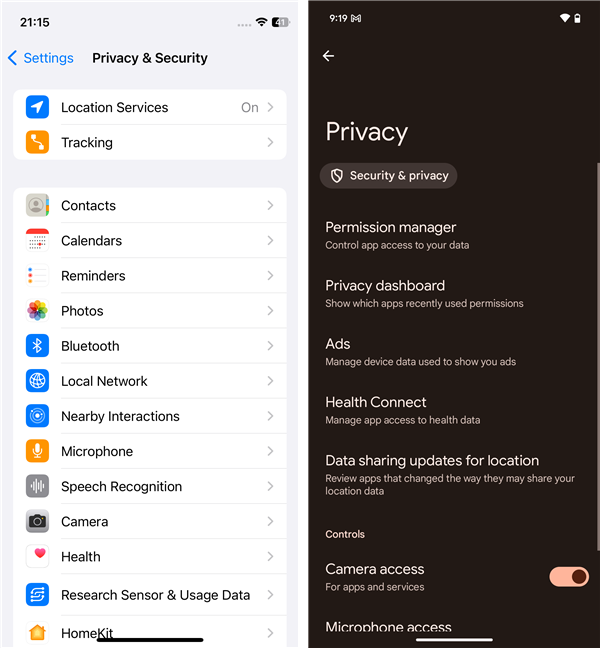 The privacy dashboard on an iPhone vs a Google Pixel
Although the answer may appear obvious, in most cases, you can get similar levels of privacy on both operating systems. The difference is that you’ll have to dig more into the menus on Android devices. Overall, Apple collects less data from users, and the third-party apps present in the App Store have more strict guidelines regarding privacy.
The privacy dashboard on an iPhone vs a Google Pixel
Although the answer may appear obvious, in most cases, you can get similar levels of privacy on both operating systems. The difference is that you’ll have to dig more into the menus on Android devices. Overall, Apple collects less data from users, and the third-party apps present in the App Store have more strict guidelines regarding privacy.
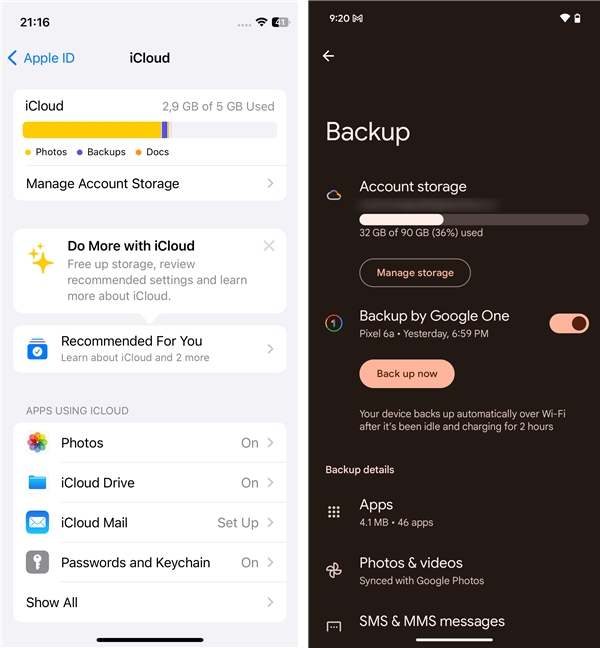 Both Android smartphones and iPhones offer cloud support
On iPhones, photo transfers are equally easy, but moving other files… not so much. Of course, unless your computer is a Mac. On Windows, you need to install iTunes, and even then, access to the contents of the iPhone’s storage is limited at best. Since iPhones don’t have expandable storage, you can’t just remove the SD card and insert it in your card reader, like you can with many Android phones.
Both Android smartphones and iPhones offer cloud support
On iPhones, photo transfers are equally easy, but moving other files… not so much. Of course, unless your computer is a Mac. On Windows, you need to install iTunes, and even then, access to the contents of the iPhone’s storage is limited at best. Since iPhones don’t have expandable storage, you can’t just remove the SD card and insert it in your card reader, like you can with many Android phones.
 iPhones have better resale value
 iPhones are perfect if you don't want to mess around with various settings
Android smartphones feel less like gadgets and more like tech - they offer more configuration options, more user control, and greater choice. It’s awesome if you want to set up your device, increase efficiency, quality, and speed, and know exactly what to look for and where. However, if you want a flagship-level smartphone that just does it all very well, you can’t go wrong with an iPhone.
iPhones are perfect if you don't want to mess around with various settings
Android smartphones feel less like gadgets and more like tech - they offer more configuration options, more user control, and greater choice. It’s awesome if you want to set up your device, increase efficiency, quality, and speed, and know exactly what to look for and where. However, if you want a flagship-level smartphone that just does it all very well, you can’t go wrong with an iPhone.
A quick preamble and some clarifications
Before you start reading this article, I’d like to clarify some things. I’ve recently received questions like “Is an iPhone an Android?” or “Is Samsung an iPhone or an Android?”. So, prior to telling you what I think are the biggest differences between iPhones and Android, which may be better for you, and which is more user-friendly, please keep in mind that:- An iPhone is not an Android device. The term “iPhone” refers solely to smartphones manufactured by Apple. All iPhones run on the iOS operating system, which Apple develops.
- Android phones are not iPhones. The term “Android” used alone refers specifically to the Android operating system that’s developed by Google and powers Android devices, phones, and tablets made by a large number of manufacturers, including Motorola, OPPO, Xiaomi, Google, OnePlus, ASUS, and Nothing.
- Samsung manufactures smartphones that run on the Android operating system, not iOS. Therefore, Samsung smartphones are Android devices.
Hardware differences between iPhones and Android phones
First, let’s look at the hardware differences. Although many manufacturers of Android devices have tried to copy the design of iPhones, the reverse is also true, albeit in a less obvious way. What are the differences, then? Let’s see…1. Formats and design
Every year, hundreds of Android smartphones are released. Over 450 models in 2023 alone! How many new iPhones did we get in 2023? Four. Not four hundred, just four. Apple releases three to five iPhone models each year, all with a very similar design. This translates into an absolutely huge number of designs each year for Android phones, from traditional designs to foldable smartphones and phones dedicated to hard-core photography and videography enthusiasts to phones designed to withstand shocks and deep water submersion. On the other hand, iPhone users have to do with what Apple decides is trendy this year.2. Energy efficiency and raw power
Surprisingly, with so many companies competing in the Android market, Apple has the lead in raw computing power. The latest Apple A16 and A17 Bionic chipsets destroy virtually any other mobile chipset while being significantly more power-efficient. Here is a Geekbench score comparison between the A17 Pro chipset in the flagship iPhone 15 Pro Max and a Snapdragon 8 Gen 3 found on the Samsung Galaxy S24 Ultra and the Xiaomi 14 Ultra, two of the fastest and most expensive Android smartphones you can get today:3. Features and innovation
Innovation has always been the main focus of the Android ecosystem. Many manufacturers even risk introducing new, unproven features to stand out from the competition. In contrast, Apple has been slow in adopting features, only introducing them when they were sure the feature would succeed. Let’s take high refresh rate screens: while the first Android phones with 120 Hz displays came out in 2017, Apple only implemented this feature four years later on the iPhone 13 Pro and iPhone 13 Pro Max. The latest iPhone 15 Pro gets 120 Hz, but the “regular” iPhone 15 is still 60 Hz only.4. Authentication
If the introduction of features is slow on Apple smartphones, they are leading in removing features. Many Android phones use facial recognition, but most of them still use fingerprints as an authentication method. Apple, on the other hand, removed fingerprint authentication back in 2018 for all new models, with the exception of iPhone SE. This is mostly because their face recognition system, the Face ID, is hands down the best there is. It can recognize your face in the dark, pick up your features even at extreme angles, and do so in the blink of an eye.5. Connectivity
Android smartphones have a wide range of connectivity options available. Infrared, Bluetooth, physical headphone jacks, and USB-C are all widely used and compatible with modern devices. Apple, on the other hand, being so eager to innovate by removing features, got rid of the headphone jack from iPhones more than seven years ago, starting with the iPhone 7. On the other hand, iPhones don’t lack any of the most modern connectivity options, like Bluetooth, NFC, or Wi-Fi. Oh, and starting with the iPhone 15, we also get USB-C, though not because of Apple’s own volition but rather because the European Union forced them to do so.6. Accessories
On Android devices, most accessories and wearables are interchangeable. You can use Samsung smartwatches with OnePlus smartphones, Sony headphones with Xiaomi devices, etc. Yes, some of them might have slightly less functionality. But overall, you’re not forced into an ecosystem like you are on iPhones. Yes, you can use the AirPods, for example, on Android smartphones, but the tradeoff is that you lose some features. But do you have a pair of high-quality wired headphones that you want to use on a modern iPhone? That will be 9 USD, thank you. And that’s the catch. The accessories dedicated to iPhones are usually much more expensive than their Android counterparts.7. Longevity, service, and repair
One of the biggest problems I have with Apple is its view on service and repair. And I’m not talking about the absurd repair prices, although that’s also an issue. Until recently, repairing a modern iPhone outside of certified, official service centers was a nightmare due mostly to artificial hurdles Apple introduced to prevent you from repairing your iPhone. Things like using proprietary screws, pairing the screen with other parts of the smartphone so that you couldn’t simply replace it, etc., are completely artificial obstacles that are not linked to any technical limitation. Due to public backlash, Apple’s attitude towards self-repair has recently improved, with parts being made available for individual consumers, starting with the iPhone 12 and onwards.8. Physical storage
Although more smartphones have moved away from this, until recently, most Android devices had expandable physical storage. Many entry-level and mid-range Android devices still do. On the other hand, all iPhones come with fixed storage, no matter how much they cost, and if you’re a photo hoarder or enjoy recording videos in higher fidelity resolutions, you might run into storage space issues down the road.Software differences between Android phones and iPhones
While you could argue that the screen on an iPhone comes from the same factory as the one made for a Samsung Galaxy or that chip manufacturing plants for iPhones and Android devices are located in the same city or even have the same owner, the software is completely different on Android smartphones versus iPhones. Let’s look at several main differences between Android and iOS:9. “Open source” versus closed operating system
In 2003, a company named Android Inc. started developing an operating system for digital cameras. Google subsequently bought the company, and from then on, it made history. Android is based on Linux and thus is a fully open-source operating system. iOS, on the other hand, is developed in-house by Apple and only some parts of the code are open-source. There are numerous articles on the benefits and disadvantages of open-source, but the main takeaway is that open-source software is more transparent, more easily accessible, and has much more robust security (vulnerabilities are discovered and fixed faster than in closed-source systems). Oh, and it’s also less regulated, significantly impacting user experience.10. Updates
Looking strictly at security updates, Android seems to have a clear advantage over iOS, as new security updates are released monthly for Android smartphones. However, when we factor in the delay in propagation (each manufacturer decides when to push the update, usually after it has finished internal testing) and the limited support period some devices have, we can say that most Android devices (apart from Pixel smartphones, which always get updates as soon as they are released) are actually running relatively outdated software. This is true for operating system updates or new versions, as well. While Android 14 was released in October 2023, a huge number of otherwise compatible smartphones have yet to receive the new version at the time of writing, in April 2024.11. Interface
The interface of Android devices varies greatly from manufacturer to manufacturer. This means, on the one hand, that you will certainly find an operating system skin that you enjoy using, but on the other hand, it makes switching from an Android smartphone to one from another manufacturer more difficult. However, the sky’s the limit when it comes to customizing the appearance of the Android interface. While you can make your phone interface look like a Star Trek tricorder if you have an Android device, the interface of all iPhones sporting the same iOS version is identical. Moving from a 2017 iPhone to a 2023 one is almost seamless, but this also comes with a disadvantage, as customization options are much more limited for iPhones. And I’m not talking just about the looks: even though it’s 2024, Apple devices still don’t have a proper app drawer, so applications are dumped on the Home Screen(s).12. Stores
Android smartphones have the Google Play Store, and iPhones have Apple’s App Store. The variety of apps in the Play Store is incredible, and thanks to the more flexible nature of Android, apps on Google Play can do things iPhone users can’t access. The vast majority of the apps in the Google Play Store are free, but most also have ads (some very intrusive). While iPhones are more restricted in terms of app features, malware apps almost never bypass the strict filtering imposed by Apple, so overall, you’re safer and have a better experience in the App Store.13. Apps
Thanks in part to more strict regulation and higher development costs, third-party iPhone apps are simply better than their Android counterparts. There is no other way to put it: iOS third-party apps crash less, have greater functionality, and (because of the different approach for monetization) fewer ads. This also encourages developers to launch their apps and updates on iOS devices first.14. Privacy
Here’s a question for you: Google makes money from providing targeted ads, based on each user’s location, browsing, shopping, and viewing preferences. Apple makes its money from selling iPhones and offering services to its users. Which of the two companies would you trust more regarding privacy?15. Backup and file transfer
Both iPhones and Android smartphones have solid cloud backup solutions as default. But while Google offers 15 GB of storage for free (extremely useful if you back up your media files), Apple only offers 5 GB on its iCloud. The space gets filled up pretty quickly, which in turn, disables backup for apps and settings. Transferring files to your computer is trivial with most Android smartphones: once connected with a USB cable, you can choose to mount the smartphone’s storage as a disk drive, and then you can drag & drop or copy & paste files to any location. You can also mount the drive as a media player, allowing you to easily upload and download media files.The market position of iPhones versus Android phones
It’s not just the hardware or the software. There are two other differences I noticed that I would categorize as being more general, a consequence of all the other aspects presented above.16. Resale value
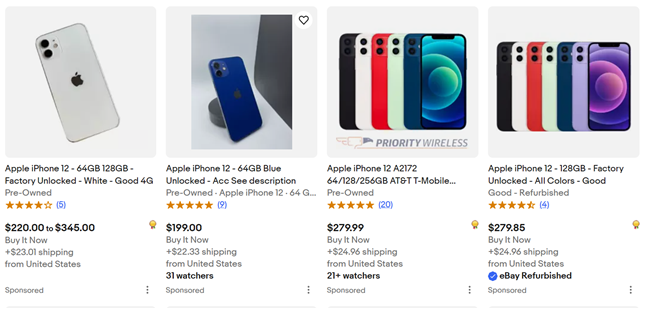
Because of their ubiquity, Android smartphones tend to drop in value faster than their iPhone counterparts. This also has to do with the sturdiness of the devices and software support. For example, a used iPhone 12 from 2020 can be had at 220 - 280 USD, slightly more than half its original price. A flagship Android smartphone from the same year, the Samsung Galaxy S20, will cost you a quarter of its price on launch. This makes iPhones a better investment if you consider their value depreciation over time.17. Target group
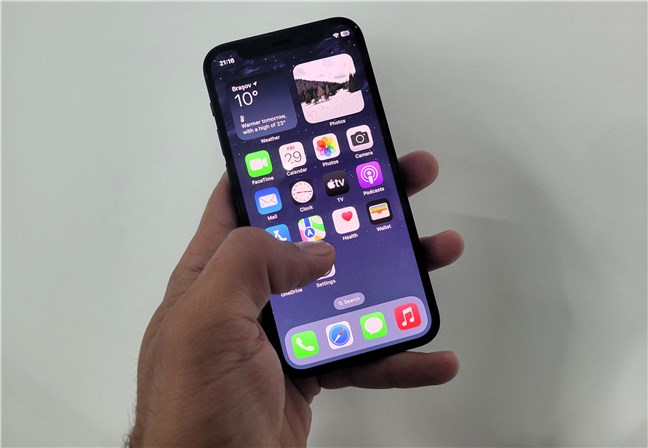
iPhones are aimed at less technical users. This becomes apparent when you look at the level of customization and the interface of iPhones. The Apple smartphones are meant to work with maximum efficiency out of the box, with minimal configuration. The software just works, the camera takes amazing pictures without having to fiddle with the settings, and the apps simply do exactly what they are meant to do. The iOS interface is perfect for people who don’t want to change much but want to have reliable and efficient phone functions.

Discussion (37)
For less than $12 a year you get 50 GB iCloud storage.
I agree that for most everyone, even techies, Apple products just work. The few oddities and frustration points pale in comparison to all the craziness that Android users seem to deal with.
I’ve been on Android for decades. Out of curiosity have been experimenting on an iphone 10 and the first thing that got my attention was lack of ability to add files and folders to the phone itself. Case in point, try to transfer a simple txt file to the phone itself and edit it. Someone told me they email those kinds of files to themselves when needed.
IPhone seems suitable just to follow the leader type of people. A phone that is incapable to make a 640×360 pic into a different size is like a big bike with training wheels attached, see what I got people. Definitely android when it comes to all the things one wants to do besides just playing music or snap pictures of their kittens or kid with spaghetti bowl on their head. Back to android pricing.
Recently switched from Samsung s21 to 13 pro max. I’m starting to regret it. Apple key board sucks having to switch between screens on android everything u need on the same screen. Closing out apps and switching between active apps is a nightmare on iPhone compared to apple. I really miss the home button app button and back button on samsung. Google calculator is far superior to apples. Googles clock and alarms is far better. Being able to control multiple volumes on Samsung with the side button is far better. I do agree the operating system is probably smoother and faster on iPhone. Most of the same 3rd party apps r optimized better on iPhone. Camera is close to a wash. Will probably switch back next time
Hi Brian, for the keyboard issue, simply install SwiftKey and set it as the default keyboard. I agree, the default keyboard on the iPhone sucks big time. Compared to the Samsung, don’t you think the iPhone needs less tinkering, though?
I got an iPhone and had it for 2 months and could not figure it out or understand it. I went back to android right away. Also, I didn’t like when I had to switch from the keyboard to the numbers in an android you have the numbers on top of the keyboard which was much easier
Thanks for sharing your experience with the iPhone.
Android phone are better I give them 95/100
Oh my
I’m in the process of switching from android phone to ios as I type, its from my android. I must take things off of android and put them on my I phone 12. The apps that didn’t transfer during that process.
Does anyone have advise for me im finding it hard to pick up my iphone and supposedly is the top line in the iphone sense.
Help would be welcomed and greatly appreciated.
Very good comment ilike it thank u
I found this while I was exploring whether or not I should switch to my first iPhone after years of using droids. I found a great deal on an iPhone so the argument of more expensive is off the list. I do love my back button on my Droid but the problem is if there is any kind of lag and you hit the back button sometimes it will take you back umpteen pages when you don’t want to do that. Generally speaking my problem isn’t with my phone it’s with my network. It took me 8 minutes to send a text tonight I used to write letters faster than that.
It was very good
I bought my first iPhone about five years ago. It was an iPhone 5s. What I liked about it as opposed to the android phone I had before is the look of it. There are two apps however that I will always keep. One app I like is the Gmail app. Another app that I like is YouTube. The Gmail app I can do so much more with it. The mail App on the iPhone is more simple.
iPhone is the best really
As i have android I probably won’t change fir s while. However, the iphone and iOS system is impressive.
I have my 2nd Android. iOS & Android seem to be pretty evenly matched.
Helpful info.: What is android one
I switched from an android to an Iphone and I found that, music is much easier to download on the android. You don’t need to download an app to download music to your phone. You just download it to the music app that’s already on the phone.
Android is so much easier and cost less. Why spend more for nothing?
I agree,Android is less expensive compared to iphone. But it has more storage. It makes me happy whatever I want to install in Android.
I am going to go back to Android. I like being able to add apps I want to add. Also Android is less expensive to upgrade.
Android smartphones can be a lot less expensive. And some have good performance even though they are cheap.
Clearly, written by an employee of Apple The whole bit about Androids being “a mess” is ridiculous–and not exactly science. Ridiculous Apple PR piece; Steve Jobs trained you well. 🙁
Android smartphones are good at their place but if you start using an iPhone you will surely start loving it . I think iPhone is better than all other androids because of it’s storage capabilities,security,privacy,best operating system and much more.I love its screen recording accessibility,health app and it provides best emergency calling facilities than all other android smartphones
I have an android Vodafone VFD 513 and it does everything I need. Wifi,camera storage apps etc. I can’t understand why people pay thousands of dollars for iPhones. The differences may be good for some but Seem hugely overpriced. My
I have had android for many years moving with iphone in 2020.The android uses so much more internal memory just to operate the phone.I am deleting cache and app its really bad.Thanks for info.
I LOVE your website!!!
I’ve discovered over time that my Android has the ability to do everything that my mother-in-law’s Smartphone, (she receives a new one every year because she foolishly continues to get herself wrapped up in a AT&T contract. AND CANNOT FULLY UNDERSTAND HOW TO WORK THEM! ),can do with the exception of my LGX is not waterproof & although she has facial recognition, I have voice AND my Google app also acts like the home units where you ask it a question, it’ll answer, look you up anything, etc. And I got to choose Serri,(spelling?;the lady’s voice), OR, a man’s voice,(can’t remember his name), I just begin by saying, “Hey Google!”. That wakes him up. Even if my phone is asleep, he wakes up saying, “I’m here, what can I do for you?” I got to customize his responses, etc. I’ve also found over the years that the LG phones are the best of the Android family. The X in the LGX means xtra large battery and IT WORKS! I used to get aggravated at having to re-charge so much, even had to force stop Google Maps because that app until I was ready to use. That app uses alot of battery. But doesn’t bother this LGX! With over 4000 OM/MA! I’m on it constantly but only need to charge after aprox., 36-40hrs. of use! Hand to God! Love it! And it didn’t cost me HUNDREDS of dollars either. So, I’m good ?.
You noted that transferring files is daunting on iOS. With Windows 10, you can just simply plug in your phone to access photos and videos as though it were a digital camera. Other media, such as music, you can not though.
As far as the back button, generally developers are highly encouraged to keep the back button at the top left of the screen. Apps that are poorly designed are typically rejected from being published on the App Store as well. Additionally, many apps allow you to gesture from the left edge of the screen to the right to go back.
One thing I’m sad you didn’t note is the security and privacy of iOS over Android.
The subject of security and privacy is worth a separate article on its own.
Thank you for your honesty in your review. But the inability to move icons around on your home screen is incorrect, if I read that correctly. Just hold down the app til it wiggles and little X appears in the corner of the icon. You then should be able to move the app on the home screen as well as move it to any other screen. I would pursue Apple help files on this common task.
Thanks
iPhone is for snob peoples who will pay more for less,
That is one way to look at it. 🙂 A bit offensive…
As well as completely subjective. Whether or not iphones offer less is a matter of opinion. Not fact.
iOS upgrades just work. Android you end up waiting for the Manufacturer to never get round to it – I’m looking at you Samsung!
Upgrades can be troublesome, indeed.
What’s the interest in updates? Just to go faster?
No. Security is highly important, as well as fixing bugs of all kinds, or improving the stability of your phone and the apps that you use.
If the iPhones will faster so what’s bad in that? There is only benefit, your life will be faster and happier.