



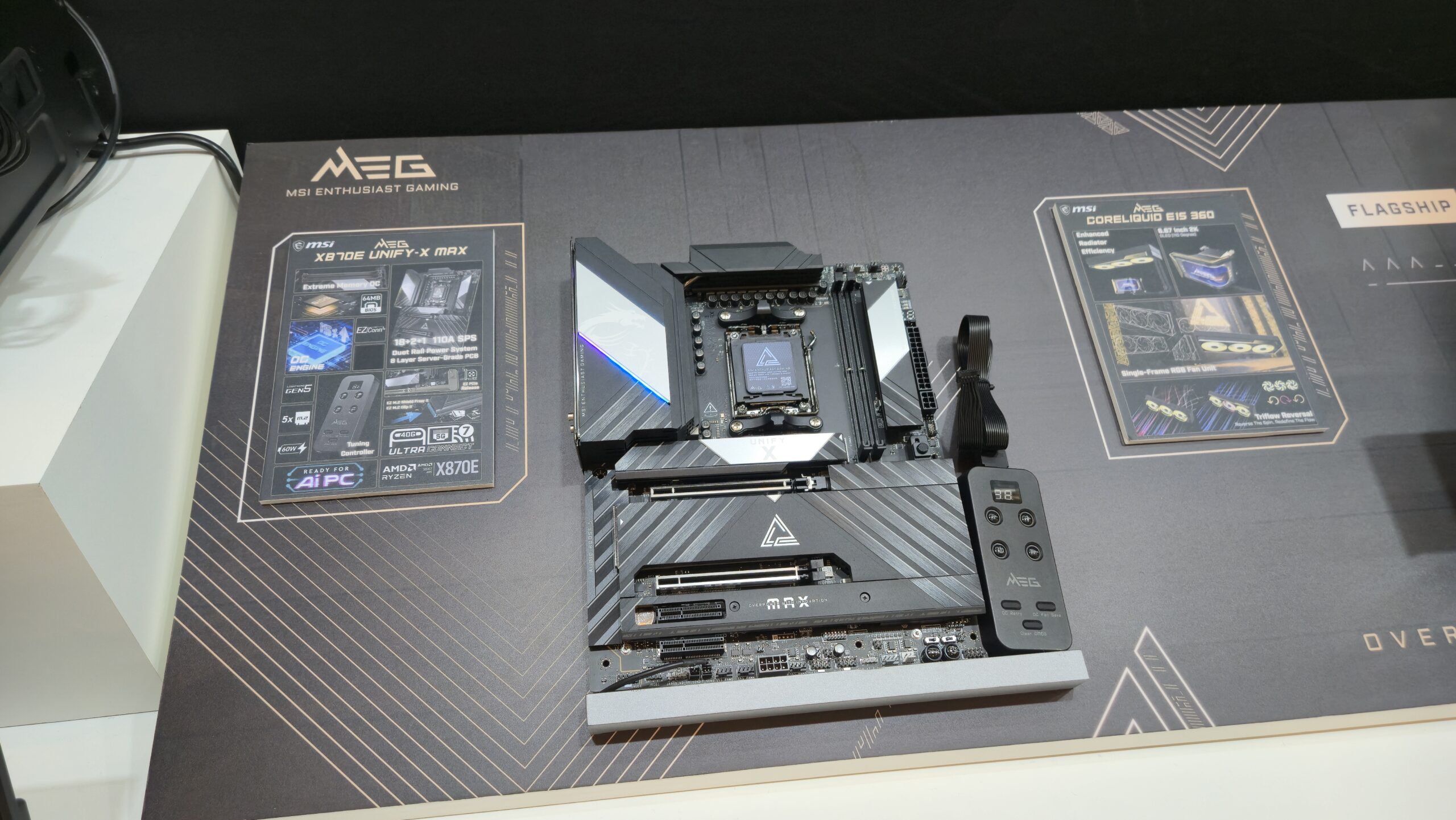
ASUS and MSI have started rolling out BIOS updates that bring AMD’s EXPO Ultra Low Latency support to select 600 series AM5 motherboards. The update helps older AM5 boards close the feature gap with newer 800 series models by adding better DDR5 memory optimization for supported systems.
AMD introduced EXPO Ultra Low Latency at Computex as an extension of its existing EXPO memory overclocking technology. The goal is to make memory tuning easier for users who want better performance without manually adjusting timings and settings in the BIOS.
The feature was initially available on newer 800 series motherboards, even though AMD intended support for both 600 and 800 series AM5 boards. Now, the first wave of BIOS updates is reaching older boards, starting with high end models from MSI and ASUS.
MSI and ASUS are rolling out BIOS updates first for high end boards
MSI appears to be among the first motherboard makers to deliver the update across parts of its 600 series lineup. Some boards now have BIOS releases based on AGESA PI 1.3.0.1b, which adds or improves EXPO Ultra Low Latency support.
The MEG X670E GODLIKE had early support in a May BIOS release, but newer June BIOS updates appear to bring more optimized support. Other MSI 600 series motherboards have also started receiving updates from early June onward.
ASUS is also rolling out support, though the update currently appears focused on premium X670E boards. Models in the ROG Crosshair, ROG Strix, ProArt, and TUF X670 series are receiving beta BIOS updates with support for the new feature.
| Brand | Motherboard support status |
|---|---|
| MSI | BIOS updates with AGESA PI 1.3.0.1b are rolling out for several 600 series boards |
| ASUS | Beta BIOS 3803 adds support on select X670 series models |
| Main boards affected first | Mostly flagship and high end X670E models |
| Feature added | AMD EXPO Ultra Low Latency |
| Wider rollout | More 600 series boards are expected to receive updates later |
The rest of the 600 series stack is still waiting for updates, so users should check their exact motherboard support page before expecting the feature to appear.
EXPO Ultra Low Latency builds on AMD’s existing memory tuning
AMD EXPO already gives users a simple way to apply tested DDR5 memory profiles on AM5 systems. Instead of manually tuning frequency, voltage, and timings, users can enable an EXPO profile from the BIOS and get a validated memory configuration.
EXPO Ultra Low Latency takes that idea further by focusing on lower latency behavior. AMD says the feature can improve gaming performance by up to 4 percent compared with standard non ULL EXPO memory configurations.

That is not a huge uplift, but it can still matter for enthusiasts who want to squeeze more performance from an existing AM5 system. In CPU limited games, memory latency can affect frame rates, frame pacing, and responsiveness.
600 series owners get more value from existing AM5 hardware
The update is important because many early AM5 adopters bought 600 series motherboards before the 800 series lineup arrived. Those users may not want to replace a working X670E, X670, B650E, or B650 board just to access newer platform features.
AMD has repeatedly positioned AM5 as a long lived socket, and BIOS updates like this help support that promise. Bringing EXPO Ultra Low Latency to older motherboards makes the platform feel more consistent across generations.
It also helps users who are upgrading to newer Ryzen processors while keeping their original motherboard. If their board receives the right BIOS update, they may get newer memory optimization features without buying a new board.
Users should update carefully because some BIOS releases are beta builds
The new feature may sound simple, but BIOS updates should still be handled carefully. Some ASUS releases are marked as beta BIOS builds, which means users should read release notes and decide whether they need the update immediately.
For most users, the best approach is to download BIOS files only from the official support page for their exact motherboard model. Installing the wrong BIOS can cause problems, and interrupting a BIOS update can leave a board unusable unless it has recovery features.
Enthusiasts who want the latest memory tuning can try the update now if their board is supported. More cautious users may prefer to wait for a stable BIOS release, especially if their current system is already running smoothly.
AMD’s AM5 platform keeps gaining features after launch
The arrival of EXPO Ultra Low Latency on 600 series boards is good news for AM5 users. It shows that older motherboards are still receiving meaningful updates and that AMD’s memory ecosystem is continuing to improve.
The feature will not transform performance on its own, but it gives users another easy tuning option. For gamers using supported DDR5 kits and updated BIOS versions, it could provide a small but useful boost with minimal effort.
ASUS and MSI are leading the rollout for now, but other motherboard vendors are likely to follow. As more 600 series boards receive updated BIOS support, AM5 owners should get a more unified experience across both older and newer motherboard generations.



Discussion (0)
Be the first to comment.