


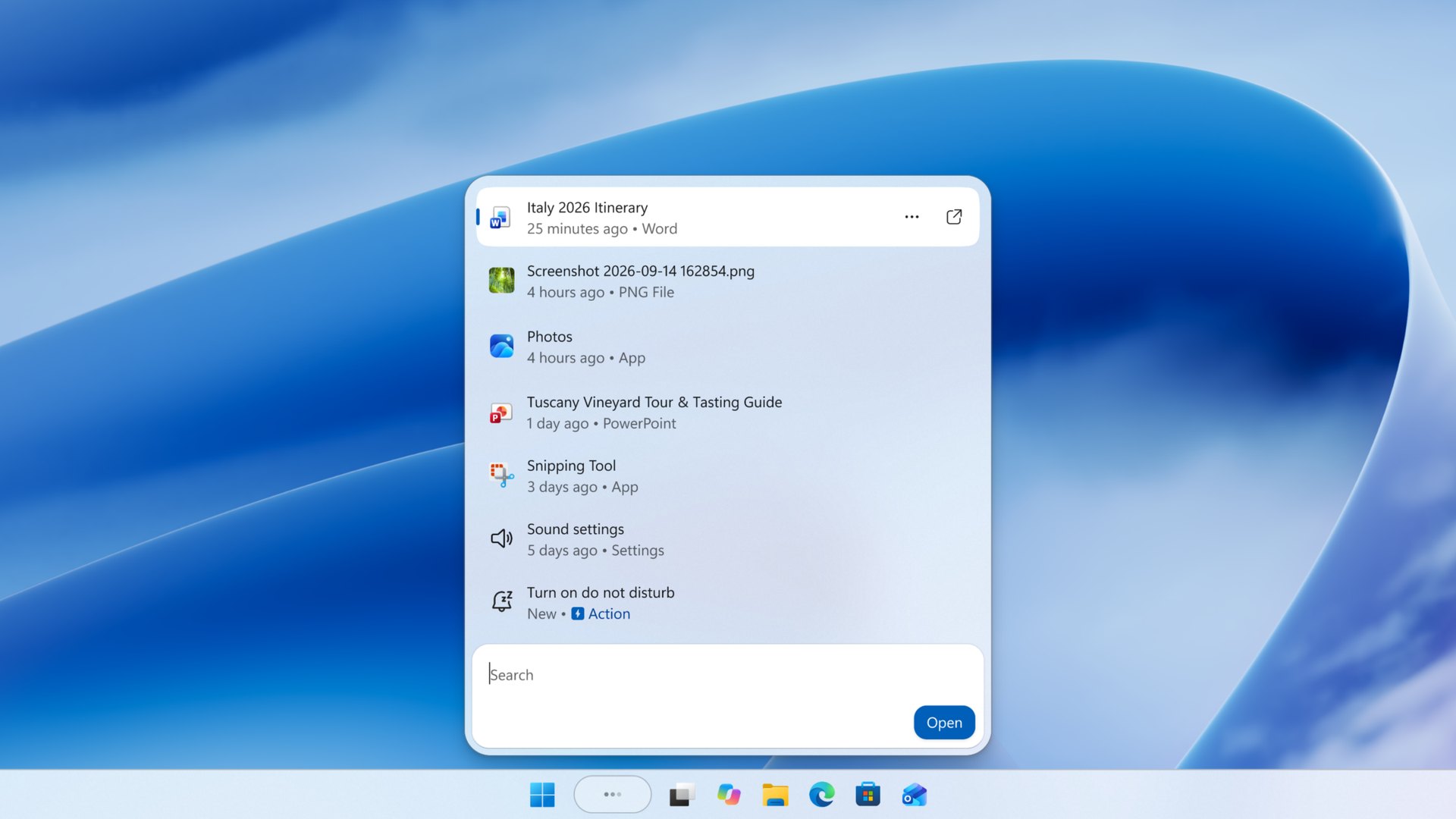
Microsoft's headline performance number for Windows 11 rests on a single footnote, and that footnote measures six interface actions. The "up to 20% more responsive" figure compares a September build of Windows 11 26H2 against a 25H2 build that shipped on January 24, 2026.
The claim sits in a Windows Experience blog post published on October 15 and bylined Navjot Virk. Microsoft promises "a Windows experience that's up to 20% more responsive", with the gains "extending to Start, File Explorer, Search, Snipping Tool, Microsoft 365, Edge and more".
Nothing in the footnote describes the test hardware, the number of runs or what counts as a response. The percentage is an aggregate, and no per-operation breakdown is published.
What Microsoft actually timed
The footnote reads: "Based on measurements of Search, Start, right-click, Settings, Snipping Tool and File Explorer response times using Windows 11 OS build 26300.9550 compared to Windows 11 OS build 26200.7628".
That is six operations, and every one of them belongs to the Windows interface itself. Microsoft 365 and Edge appear in the claim but not in the measured set.
Boot sits in the same sentence and also outside the footnote. Microsoft says the work can be felt "as soon as you boot into your PC", then times no boot.
The rest of the footnote is a disclaimer. "Actual performance varies by device, configuration, usage, and other factors", it says, without naming a single device.
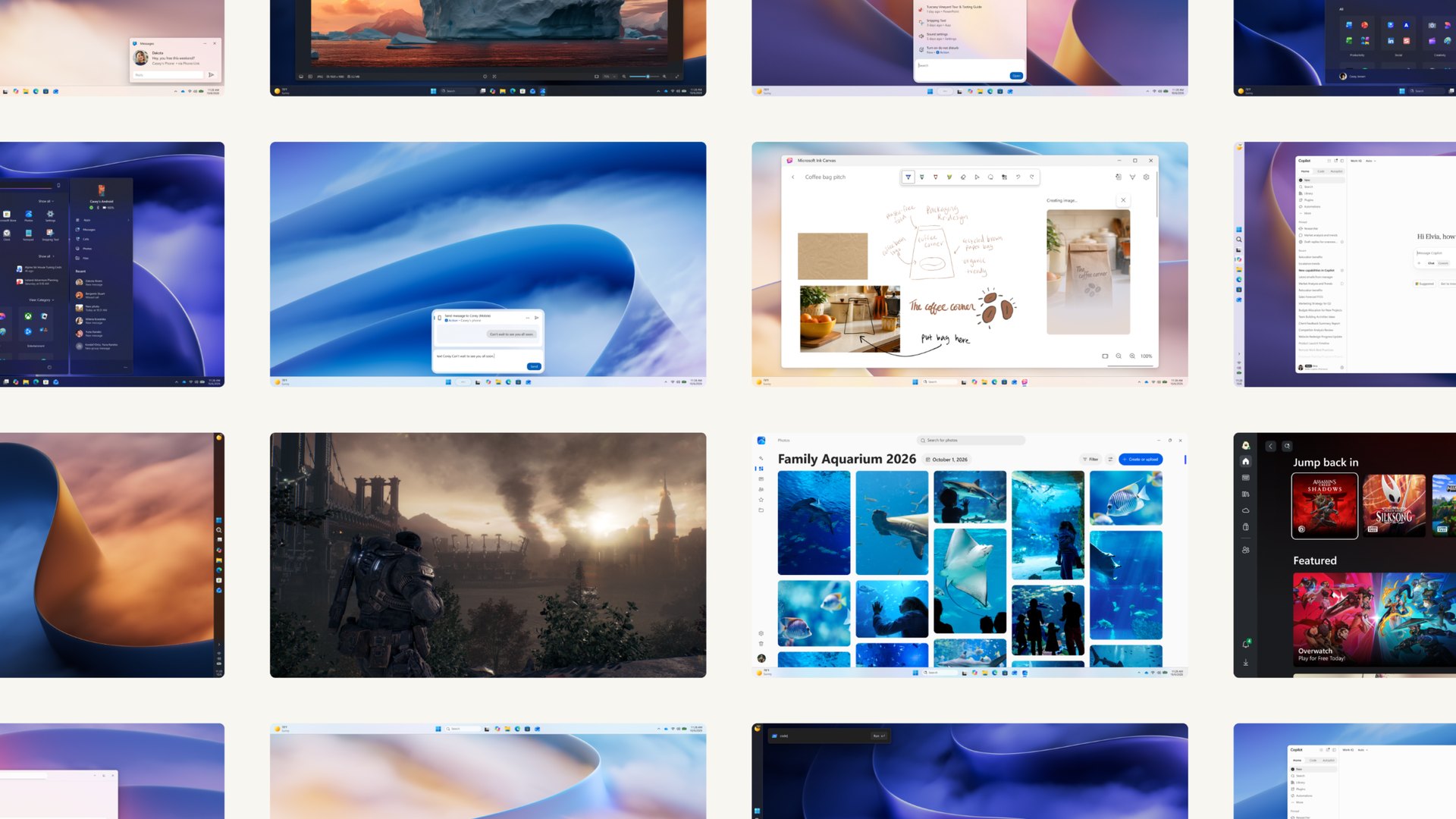
The baseline is a January build of the older Windows version
Microsoft's release health pages date build 26300.9550 to September 29, 2026. It is a Windows 11 26H2 build, delivered as the preview update KB5124010.
The baseline, build 26200.7628, is Windows 11 25H2. Microsoft lists it as an out-of-band release from January 24, 2026, shipped as KB5078127.
The two builds are about eight months and one annual version apart. The 20% therefore folds a version upgrade and three quarters of servicing into one number.
Neither build is current. Both branches moved to build 9711 on October 13 through the October cumulative update, and the figure has not been restated against it.
The measured build's release notes do not mention the work
KB5124010's release notes list no change to responsiveness, system memory use, the Start menu, Windows Search or Snipping Tool. They also say nothing about Widgets loading only on demand.
Its File Explorer entries cover section states and the preview pane. The only performance line concerns display behavior on a plugged-in laptop.
The same update went to 25H2 as build 26200.9550 and to 24H2 as 26100.9550, a version whose Home and Pro support ended on October 13. Microsoft does not say whether those machines gain the same responsiveness.
The memory and Bluetooth figures sit on different builds
The memory claim is the one most likely to matter on cheap laptops. Microsoft says Windows can now keep "up to 2GB more" active data in memory instead of moving it to slower storage, and that sentence carries no footnote at all.
So no build and no baseline back the 2GB figure. The related Widgets saving, "more than 200 MB" on PCs with 8GB of memory or less, cites build 26300.9550 and still names no baseline.
Those two numbers carry most of what Microsoft is promising owners of 8GB RAM PCs. For context, 32GB passed 16GB in Valve's September hardware survey, so 8GB is now the low end.
The Bluetooth figure comes from somewhere else again. An AirPods pairing experience "up to 15 seconds faster" is footnoted to build 26200.8737, a 25H2 release from June 23.
Microsoft disclosed more about its Photos test than its Windows test
A second Microsoft post from the same day, bylined Giorgio Sardo, describes its testing in more detail. Its footnote cites "controlled test conditions across a range of Windows 11 devices, including both x64 and ARM64 architectures, compared to Photos Version 2026.11060".
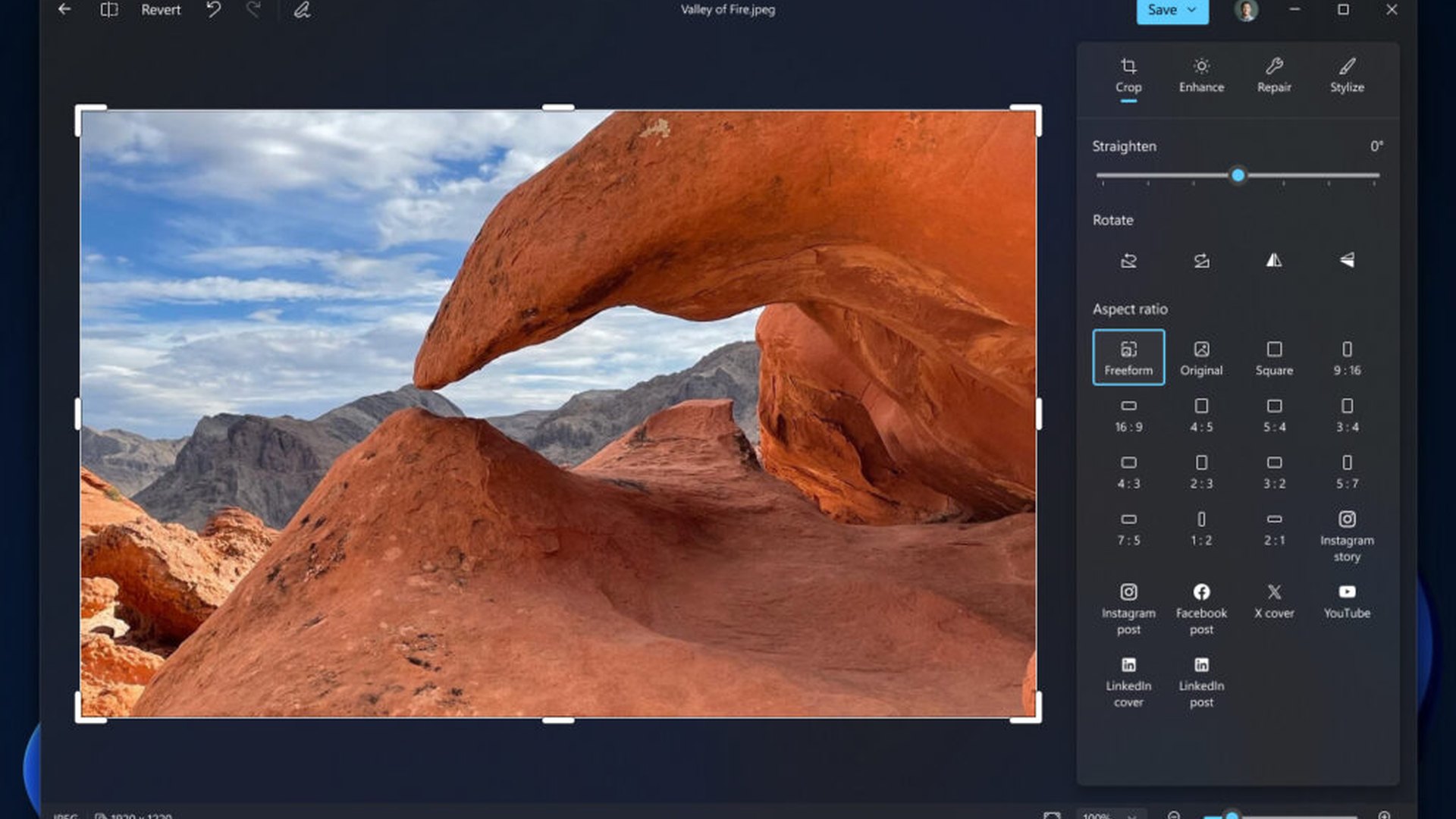
That post says the Photos Editor "launches 25% faster" and the Viewer manages "15% faster startup on average", with up to 30% for HEIC images. The main Windows post gives the same app "up to 20% faster" instead, measured against the two operating system builds.
What stays unpublished is the part that would make the 20% checkable. There is no test hardware, no run count, no definition of response time and no result for any single action.
Microsoft's July update on Windows quality, the post the claim links back to, contains no performance metrics at all. Every figure here is an "up to" number, and Microsoft adds that rollout timing and availability vary by device and region.
Discussion (0)
Be the first to comment.