



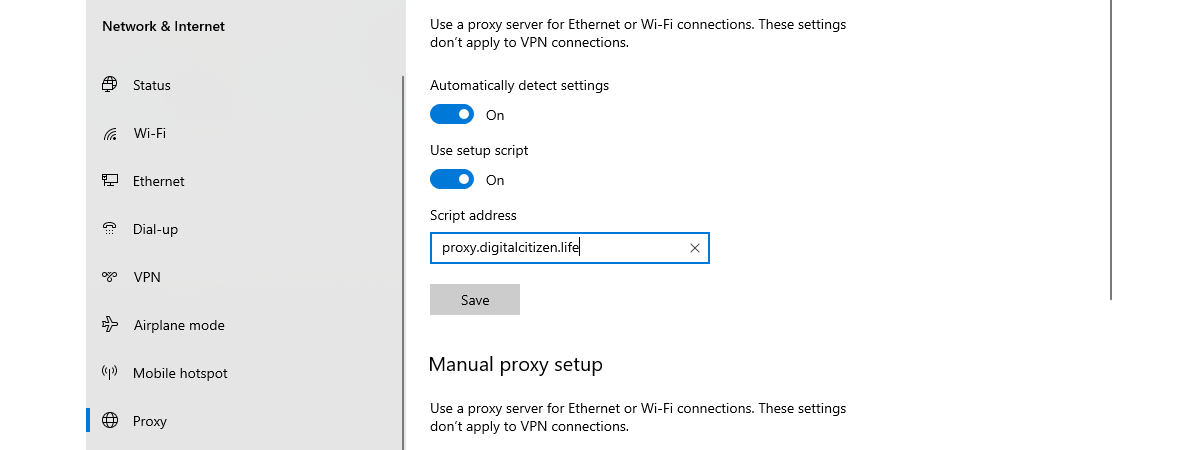
If you have worked in a corporate network, you’ve probably encountered the term proxy server, and you know that without one, you cannot access websites and services outside the company’s network. However, what exactly are these proxy servers? Should you use one at home? Read this guide to learn why proxy servers are necessary and when you should use a proxy:
NOTE: There are many types of proxy servers that do all kinds of things. In this article, I’m referring to the most common type - web proxies that facilitate access to the content and services found on the internet.
 How a proxy server works
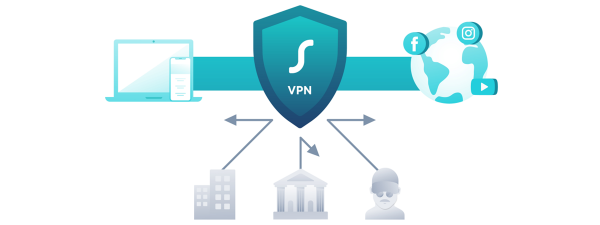
TIP: A concept related to and sometimes used together with a proxy server is VPN (Virtual Private Network). To understand the differences between a proxy server and a VPN, read when to use a proxy and when to use a VPN.
Now that you know the basics, let’s see the benefits of using a proxy server:
How a proxy server works
TIP: A concept related to and sometimes used together with a proxy server is VPN (Virtual Private Network). To understand the differences between a proxy server and a VPN, read when to use a proxy and when to use a VPN.
Now that you know the basics, let’s see the benefits of using a proxy server:

 Proxy servers can be used to control internet access
Forcing employees to access the internet only through your company’s proxy also means that you have detailed logs of all the websites and content they accessed, when, and for how long. Detailed usage reports are available about each employee, and the company can quickly identify misbehaving users.
Proxy servers can be used to control internet access
Forcing employees to access the internet only through your company’s proxy also means that you have detailed logs of all the websites and content they accessed, when, and for how long. Detailed usage reports are available about each employee, and the company can quickly identify misbehaving users.
 Bandwidth usage on a Windows computer
When a web page is accessed, a proxy server can store it, and when the next person requests it, the proxy first checks if the page has changed. If it hasn’t changed, it forwards the local copy without re-downloading the whole page. This saves bandwidth for the company and makes the loading process faster for the next person requesting the same resource.
Bandwidth usage on a Windows computer
When a web page is accessed, a proxy server can store it, and when the next person requests it, the proxy first checks if the page has changed. If it hasn’t changed, it forwards the local copy without re-downloading the whole page. This saves bandwidth for the company and makes the loading process faster for the next person requesting the same resource.
 InPrivate browsing in Microsoft Edge
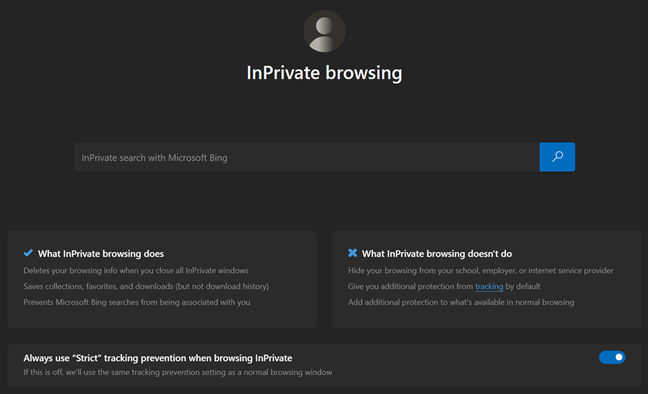
Proxy servers can hide your IP address (if they are set to do this), can send a different user agent so that your browser is not identified, and can block cookies or accept them but not pass them to your PC or device. Therefore, when using a proxy server, you can be more anonymous than when using a direct connection to the internet.
TIP: If you want to use a proxy server on your computer, here’s how to configure the proxy settings in Windows, as well as how to set a proxy in your web browser.
InPrivate browsing in Microsoft Edge
Proxy servers can hide your IP address (if they are set to do this), can send a different user agent so that your browser is not identified, and can block cookies or accept them but not pass them to your PC or device. Therefore, when using a proxy server, you can be more anonymous than when using a direct connection to the internet.
TIP: If you want to use a proxy server on your computer, here’s how to configure the proxy settings in Windows, as well as how to set a proxy in your web browser.
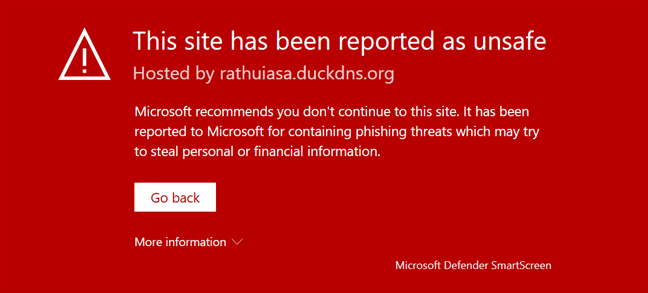
 A phishing website that has been blocked

 Proxy servers can be used to bypass censorship
Furthermore, some services are available only in specific countries. For example, Hulu works only for users based in the US and Japan. People in Europe can theoretically use a proxy server based in the US to access it, although the company has made steps to detect and block people who try to access its streaming services this way.
TIP: In case you want to use a proxy server on a smartphone or tablet and are curious how to do that, here’s how to set an Android proxy and how to configure a proxy server on an iPhone.
Proxy servers can be used to bypass censorship
Furthermore, some services are available only in specific countries. For example, Hulu works only for users based in the US and Japan. People in Europe can theoretically use a proxy server based in the US to access it, although the company has made steps to detect and block people who try to access its streaming services this way.
TIP: In case you want to use a proxy server on a smartphone or tablet and are curious how to do that, here’s how to set an Android proxy and how to configure a proxy server on an iPhone.
 Proxy servers can be unsafe
Furthermore, a proxy can alter the requests you make to a website or service on the internet to generate results that meet someone else’s intentions. Also, depending on how it was configured, a proxy server can provide unencrypted data where encrypted data was previously provided by the website or service you’re using. It can expose you to network sniffing and having others monitor what you’re doing on the internet.
Proxy servers can be unsafe
Furthermore, a proxy can alter the requests you make to a website or service on the internet to generate results that meet someone else’s intentions. Also, depending on how it was configured, a proxy server can provide unencrypted data where encrypted data was previously provided by the website or service you’re using. It can expose you to network sniffing and having others monitor what you’re doing on the internet.
What is a proxy server?
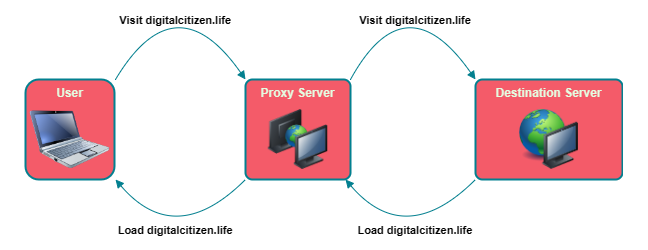
A proxy server is an intermediary between your PC or device and the internet, in charge of handling the requests to websites, servers, and services on the internet for you. To better explain what a proxy server does, let’s assume that you are at work. You’re using a web browser to visit our website, Digital Citizen, and your browser is set to use a proxy server. After you type digitalcitizen.life in your browser’s address bar and hit Enter, the request is not sent directly to the server holding our website. Instead, it’s sent to your proxy server, which then sends another request to the server where our website is hosted. The homepage of our website is returned to the proxy server, which, in turn, returns it to you. As a result, our website sees the proxy server as the actual visitor rather than seeing the computer or device you’re using. This exchange of information is illustrated in the image below:What are proxies used for?
Using a proxy server offers many advantages, including but not limited to better control over internet usage in corporate networks, bandwidth savings for large networks, improved speed in certain situations, enhanced privacy and security, and the ability to bypass censorship. Let’s take these benefits one by one and clarify how they can work for you.Control internet usage using proxy servers
One of the most important reasons why proxies are widely used in corporate networks is that they provide control over what employees are accessing and using on the internet. For example, many companies ban certain websites, so employees don’t access them during working hours; they may ban adult websites, popular social networks, or time-wasting websites like 9gag.com.Bandwidth savings and improved speed when using a proxy server
Another reason why companies use proxy servers is that it helps them save precious bandwidth. Proxy servers can compress traffic, cache files and web pages from the internet, and even strip ads from websites before they reach your computer. This allows companies to save bandwidth, especially when they have hundreds or thousands of employees accessing mostly the same popular websites (e.g., CNN, New York Times, Wikipedia, etc).Privacy benefits: hide your IP address, location, and other information
When you have a direct connection to the internet, and you load a website, the server where it’s hosted can see your IP address. With the help of this address, it can approximate your geographical location. Also, the browser sends its user agent information, and the website knows what browser you’re using. On top of this, cookies are stored on your computer, and they provide further personal information.Proxy servers can improve security
Proxy servers can also have a role in enhancing your security, especially when used in business networks. They can be set to block access to malicious websites that distribute malware, and they can also provide encryption services so that your data is not easily sniffed by third parties eager to get their hands on it.Proxy servers may provide access to blocked resources on the web
A popular use for proxy servers is the bypassing of internet censorship. For example, countries like China or Iran censor access to many websites and services online. Users in those countries can use proxy servers to circumvent this censorship and get access to them.Should you use a proxy server? Potential drawbacks of proxy servers
Using proxy servers is not all about benefits and good stuff. They can also pose problems. Here are a few potential reasons why using a proxy server might not be a good idea in some situations:Proxy servers can pose security issues
When using unencrypted connections, the proxy server can alter the responses you receive, both in good and bad ways. For example, an infected or malicious proxy server can be used to load malware into your browser or redirect you to a phishing website.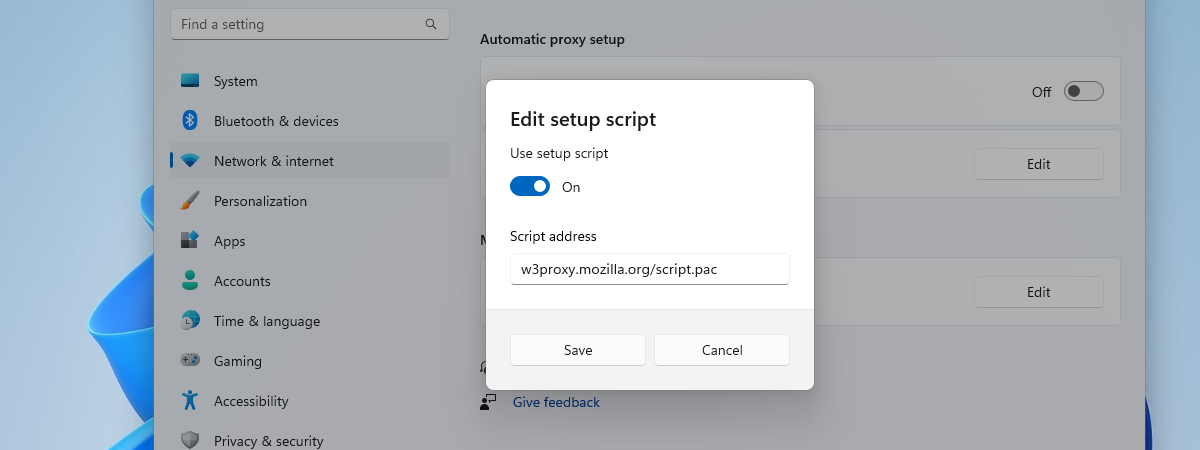
Discussion (22)
In today’s digital age, web proxies have become a critical tool for users looking to safeguard their online privacy and security.” By using a web proxy like Utopia P2P, you can rest assured that your online activities remain completely anonymous and secure from prying eyes. Unlike other web proxies that may expose your IP address or track your online behavior, Utopia P2P offers top-notch encryption and anonymity features that ensure your data remains safe and secure.
In a article you tell that proxy server store the recent webpages that has been recently visited by user, and other user request the same webpage then proxy server send stored webpage without downloading again that web page. Now my question is that if at moment content of webpage changes than how user will get the latest content of a webpage?
What proxy servers do is before that request can even reach your competitors, the proxy servers accept the request first, changes your IP address and then sends it to your competitors. When they approve the information is then easily viewed by you.
Would a proxy be useful in eliminating the ability of former co-workers of mine to spy on my home computer? (seriously, they know literally everything I do online and even offline activities, such as TextEdit documents that I type and photos that I upload to my computer). How would I go about configuring such a proxy on my Mac desktop? Thx for the info in your article!
No, it wouldn’t help.
Whenever I turn my laptop on and want to connect the internet , I must go to the LAN setting and uncheck the check for the proxy server. How can I uncheck it permenantly?
I recently have been plagued with this same problem. I don’t see an answer here. I have a private PC which goes only through a commercial internet connection. It is annoying although I check I do not have a LAN but both Chrome and Internet Explorer think I do. How can I permanently turn the proxy connection off? I don’t see a solution for that on your website.
See this: https://www.digitalcitizen.life/how-set-proxy-server-all-major-internet-browsers-windows/
Thanks for the article. I have never used a proxy server partly because I just did not understand their purpose. Now I have a much better idea. I work for a small company about 100 computers, many of the computers legitimately go to the same business related sites, but they require user logins. I imagine the proxy server would have a way to pass this login information along. Is that correct? My other question has to do with lag. Does going through the proxy server slow things down? I can imagine if it takes 12 seconds to fully load a page now, it might take 24 to fully load it once the proxy server is in place. Is that correct? Thanks, B. mrbbrown at hotmail
The proxy will pass the login information to the websites people are visiting.
The proxy may or may not slow things down. It depends on many things: how it is configured, how far it is from the clients, the speed of its internet connection, etc. A good proxy can speed things up.
I would like to compliment the author of this article. It was well written, easy to understand, and extremely precise. I hope to read more in future articles surrounding various subjects.
I’m happy that you enjoy our writing.
Are Proxy servers used by all the organizations.
If yes are they still used or its been replaced by any other technology.
In simple word, we can say that. A proxy server is a dedicated computer or a software system running on a computer that acts as an intermediary between an endpoint device, such as a computer, and another server from which a user or client is requesting a service. I am using Microleaves Dedicated Proxies. And it is working fine for me.
Good information..
Please post more information like this.
Good. Helpful.
Happy to help. Don’t hesitate to subscribe to our website.
Nice..Well explained!
Explained in layman term, I found it very easy to understand and relate to practical usage in the corporate.
Great list of reasons to use a proxy server. It sounds like it can be really useful for your business. Thanks so much for sharing!
Excellent explanation.
I’m glad you found it useful.