



You've probably worked with a lot of PDF files. The format is user-friendly, easy to view and easy to print. The are a lot of apps capable of opening this type of file but few people know that there's an app developed by Microsoft for this purpose, called Reader, included in the standard Windows experience. The app was first introduced with the release of Windows 8.1 and it's also available in Windows 10. The Reader app capable of opening PDF files, as well as XPS and TIFF files. In this article we will share how to use the Reader app to open and work with PDF, XPS and TIFF files:
NOTE: This guide applies to computers and devices which run Windows 10 and Windows 8.1.
How to start the Reader app in Windows 8.1 and Windows 10
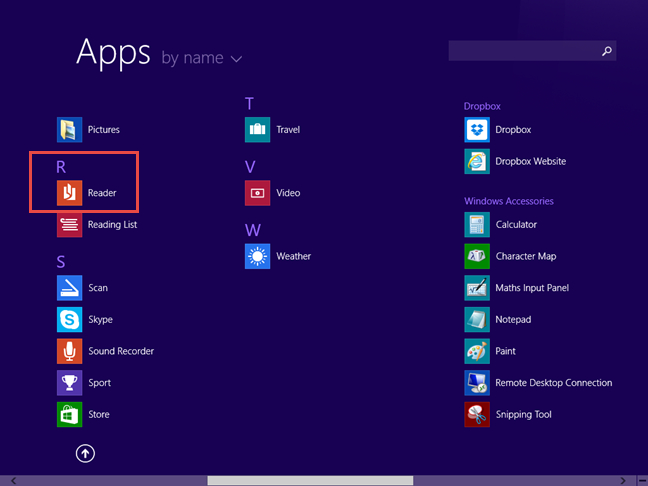
In Windows 8.1 the Reader app is bundled with the operating system. So all you have to do is browse through your list of apps and press on its shortcut.
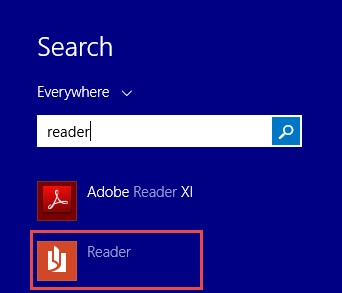
Another way to do it is to type its name on the Start screen and click or tap on the Reader search result.
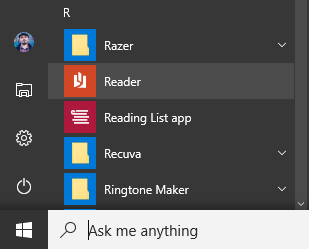
If installed, the Reader app will show up in your Windows 10 Apps list, where it can be started.
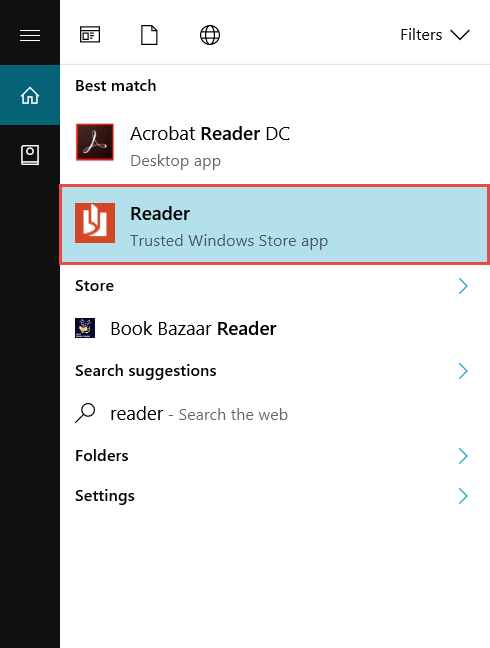
You can also type "reader" in Cortana's search box and click or tap the appropriate search result.
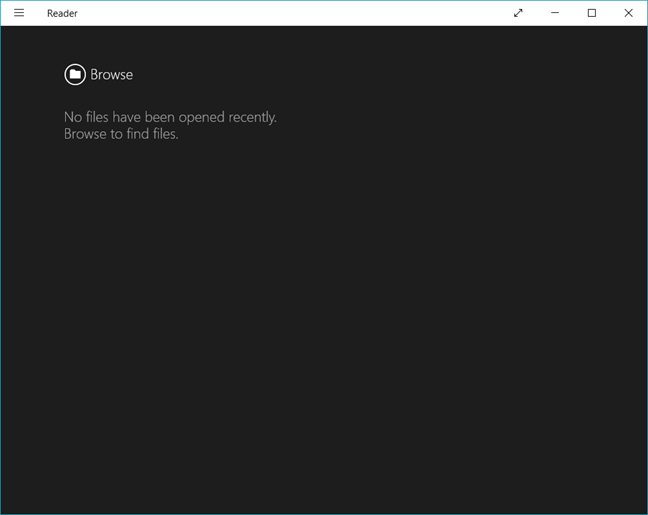
When the Reader app opens, its window will look similar to the screenshot below.
NOTE: If for some reason, the Reader app is not installed on your Windows computer or device, you can find it in the Windows Store, here.
How to open PDF, XPS and TIFF files in the Reader app
If the app is set as the default reader for files with .pdf, .xps and, .tiff extensions, all you have to do is double-click or double-tap the file and it will open in the Reader app. If you don't know how to set the Reader app as default for these formats check out this guide: The easy way to set your default apps in Windows 8.1 & Windows 10.
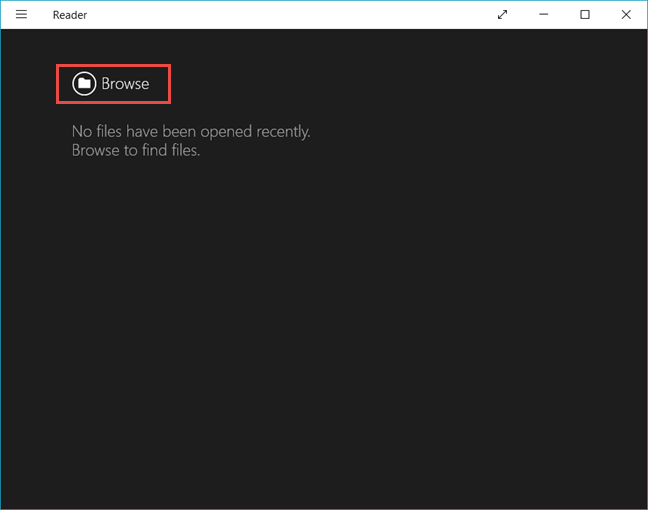
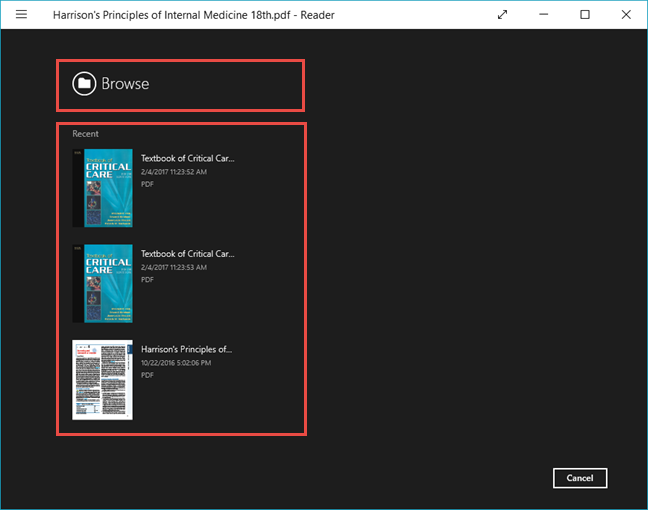
Another way to do open such files is to start the app and press the Browse button in its user interface.
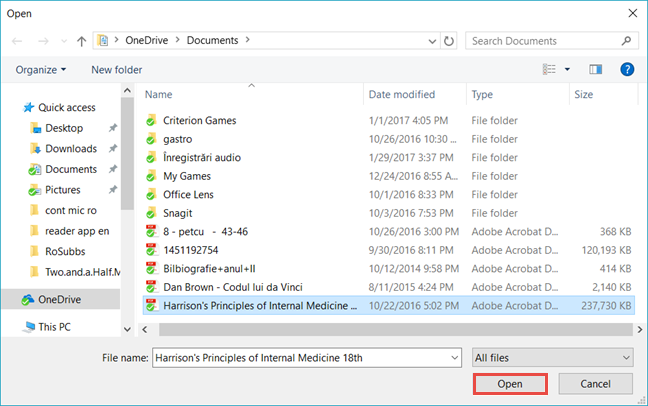
Search for your file in File Explorer, select it and press Open.
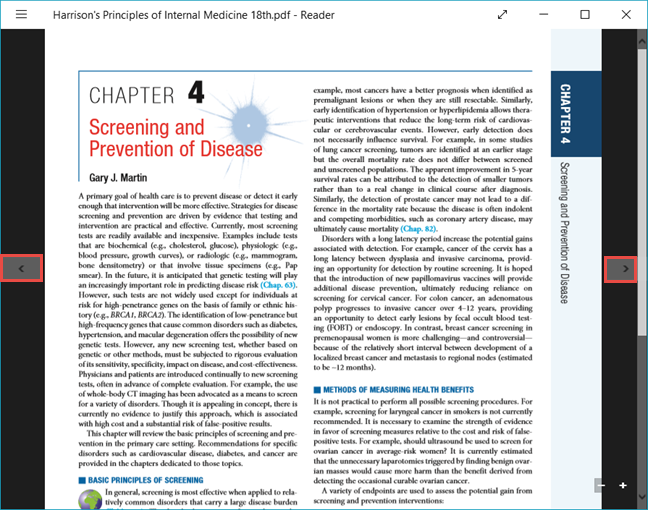
Your file will now be opened in the Reader app. You can turn pages, by swiping left or right on your screen, using the left and right arrow keys or pressing the buttons provided by the app.
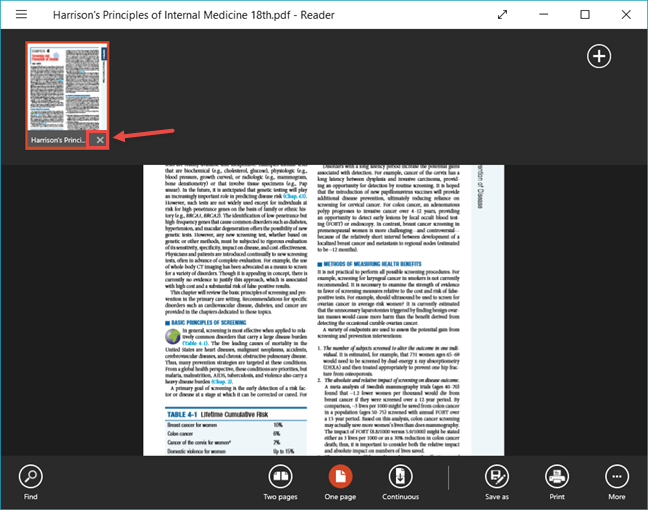
If you've finished checking out the file and you want to close it, right-click or swipe from the bottom of the screen if you use a touch-enabled device. At the top and bottom of the window, you'll see the app's menu bars. To close the file, press the Close button, placed on the top menu bar, below the file's thumbnail.
How to open multiple files simultaneously in the Reader app
The Reader app allows you to open more than one file at a time. Once you've opened one file, right-click or flick upwards on the screen.
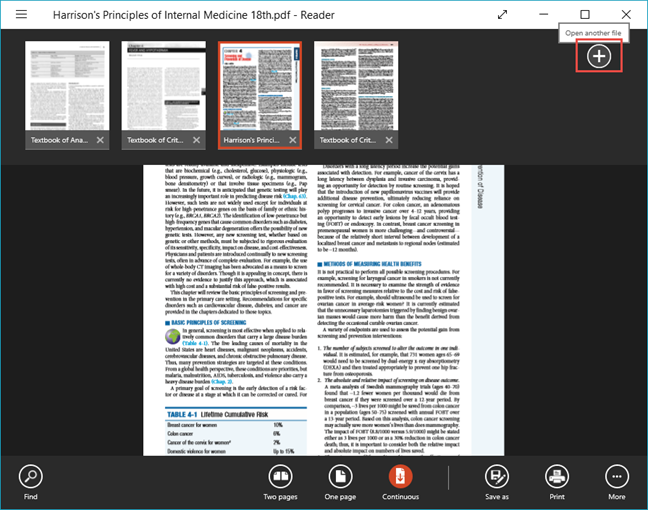
Press the "Open another file" button from the upper menu bar.
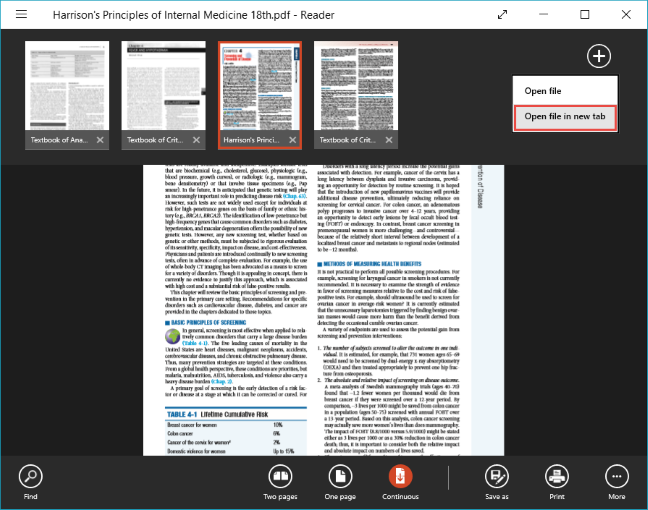
Next, select "Open file in new tab" from the menu that is shown.
If the file you need is displayed in the Recent section you can select it from there. If not, just press the Browse button and open the file as shown in the previous section.
NOTE: The Reader app can only open five files at the same time. Opening more than five files closes the first opened file. You will be prompted to save any changes that you have made to the file if any changes were made.
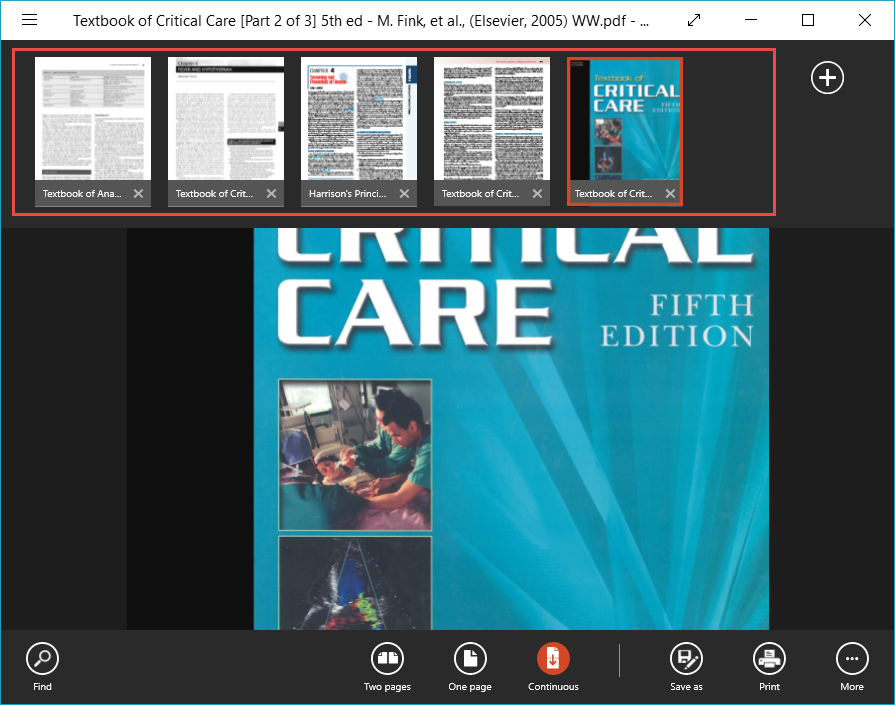
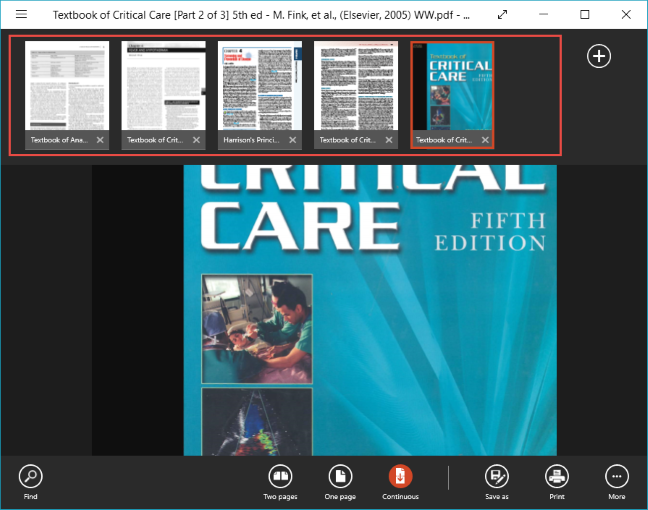
To switch between multiple opened files, right-click or flick upwards on the screen to view all the files you've opened, in the upper menu bar. Then, click or tap on the file's thumbnail to open it.
How to open files in a new window in the Reader app
Let's suppose you want to see two files at the same time, without having to switch constantly between them. To do this, in the Reader app, right-click or swipe upwards on your screen to see all the files opened in the top menu bar.
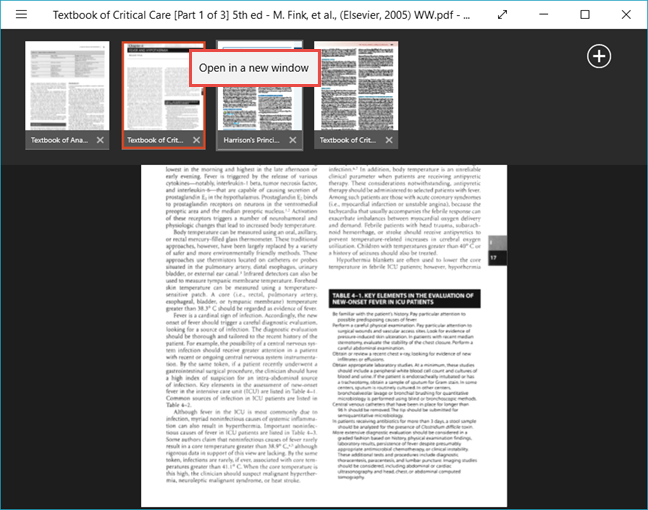
Now, right-click or press and hold any of the opened files and press the "Open in a new window" button which will appear.
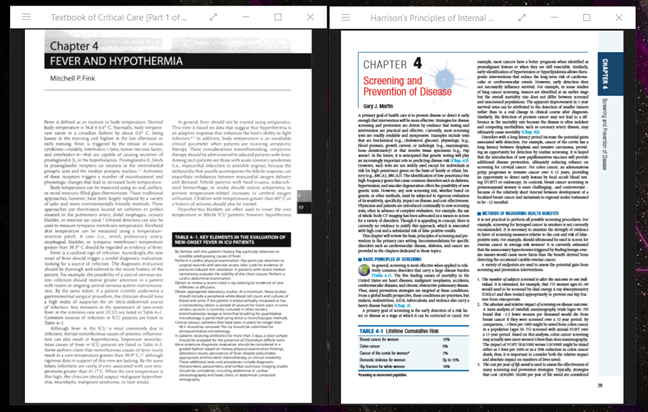
A new Reader window opens with your file. You can minimize the windows and align them side by side, so you can view them both at the same time.
Go to the next page of this tutorial if you want to learn how to print files, rotate documents, view the bookmarks inside your documents and save files with a different name, using the Reader app.
How to print files from the Reader app
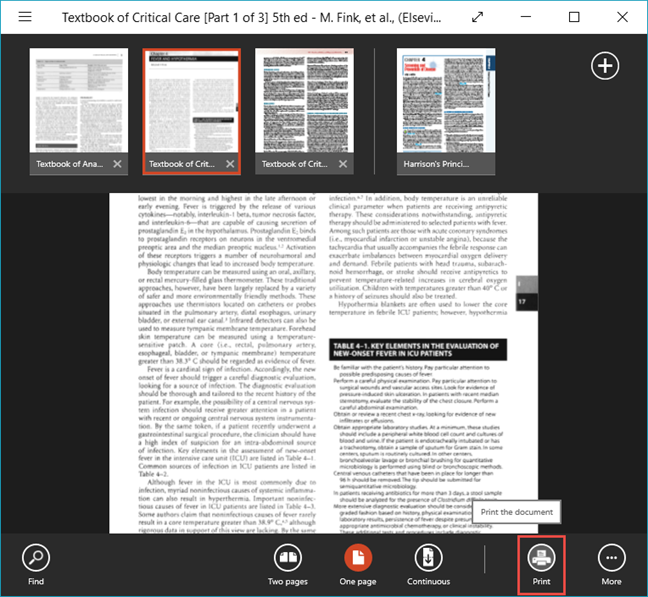
To print a file using the Reader app, first, you need to open the file as shown in previous sections of this tutorial. Next, right-click or swipe upward and press the "Print the document" button from the lower menu bar.
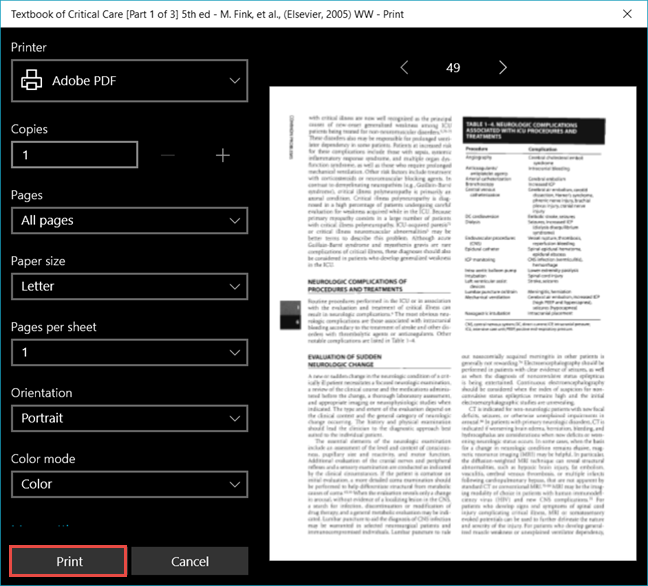
Set up printing properties and press Print when you're done.
How to rotate files in the Reader app
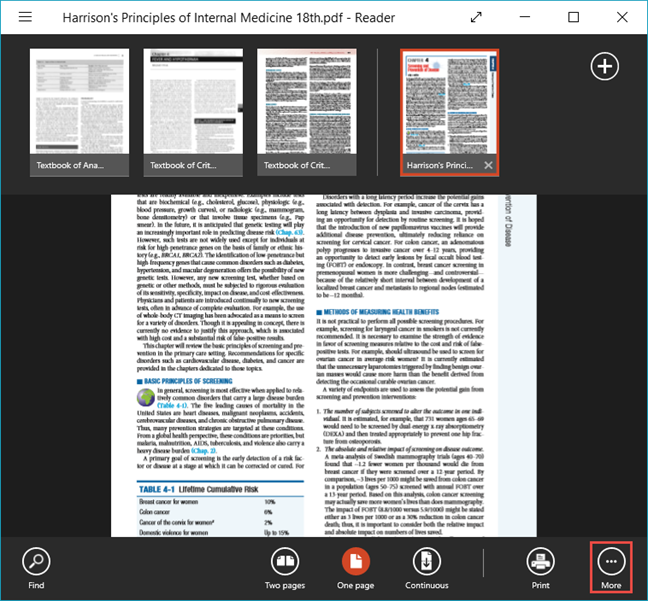
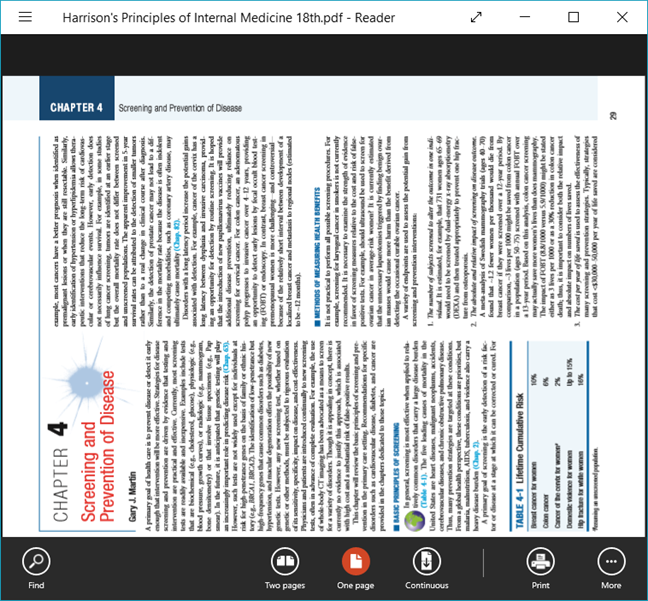
In some cases, for a better view, rotating files might be useful. The Reader app allows you to rotate the file 90 degrees counter-clockwise each time you press the button. To do this, right-click or swipe up from the bottom of the screen and press the More button from the lower menu bar.
Now, press the Rotate option from the menu that is shown.
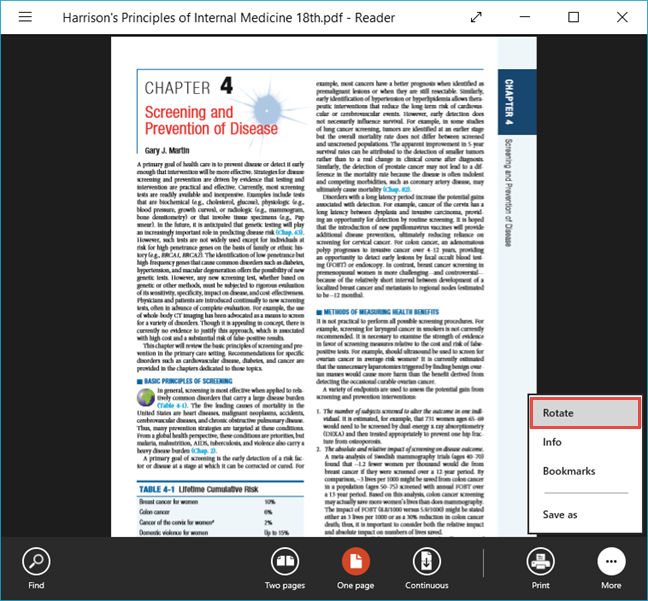
Press the button until the document or the file you are viewing is displayed in the position you want.
How to view the bookmarks inside a file and use them in the Reader app
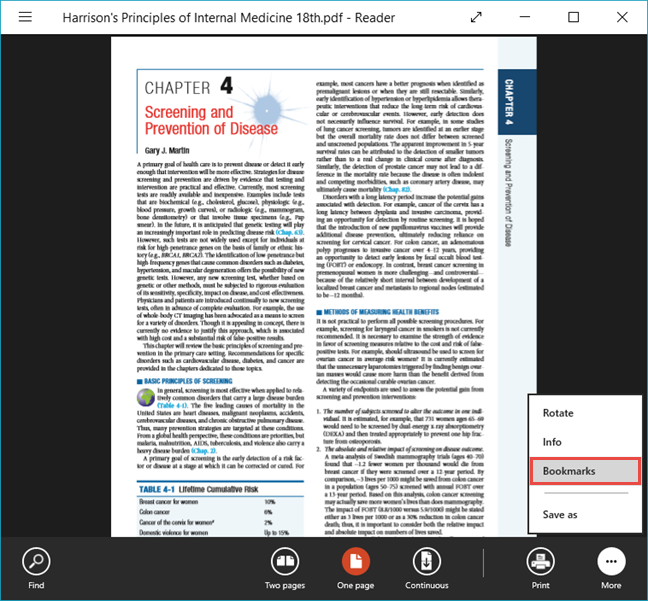
Most books saved in .pdf format have bookmarks to help you navigate more easily through its content. This can be very useful if you use this app as an ebook reader, where navigation is made easier. However, not all files you can open in the Reader app have bookmarks.
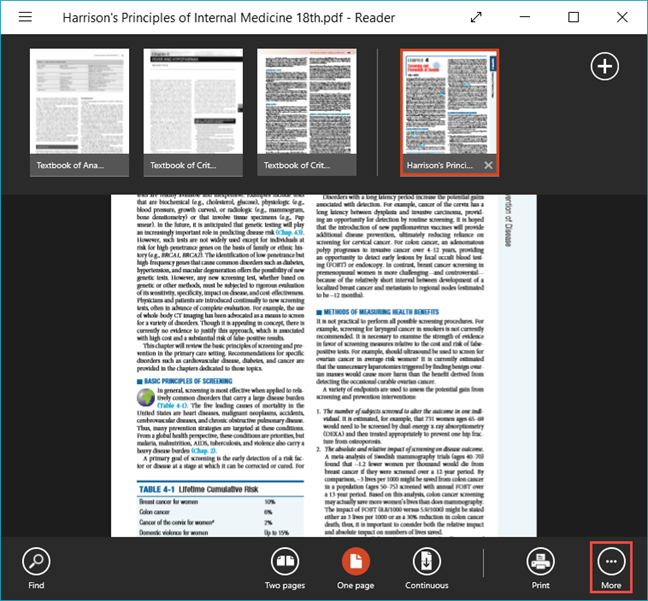
To reach a file's bookmarks, right-click or flick upwards on your app screen and press the More button from the lower menu bar.
Next, press the Bookmarks option from the menu that is shown. If the file doesn't have any bookmarks the option won't be available.
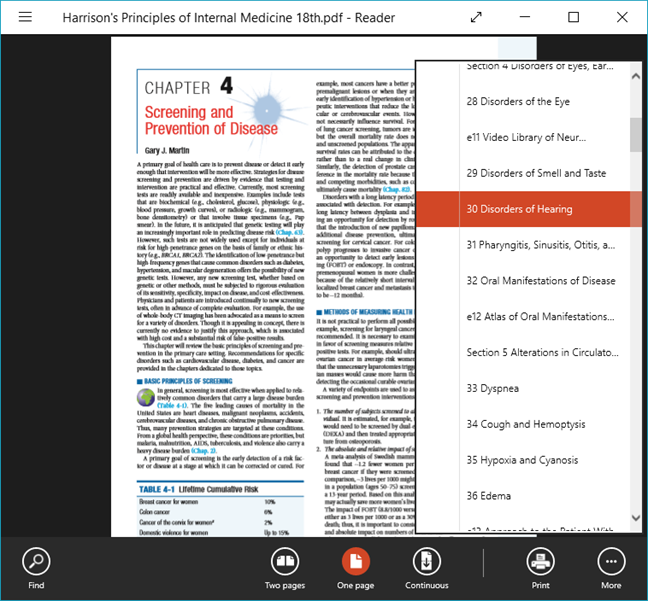
Now, you can scroll through the bookmarks that are available and jump directly to a certain section of your document.
How to save the file with a different name in the Reader app
If you want to save a file under a different name, open it in the Reader app and right-click or swipe upwards. Press the More button from the lower menu bar.
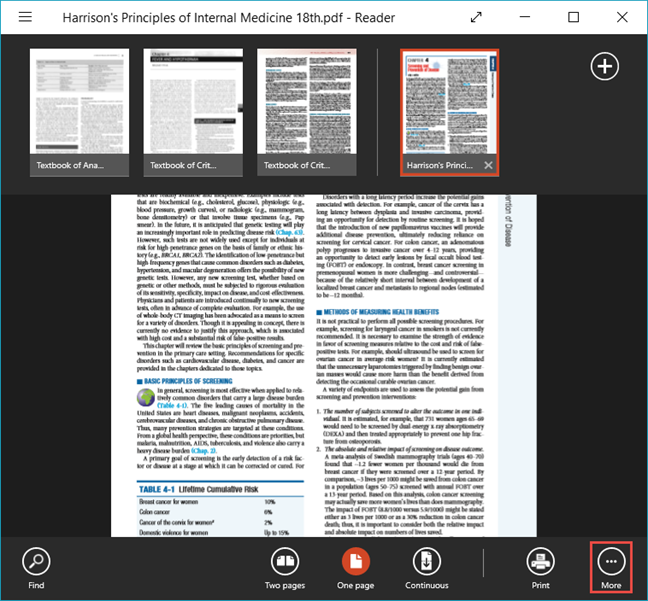
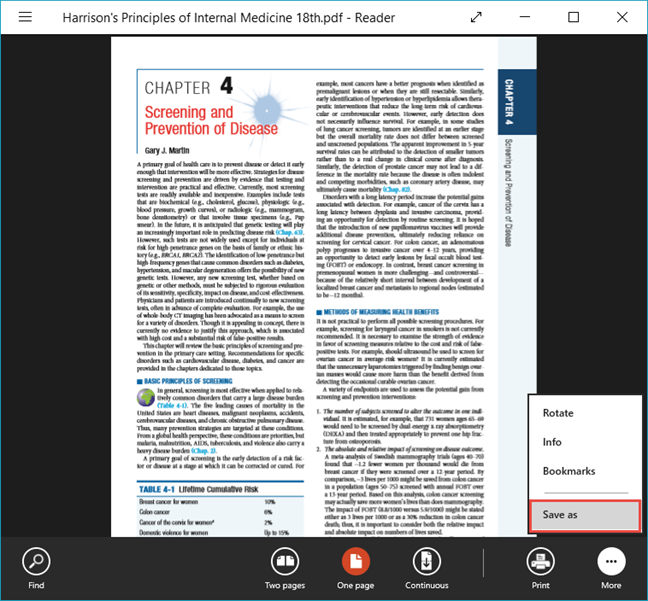
Next, press "Save as".
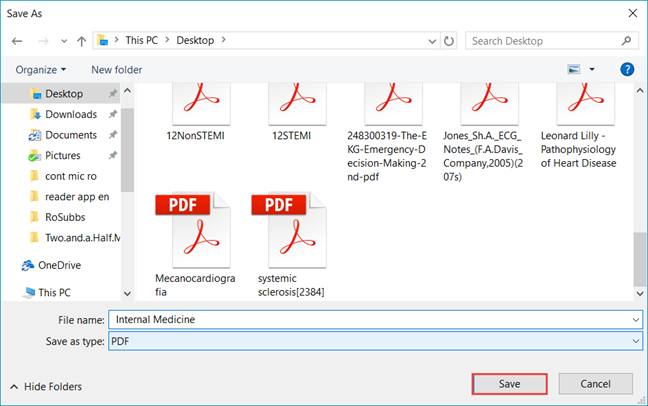
Now, you can rename the file by typing a new name in the "File name" field and navigate to the location you want the file to be saved. Then, press Save. The original file won't be modified.
Go to the third page of this tutorial you want to learn more about jumping to pages, switching between viewing modes, searching through your documents or adding notes and highlights using the Reader app.
How to jump to a certain page in your file, using the Reader app
If you are using the Reader app to read a long document, chances are you might need to jump to a certain page at some point. On your keyboard, press Ctrl + Minus Sign (-) to display each page's thumbnail. Alternately, you can hold down the Ctrl key and use the scroll wheel on your mouse to zoom in and out. On a touch-enabled device, pinch the screen to zoom in and out.
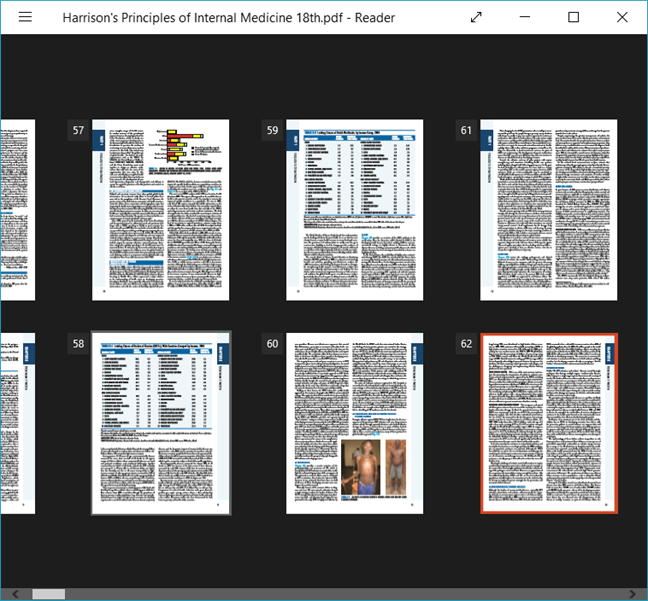
Next, select the page where you want to go to, by clicking or tapping on it.
How to switch between viewing modes in the Reader app
The Reader app offers multiple viewing modes that you can use to display your documents. To cycle between the viewing modes, open a file in the Reader app and right-click or swipe up from the bottom edge of the screen. In the lower menu bar you can see the buttons for different display modes.
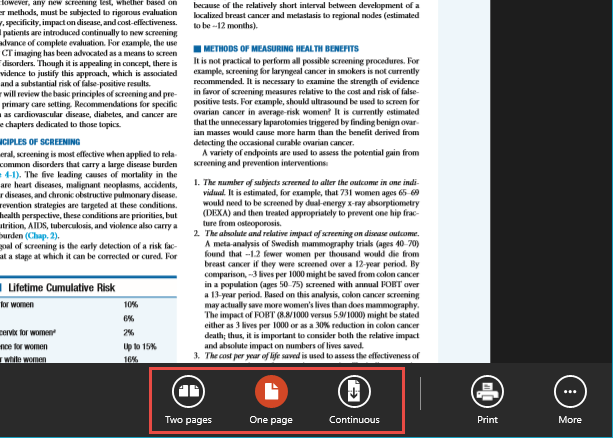
One page is the default viewing mode for the Reader app. If this mode is active, pages are displayed one at a time.
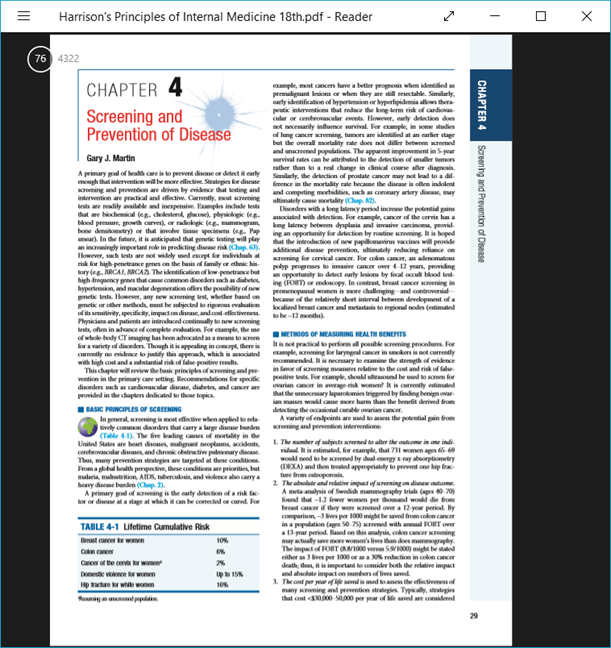
When using Two pages, the Reader app displays the pages of your documents in pairs of two, as if you were reading a book.
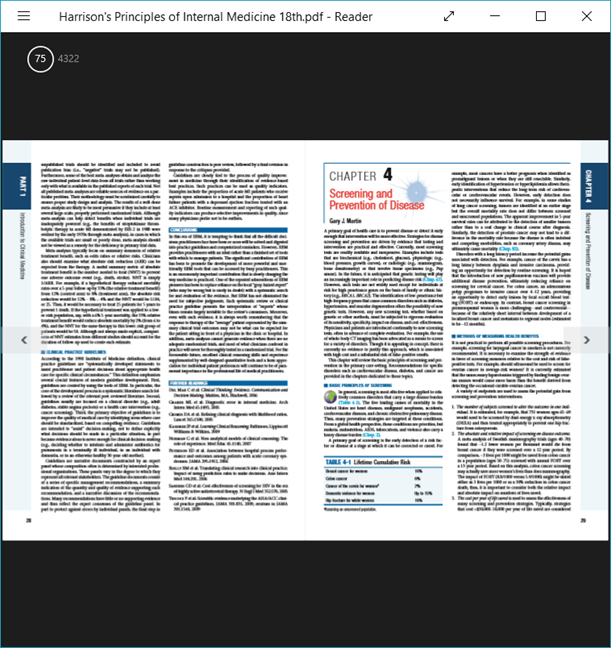
When you enable this mode, a fourth viewing mode becomes available: Cover page.
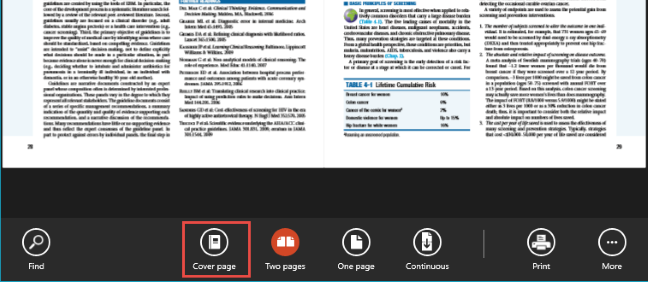
If you enable the Cover page viewing mode, the cover of the document is displayed separately from its pages.
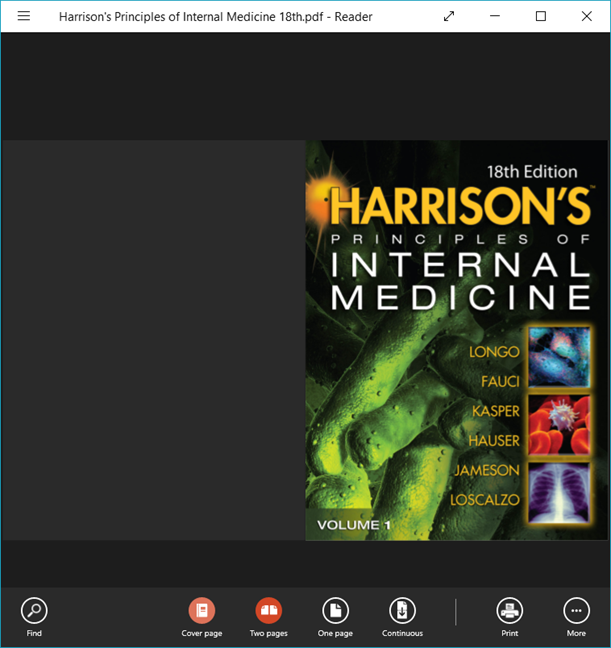
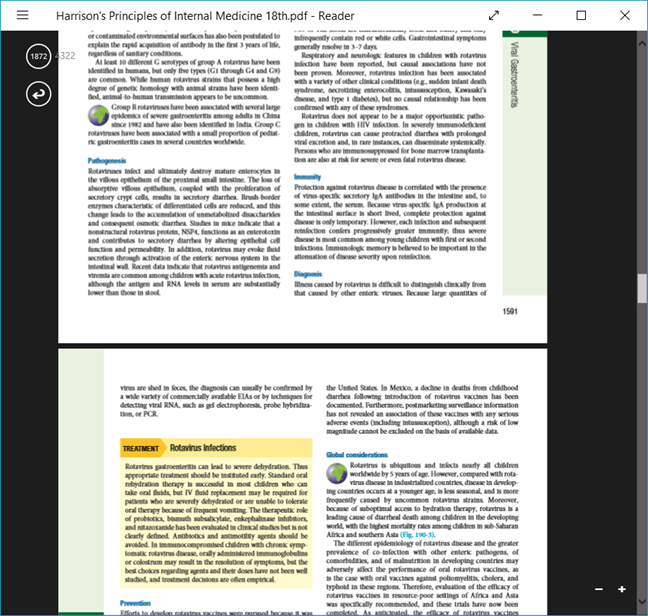
Another mode is Continuous, which shows the pages of your document one after the other, separating pages with a dark space between them.
How to search through a PDF or XPS document in the Reader app
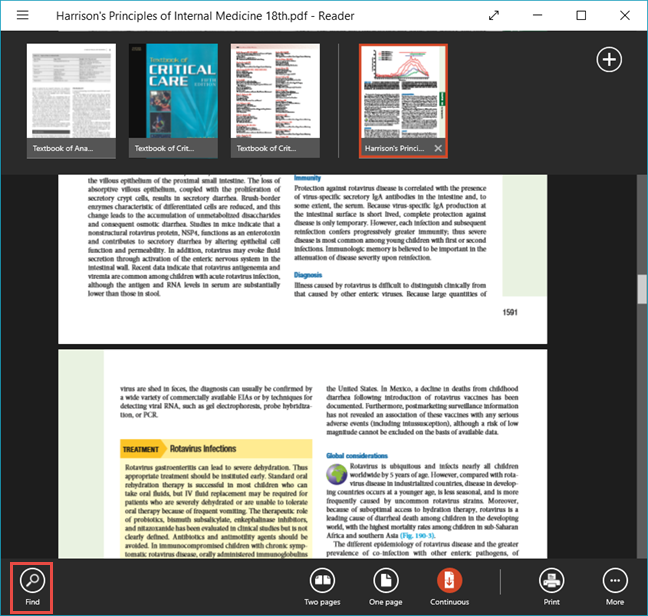
The Reader app allows you to search for information in PDF or XPS files. First, open the document in the Reader app and right-click or swipe upwards from the bottom of the screen. Press the Find button from the lower menu bar.
Type the keywords you want to search for in the text field and press the Enter key or the Find button placed at the right of the search field.
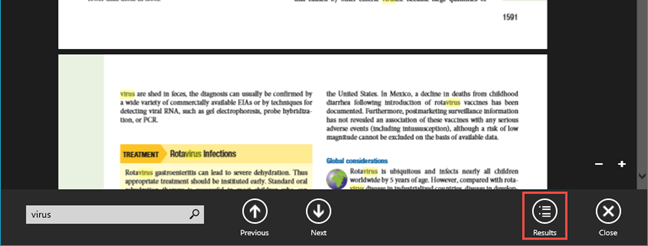
The search results are highlighted throughout the document. You can cycle through them by either pressing the Search icon multiple times or by using the Previous and Next buttons next to it.
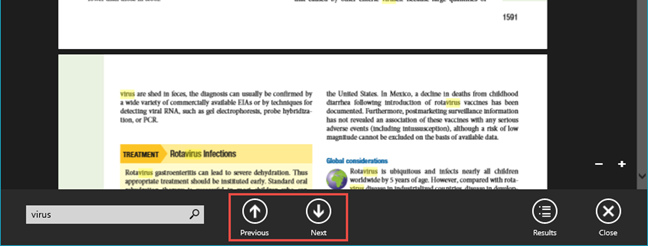
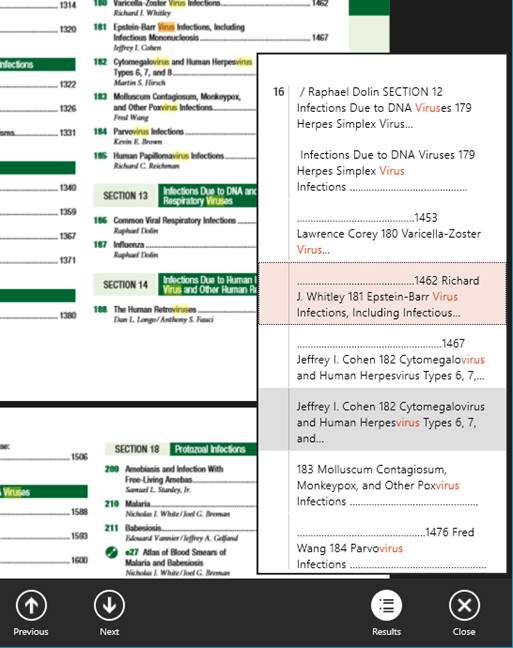
To view the complete list of results, click or tap the Results button in the lower right corner of the screen.
Here, you can navigate through the results to find what you were looking for.
How to highlight text and add notes in the Reader app
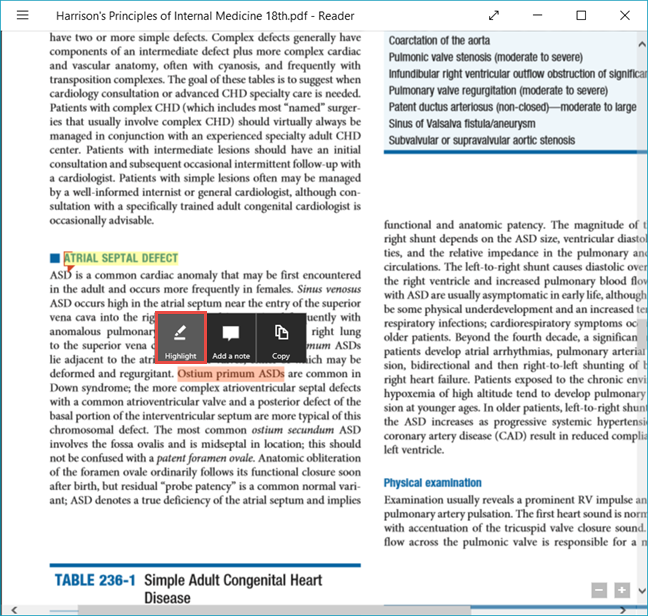
If you want to mark certain parts of your document, the Reader app allows you to do so. Select a fragment of text and press the Highlight option from the pop-up menu. Unfortunately, you can't view all the highlights you've created in one window.
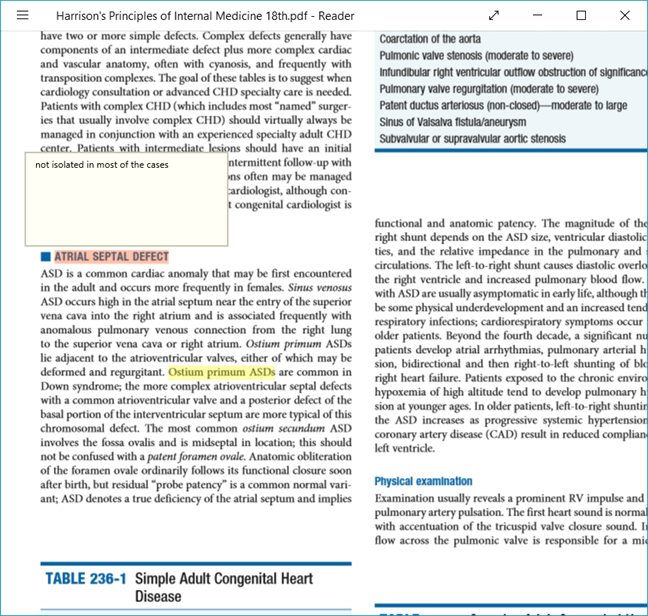
To add a note, select a fragment of text and press the Add a note option from the same menu shown below.
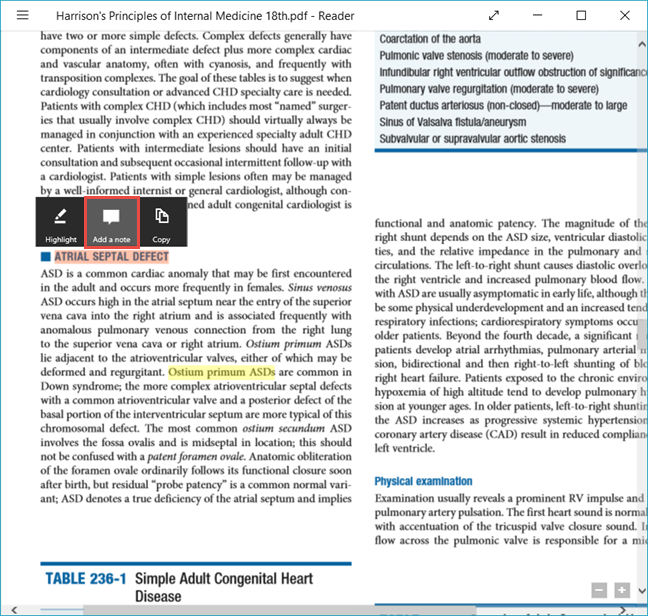
A text box will appear where you can start typing your note. When you are done, just click or tap outside the text box and you're done.
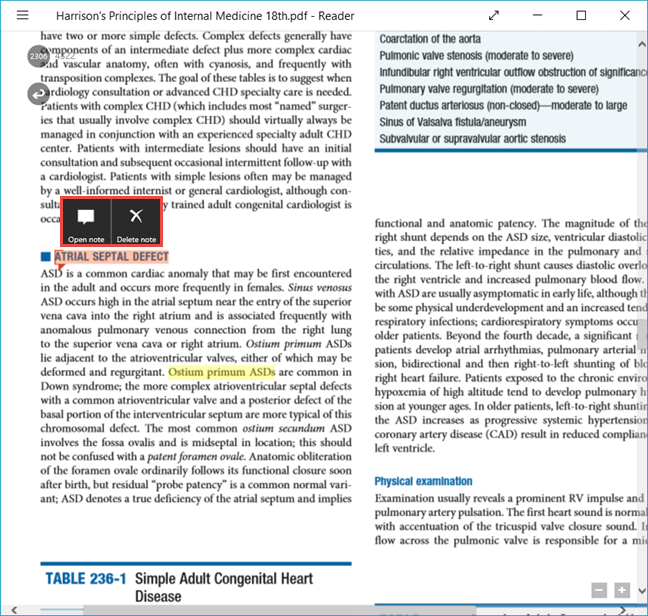
To open the note, click or tap the text you added the note to and press Open note from the pop-up menu. If you want to remove the note press Delete note from the same menu.
Conclusion
We like the Reader app mostly because it's simple and ready to use at any time. It's perfect for devices with touch and it works well if you just want to view your documents and you don't need professional editing tools, which aren't usually free. The app is bundled with Windows 8.1 and Windows 10, making it accessible for all Windows users. Try this app and tell us what you think in the comments below.

Discussion (13)
Can I join/merge multi files into one file?
narrator is not working on this app in windows 8.1
please help!
“It holds open the files of what you have viewed, even after you have stopped viewing the document and closed the window”.
Agreed! very annoying. If you read a document from an email attachment and you already have 5 files open it does not close the first file to allow the space, instead it opens the 5th file instead! I had a document to open which was very similar to the 5th document and it opened that one which was very confusing and dangerous. I was also blaming someone for sending me the wrong document. Not good.
When I “Save As” a pdf file, I do not see a choice for “Favorites”. I have to start at Documents and walk the whole tree. I also do not see an option to create a new Folder once I get there.
Is it somehow possible to change default viewing mode in reader app?
I can not get the reader app to add text into PDF documents that this feature is turned on in I load onto windows 7 laptop and use standard ADOBE no problem at all, how do you text type in PDF Reader or is it so useless it cant do it.
I keep having issues where in a file that has pages with different orientations, it’ll only print one way. Such as only landscape or only portrait, which makes the printed result screwy.
there should be “night mode”. i can do it from windows settings but it can be one button accessible.
I seem to have a problem with all my apps in the new metro UI in windows 8.1 including in the Reader App. When I want to save a file I can only do so in onedrive, I can click on onedrive and change it to this PC for exemple but I see no folders and if I try and save I have a error message saying I cant save here.
Does Windows 8.1 allow apps to acces the C drive? or is it a problem with my settup?
regards
I hate the reader app. I am in college and it is easier to switch from tab to tab in Explorer as I did in Windows 7. How can I turn this feature OFF? Now I go to the app then have to go to the bottom left hand corner of the screen then click desktop then click explorer to get to where I was before.
The reader app also does not zoom to page width as in adobe
You forgot one important aspect that is very very annoying with the reader app
It holds open the files of what you have viewed, even after you have stopped viewing the document and closed the window
This means you cannot move the files, rename the files or do anything but copy the files as reader will hold them open
You have to go into the task manager and kill the read app to be able to do anything with the files after you have viewed them with reader, which makes the reader app a huge pain and not worth it
We did not stumble on this problem. Thanks for sharing this.