



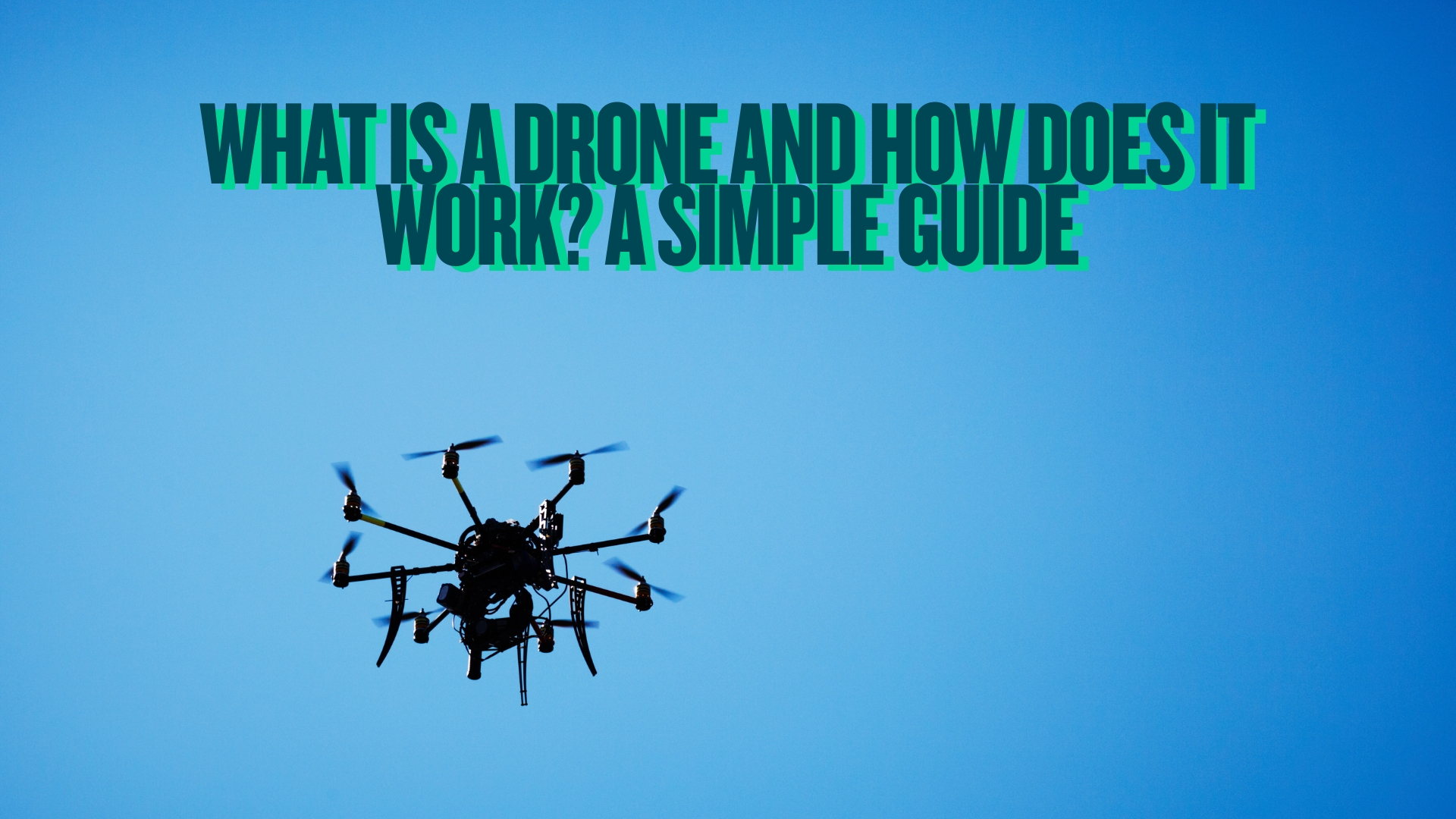
A drone, or unmanned aerial vehicle (UAV), is an aircraft that flies without a pilot onboard; think of it as a type of robot. It can be remotely controlled or fly autonomously using onboard computers, sensors, and GPS navigation.
If you’re wondering what is a drone and how does it work, here’s the short answer: a drone maintains stability through sensors and a flight controller that constantly adjusts its motors. At the time of writing, drones are widely used for aerial photography, mapping, inspections, and even emergency response—while following strict airspace rules.
Drone Definition That Fits Today’s Use
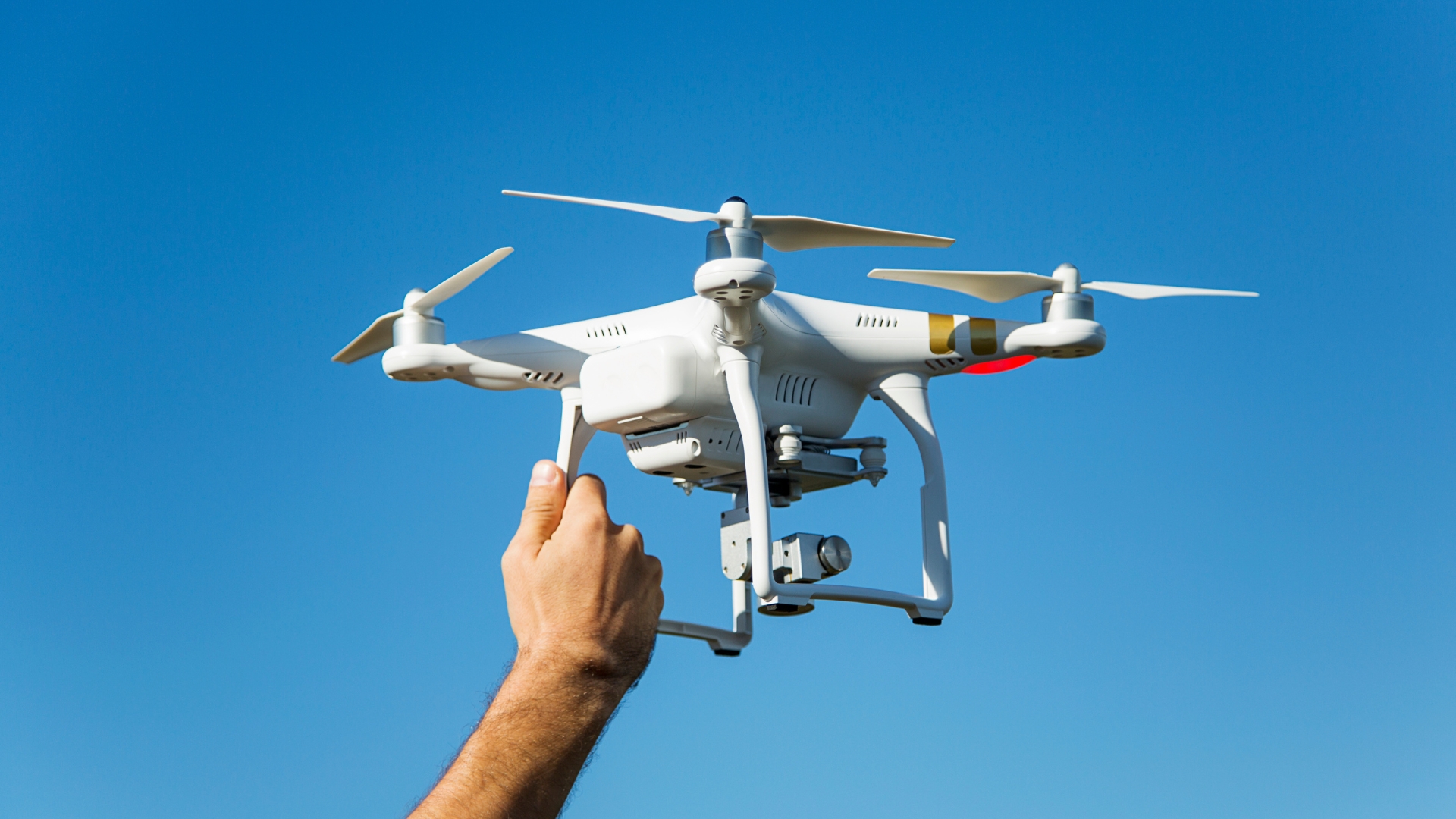
A modern drone is part of a larger unmanned aircraft system (UAS) that includes the aircraft itself, a controller or app, a communication link, and the supporting software. Most consumer drones are compact quadcopters, while professional users rely on fixed-wing or hybrid platforms for extended missions.
When people ask what is a drone used for, the answer goes far beyond photos. Drones now power data collection in agriculture, construction, energy, logistics, and environmental research—doing tasks that once required costly manned aircraft.
How Drones Work
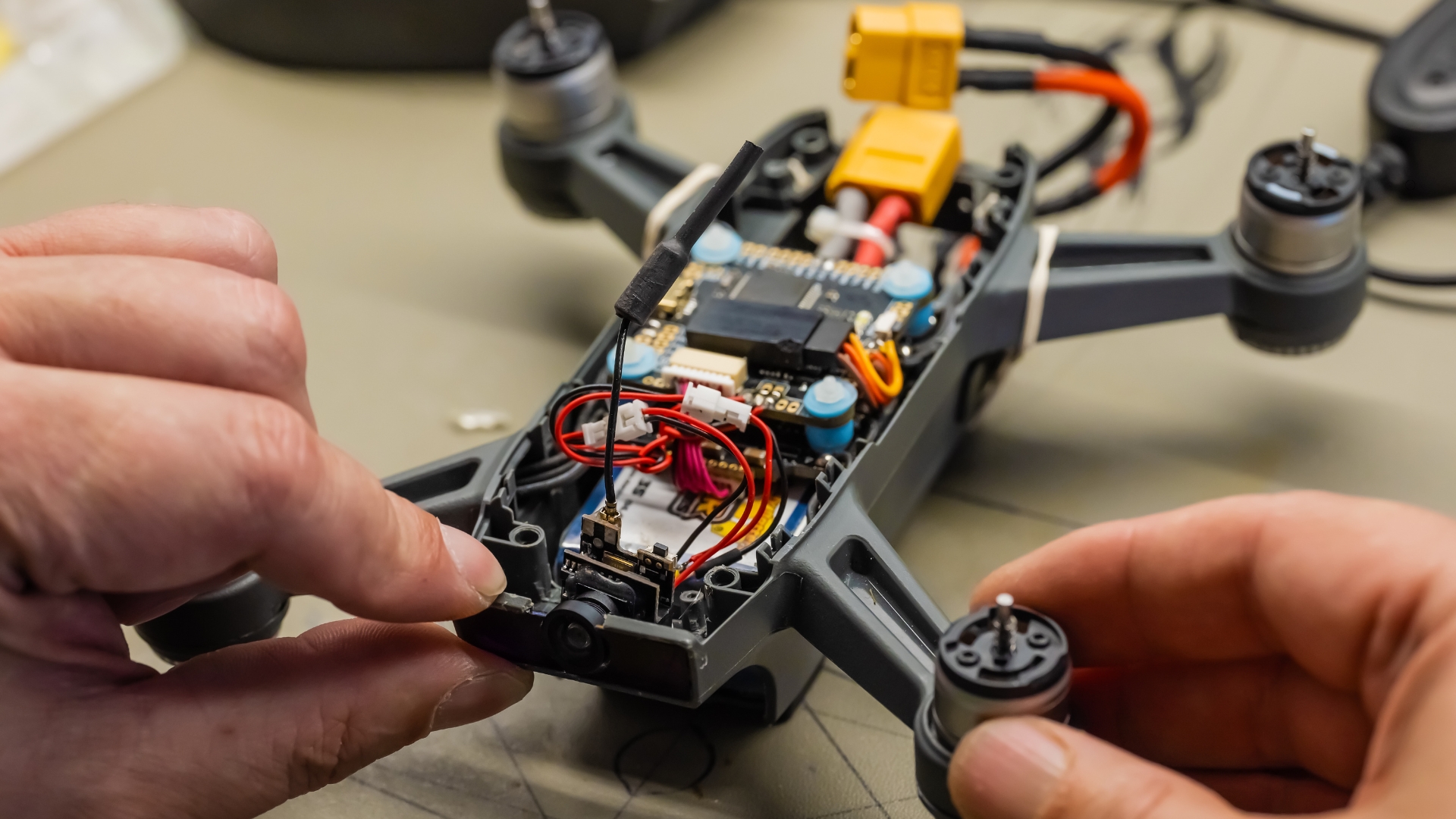
The flight controller is the brain of every drone. It combines inputs from accelerometers, gyroscopes, magnetometers, barometers, and GPS sensors, then adjusts motor speeds to keep the aircraft level and responsive to commands.
Pilots use handheld transmitters or mobile apps to control the drone. The onboard receiver interprets those inputs and moves the aircraft accordingly. Advanced drones add autonomous modes like position hold, follow-me, and waypoint navigation, allowing flight without constant manual input.
Most drones include a stabilized gimbal that keeps the camera steady while capturing video. Battery life determines range and flight time, with typical consumer models staying airborne for 20 to 40 minutes per charge.
Types of Drones

Quadcopters: These four-rotor drones offer stable flight and easy control, ideal for beginners, photography, and inspection work.
Fixed-wing drones: Designed like airplanes, they deliver longer flight endurance for mapping, surveying, and environmental monitoring.
Heavy-lift multirotors: Hexacopters and octocopters can carry large cameras, LiDAR scanners, or other payloads for industrial and rescue missions.
Nano and micro drones: Palm-sized and lightweight, these are perfect for indoor use, education, and close-range operations.
Hybrid or VTOL drones: Combining vertical takeoff with fixed-wing efficiency, these models balance lift and long-range performance for surveying and delivery.
What Drones Are Used For
Aerial photography and videography: Capture cinematic perspectives once possible only from helicopters. See our aerial photography tips for better shots.
Agriculture: Drones help farmers monitor crops, map fields, and apply fertilizers precisely to boost yield and reduce waste.
Construction and infrastructure: Used for progress tracking, 3D mapping, and inspections of roofs, bridges, and transmission towers.
Search and rescue: Equipped with cameras and thermal sensors, drones can quickly locate missing persons and assess disaster zones.
Environmental monitoring: Track wildlife, survey forests, and measure environmental changes without disturbing sensitive ecosystems.
Delivery services: Companies are testing drone delivery to reduce last-mile logistics time in urban and rural areas.
Benefits and Drawbacks
Benefits: Drones lower operational costs, reduce safety risks, and provide instant data collection with a smaller carbon footprint than manned aircraft.
Drawbacks: Battery limits, weather sensitivity, privacy concerns, and strict aviation laws can restrict usage. Responsible piloting and regular maintenance are essential.
Drone Rules and Regulations (U.S.)
Before flying, register your drone if required, mark it clearly, and check local no-fly zones. Maintain line-of-sight, stay below 400 feet, and respect people’s privacy. Commercial pilots must pass the FAA Part 107 exam. For details, see our guide to U.S. drone laws.
Quick Answers (FAQs)
What is a drone used for? Common uses include aerial photography, mapping, inspections, agriculture, and emergency response.
What are the four types of drones? The main categories are quadcopters, fixed-wing, heavy-lift multirotors, and nano drones.
How far can a drone fly? Many consumer drones reach several miles, but regulations often require keeping visual contact.
What is a drone for kids? Small, safe drones with propeller guards and simple controls designed for supervised learning.
What is a drone in the military? UAVs used for reconnaissance, communications, or defense missions under regulated control.
What is a drone in music? A continuous tone or note held through a composition—unrelated to aerial drones beyond the name.
Tips for Smarter, Safer Flights
Begin in beginner mode with a small UAV until you’re comfortable with orientation. Fly in open spaces and check local weather before each launch.
Keep spare batteries ready and land with a margin of power left. Update firmware only when you can test afterward.
Keep people, pets, and property clear of the aircraft. Log flight hours and maintenance to track performance safely.
Summary
- A drone is an unmanned aerial vehicle (UAV) that flies by remote or autonomous control.
- Flight controllers and sensors maintain stability and navigation.
- Main types include quadcopters, fixed-wing, heavy-lift, nano, and hybrid VTOL drones.
- Primary uses include imaging, mapping, agriculture, inspection, and rescue.
- Benefits: low cost, safety, and flexibility. Drawbacks: battery life and regulation.
- Know and follow drone laws before flying commercially.
Conclusion
Now that you know what a drone is, it’s clear how these aircraft reshape industries. Drones combine sensors, GPS, and automation to collect data faster, safer, and more efficiently. As technology advances, expect longer flights, smarter AI-assisted control, and new commercial applications.
Ready to start flying? Pick a reliable beginner model, review regulations, and practice in open areas. For guidance, check our best drones for beginners article.


Discussion (0)
Be the first to comment.