



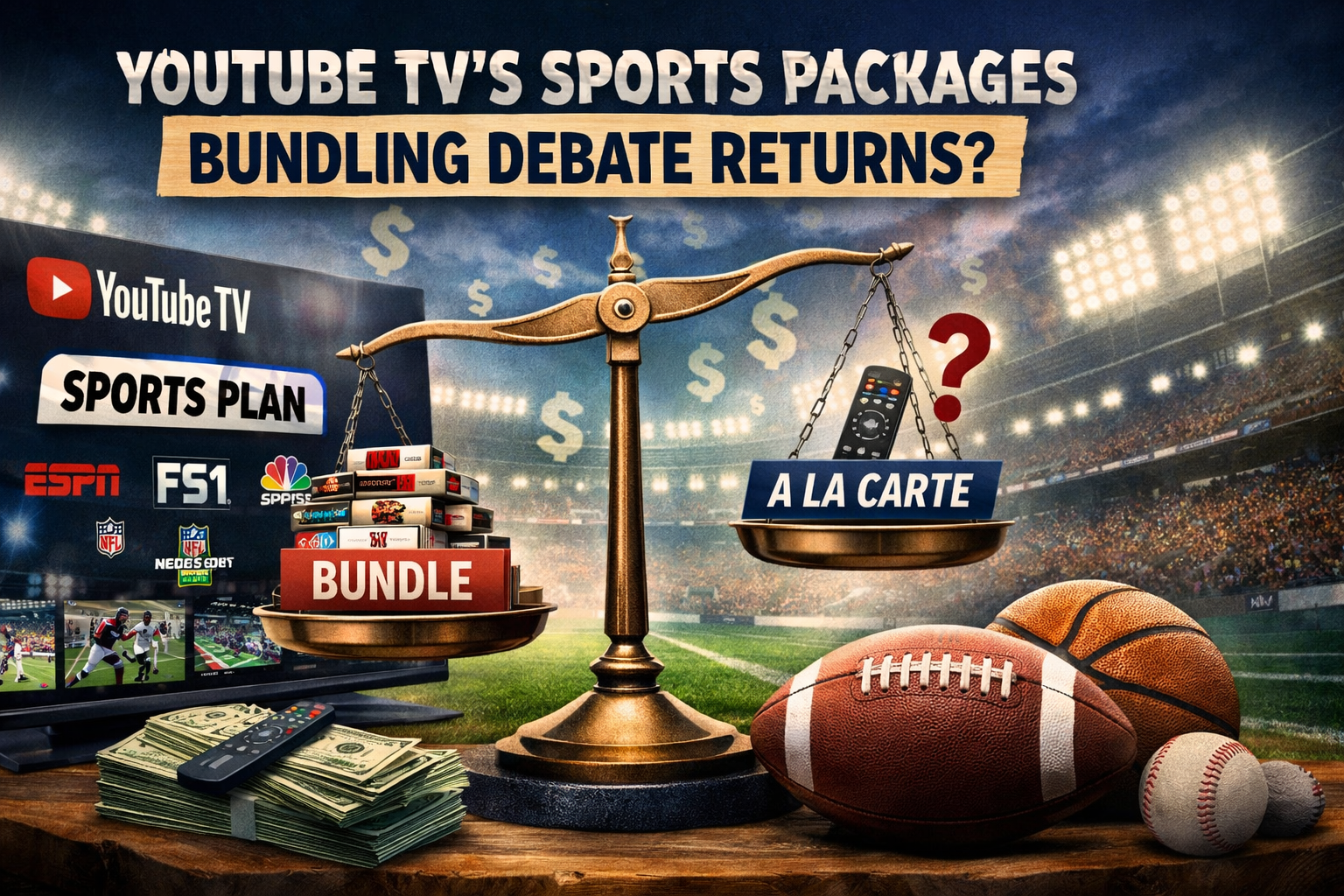
YouTube TV is reshaping its subscription strategy with a slate of new genre-based packages, putting sports front and center and reopening an old argument about whether streaming has truly escaped cable-style bundling.
YouTube TV confirmed plans to roll out more than 10 interest-focused tiers starting in early 2026, with a dedicated Sports Plan positioned as a cheaper alternative to its full base subscription. The move targets viewers who mainly watch live games and want to cut costs without giving up marquee networks.
A sports-first package, not full unbundling
The upcoming Sports Plan bundles major broadcast networks with popular sports channels such as ESPN and FS1. Subscribers will still get YouTube TV staples like unlimited DVR and multiview, while optional add-ons such as NFL Sunday Ticket and RedZone remain available at extra cost.
YouTube TV frames the new structure as flexibility rather than fragmentation. Executives argue that viewers no longer want a one-size-fits-all lineup and prefer paying for content categories they actually watch.
Why critics see cable echoes
The announcement immediately sparked debate among cord-cutters and industry analysts. While the Sports Plan costs less than the full package, it still groups channels together instead of offering true pick-and-choose access.
That structure mirrors the “skinny bundle” approach cable companies pushed for years. Critics say it repackages the same logic under a streaming label, especially since live sports rights continue to drive up prices across the industry.
Sports costs still shape the market
Live sports remain the most expensive content for TV providers, and they heavily influence subscription pricing. YouTube TV’s earlier carriage disputes, including a high-profile clash over ESPN, highlighted how much leverage sports networks still hold.
By isolating sports into its own tier, YouTube TV aims to protect non-sports viewers from rising costs while keeping die-hard fans inside its ecosystem.
Advertisers and rivals take note
Advertisers now face a more segmented audience. Sports-focused packages allow sharper targeting but reduce the massive reach that came with a single bundled lineup. Competitors like Fubo and other live TV streamers already experiment with similar sports-heavy offerings, signaling a broader industry shift.
What happens next
YouTube TV has not yet shared final pricing or full channel lists for the new packages. Those details will determine whether the Sports Plan feels like meaningful consumer choice or simply cable bundling in a new format.
For now, the move shows how streaming services continue to circle back to familiar models as sports rights costs rise. The cable bundle may not be gone after all—it may just wear a different interface.


Discussion (0)
Be the first to comment.