



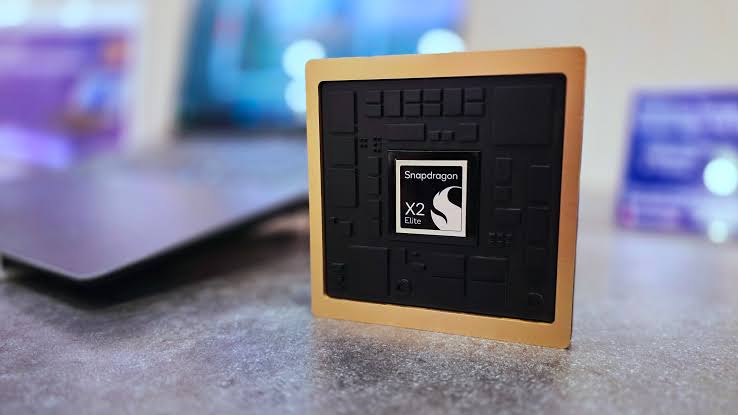
Qualcomm's standard 18 core Snapdragon X2 Elite is showing strong results against Intel and AMD in premium 14 inch Windows laptops, suggesting that the company's performance gains are not limited to its more expensive Extreme processor.
A recent benchmark study compared the Snapdragon X2 Elite X2E 88 100 inside a Lenovo Slim 7x with Intel's Core Ultra X7 358H in a Dell XPS 14 and AMD's Ryzen AI 7 445 in a Lenovo Yoga 7a 14. The testing focused on CPU performance, AI workloads, productivity, battery life and graphics performance.
The results generally favored Qualcomm in CPU, AI and battery focused tests, although Intel retained a clear advantage in integrated graphics. The study was commissioned by Qualcomm, so the results should be viewed with that context in mind.
Snapdragon X2 Elite Posts Strong CPU Results
In Geekbench 7, the Snapdragon powered Lenovo Slim 7x reached a multi core score of 24,016, compared with 18,360 for the Intel powered XPS 14.
Single core performance also favored Snapdragon, with a score of 3,237 compared with Intel's 2,602.
That works out to a reported 31 percent advantage in multi core performance and 24 percent in single core performance for Qualcomm. The single core result is particularly important because it suggests the improvement cannot be explained only by Snapdragon's higher core count.
| Test or category | Snapdragon X2 Elite | Intel Core Ultra X7 358H |
|---|---|---|
| Geekbench 7 single core | 3,237 | 2,602 |
| Geekbench 7 multi core | 24,016 | 18,360 |
| AI Computer Vision | 4,360 | 2,302 |
| Local video playback | 16.1 hours | 14.4 hours |
| Chrome browsing | 11.2 hours | 8.6 hours |
| Office battery test | 14.3 hours | 17.4 hours |
Qualcomm also maintained an advantage in Cinebench 2026 and productivity testing. In an Office focused benchmark, the Snapdragon laptop led Intel by around 10 percent when both machines were configured for maximum performance, while maintaining a smaller lead under balanced settings.
AI Performance Remains a Major Strength
AI workloads produced another sizeable advantage for Snapdragon.
In an AI computer vision benchmark, Qualcomm's laptop scored 4,360, compared with 2,302 for Intel.
Qualcomm also maintained a lead of roughly 31 percent in a newer Windows ML based computer vision test. This result is notable because Windows ML provides a more standardized software layer rather than relying entirely on vendor specific optimizations.
That could become increasingly relevant as more Windows applications begin using local AI processing through standardized operating system frameworks.
Battery Results Mostly Favor Snapdragon
The Snapdragon system retained an average of 97 percent of its plugged in balanced mode performance when running on battery.
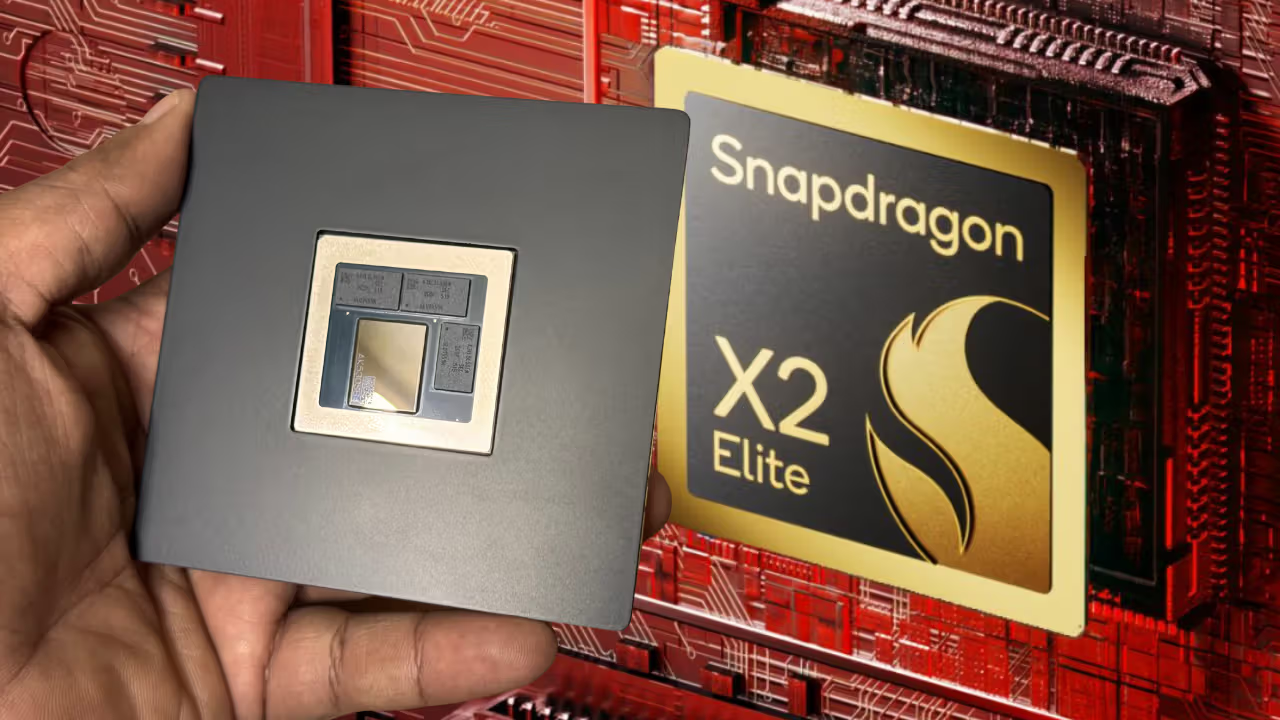
Intel retained 95 percent, while the AMD based laptop retained 74 percent in the same comparison. Qualcomm also led the tested CPU, productivity and AI workloads while operating on battery.
Battery life results also favored the Snapdragon laptop in several tests.
The Lenovo Slim 7x lasted 16.1 hours during local video playback, compared with 14.4 hours for the Dell XPS 14. During Chrome browsing, Snapdragon reached 11.2 hours compared with Intel's 8.6 hours.
Intel did record an important victory in the sustained Office battery test, where the XPS 14 lasted 17.4 hours compared with 14.3 hours for the Snapdragon laptop.
These battery comparisons require some caution because the laptops have different displays. The XPS 14 uses a 2880 by 1800 OLED panel with a 120Hz variable refresh rate, while the Slim 7x has a 1920 by 1200 60Hz OLED screen. Display resolution and refresh rate can significantly affect battery consumption.
Intel Still Wins in Graphics Performance
Integrated graphics remains Intel's strongest advantage.
In 3DMark Steel Nomad Light, Intel's Arc B390 GPU was roughly 23 percent faster than Qualcomm's Adreno X2 90 in both DirectX 12 and Vulkan testing.
That makes the Intel platform more attractive if your workload depends heavily on integrated graphics, gaming or GPU accelerated creative applications.
Price also changes the comparison considerably. The Snapdragon powered Slim 7x used in the tests was priced at $1,999, while the Intel powered XPS 14 cost $2,749.
That is a $750 difference, although the two laptops are not directly equivalent products. The XPS 14 has more premium construction and a higher resolution, higher refresh rate display, so some of its additional cost comes from features beyond the processor.
The broader result is that Qualcomm's second generation Snapdragon laptop platform appears competitive even without relying on its flagship Extreme chip. Strong CPU performance, AI acceleration and battery efficiency make the standard Snapdragon X2 Elite a serious option for premium Windows laptops.
Intel still has important strengths, particularly in graphics, and laptop design can influence both performance and battery results. Even so, the latest testing suggests Snapdragon's advantages are becoming available in systems that are more likely to reach a wider group of buyers rather than remaining limited to a small number of flagship devices.

Discussion (0)
Be the first to comment.