


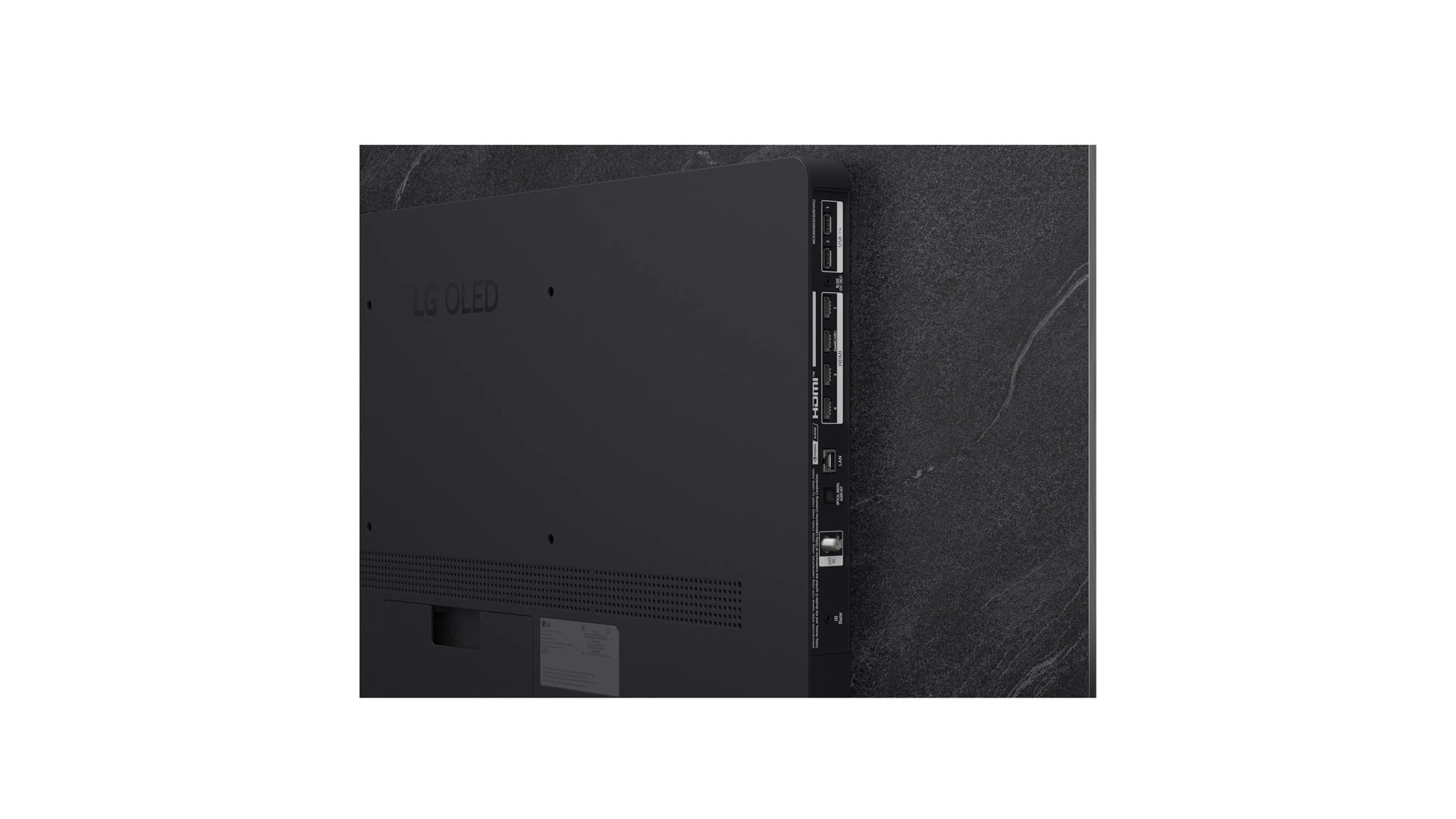
A TV sold on 4K and 144Hz can refuse that mode on half of its HDMI inputs. TCL's published specifications for the 65-inch QM7L list four HDMI ports, then split them: HDMI 1 and 2 at 4K@144Hz, HDMI 3 and 4 at 4K@60Hz.
The panel never changes. TCL rates the QM7L's native panel refresh at 144Hz. A console plugged into HDMI 3 is working exactly as specified, at 60Hz.
The pattern runs across brands, and it decides how many gaming inputs a TV really has. It applies to TCL's 65-inch Mini LED set and to Sony's 55-inch BRAVIA 7 alike.
Each HDMI port carries its own bandwidth
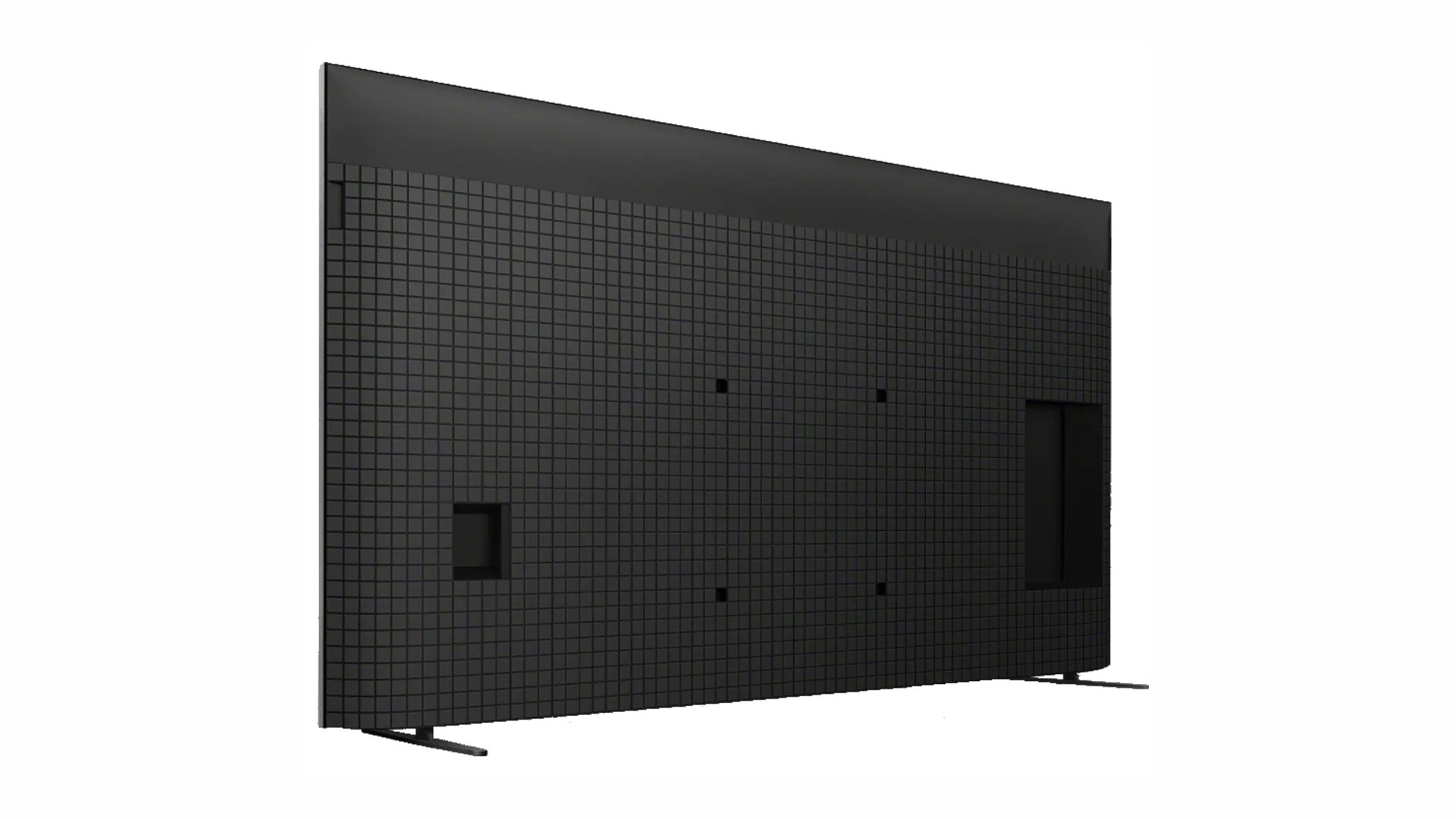
Sony publishes the reason in plain numbers. Its spec sheet for the 55-inch BRAVIA 7 rates HDMI IN1 and IN2 for a 4K signal "up to 18Gbps". It rates HDMI IN3 and IN4 for a 4K signal "up to 48Gbps".
The HDMI Signal row carries a footnote of its own: "120Hz is supported by HDMI IN 3 and IN 4". Sony lists the native panel refresh rate as 120Hz.
Two more rows follow the same split. Variable refresh rate is listed as "Yes (for HDMI3/4)", and so is source-based tone mapping. Auto low latency mode is the exception, at "Yes (for HDMI1/2/3/4)".
So half the inputs on that set carry the headline refresh rate and most of the gaming features. The other half carry neither.
The HDMI 2.1 label does not settle it
Sony lists its "Features specified in HDMI2.1" as 4K120, eARC, VRR, ALLM and SBTM. That is on the same sheet that confines 120Hz to two ports. The badge describes the set, not every socket.
TCL's own documents show the same thing from the other side. Its specification sheet for the 65QM8L reads "4x HDMI 2.1 (4K@144Hz), HDMI4 with eARC". The QM7L sheet drops the version number and prints the port split instead.
Both sets are rated at a 144Hz native panel. What differs is what the inputs will accept.
Two other makers skip the version entirely. The phrase "HDMI 2.1" appears nowhere in LG's spec table for the 65-inch C6 OLED, and nowhere in Samsung's spec sheet for the 77-inch S90H.
The soundbar port is often one of the slow ones
The eARC connection, which sends audio back out to a soundbar, usually sits on one named port. LG states it as a spec row: "eARC (HDMI 2)".
TCL puts the QM7L's eARC on HDMI 4. That is one of the two inputs capped at 4K@60Hz.
A soundbar therefore claims a port before any console does. On the QM7L it claims a slow one, leaving exactly two full-rate inputs for everything else.
A 165Hz number is often a variable refresh ceiling
LG gives the C6's refresh rate as "120Hz Native (VRR 165Hz)". The variable refresh row reads "Yes (Up to 165Hz)". The HDMI row rates all four inputs for 4K 120Hz. LG also footnotes the 165Hz figure with a requirement for a PC and a 165Hz graphics card.
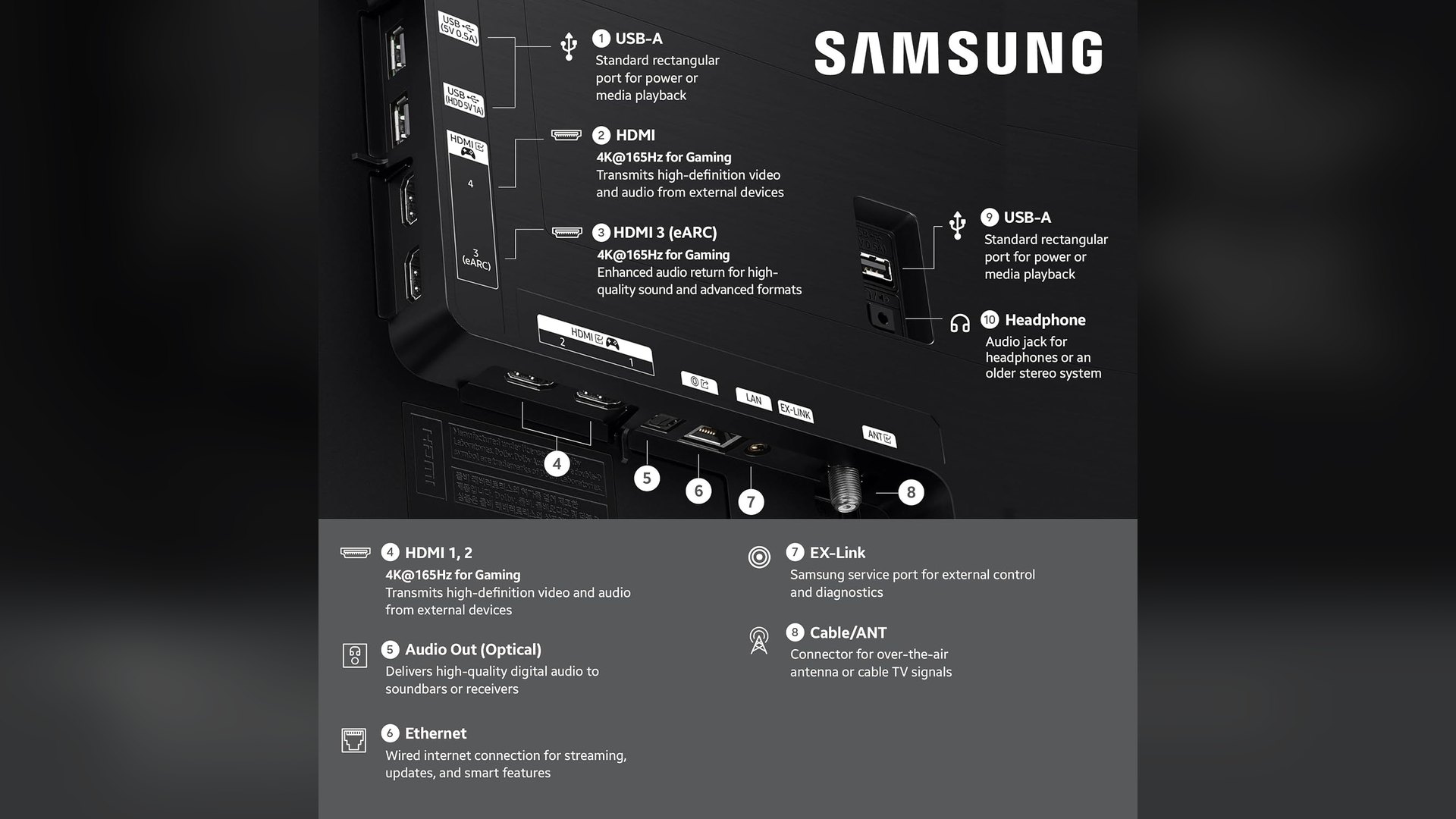
Samsung publishes the S90H refresh rate as "165 Hz (VRR Support)". It states no native panel refresh rate for the US model at all.
The HDMI Licensing Administrator describes VRR as letting a source deliver frames "as fast as it can, which in many cases is slower than the normal static refresh rate". A VRR ceiling is a window the TV will follow, not a rate it drives. That distinction matters more now that some games require a VRR display for their 120Hz mode.
How to find the right port before plugging anything in
Open the maker's spec sheet for the exact model code rather than the series page. Then look for a port number printed beside a refresh figure.
Sony files it as a footnote on the HDMI Signal row. TCL prints it inside the HDMI row. LG and Samsung attach a port list to the eARC and high-frame-rate rows.
Then count what is left once the audio port is taken. On Samsung's 77-inch S90H every input is rated "4K 165 Hz (for HDMI 1/2/3/4)", so nothing is lost wherever a console goes.
Nothing on screen warns you when a port is the wrong one. A console on a slower input negotiates 60Hz and plays normally, and the TV reports no fault.
Only Sony publishes a bandwidth figure for each input. LG prints no HDMI version number and no gigabit rating, TCL publishes neither for the QM7L, and Samsung publishes no native panel refresh rate for the US S90H. Spec sheets are also revised without notice, so the one for the exact model code is the only one worth reading.



Discussion (0)
Be the first to comment.