



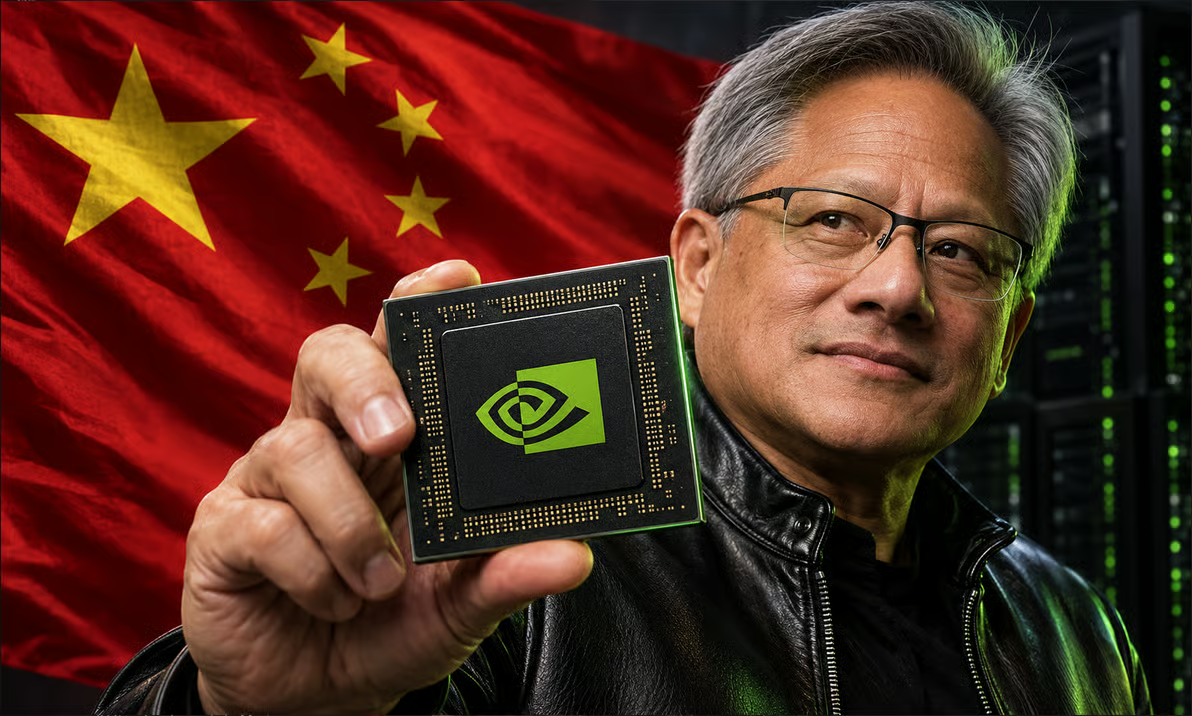
Chinese technology companies ByteDance, Alibaba, and Tencent have reportedly placed orders worth approximately $35 billion for NVIDIA RTX PRO 5500 graphics cards, despite uncertainty over whether the chipmaker can fulfill the demand.
The companies are seeking millions of GPUs to expand their artificial intelligence infrastructure, particularly for AI inference workloads. However, US export restrictions continue to limit China's access to some of NVIDIA's more powerful AI accelerators.
According to the report, Chinese customers have collectively ordered more than six million RTX PRO 5500 units, with ByteDance, Alibaba, and Tencent accounting for more than three million of them.
NVIDIA has reportedly warned its partners that it may initially fulfill only 5% to 10% of the requested shipments.
The situation highlights China's continued dependence on NVIDIA hardware, even as domestic companies such as Huawei develop competing AI processors.
NVIDIA RTX PRO 5500 Attracts Millions of Orders From Chinese Companies
The RTX PRO 5500 has emerged as an important option for Chinese technology firms seeking additional computing capacity.
Although the GPU is less powerful than NVIDIA's flagship B300 and H200 AI accelerators, it offers substantial memory capacity and processing resources for professional computing and AI applications.
The RTX PRO 5500 reportedly features 84GB of GDDR7 ECC memory, 21,760 CUDA cores, and memory bandwidth reaching 1.398TB/s.
These specifications make it suitable for workloads requiring large amounts of memory and parallel processing.
The GPU is particularly attractive to companies building infrastructure for running AI models after training.
However, NVIDIA's reported supply limitations could prevent customers from receiving most of their requested hardware in the near term.
The report does not establish when the outstanding orders will be fulfilled.
RTX PRO 5500 and Huawei Ascend 950PR Specifications Compared
Huawei is developing its Ascend processor lineup as an alternative to NVIDIA's AI accelerators.
The Ascend 950PR reportedly offers higher memory capacity and slightly greater memory bandwidth than the RTX PRO 5500.
However, hardware specifications alone do not determine how well a GPU performs in practical AI applications.
| Specification | NVIDIA RTX PRO 5500 | Huawei Ascend 950PR |
|---|---|---|
| Memory capacity | 84GB | 128GB |
| Memory type | GDDR7 ECC | HiBL 1.0 |
| Memory bandwidth | 1.398TB/s | 1.4 to 1.6TB/s |
| Processing architecture | NVIDIA CUDA | Huawei Ascend |
| CUDA support | Native | Not native |
| Power consumption | Comparable according to report | Comparable according to report |
Huawei's larger memory capacity may offer advantages for certain AI models, particularly those requiring substantial local memory.
Nevertheless, NVIDIA benefits from its established CUDA software platform, which supports a wide range of AI development tools and applications.
Switching to alternative hardware may require additional engineering work, software modifications, and performance optimization.
This helps explain why some Chinese companies continue prioritizing NVIDIA products despite the availability of domestic alternatives.
US Export Restrictions Continue to Affect NVIDIA AI Chip Shipments
American export controls have made it increasingly difficult for Chinese businesses to purchase certain high performance AI accelerators.
NVIDIA's B300 reportedly remains unavailable for authorized shipment to China, while H200 deliveries face licensing requirements.
These restrictions have encouraged Chinese companies to explore other hardware options.
However, domestic processors may not offer the same combination of software compatibility, performance, and established development tools that customers receive with NVIDIA products.
The RTX PRO 5500 has therefore attracted significant attention as companies search for hardware that can support their AI expansion plans.
Still, its reported availability does not guarantee that all orders will be approved or delivered.
NVIDIA's ability to supply the GPUs depends on manufacturing capacity, applicable export rules, and other commercial requirements.
AI Inference Demand Is Driving Chinese GPU Purchases
Much of the reported demand is connected to AI inference rather than exclusively training new models.
Inference involves using an already trained model to generate responses, analyze information, or perform other tasks.
For companies operating large AI services, inference can require substantial computing infrastructure because models must respond to customer requests continuously.
ByteDance, Alibaba, and Tencent all operate major technology platforms and are investing in AI capabilities.
Access to additional GPUs can help such companies increase processing capacity and support more demanding applications.
Although inference workloads can sometimes operate on less powerful hardware than large scale training systems, their requirements vary significantly depending on model size, response speed, and customer demand.
The RTX PRO 5500's 84GB memory capacity could help accommodate workloads that require considerable local GPU memory.
However, actual performance will depend on the AI software, model architecture, and system configuration.
Older NVIDIA Tesla V100 GPUs Are Also Seeing Stronger Demand
The demand for AI computing hardware is not limited to NVIDIA's latest processors.
The Tesla V100, introduced approximately nine years ago, has reportedly attracted renewed interest in the secondhand market.
The accelerator includes configurations with up to 32GB of HBM2 memory, allowing it to support certain smaller and medium sized AI models.
Although the V100 cannot match the performance of newer NVIDIA accelerators, it may remain practical for organizations with less demanding workloads.
Reports suggest that increased demand has pushed secondhand prices approximately $200 higher for some used units.
This indicates that older AI hardware can retain economic value when demand for computing resources remains strong.
However, prices depend on hardware condition, availability, and the specific configuration being sold.
NVIDIA Faces Supply Challenges Despite Strong Chinese Demand
The reported $35 billion order total demonstrates the scale of interest in NVIDIA's professional GPUs among major Chinese technology companies.
However, the gap between requested quantities and potential shipments remains substantial.
If NVIDIA can fulfill only 5% to 10% of the reported orders initially, customers may face significant delays in expanding their AI infrastructure.
The situation could create additional opportunities for Huawei and other domestic accelerator manufacturers.
Nevertheless, NVIDIA's CUDA ecosystem continues to be an important advantage for companies with existing software designed around its hardware.
For Chinese technology firms, the decision involves balancing performance, software compatibility, purchase costs, and regulatory uncertainty.
The reported orders show that demand for NVIDIA's AI processors remains substantial despite restrictions on more advanced products.
Whether NVIDIA can meet that demand, and how quickly domestic competitors improve their software platforms, will influence China's AI hardware market over the coming years.

Discussion (0)
Be the first to comment.