


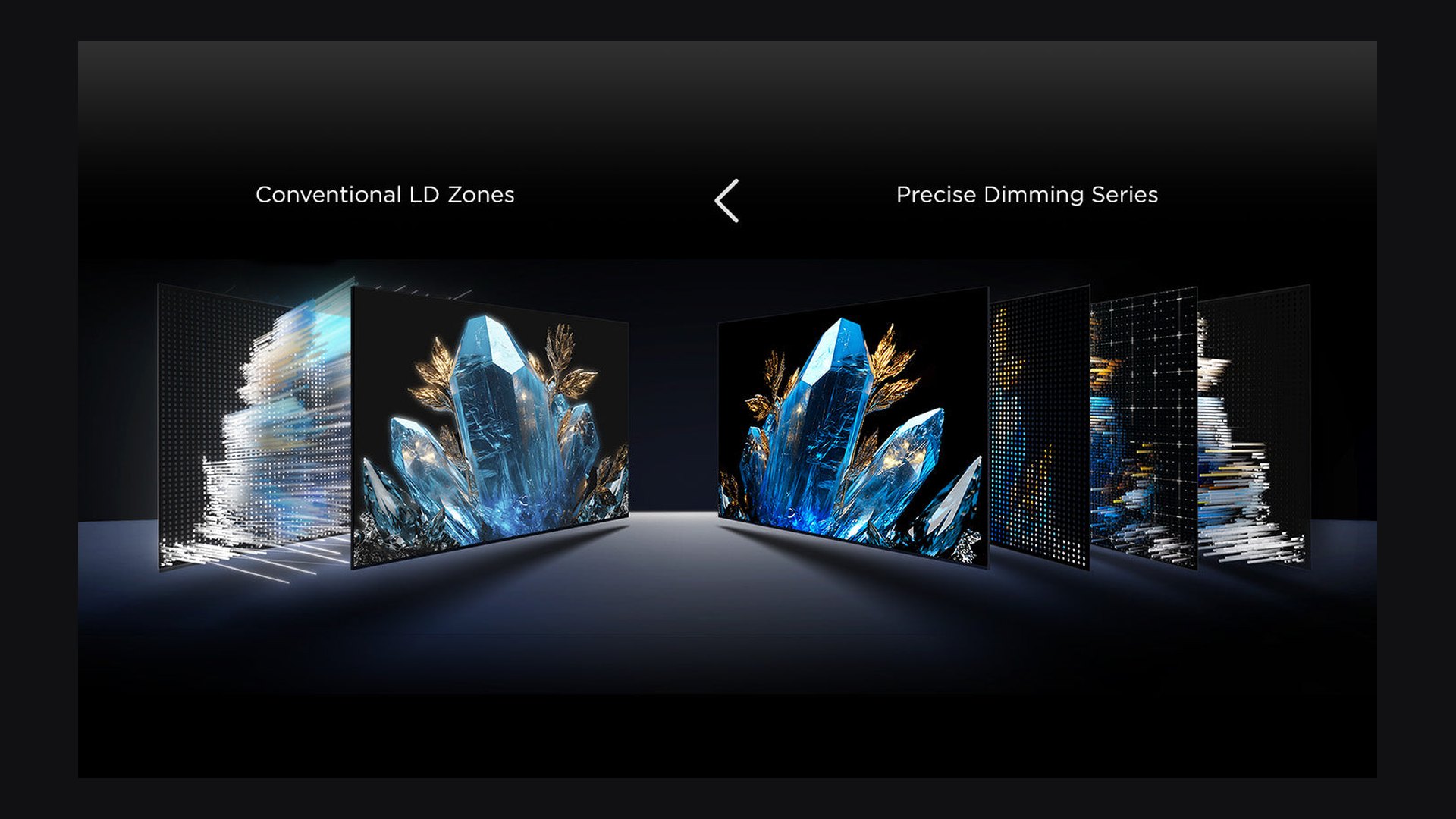
The phrase "Up to 4000+ Discrete Dimming Zones" appears exactly once in TCL's specification sheet for the QM8L series. That document covers the 65, 75, 85 and 98-inch sets together, and TCL publishes no zone count for any one of them.
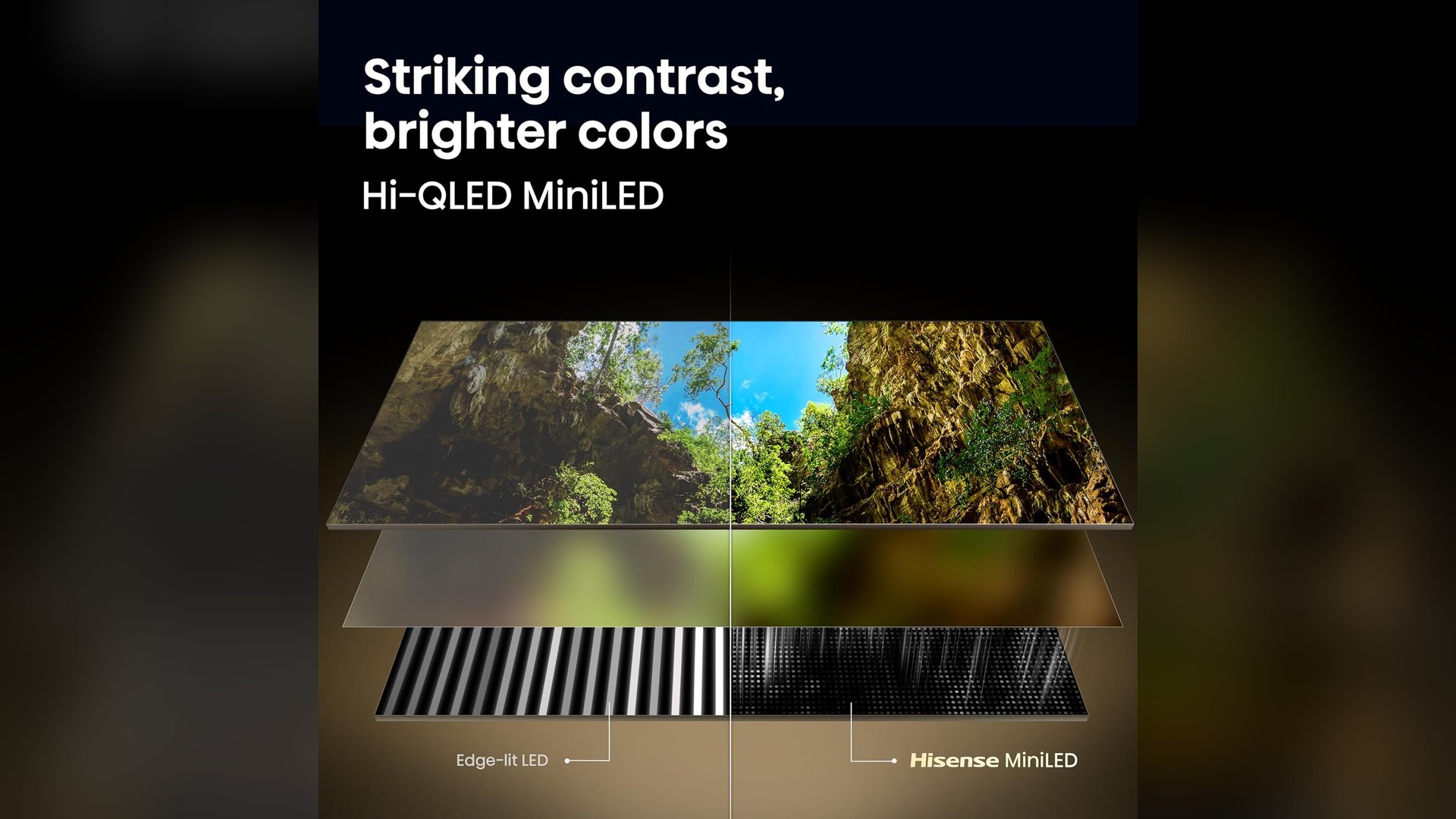
Mini LED TVs are sold on that number. It is also the number most likely to be a series ceiling rather than a figure measured on the set being bought.
What a dimming zone actually is
A Mini LED TV lights its picture with an array of small LEDs behind the LCD panel. The panel blocks light to make dark areas, but it cannot block all of it.
So the backlight helps. The LEDs are wired into groups, and each group the TV can brighten or dim on its own counts as one dimming zone.
Fewer zones means each one covers more of the screen. A bright object then sits inside a lit block larger than itself, which shows up as a halo around it and lifts nearby blacks to grey.
More zones let the backlight follow the image more closely. That is the whole mechanism, and it is why the count ends up on the box.
TCL publishes one figure for every size in a series
The QM8L sheet lists "Local Dimming Zones" once, as "Up to 4000+ Discrete Dimming Zones", then "Peak HDR Brightness" once, as "Up to 6000 Peak Nits". TCL's store repeats the identical zone string in all four per-size columns.
That is why the 75-inch QM8L reached retail with its zone count unpublished.
The QM7L is handled the same way. One row reads "Up to 2100+ Discrete Dimming Zones" for a series running from 55 to 98 inches, with "Up to 3000 Peak Nits" beside it.
TCL says as much itself. It labels that row "Published series maximum; varies by size", and footnotes it with the line that zone counts are "published series maximums" whose "values vary by screen size".
So TCL states that the figure varies by size, then does not publish the variation. Its per-size table prints the same "up to" string in every column, including the one for the 65-inch QM7L.
Hisense gives a 50-inch and an 85-inch the same 144 zones
Hisense is the clearest case, because it does publish a plain number. Its spec table for the 85-inch E7SF gives 144 local dimming zones and "Up to 600 nits".
Hisense lists the same 144 zones and the same 600 nits for the 75, 65, 55 and 50-inch models in that line.
An 85-inch screen has roughly 2.9 times the area of a 50-inch one. The same 144 zones spread across it, so each zone on the 85-inch set covers nearly three times as much picture.
Zone density falls as the screen grows. The published count does not move.
Hisense's own US product page for that set describes "hundreds of precise light zones" and carries no spec table at all. The Amazon listing's first bullet says "thousands".
Sometimes there is no number to read
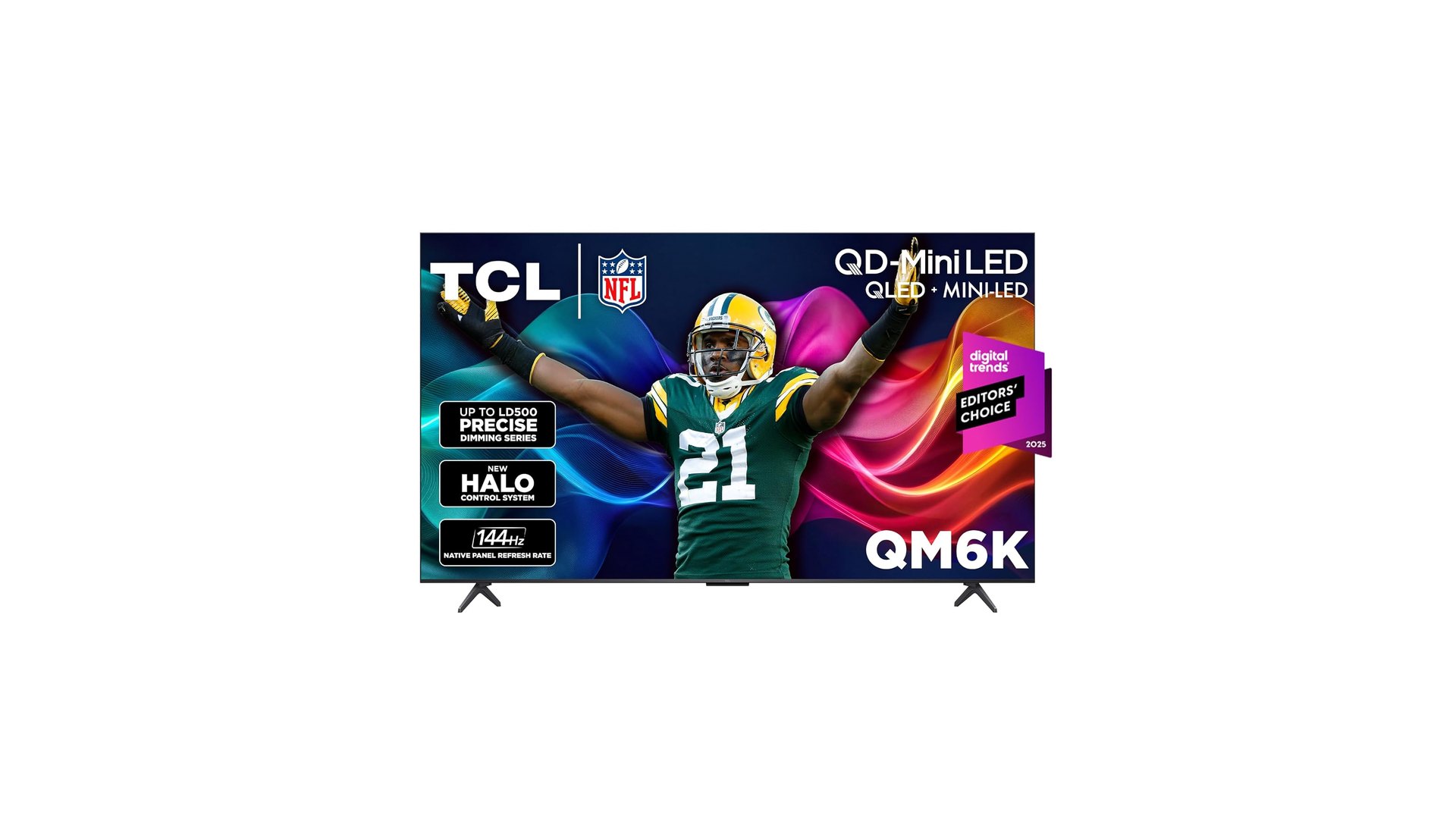
The cheaper QM6K drops the count. TCL's per-size table prints "Up to LD500 Precise Dimming Series" under every size from 55 to 98 inches, and gives brightness as the words "High HDR Brightness".
That absence is itself a ranking. On TCL's own comparison page the step-up tiers get "Up to HDR 3000", "Up to HDR 5000" and "Up to HDR 6500 Brightness", while the QM6K gets adjectives.
That page also has its rows crossed. The one labelled "Peak Brightness" carries the dimming values, LD500 through LD6000, and the one labelled "Native Refresh Rate" carries the brightness wording.
What to look for instead
Look for a zone count printed against a single model code rather than a series name. Hisense does that, at 144 against 85E7SF.
TCL does not do it for the QM8L, the QM7L or the QM6K.
Then read the wording. "Up to" and "series maximum" describe a ceiling, and the largest set in a line is usually the only one near it.
Never carry a count across sizes either. The same number is denser on a 55-inch panel than on an 85-inch one, and density is what turns into halos.
Neither maker publishes zone density, a zone layout or a per-size count for any TCL series named here. No measured brightness figure at a stated window size appears either.
Spec pages are revised without notice, so the one carrying the exact model code is the only one worth reading.
Discussion (0)
Be the first to comment.