


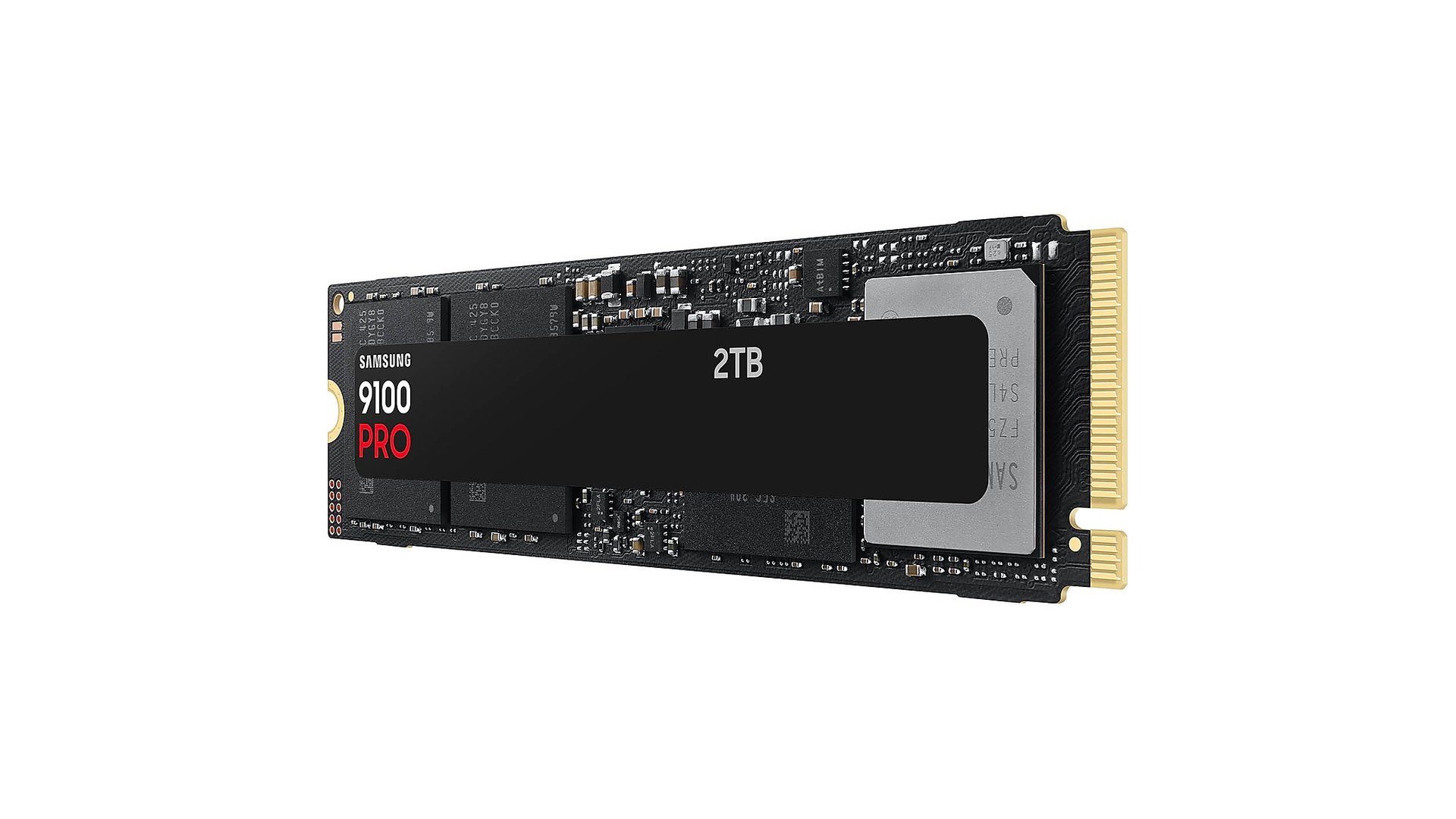
The Samsung 9100 PRO 2TB is $407.30 at Amazon at the time of writing, down $272.67 from a $679.97 list price. That anchor is a price someone really charges, and the someone is Samsung: its own US store asks $679.99 for the same SKU.
It is also a price Samsung raised. Samsung's newsroom gave the 9100 PRO 2TB a $299.99 MSRP when the line launched in March 2025, so the maker's own asking price has climbed $380.00, or 126.7%, since.
The listing's 40% is therefore 40% off a number Samsung more than doubled. At $407.30 the drive still sits $107.31 above that launch MSRP.
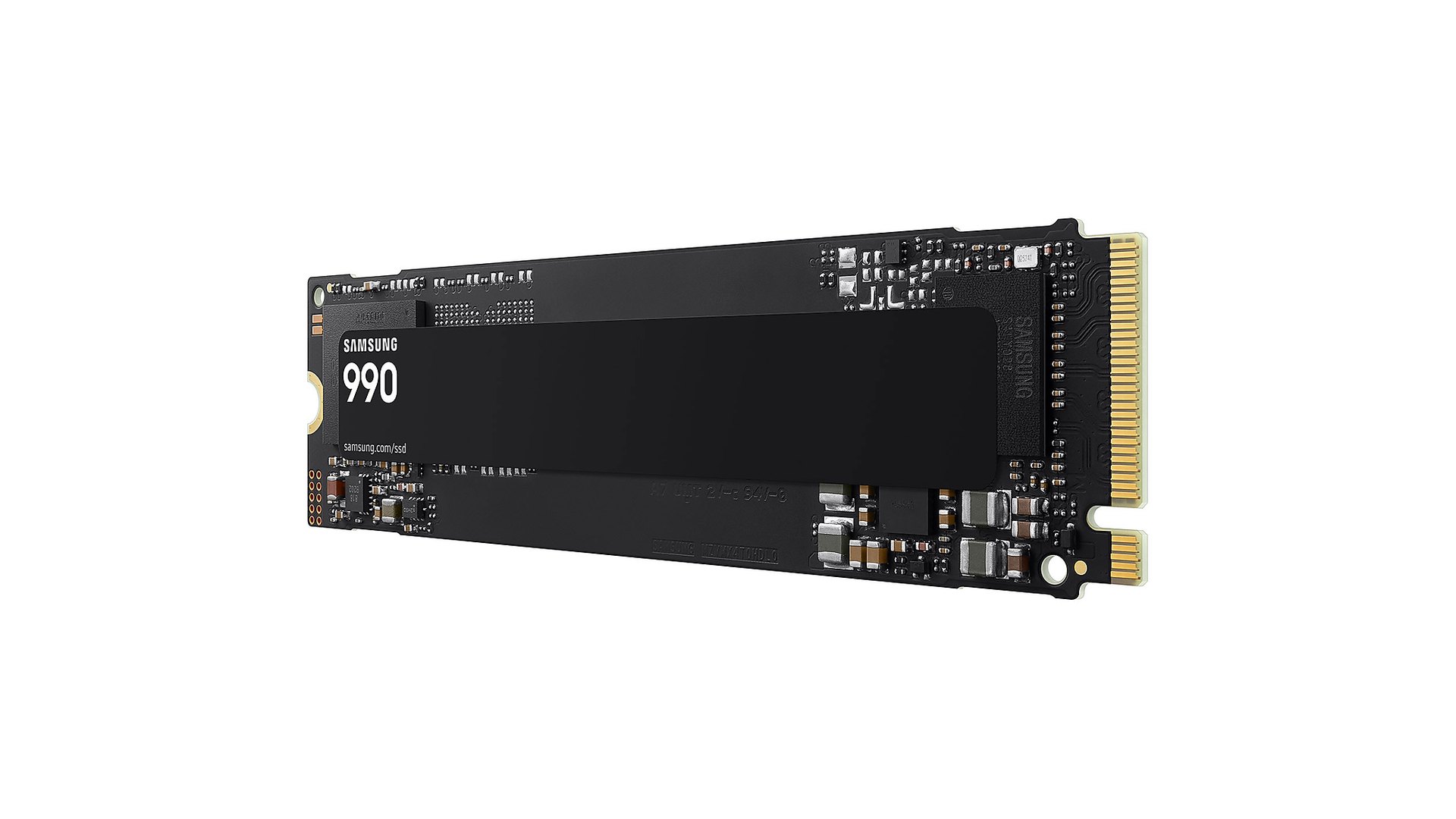
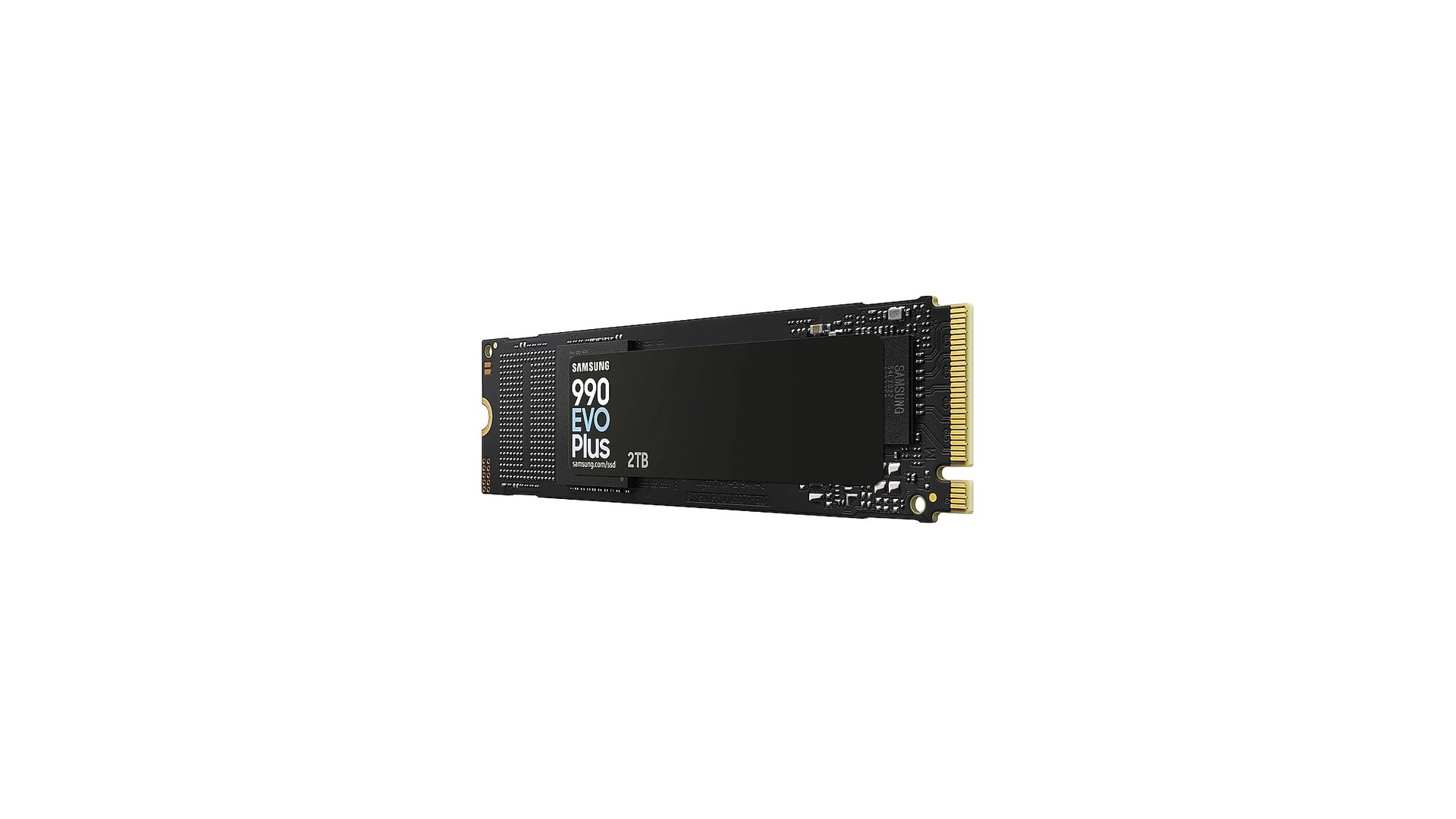
Two other Samsung 2TB drives are cut at the same moment. The 990 EVO Plus 2TB is $366.50 and the 990 2TB is $329.99.
Cost per terabyte across the three Samsung drives
Samsung's naming puts EVO Plus above the plain 990 and below the PRO. The prices do not fall in that order once each drive is divided by its capacity.
| Drive | Price | List price | Cost per terabyte | Rated sequential read and write |
|---|---|---|---|---|
| Samsung 9100 PRO 2TB | $407.30 | $679.97 | $203.65 | 14,700 / 13,400 MB/s |
| Samsung 990 EVO Plus 2TB | $366.50 | $579.99 | $183.25 | 7,250 / 6,300 MB/s |
| Samsung 990 2TB | $329.99 | $529.99 | $165.00 | 7,250 / 6,450 MB/s |
Speeds are Samsung's published figures for the 2TB capacity in each case. The cheapest drive per terabyte also rates a faster sequential write than the 990 EVO Plus priced above it.
On that arithmetic the 990 is the buy. The 9100 PRO only makes sense if a PCIe 5.0 slot is going spare, because it is the only drive here that can use one.
Samsung 9100 PRO 2TB specifications
| Specification | Samsung 9100 PRO 2TB |
|---|---|
| Interface | PCIe 5.0 x4, NVMe 2.0 |
| Sequential read and write | 14,700 / 13,400 MB/s |
| Random read and write | 1,850K / 2,600K IOPS |
| Cache | 2GB LPDDR4X DRAM |
| Endurance | 1,200 TBW |
| Warranty | 5 years limited, or the TBW |
| Form factor | M.2 2280 |
| Cost per terabyte | $203.65 |
Those figures are from Samsung's 9100 PRO datasheet, which rates the 2TB capacity at 14,700 MB/s. Samsung's own product page claims 14,800 MB/s and 2,200K random read IOPS, numbers the datasheet reserves for the 4TB and 8TB models.
This is the only one of the three with a published DRAM cache, and the only one Samsung's datasheet lists for the PlayStation 5. It needs a PCIe 5.0 slot to reach any of those speeds.
It is not cheap by its own history either. The listing charged $399.99 on October 2, and the 1TB version was $249.44 in September against a $339.99 Samsung price.
The 990 is cheapest per terabyte and the only one that has fallen
The 990 2TB is $329.99, a $200.00 cut from a $529.99 list price Samsung also charges. That works out $38.65 per terabyte under the 9100 PRO and $18.25 per terabyte under the 990 EVO Plus.
It is also the only one of the three that has actually got cheaper. The same listing read $339.99 on August 29 and $369.99 on September 19.
Samsung rates it at 7,250 MB/s read and 6,450 MB/s write, with 850K and 1,200K random IOPS. Samsung announced it in July 2026, so the cheapest drive here is also the newest.
The 990 EVO Plus costs more and ships from a marketplace seller
The 990 EVO Plus 2TB is $366.50, which is $36.51 more than the 990 for a sequential write Samsung rates lower at 6,300 MB/s. Its buy box belongs to a marketplace seller called MobileMonster rather than to Amazon.
Its price has barely moved, either. The same listing read $359.99 on September 19 and $369.99 on October 2.
Samsung's datasheet gives it 1,200 TBW and a five-year limited warranty, matching the 9100 PRO. It uses Host Memory Buffer rather than an onboard DRAM cache.
What Samsung does not publish
Samsung publishes an endurance rating and a warranty term for the 9100 PRO and for the 990 EVO Plus. For the 990 it publishes neither, on its product page or in its July announcement, so the cheapest drive here is the one with the least disclosed about how long it should last.
Samsung is out of stock on the 990 and the 990 EVO Plus on its own store, and sells only the 9100 PRO directly. Samsung has tied its record memory revenue partly to industry-wide memory price increases.
No end date is published for any of the three listings. Prices at Amazon can change at any time.

Discussion (0)
Be the first to comment.