



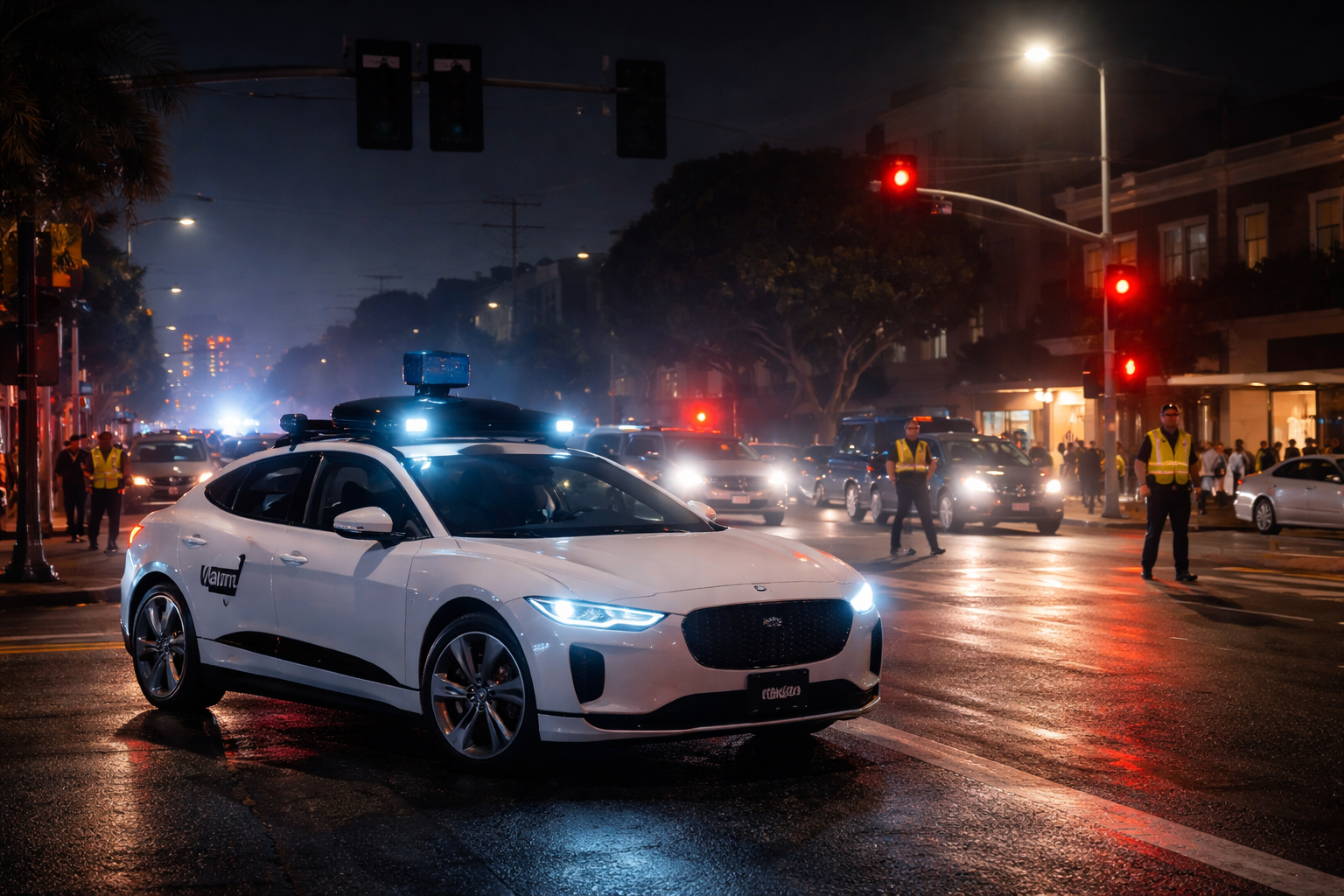
Waymo temporarily suspended its robotaxi service in San Francisco after a widespread power outage disrupted traffic signals across the city, causing multiple autonomous vehicles to stall at intersections and adding to traffic congestion.
The incident has renewed scrutiny around how autonomous ride-hailing services perform during large-scale emergencies, when core urban infrastructure fails all at once.
Citywide power failure triggered cascading issues
A fire at a substation operated by Pacific Gas and Electric Company cut electricity to large parts of San Francisco, disabling thousands of traffic lights simultaneously. Police officers manually directed traffic in some areas, while other intersections remained uncontrolled for extended periods.
During the outage, several Waymo vehicles slowed down or stopped entirely when encountering dark signals, creating localized backups. Waymo then paused service citywide as conditions worsened.
Scale, not capability, became the problem
Waymo vehicles already include logic for navigating intersections without active traffic lights. However, the outage created an unusually high number of simultaneous edge cases, pushing the system into a conservative mode across large parts of the fleet.
Reports indicate that the surge also strained Waymo’s remote assistance and operational support systems, increasing delays as vehicles waited for clearance to proceed.
Waymo plans software and response updates
Waymo has issued software update after the incident, and the company says it is preparing more updates that allow vehicles to handle disabled traffic lights more decisively during widespread outages. The company also plans to refine its emergency coordination procedures with city agencies to reduce disruption during future incidents.
Service resumed after power returned and traffic conditions stabilized.
Why emergency readiness matters
The outage has raised broader concerns about robotaxi reliability during natural disasters, fires, or earthquakes, when traffic signals, communications, and road conditions can fail simultaneously. Critics argue that stalled autonomous vehicles could obstruct lanes or slow emergency responders during critical moments.
Transportation analysts say the episode highlights the need for clearer standards around fleet-wide emergency behavior, including minimum remote support capacity and predefined response plans for city-scale failures.
Regulatory attention returns
California regulators are reviewing the incident as part of ongoing oversight of commercial autonomous vehicle deployments. The event adds to a growing list of real-world stress tests that regulators and city officials now use to evaluate whether robotaxi services can operate safely when normal assumptions break down.
As autonomous fleets expand, emergency resilience may become just as important as everyday driving performance.

Discussion (0)
Be the first to comment.