



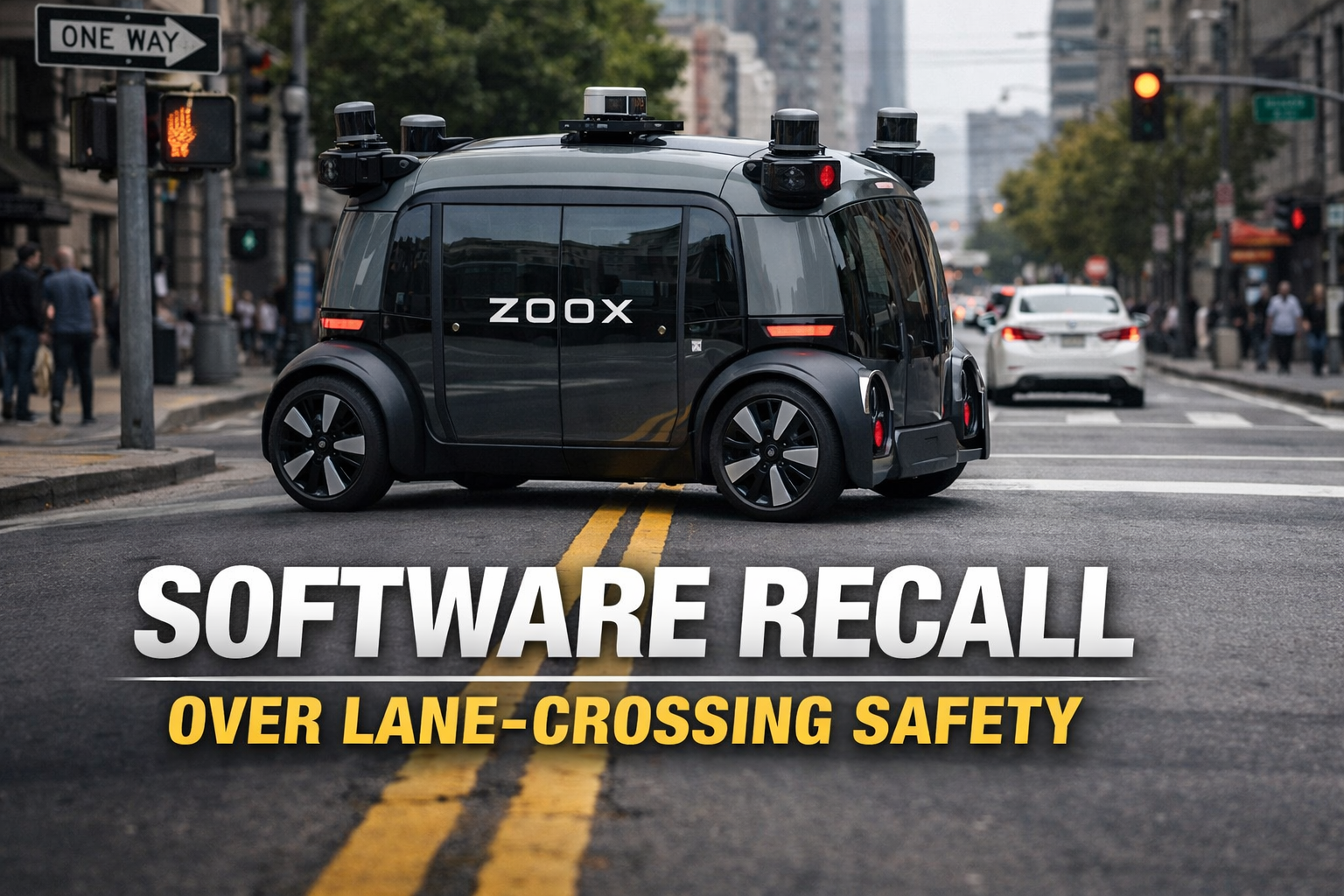
Zoox, Amazon’s autonomous vehicle company, has issued a voluntary software recall in the U.S. after safety concerns about lane crossings near intersections. Regulators said affected vehicles could cross a yellow center line or stop in the path of oncoming traffic, raising crash risk.
What the recall covers
The recall covers 332 Zoox vehicles, including robotaxis and test vehicles operating in the United States. Zoox issued the recall as a software update rather than a hardware repair.
The affected versions include software releases from before December 19, 2025. Zoox provided the fix as a free update.
What went wrong
In documents tied to the recall, Zoox flagged scenarios where its self-driving system could cross the center line or stop in an oncoming lane near intersections. That behavior could put the vehicle in conflict with approaching traffic during turns or complex lane geometry.
The issue came to light after a robotaxi made a wide turn that partially entered oncoming traffic. A follow-up review identified additional cases of unnecessary lane encroachment around intersection maneuvers.
Fix status and safety impact
Zoox deployed a software change designed to prevent the system from making the problematic maneuvers. The update applies across the affected fleet, and drivers do not pay for the fix.
Zoox said it had no reports of crashes or injuries tied to the issue at the time of the recall disclosure. The company still moved forward with a recall to reduce risk as testing and limited deployments continue.
Why this matters for robotaxis
Intersection handling remains one of the hardest environments for autonomous systems because it combines lane markings, turning paths, and fast-changing right-of-way decisions. A software recall like this shows how quickly edge cases can surface once vehicles operate on real streets.
Zoox continues to develop and expand its autonomous ride efforts in markets such as San Francisco and Las Vegas. The company’s ability to ship over-the-air fixes helps, but each recall also adds pressure to prove consistent, predictable driving behavior at scale.


Discussion (0)
Be the first to comment.