




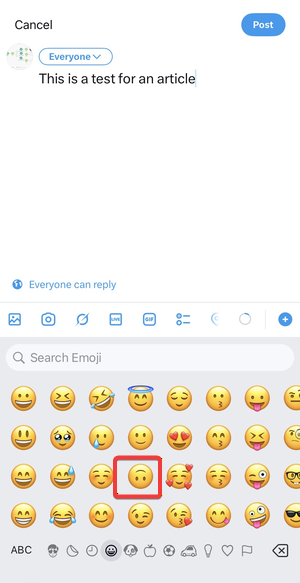
The upside-down emoji (🙃) looks cheerful at first glance, but people rarely use it to express pure happiness. Most users rely on it to signal irony, hidden frustration, awkward humor, or emotional mixed signals. Context always matters more than the emoji itself.
What the upside-down emoji means
The upside-down emoji usually means “I’m smiling, but something is off.” People use it to soften sarcasm, mask annoyance, or acknowledge an uncomfortable situation without sounding openly negative. It often communicates the opposite of a normal smile.

Why people use the upside-down emoji in messages
Users pick 🙃 when a regular smile feels dishonest. The flipped face adds emotional distance and signals that the sender does not take the situation at face value. It lets people joke, vent lightly, or disengage without escalating the tone.
Emotional meanings of the upside-down emoji
The emoji covers several emotional states, depending on timing and message content. It rarely stands for genuine joy.
Playful sarcasm
People use 🙃 to underline irony or dry humor. It often means “this is funny, but also kind of ridiculous.”
Mild frustration or annoyance
The emoji signals irritation without confrontation. Many users rely on it when they feel tired of explaining or arguing.
Awkwardness or social discomfort
🙃 fits moments that feel uncomfortable but not serious enough to address directly. It acts as a social shrug.
Forced positivity or fake cheerfulness
Sometimes the emoji means “I’m pretending everything is fine.” This usage appears often in stressful or disappointing situations.
Upside-down emoji meaning by context
Meaning changes quickly based on where and how someone uses the emoji.
In texting and private chats
In one-on-one messages, 🙃 often reflects personal emotion. Short replies with this emoji usually signal annoyance, emotional distance, or dry humor.

On social media posts and captions
On platforms like X or Instagram, 🙃 highlights irony, self-mockery, or commentary on bad luck. It rarely expresses happiness in public posts.
At work or professional messages
In professional settings, the emoji often signals burnout or subtle sarcasm. Many readers interpret it as passive frustration, which makes it risky at work.
What the upside-down emoji means from different people
Who sends the emoji matters as much as the emoji itself.
From a friend
Friends usually use 🙃 playfully. It often signals teasing, shared sarcasm, or light complaining.
From a partner or crush
In close relationships, 🙃 can signal mixed emotions. It may hide annoyance, disappointment, or an indirect request for reassurance.
From a coworker or boss
At work, the emoji often reflects disengagement or subtle dissatisfaction. Readers may interpret it as frustration rather than humor.
Real examples of the upside-down emoji in use
These short examples show how context changes meaning.
- “Yeah, that meeting definitely helped 🙃”
The sender feels frustrated or unimpressed. - “Another deadline moved up 🙃”
The emoji masks stress or resignation. - “Sure, that makes sense 🙃”
This reply usually signals sarcasm or disbelief.
What to reply when someone sends the upside-down emoji
Your response should match the emotional weight behind the emoji.
Safe neutral replies
Neutral replies work when intent feels unclear. A simple acknowledgment avoids escalation.
Example: “Yeah, I get that.”
Playful replies
Use humor if the conversation feels light or friendly.
Example: “Classic situation, honestly.”
Clarifying replies
Clarifying helps when the emoji suggests frustration.
Example: “You sound annoyed. Want to talk about it?”
Common misconceptions about the upside-down emoji
Many people assume 🙃 always means silliness. In reality, it often signals emotional distance, irony, or frustration. Treating it as a happy emoji leads to misunderstandings.
Related emojis with similar meanings
Several emojis overlap with 🙃 but express different tones:
- 😏 suggests confidence or smug humor.
- 😬 signals visible discomfort or anxiety.
- 😐 reflects emotional flatness or detachment.
Choosing the right emoji depends on how direct or subtle the sender wants to sound.
Summary
- The upside-down emoji usually signals irony, sarcasm, or hidden frustration.
- Context and relationship strongly affect its meaning.
- It often softens negative emotions instead of expressing happiness.
- Replies should match the emotional tone behind the emoji.
The upside-down emoji rarely means what it looks like. You can use the emoji on iPhone, Android, Windows and across many devices and platforms.
People use the upside-down emoji to express irony, emotional distance, or quiet frustration without saying those feelings outright. Reading the surrounding message and the sender’s intent helps you understand what 🙃 actually means and how to respond without misreading the tone.


Discussion (0)
Be the first to comment.