




Tensordyne has announced the tape out of its new 3nm Napier AI chip, claiming the processor can deliver far higher inference performance and efficiency than NVIDIA’s Blackwell platform. The company says Napier is built to handle large AI models with more tokens per second, lower power use, and a smaller rack footprint.
The chip is now moving into production after tape out, which is a key milestone before wider deployment. Tensordyne says it is working toward beta deployment and a larger infrastructure plan backed by more than $200 million in forecasted demand for Napier systems.
Napier is focused on AI inference, which is the stage where trained AI models generate responses, images, code, or other outputs. That market is becoming more important as companies move from training large models to serving them at scale for millions of customers.
What makes the Napier AI chip different
The Napier chip is built on TSMC’s 3nm process and includes 138 billion transistors. It features 144GB of HBM3E memory, 256MB of SRAM, and up to 2.1 PFLOPs of peak AI compute using dense FP8 format. The chip has a 300W power rating.
Tensordyne says the key difference is not only raw compute. The company is using what it calls TDN Math, a logarithmic math approach that replaces large scale multiplication with simpler addition based computation. The goal is to improve performance per watt when running frontier AI models.
Napier also uses a tightly integrated memory design and a proprietary scale up interconnect called TDN Link. That interconnect is designed to reduce communication delay between processors and keep more compute resources active.
| Feature | Tensordyne Napier details |
|---|---|
| Process node | TSMC 3nm |
| Transistors | 138 billion |
| Memory | 144GB HBM3E |
| SRAM | 256MB |
| Peak AI compute | 2.1 PFLOPs FP8 |
| Power rating | 300W |
| Main focus | AI inference |
| System design | TDN72 pods and rack systems |
Tensordyne claims major gains over NVIDIA Blackwell
Tensordyne says a Napier rack can deliver 17 times more tokens per watt and 13 times more tokens per second than NVIDIA Blackwell. The company also claims that its system could generate up to $33 million more annual revenue per rack.
Those are very large claims and should be treated carefully until independent testing is available. AI hardware performance can depend heavily on model size, precision, software stack, memory behavior, networking, and the exact workload being measured.
Still, Tensordyne’s pitch is clear. It wants to compete not by copying the GPU model, but by building a system designed specifically for high efficiency inference.
The TDN72 rack targets multi trillion parameter models
Tensordyne’s Napier platform comes together in the TDN72 Inference Pod and rack system. Each pod includes 72 Napier AI chips. A full rack includes four TDN72 pods, for a total of 288 chips.
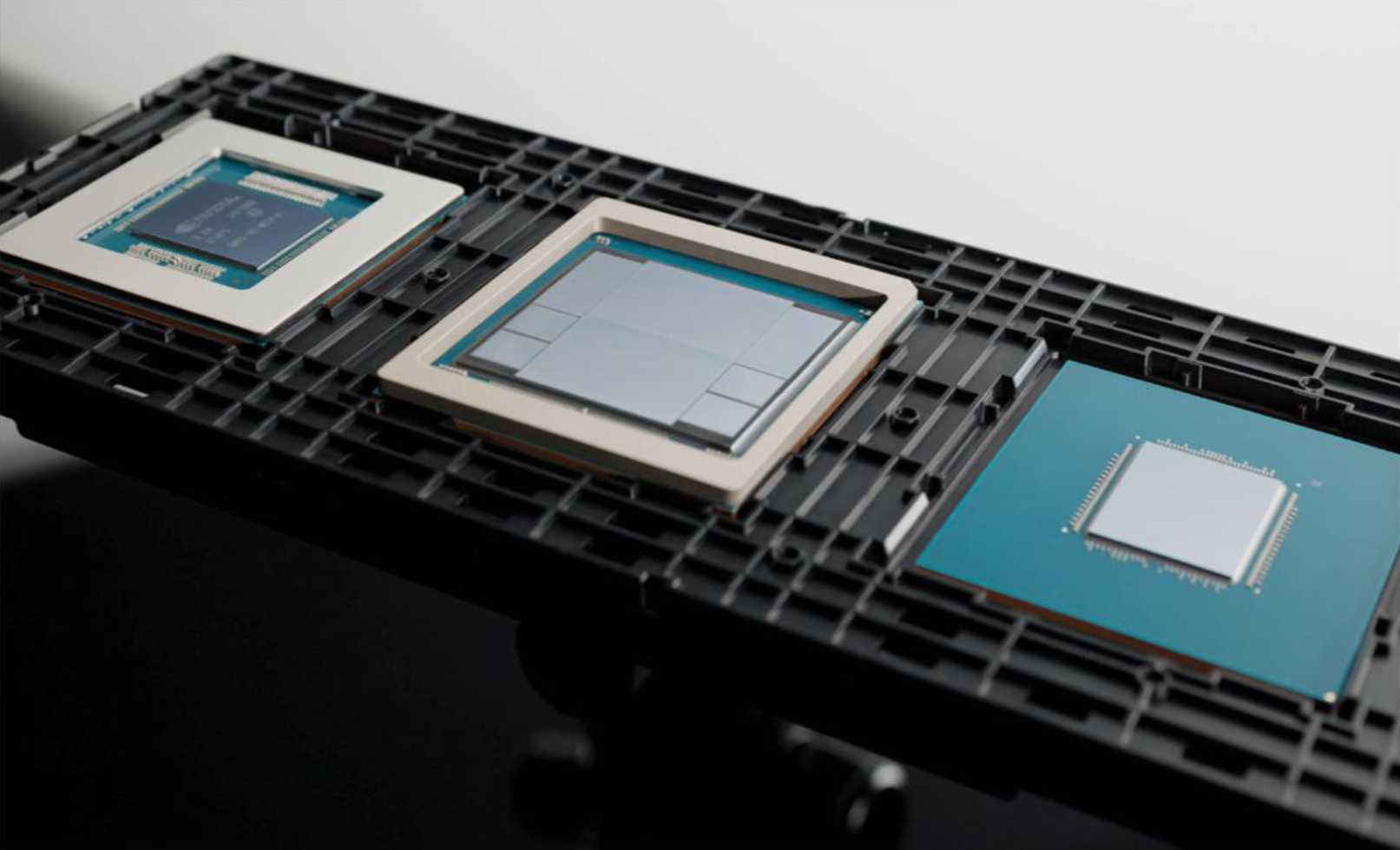
The full air cooled rack is said to deliver 608 PFLOPs of FP8 compute, 74GB of SRAM, and 42TB of HBM3E memory, with a rated power level of 120kW. Tensordyne says the system can support models with up to 10 trillion parameters using FP4.
The company also compares Napier against NVIDIA’s upcoming Rubin platform. It claims Napier can support multi trillion parameter models at 1000 tokens per second per user in a single rack configuration, while a comparable setup using NVIDIA Rubin and Groq LPX would need nine racks.
Power and infrastructure costs are becoming a major AI problem
Napier is arriving at a time when AI infrastructure is running into power and cooling limits. Large AI deployments need expensive data center upgrades, high power delivery, and heavy cooling capacity.
Tensordyne says its system reduces those pressure points by improving tokens per watt and shrinking the amount of infrastructure needed for large inference workloads. If those claims hold up, the system could be attractive to cloud providers and AI companies that need to serve models more efficiently.
That is the bigger story behind Napier. The AI market is no longer only about who can build the biggest accelerator. It is also about who can deliver the most useful output per watt, per rack, and per dollar.
Napier still needs real world proof
Tensordyne’s claims are ambitious, but the chip still needs to prove itself in production systems. Tape out is a major step, but customers and analysts will want real world benchmarks, software maturity, availability details, and reliability data before judging it against NVIDIA’s established platforms.
NVIDIA has a large advantage in software, ecosystem support, developer tools, and customer relationships. Any challenger must compete not only on hardware performance, but also on deployment ease and long term support.
Even with that caution, Napier is worth watching. If Tensordyne can deliver the efficiency and throughput it is promising, it could become a serious new option for AI inference. The company is aiming directly at one of the biggest problems in AI today, serving massive models without letting power and infrastructure costs get out of control.



Discussion (0)
Be the first to comment.