



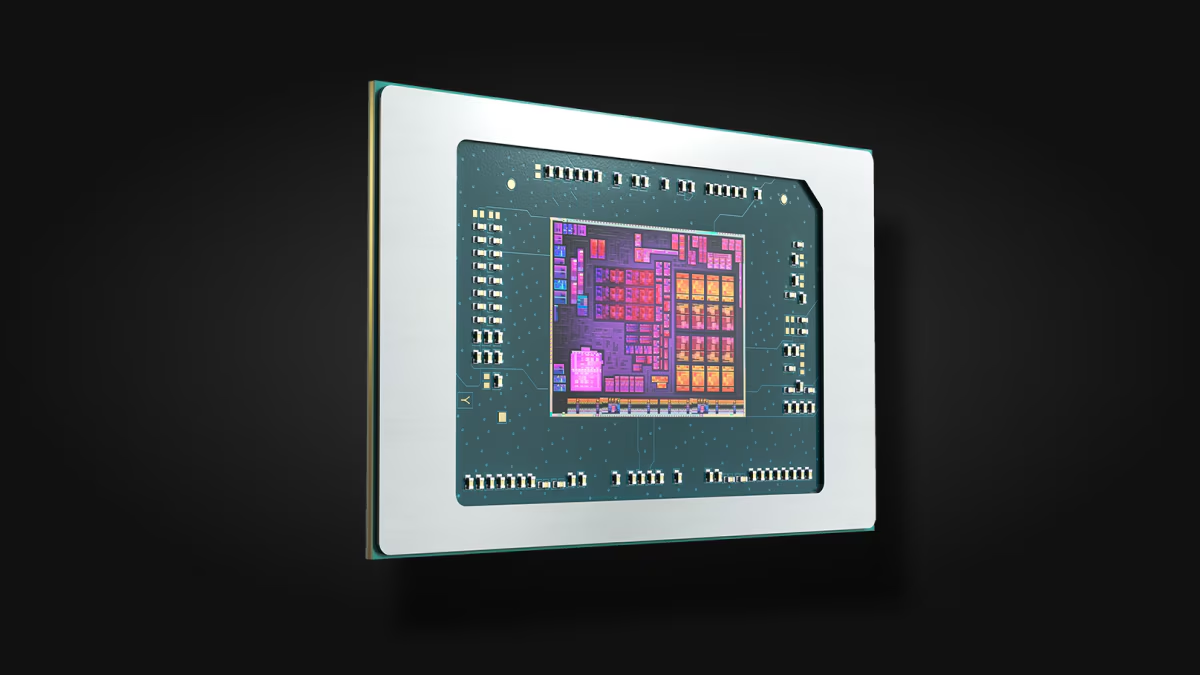
AMD’s next generation Ryzen desktop CPUs, reportedly codenamed Olympic Ridge, may bring a major design change when they arrive in 2027. The upcoming Zen 6 based processors are expected to include an integrated NPU for AI workloads, but AMD may remove the small integrated GPU that has been included on standard AM5 desktop Ryzen chips.
That would mark a notable shift for AMD’s mainstream desktop lineup. Since the AM5 platform launched, regular Ryzen desktop CPUs have included a small Radeon iGPU. It was not meant for serious gaming, but it was useful for basic display output, office systems, and troubleshooting when a dedicated graphics card failed.
The reported Olympic Ridge design suggests AMD may now prefer using that space for an NPU instead. That would make the chips more relevant for AI focused workloads, but it could also remove one of the quiet practical benefits of current Ryzen desktop processors.
What AMD Olympic Ridge may bring in 2027
The Olympic Ridge lineup is expected to use AMD’s Zen 6 CPU architecture and TSMC’s 2nm N2P process. That should bring improvements in performance, efficiency, and instructions per clock compared with current Ryzen chips.
The new desktop family is also expected to use a redesigned CCD with up to 12 cores and 48MB of L3 cache. If the report is accurate, AMD could offer models ranging from 6 cores to 24 cores, with SMT support across the lineup.
| Expected Zen 6 Ryzen model type | Possible configuration |
|---|---|
| Single CCD entry model | 6 cores |
| Single CCD mainstream model | 8 cores |
| Single CCD higher model | 10 cores |
| Single CCD top model | 12 cores |
| Dual CCD model | 16 cores |
| Dual CCD higher model | 20 cores |
| Dual CCD flagship model | 24 cores |
AMD is also expected to continue offering 3D V Cache versions, as it has done with recent Ryzen generations. Those chips are likely to remain especially important for gaming performance.
Why an integrated NPU matters for desktop Ryzen
An NPU, or Neural Processing Unit, is designed to accelerate AI tasks more efficiently than a CPU or GPU in certain workloads. AMD already uses NPUs in some Ryzen AI laptop chips and desktop APUs, but Olympic Ridge would reportedly bring this feature to standard non APU Ryzen desktop processors.
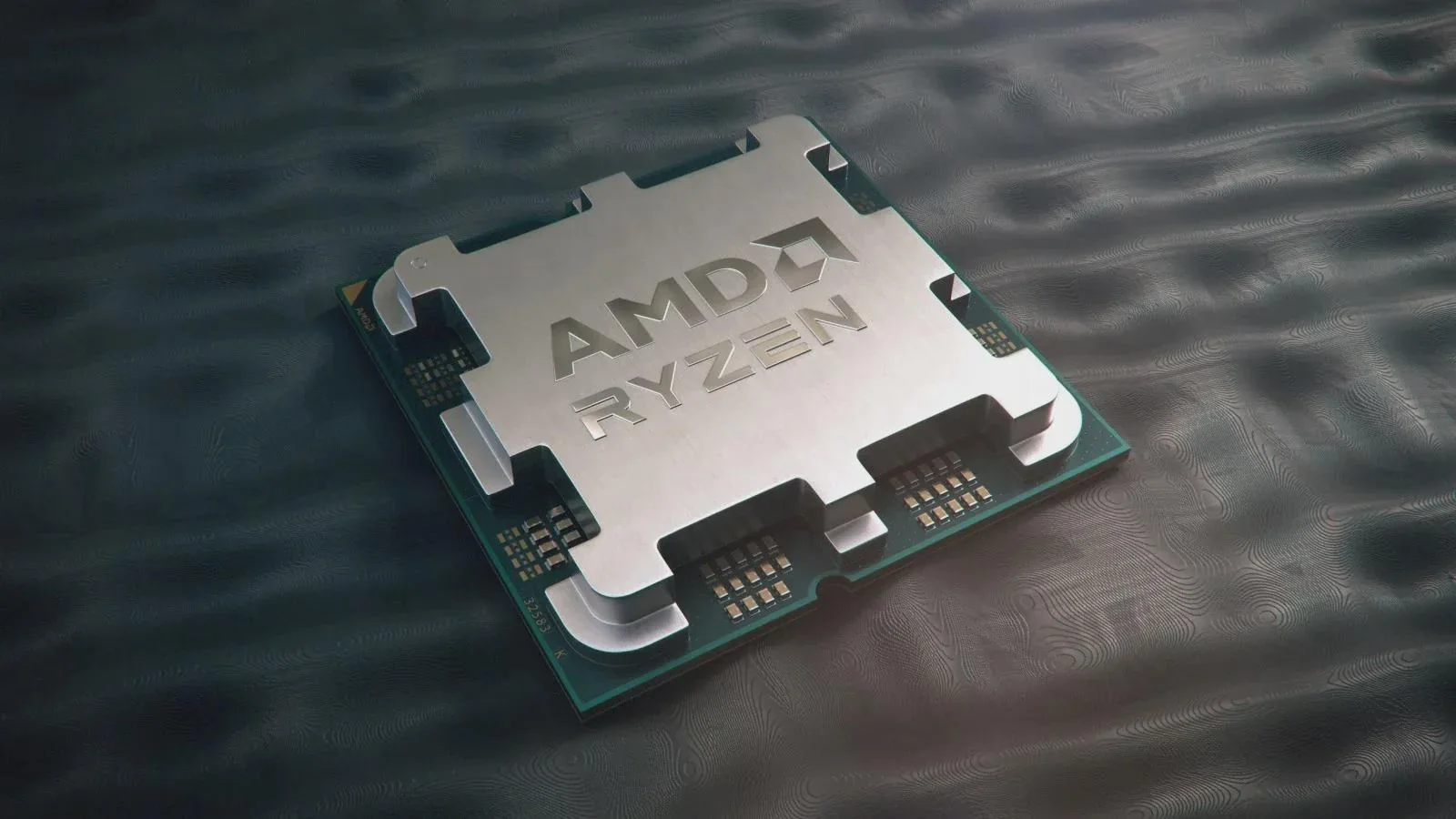
That could matter as more Windows features, creative apps, productivity tools, and local AI models begin using dedicated AI hardware. Desktop PCs often have powerful CPUs and GPUs, but an NPU can handle lighter AI tasks while using less power.
For AMD, adding an NPU also helps keep Ryzen competitive as the PC market becomes more AI focused. Microsoft and chip makers are pushing AI PC features more aggressively, so AMD may want every major Ryzen category to include dedicated AI acceleration.
Losing the iGPU could make troubleshooting harder
The possible removal of integrated graphics is the tradeoff. Current AM5 Ryzen desktop chips include a small Radeon 710M style iGPU with two compute units. It is basic, but it can output video without a dedicated graphics card.
That matters when building or diagnosing a PC. If a system has a black screen, a faulty graphics card, or a driver issue, the iGPU can help confirm whether the rest of the system is working.
Without an iGPU, desktop Ryzen buyers would need a working discrete GPU for video output. That may not bother gamers or enthusiasts, since most already use dedicated graphics cards. But it could be a drawback for office PCs, repair shops, system builders, and anyone who values backup display output.
The AM5 platform may also get memory upgrades
Olympic Ridge is also expected to bring platform improvements. Reports point to support for faster DDR5 memory, CUDIMM modules, and the full EXPO 1.2 feature stack. That could help AMD improve memory stability and performance on future AM5 motherboards.
CUDIMM support is important because it can help push DDR5 speeds higher with better signal stability. AMD is also expected to improve support for ultra low latency memory profiles.
However, integrated USB4 support is reportedly still absent. That means motherboard makers may still need separate controllers if they want to offer USB4 on future AMD desktop boards.
Zen 6 could compete directly with Intel Nova Lake
AMD’s Olympic Ridge chips are expected to launch around the same time as Intel’s Nova Lake S desktop processors in 2027. Intel is expected to push very high core counts with a mix of performance cores, efficiency cores, and low power efficiency cores.
AMD’s approach appears different. Instead of hybrid core types, Olympic Ridge is expected to keep a more traditional Zen core layout with up to 24 cores and 48 threads.
If the reports are accurate, Zen 6 could be one of AMD’s biggest desktop updates in years. Adding an NPU would modernize the platform for AI features, while CUDIMM support could improve memory performance. But removing integrated graphics would make the chips less flexible for troubleshooting and basic display needs.
For most gaming desktop buyers, the missing iGPU may not be a dealbreaker. For builders who rely on it as a safety net, it could be a frustrating tradeoff.



Discussion (0)
Be the first to comment.