


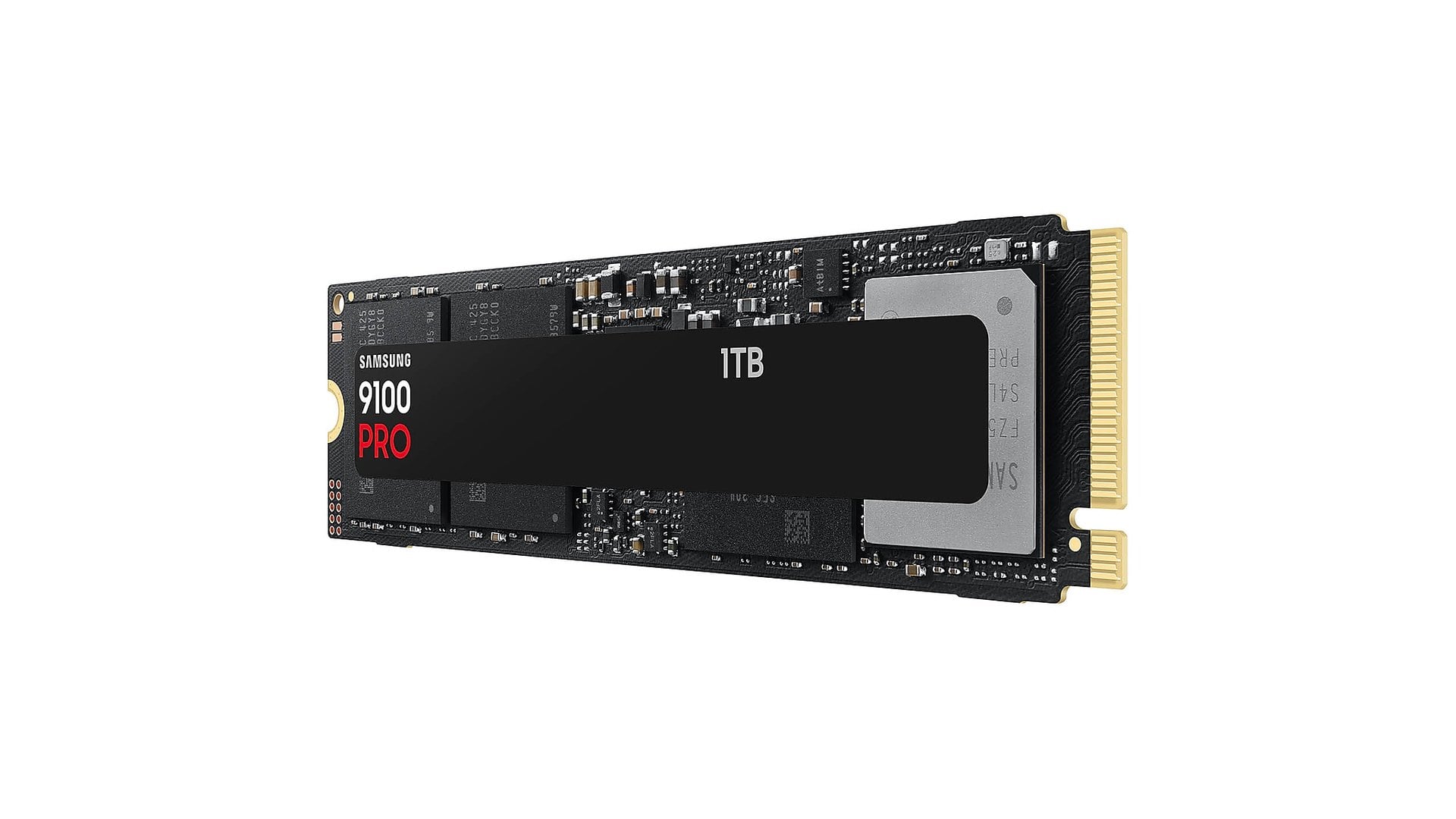
Samsung rates the 1TB version of its SSD 9100 PRO at 600 terabytes written, alongside a five-year limited warranty. Reaching 600TB before those five years expire takes about 329GB of writes a day, every day, for 1,826 days.
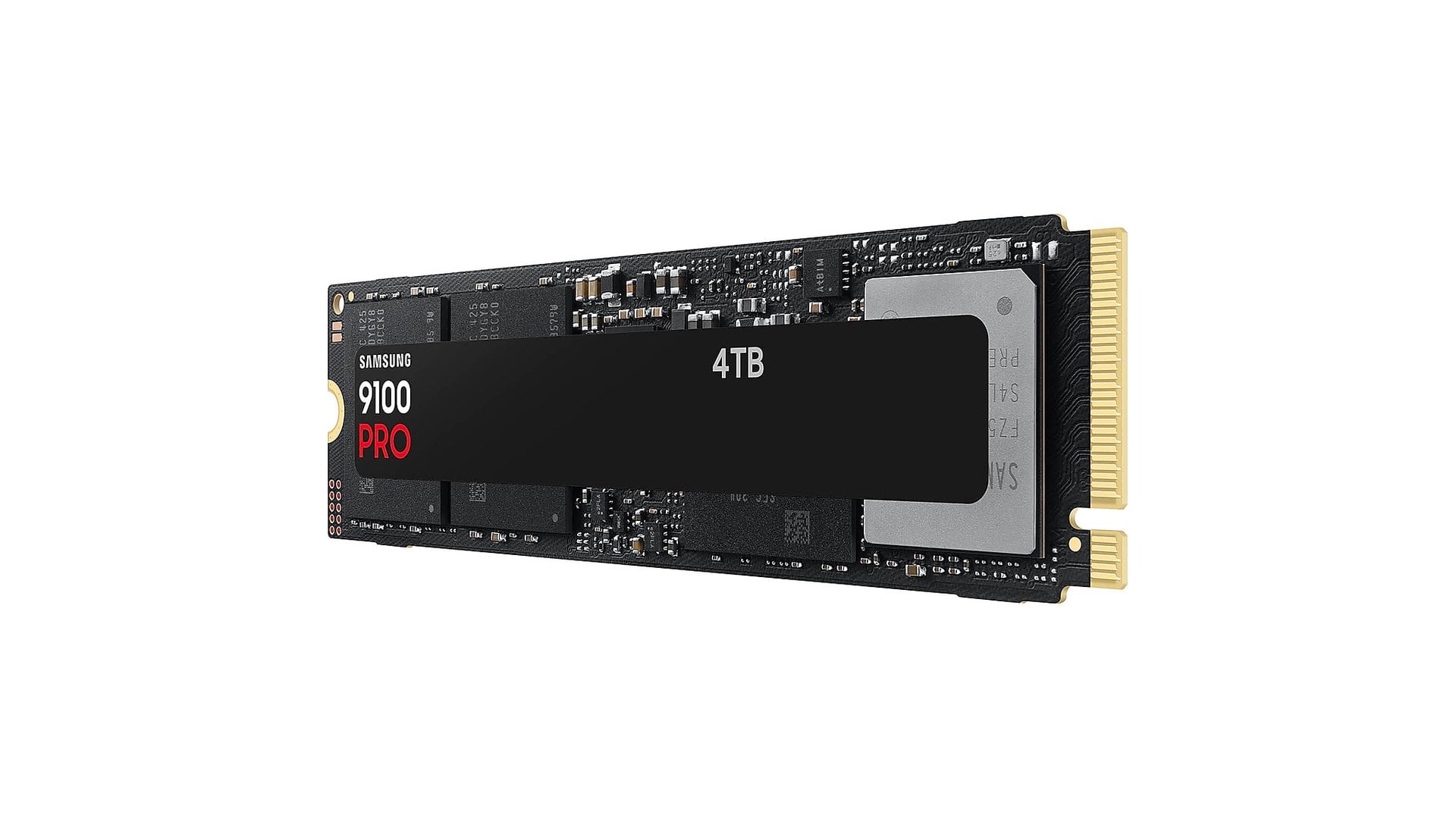
That division is the part nobody does at the shelf. The figure also sits on Samsung's data sheet in a row headed Warranty, not in a row about how long the drive lives.
How to run the sum on your own drive
The method is three numbers and one division. Take the rated terabytes written, convert it to gigabytes, and divide by the days in the warranty term.
Five years from today is 1,826 days, counting the leap day in February 2028. The 9100 PRO data sheet rates 1TB at 600TB, 2TB at 1,200TB, 4TB at 2,400TB and 8TB at 4,800TB, all on five-year terms.
So the 1TB model allows 329GB a day. The 4TB allows about 1.31TB a day over the same five years.
The third number has to come from the drive itself. Total host writes is reported in SMART data, and CrystalDiskInfo reads it in a few seconds.
The clause that makes the number matter
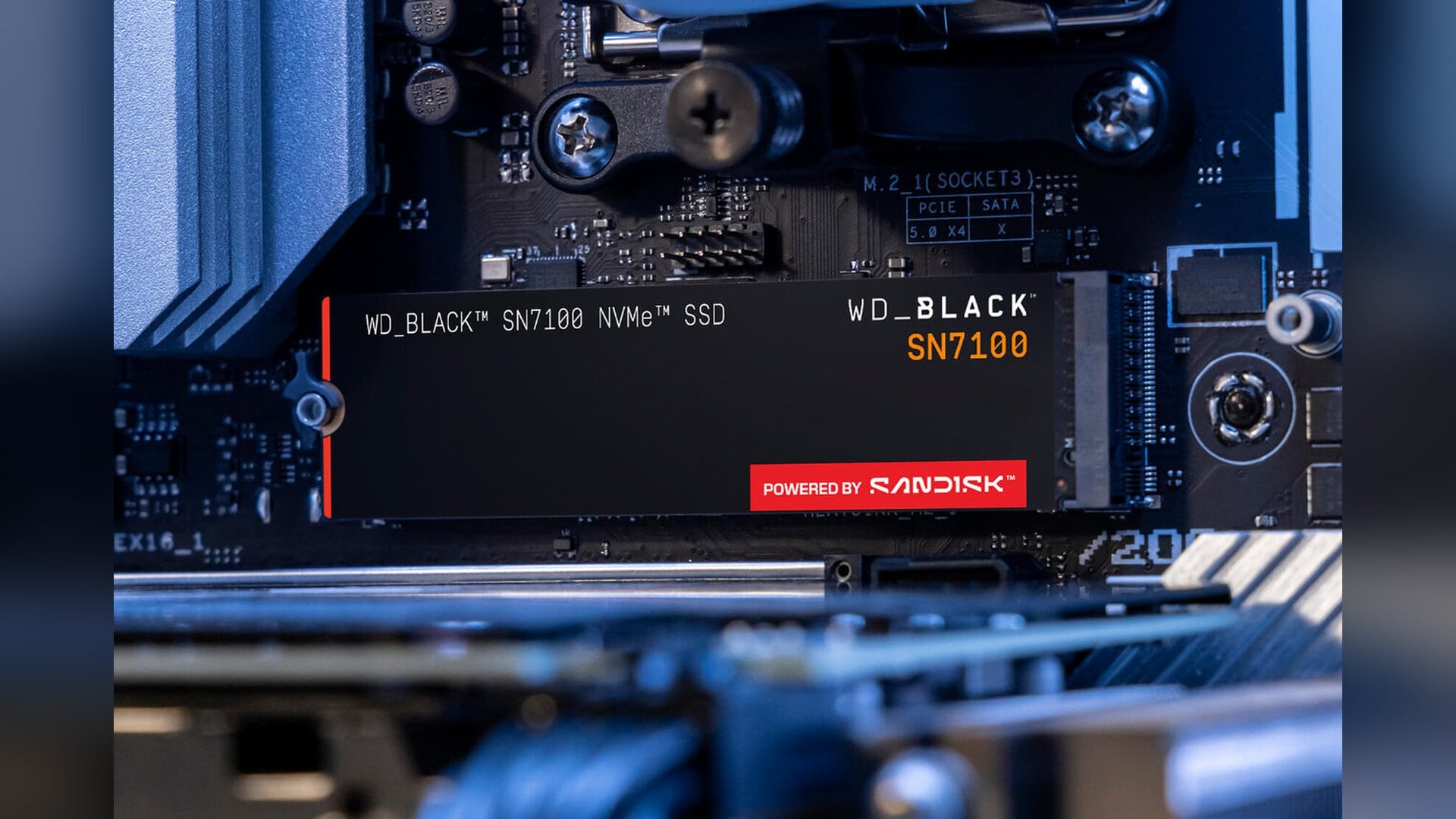
Every maker checked here states the limit the same way. SanDisk's WD_BLACK SN7100 data sheet prints "5 years or Max Endurance [TBW] limit, whichever occurs first".
Samsung's footnote reads "Warranty provides coverage for the stated time period or the TBW, whichever comes first". Crucial's P510 page sets the same boundary, measured "in the product's SMART data".
BIWIN, which makes and warrants Acer's Predator drives under licence, is blunter. Its warranty policy excludes failures from reaching the rated endurance limit, calling them "deemed after the end of product life".
Kingston draws the line somewhere else again. Its NV3 data sheet ties cover to five years or the drive's own Percentage Used attribute reaching 100.
None of those sentences forecasts a failure. They fix the point at which a maker stops paying, which is what a replacement claim turns on.
A bigger drive is not a tougher drive
The rating doubles with capacity on every ladder checked. SanDisk rates the SN7100 at 300TB, 600TB, 1,200TB and 2,400TB across 500GB, 1TB, 2TB and 4TB.
Divide any of those ladders by capacity and the answer stops moving. The 1TB and the 4TB 9100 PRO both allow 600 full-capacity writes, which is the rating underneath the headline figure.
A buyer weighing 2,400TB against 600TB is therefore comparing size, not durability. The larger drive earns its larger allowance only by having more of the same flash to spread the writes across.
The same 1TB, rated from 320TB to 800TB
Hold capacity still and the figure still moves by a factor of 2.5. Kingston rates the NV3 at 320TB for 1TB and its own KC3000 at 800TB.
Samsung, SanDisk and the Predator GM7 all land on 600TB at that capacity. Predator's GM6 is rated 500TB and its GM9000 800TB, every one of them on a five-year term.
Price tier does not explain the spread either. Samsung rates the DRAM-less 990 EVO Plus at the same 600TB per terabyte as its PCIe 5.0 flagship.
All of these figures are derived from a JEDEC test workload, JESD218 or JESD219, as the makers' own footnotes say. None is a measurement of anybody's actual use.
What the makers leave unpublished
No maker here publishes what a normal desktop writes in a day, which is the one number that would make the division meaningful. None publishes a breakdown of why consumer drives fail, either.
So the widely repeated claims, that controllers give out before flash wears out, or that every extra 10C halves a drive's life, are unestablished rather than confirmed. What is published is narrower: operating ranges of 0C to 70C at Samsung and Kingston, 0C to 85C at SanDisk, and a note from SanDisk that storage temperature "does not guarantee data retention".
Samsung's retail page for the 1TB 9100 PRO prints neither the endurance rating nor the warranty length, and its page for the newer 990 prints neither at any capacity. A fuller account of how long an SSD actually lasts covers the wear mechanism, while write amplification explains why a drive commits more than the host asked for. Specifications and warranty terms can change without notice, and Samsung's data sheet says so in as many words.


Discussion (0)
Be the first to comment.