


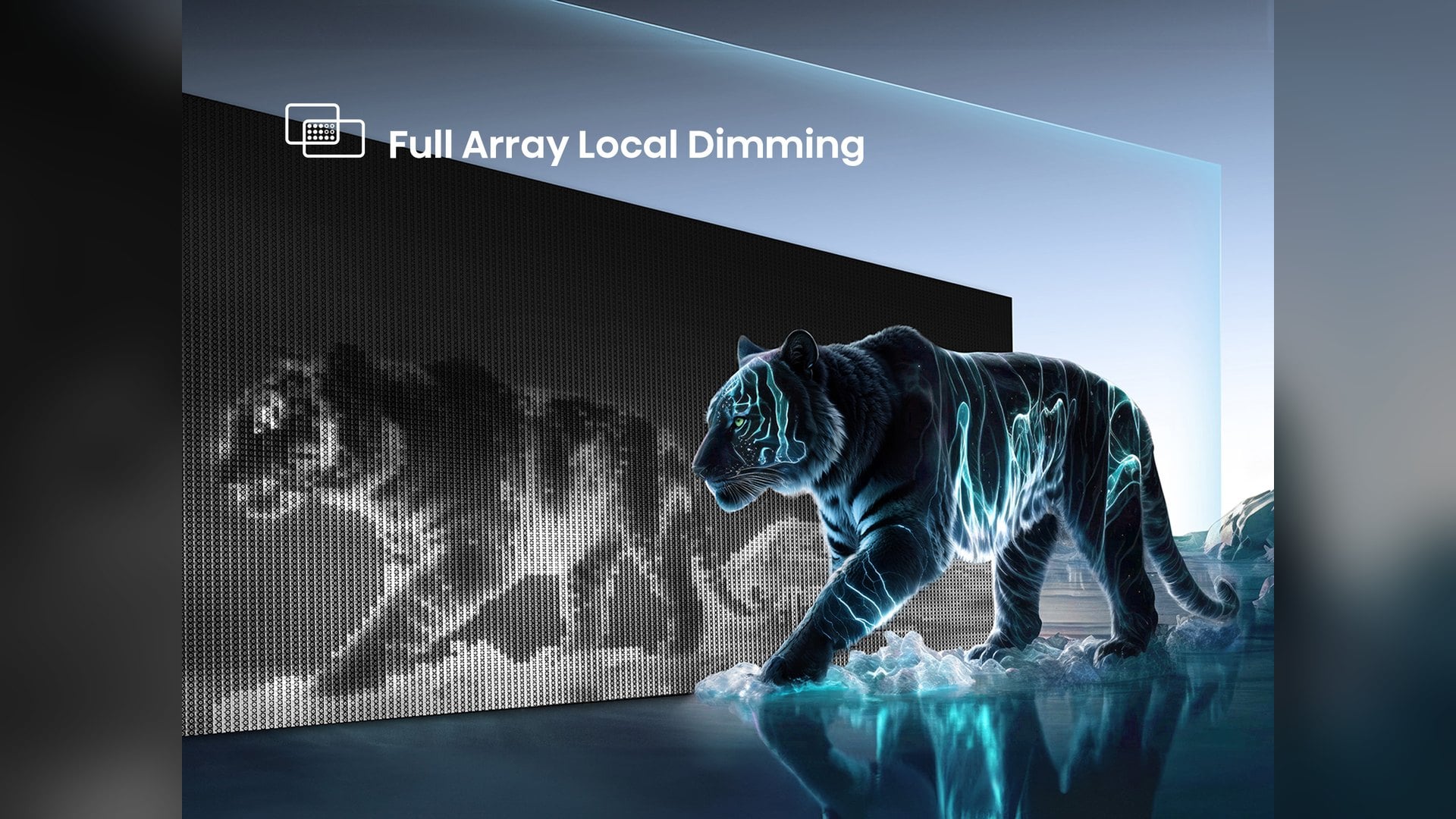
Hisense publishes 144 local dimming zones for its 85-inch E7SF mini-LED television. It publishes the same 144 zones for the 50-inch set in that line.
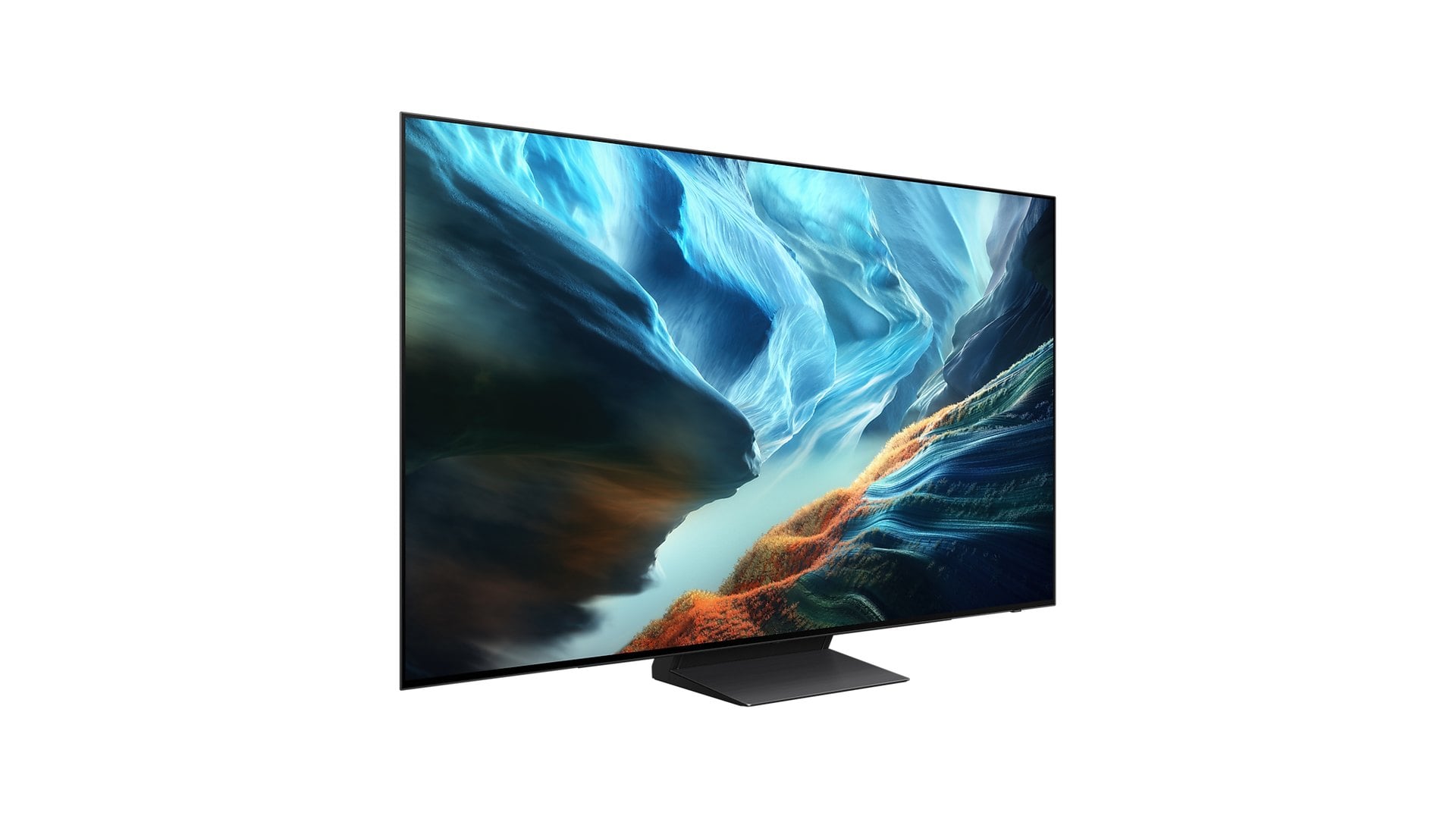
LG publishes no brightness figure at all for the 65-inch C6 OLED, and Samsung publishes none for the 65-inch S90H.
The two panel types differ in a way anyone can see on a dark scene. The figures needed to compare two specific sets are missing from both camps more often than not.
What the two technologies actually do
An OLED television has no backlight. LG describes the C6 panel as "over 8.3 million self-lit pixels", and its dimming row reads "Pixel Dimming".
A pixel asked for black simply stops emitting. Nothing behind it stays lit.
A mini-LED television is an LCD panel with an array of small LEDs behind it. Those LEDs are wired into groups, and each group dims on its own.
The LCD layer blocks light but never all of it. A bright object therefore lifts the darkness immediately around it.
What each type is genuinely better at
OLED wins at the edge between light and dark, because the control is per pixel rather than per block. LG rates the 65-inch C6 response time at "Less than 0.1ms".
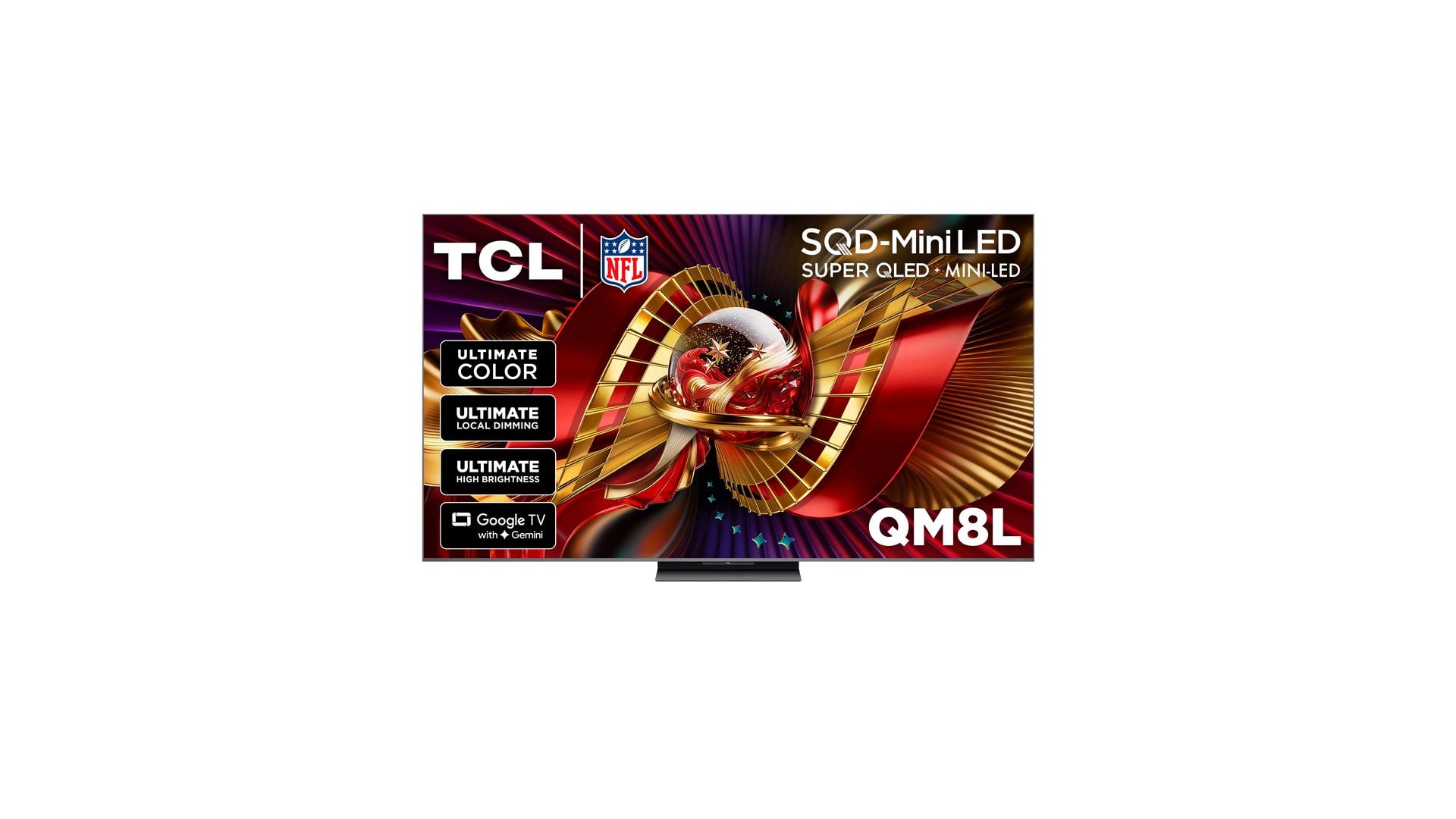
Mini-LED wins on raw output, because a backlight can be driven far harder than an emissive pixel. TCL publishes "Up to 6000 Peak Nits" for its QM8L series.
Brightness is not a property of the category, though. Hisense rates the 85-inch E7SF at "Up to 600 nits", a tenth of TCL's ceiling on a set built the same way.
The number to ask for on a mini-LED
A zone count is only useful printed against one model code. TCL prints "Up to 4000 Discrete Dimming Zones" in all four size columns of the QM8L table, and the same "Up to 6000 Peak Nits" four times.
TCL says as much itself. It labels both rows "Published series maximum; varies by size", then publishes no variation.
Hisense does give a plain number, and gives the identical 144 for the 85-inch and the 50-inch model. The larger screen covers close to three times the area, which is what a series-wide zone count hides.
Sometimes there is no table at all. A Toshiba-branded 100-inch mini-LED set serves its specification block hidden and collapsed, and the words "dimming zones" and "nits" appear nowhere on its product page.
The two things to ask for on an OLED
The first is the panel structure. Samsung's 65-inch S90H is sold as an OLED and nothing more precise than that.
The strings "QD-OLED" and "WOLED" appear zero times on Samsung's own page for it, and the page carries no panel-type row.
The second is a brightness figure with a window size attached. Neither LG nor Samsung prints one for the sets named here.
LG tiers the hardware by size instead. The Picture (Panel) row on the 65-inch C6 reads "Brightness Booster", while the same row on the 77-inch C6 reads "Brightness Booster Pro".
LG's own description of the 77-inch adds "tandem four stack panel tech" and a claim of "up to 3x brighter". No baseline is given for that multiple, and the 65-inch description claims neither.
What a blank row is worth
The test is the same on both sides. A mini-LED needs a zone count tied to one model code, and an OLED needs its panel structure plus a nit figure with a stated window.
A maker that names a better brightness tier only on its larger sets has ranked its own line without printing a number. The smaller set is not the one being advertised.
What none of these makers publishes is the rest of it. Measured contrast, colour-gamut coverage and a zone layout are absent from every page read here, and no per-size zone count exists for any QM8L.
Spec sheets are also revised without notice. A figure read last month may not be the figure a maker publishes today.
Discussion (0)
Be the first to comment.