



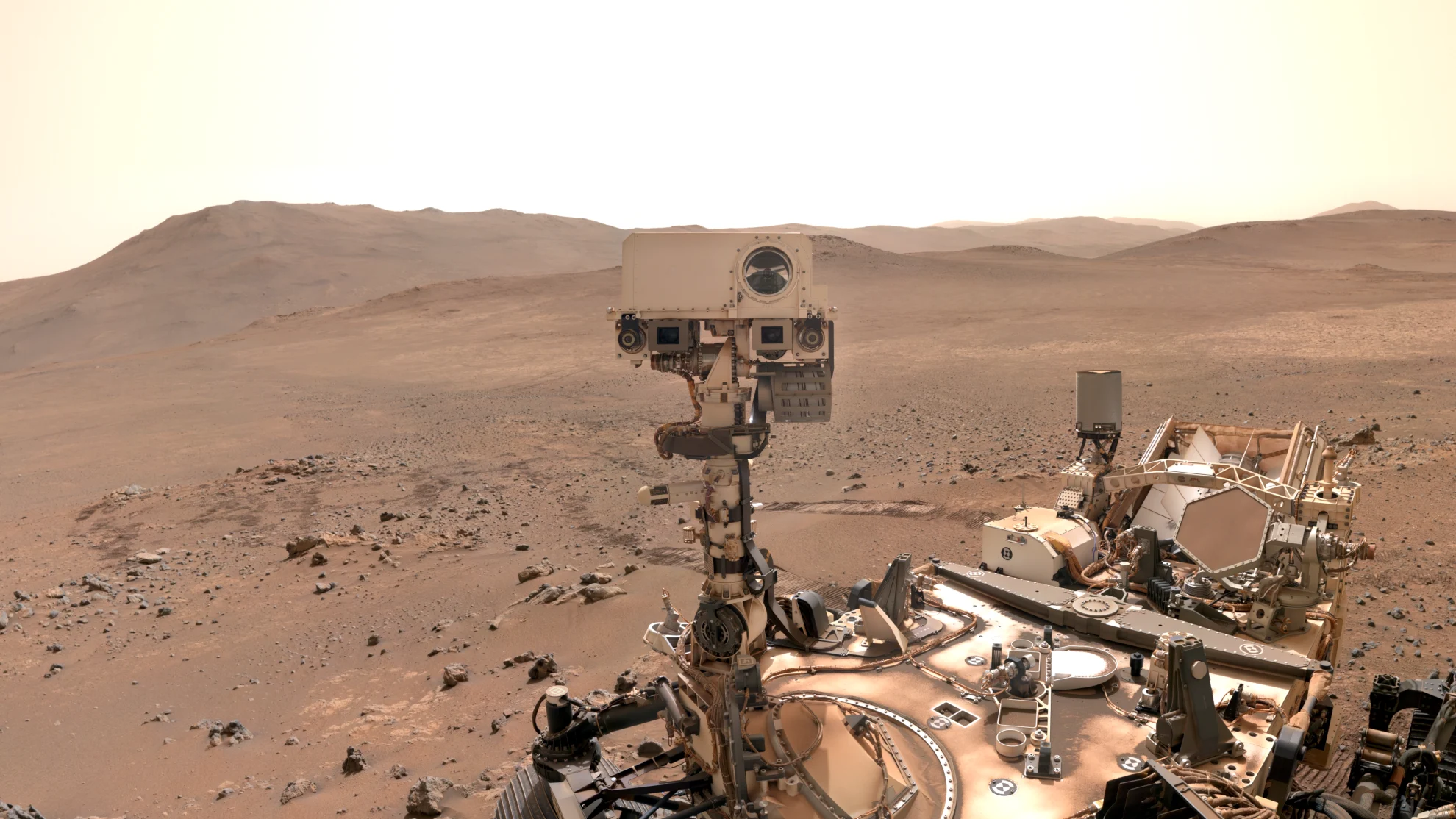
NASA’s Perseverance rover has set a new distance record on Mars after traveling 28.10 miles, or 45.22 kilometers, across the planet’s surface.
The six wheeled rover has now traveled farther on another planetary body than any previous vehicle, edging past the record held by Opportunity. The older Mars rover covered 28.06 miles before its mission ended in 2018.
Perseverance reached the new mark on its 2,006th Martian day, or sol, roughly five and a half years into its mission.
That makes the comparison with Opportunity particularly notable. Opportunity needed almost 15 years to reach its final distance, while Perseverance has covered slightly more ground in considerably less time.
AutoNav Helps Perseverance Cover Mars More Efficiently
A major reason Perseverance can travel faster is its onboard autonomous navigation system, called AutoNav.
Earlier Mars rovers depended more heavily on operators on Earth to plan relatively short driving segments. Perseverance can make many navigation decisions on its own while moving between destination points.
Its system creates real time 3D maps of surrounding hazards and processes more than 600,000 measurements while the rover is moving.
| Rover milestone | Perseverance |
|---|---|
| Total distance | 28.10 miles, 45.22 km |
| Previous record | Opportunity at 28.06 miles |
| Record reached | Sol 2,006 |
| Maximum reported distance per sol | 1,351 feet |
| Autonomous driving share | More than 90% |
| Samples collected | 29 |
| Mission extension | Through at least 2028 |
AutoNav allows Perseverance to travel at speeds of up to 1,351 feet during a Martian day.
More than 90% of its total distance has reportedly been covered autonomously.
By comparison, only about 5% of the distance traveled by Spirit and Opportunity was driven autonomously.
Rover Is Exploring Ancient Rocks Near Jezero Crater
Perseverance passed the record while traveling through an area known as Lac de Charmes along the western rim of Jezero Crater.
The rover is heading toward a target region called Idubi, where scientists are studying exposed rock formations estimated to be around 4 billion years old.
Mars can preserve extremely ancient geological material because it has not experienced the same level of plate tectonic activity and surface erosion as Earth.
That gives scientists an opportunity to examine rocks that may retain evidence about conditions during the planet’s early history.
Perseverance is also moving toward regions containing ancient uplifted crust and areas suspected of having experienced hydrothermal activity.
Those locations are particularly interesting because heated, mineral rich water could once have created environments capable of supporting subterranean microbial ecosystems.
Perseverance Has Collected 29 Samples
The rover has collected 29 core samples so far, including material from ancient lakebed deposits, river delta sediments and Martian regolith.
One of its most closely watched discoveries is a rock sample called Cheyava Falls.
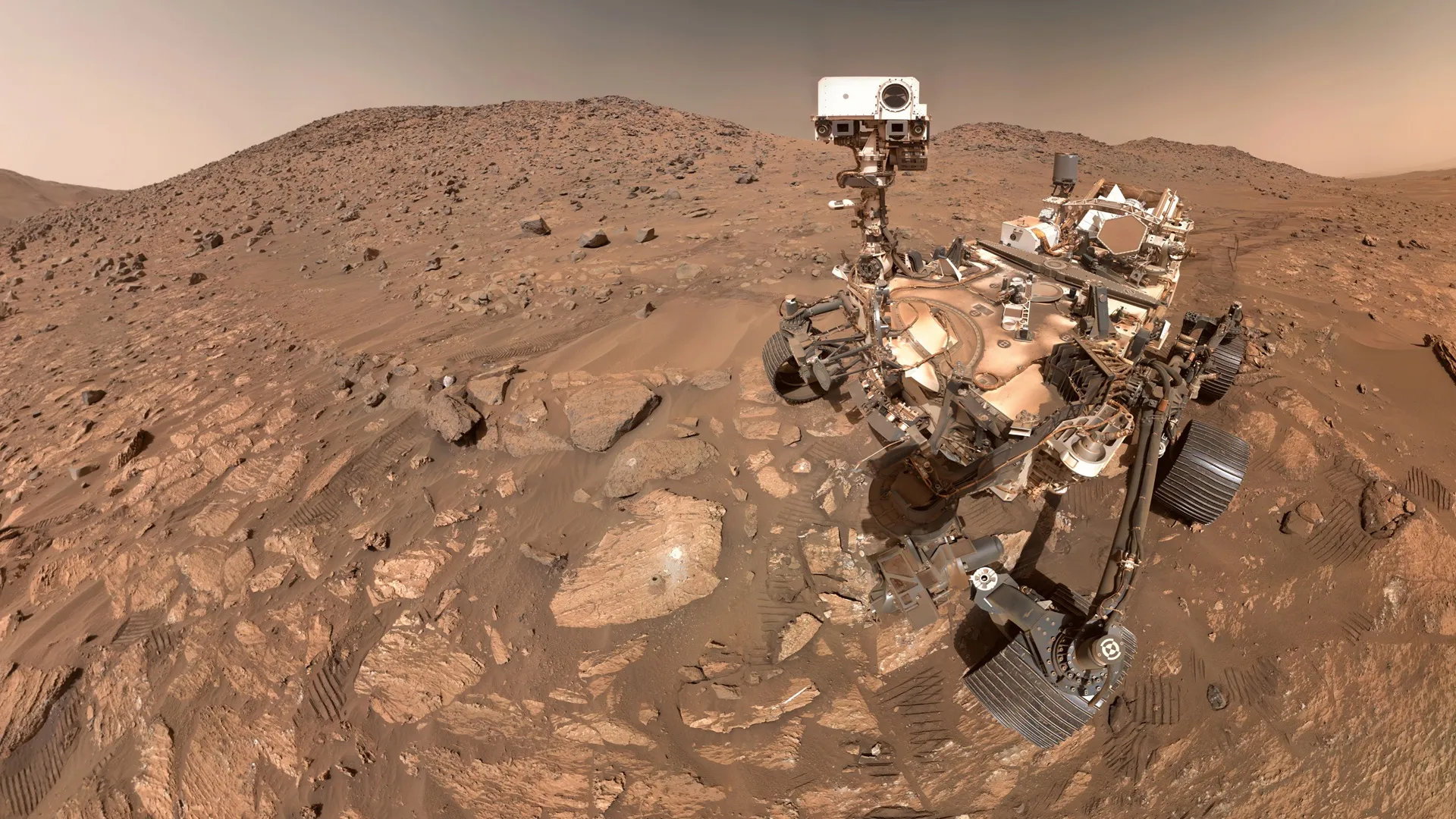
The sample contains chemical structures and other features that scientists consider possible biosignatures associated with ancient microbial life.
That does not confirm that life once existed on Mars, but it makes the material scientifically important for continued study.
Perseverance was sent to Jezero Crater partly because geological evidence suggests the area once contained a lake and river delta, making it a strong location to search for signs of ancient habitable conditions.
NASA Extends the Mission Through at Least 2028
Perseverance remains in good condition despite spending more than five years operating on Mars.
Its primary mechanical and scientific systems are reported to be functioning normally, allowing NASA to continue using the rover for exploration and sample collection.
The agency has approved an extension that keeps the mission operating through at least 2028.
That gives Perseverance more time to explore older parts of the Martian crust, investigate possible hydrothermal environments and continue building its collection of samples.
With the distance record now surpassed and its core systems still healthy, Perseverance is positioned to keep extending its journey well beyond the 28.10 mile mark.


Discussion (0)
Be the first to comment.