



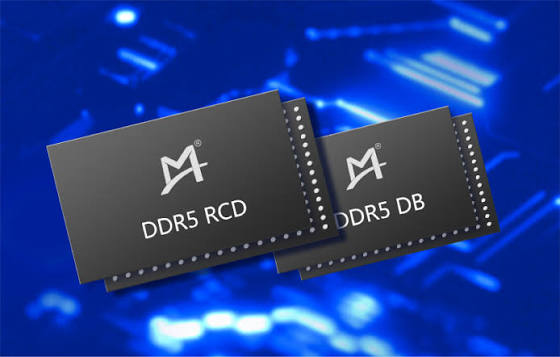
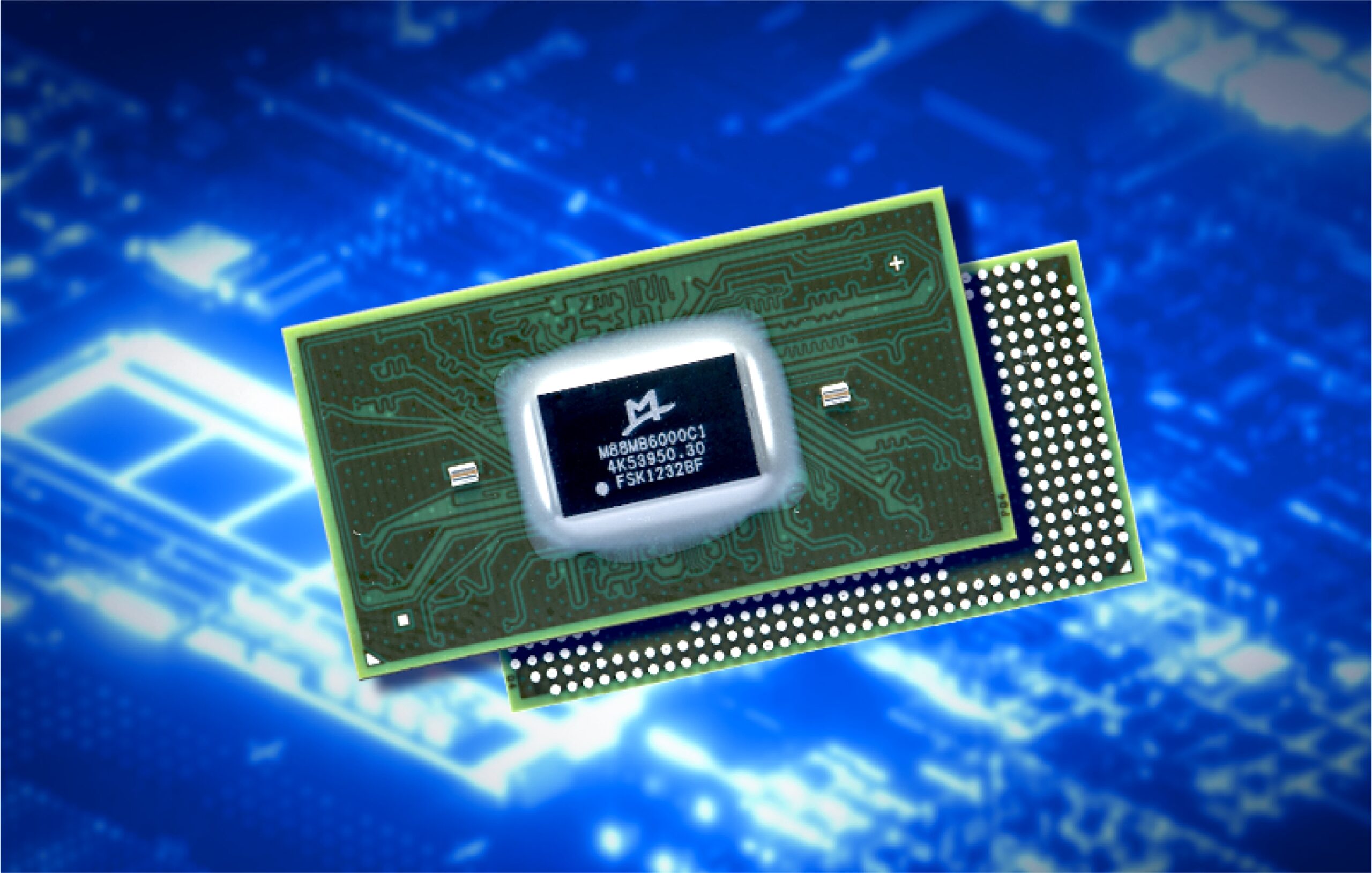
Montage Technology has started sampling a new DDR5 registered clock driver that supports speeds of up to 9200 MT/s, giving memory makers another option for faster RDIMM modules aimed at next generation data centers. The new RCD06 chip is designed for server memory, where bandwidth demand is rising because of AI, cloud computing, databases, and other memory heavy workloads.
The launch matters because RDIMMs remain one of the most important memory formats for servers. While newer memory types such as MRDIMM can offer higher density and more bandwidth, RDIMMs are still widely used because they are more cost effective and easier to deploy at scale.
With AI infrastructure expanding quickly, server platforms need more memory capacity and faster data movement. Montage’s new 9200 MT/s RCD gives memory vendors a faster component for building future DDR5 RDIMMs.
Montage is targeting the server memory market
Montage previously introduced a 9200 MT/s DDR5 clock driver for client CKD modules. The new RCD06 brings similar speed targets to RDIMM memory, which is used in data centers and enterprise servers.
A registered clock driver helps manage and stabilize signals on RDIMM modules. As memory speeds increase, signal quality becomes harder to maintain. That makes components such as RCDs more important because they help memory modules operate reliably at higher transfer rates.
| Feature | Montage RCD06 |
|---|---|
| Product type | DDR5 registered clock driver |
| Target memory | RDIMM server memory |
| Maximum speed | Up to 9200 MT/s |
| Claimed uplift | Around 15 percent over previous generation |
| Architecture | Dual channel with independent sub channels |
| Key focus | Signal stability and high speed data center memory |
| Current stage | Engineering samples sent to memory customers |
Montage says the chip has already completed engineering sample development and has been sampled to major memory customers worldwide.
Faster RDIMMs are becoming more important for AI servers
AI servers do not only need GPUs and accelerators. They also need fast and reliable system memory to support CPUs, data movement, inference pipelines, virtualization, and large scale workloads.
As models and datasets grow, memory bandwidth becomes a bigger bottleneck. Faster DDR5 RDIMMs can help servers feed CPUs more efficiently, improve response times, and support more demanding cloud workloads.
The 9200 MT/s speed target is important because it shows how quickly server DDR5 is moving beyond older speeds. Data centers want more bandwidth without always moving to much more expensive memory formats.
The RCD06 design focuses on signal integrity
Montage’s RCD06 uses a dual channel design with two sub channels that share clock logic but operate independently. This allows separate parity checks without the two sub channels interfering with each other.
The chip also includes continuous time linear equalization and a low jitter phase locked loop. These features are meant to improve signal integrity and keep clock distribution stable at high speeds.
That kind of stability is important because server memory must run reliably for long periods. Faster memory is useful only if it can maintain accuracy under heavy workloads.
China’s memory ecosystem is moving faster
The announcement also shows how quickly Chinese firms are advancing in DDR5 and memory interface technology. Montage is based in Shanghai, and its latest RCD gives domestic and global memory makers another supplier for high speed RDIMM designs.
Chinese memory companies are also pushing faster DDR5 modules. CXMT has already been linked with DDR5 products reaching up to 8000 MT/s, while Montage’s 9200 MT/s clock driver could help support faster server and client memory validation in the future.
This matters because the global memory market is under pressure from AI demand. Samsung, SK Hynix, and Micron are focusing heavily on high margin data center and AI products, while Chinese suppliers are trying to expand their role in both consumer and server memory.
More supplier choice could help RDIMM makers
For memory module vendors, having more registered clock driver suppliers is useful. It can reduce dependence on a small group of component makers and improve flexibility when planning new DDR5 RDIMM products.
That does not mean faster 9200 MT/s RDIMMs will become common immediately. Memory makers still need to validate modules with CPU platforms, motherboard designs, BIOS support, and real server workloads. But sampling is an important step toward wider adoption.
The broader direction is clear. Data centers need faster memory, and RDIMMs will remain a major part of that market because they offer a strong balance of cost, capacity, and performance.
Montage’s RCD06 gives the industry another building block for faster DDR5 server memory. If validation goes well, it could help bring 9200 MT/s RDIMMs closer to real world deployment in next generation AI and cloud platforms.



Discussion (0)
Be the first to comment.