



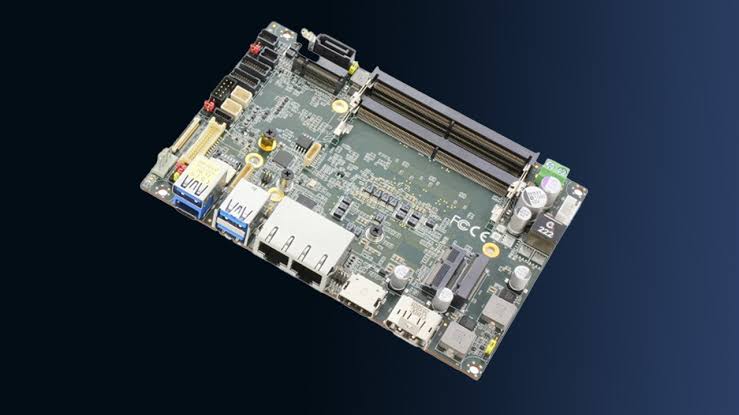
AAEON has introduced new edge systems and developer boards powered by Intel Wildcat Lake processors, giving embedded developers more options for compact systems built around Intel’s Core Ultra Series 3 platform. The new lineup includes UP WCL Edge, UP Nexus WCL Edge, and matching developer boards with up to 48GB of LPDDR5 memory.
Intel Wildcat Lake is designed as a flexible SoC platform for devices that need efficient compute in small spaces. It is already showing up across laptops, mini PCs, and embedded systems, and AAEON’s new boards show how quickly vendors are adopting it for industrial and edge computing products.
The new AAEON products are aimed at developers, system builders, and businesses that need compact hardware for edge AI, automation, kiosks, retail systems, smart infrastructure, robotics, and lightweight industrial workloads.
AAEON is using Intel Core Ultra Series 3 chips for compact edge hardware
AAEON’s new systems will use Intel Core 5 320 or Intel Core 7 350 processors, both part of Intel’s Wildcat Lake family. These chips are not aimed at high end desktops. They are built for compact devices where power, size, memory support, and connectivity matter more than raw gaming performance.
The UP WCL Edge is the smaller system. It uses an 85 x 56 mm board inside a compact chassis and supports up to 256GB of UFS 3.1 storage. It also includes practical I/O for embedded setups, including USB Type-A ports, HDMI, and RJ45 LAN.
| Product | Main details |
|---|---|
| UP WCL Edge | Compact edge system with Intel Wildcat Lake |
| UP WCL developer board | Smaller developer board with up to 24GB LPDDR5 |
| UP Nexus WCL Edge | Larger edge system with up to 48GB LPDDR5 |
| UP Nexus WCL developer board | Larger board with expanded I/O and M.2 support |
| CPU options | Intel Core 5 320 and Core 7 350 |
| Storage | Up to 256GB UFS 3.1 |
| Target use | Edge systems, embedded PCs, developer platforms |
The developer board version gives builders the same basic platform without a finished system enclosure, making it easier to create custom hardware around Wildcat Lake.
UP Nexus WCL offers a larger board with more expansion
The UP Nexus WCL and UP Nexus WCL Edge use a larger 101.6 x 101.6 mm board. That gives AAEON more room for memory, connectors, and expansion options.
These models support up to 48GB of LPDDR5 memory, making them more capable for workloads that need more headroom than a basic embedded board can provide. They also include USB 3.2 Gen 2x2, a 40 pin GPIO header, dual 2.5GbE LAN, dual USB Type-A, one USB Type-C port, and several M.2 connectors.
The onboard expansion includes M.2 2230 E Key, M.2 2280 M Key, and M.2 2242 M Key slots. That gives developers room to add Wi-Fi, SSD storage, cellular connectivity, or other modules depending on the use case.
Wildcat Lake is becoming useful beyond laptops
Intel’s Wildcat Lake platform is important because it gives vendors a modern SoC design that can fit many different product types. AAEON’s systems show that Wildcat Lake is not only for consumer laptops or small desktop PCs.

Edge systems often need stable, efficient processors that can run in compact enclosures and support long term deployments. They also need strong I/O, reliable memory, networking, and storage options. AAEON’s new boards appear built around that practical requirement rather than flashy consumer specs.
This kind of hardware can be useful in factories, signage systems, automated checkout hardware, smart cameras, local AI inference boxes, and industrial monitoring.
Developers get more flexibility with board level options
The developer boards are important because not every customer wants a ready made mini PC. Some companies need a board they can integrate into their own enclosure, machine, or product line.
With UP WCL and UP Nexus WCL, developers can test Intel Wildcat Lake in compact layouts before building custom systems. That can speed up product development because they do not need to design a full board from scratch at the early stage.
The larger Nexus model will likely appeal to projects that need more memory and expansion. The smaller UP WCL board should fit better in space constrained designs.
Pricing and availability are still missing
AAEON has not confirmed pricing or availability details yet. That will matter because embedded boards and edge systems can vary widely in cost depending on processor, memory, storage, and enclosure configuration.
Still, the announcement shows that Intel’s Wildcat Lake platform is gaining momentum in the embedded market. AAEON is giving developers multiple ways to use the chip, from compact edge systems to larger boards with more expansion.
For businesses building edge computing hardware, the new UP WCL and UP Nexus WCL products could become practical options if pricing is competitive. They bring modern Intel processors, LPDDR5 memory, UFS storage, wired networking, M.2 expansion, and compact board designs into a lineup made for embedded development rather than standard consumer PCs.



Discussion (0)
Be the first to comment.