


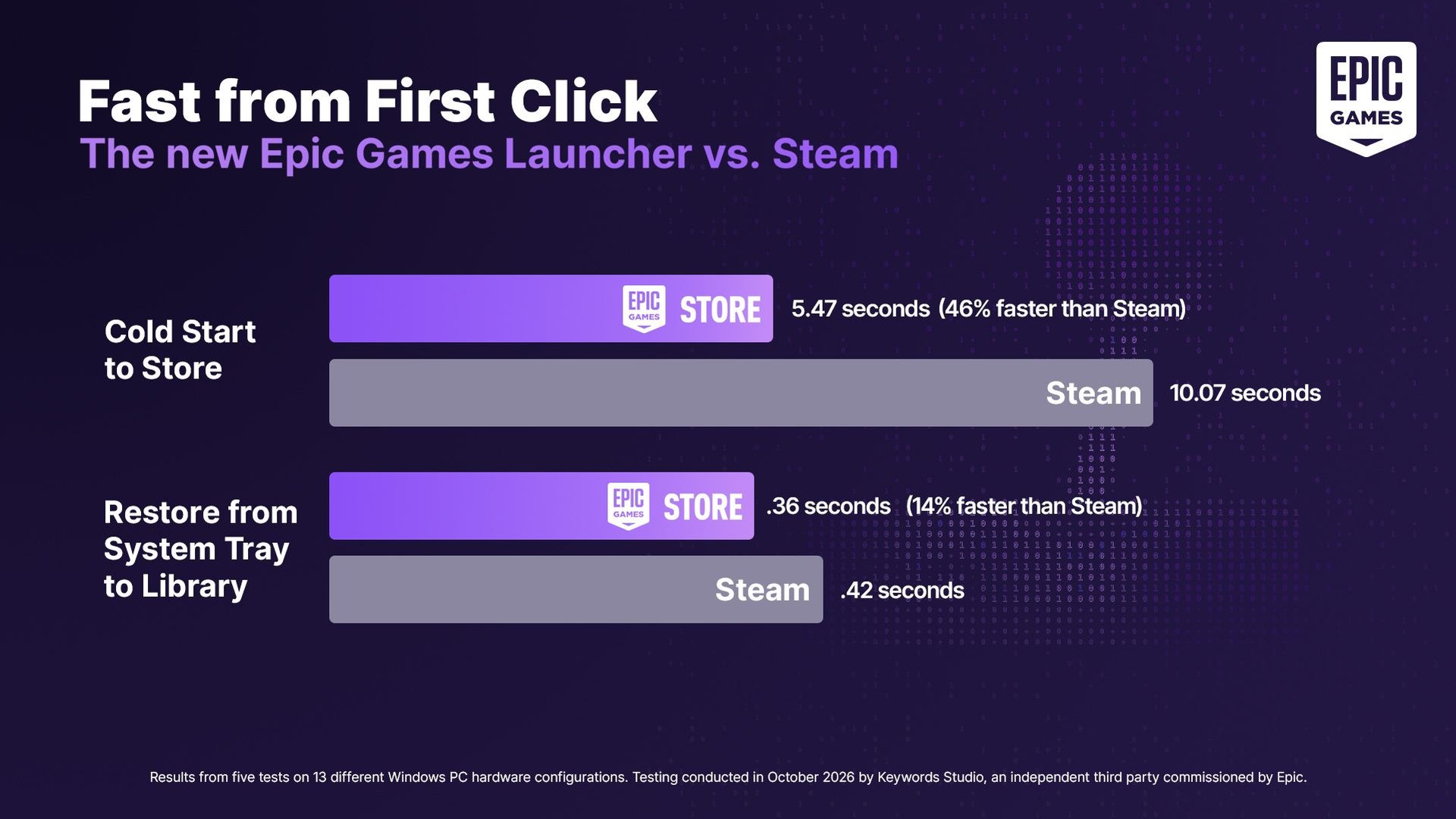
Epic’s redesigned Games Launcher reaches the Store in 5.47 seconds against Steam’s 10.07, the 46% lead the company has built its Preview launch around. The footnote on Epic’s own Preview website says that average excludes the three lowest-end of the 13 machines tested.
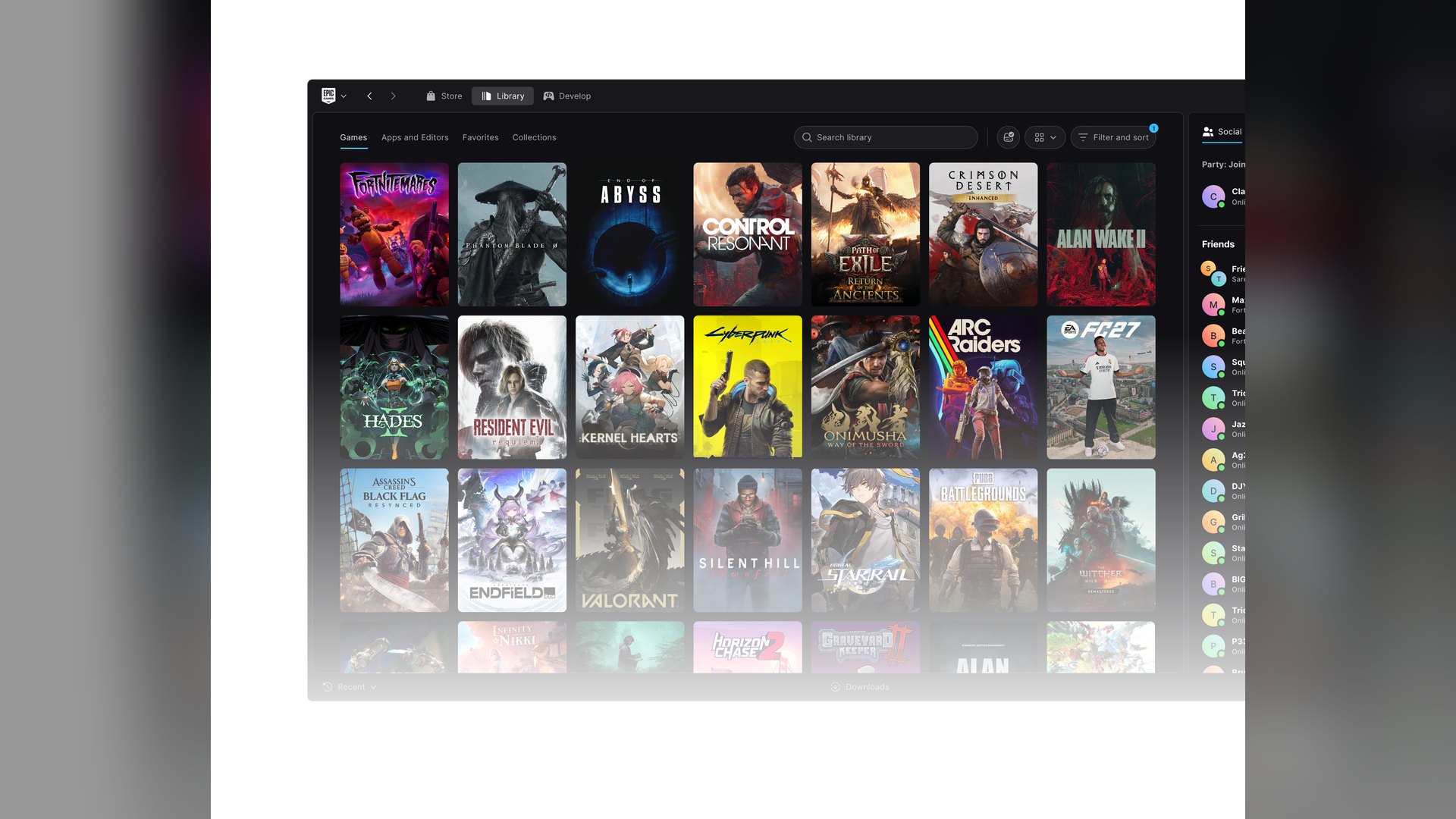
The announcement post carrying the figure never mentions Steam in its text. Epic’s only speed claim there in plain prose is that the new app is “way faster and more responsive than the current one”, meaning Epic’s existing launcher.
The Steam comparison exists as a chart, not as a sentence Epic wrote. That chart is the whole basis for the faster-than-Steam framing now attached to the free Preview build.
What Epic actually measured
Epic timed two operations, not general performance. The first is a cold start to the Store, where the chart puts the new launcher at 5.47 seconds and Steam at 10.07 seconds.
The second is restoring the app from the system tray to the Library. Epic lists 0.36 seconds for its launcher against 0.42 seconds for Steam, and labels that 14% faster.
In absolute terms the second gap is 0.06 seconds. Neither operation is defined anywhere, so it is not published whether sign-in, network calls or first-run caching count toward the cold start.
The three slowest test PCs are not in the average
Epic’s Preview site footnote reads: “Average of 5 tests on each of 13 machines, excluding the 3 lowest-end machines tested.” By that wording the published averages rest on 10 machines.
The footnote printed under the same chart in the announcement post leaves the exclusion out. It says only that the results come from five tests on 13 different Windows PC hardware configurations.
Both footnotes credit the same outside firm. Epic says the testing was conducted in October 2026 by Keywords Studios, which it describes as an independent third party commissioned by Epic.
Commissioned means Epic paid for the work. No report from the testing firm is linked, and no per-machine result, spread or median is published alongside the two averages.
Epic also does not name the Steam client version it tested, or give the specification of any of the 13 machines. Library size is not stated either, and a larger library lengthens launcher startup.
Windows only, and two different multipliers for one test
Every published number comes from Windows. The Preview ships on Windows, macOS and Linux, and Epic has published no macOS or Linux timing at all.
Epic’s Preview site then states the cold start result twice in different units. One line reads “1.8x faster startup than Steam”, which matches 5.47 seconds against 10.07.
A line further down the same page says the launcher “opens the Store 3x faster than Steam”. Both carry the same asterisk pointing at the same footnote.
A third claim on that page, “Library, 30x faster”, carries no asterisk and names no comparison target. It sits outside the benchmark footnote entirely.
Installing the Preview uninstalls the current launcher
The Preview is opt-in and nothing is pushed to existing users. Epic describes it as open to everyone and asks for feedback through a button inside the app.
Switching is not free of consequences, though. Epic warns that trying the new launcher “will automatically uninstall the legacy version”, while purchases, installed games, cloud saves and progress carry over.
Windows requires Windows 10 or 11 in 64-bit, an Intel Core i3 or AMD Ryzen 3, 4 GB of RAM and 700 MB of storage. The build that arrived with native Linux support asks for Ubuntu 22.04 LTS, Fedora 43 or Debian 12 or newer, plus 2 GB.
On macOS the Preview is Apple Silicon only. Epic states flatly that Intel Macs are not supported.
What Epic says is still missing
Epic calls this release “light on features” and describes it as “a speedboat and not a yacht”. Its FAQ lists certain social features and account management options as not yet available.
The company’s two pages also disagree about competitive play. The announcement recommends that competitive players and developers on live projects stay on the current launcher, while the FAQ says nothing would prevent competitive play.
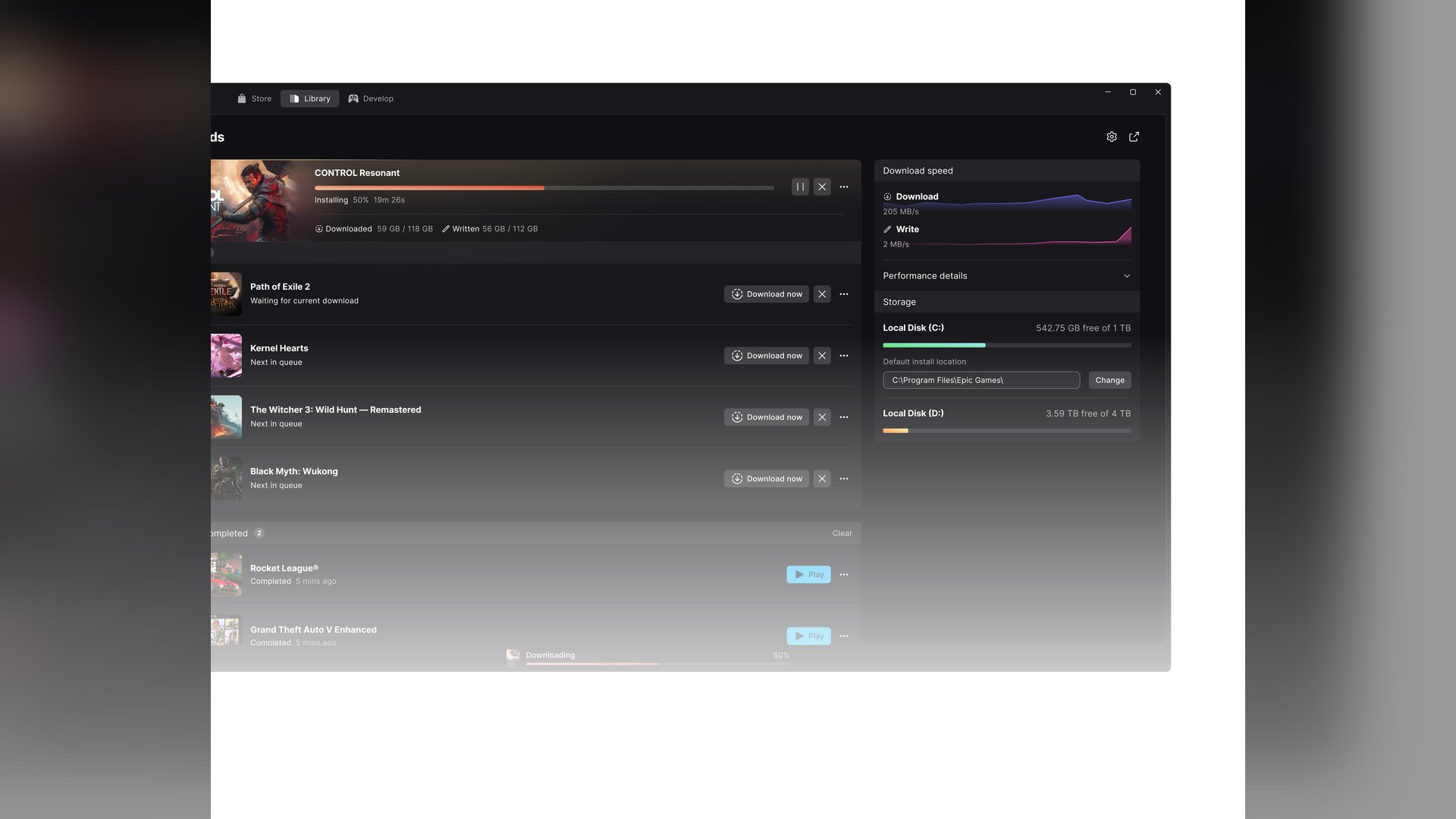
What did land is a download view that reports download, read and write speeds, with active, queued, scheduled and failed downloads in one place. The current launcher, meanwhile, is the one responsible for unexplained chimes with no off switch.
Steam has since been reported starting in 5.23 seconds in a community test, run after a Valve client update. That would close most of the cold start gap, although Valve has published no figures of its own.
Epic has not dated a stable release, has not dated Fortnite on Linux, and has not released the raw benchmark data. Startup times move with every client update on both sides, so the 46% is a snapshot of October 2026.

Discussion (0)
Be the first to comment.