



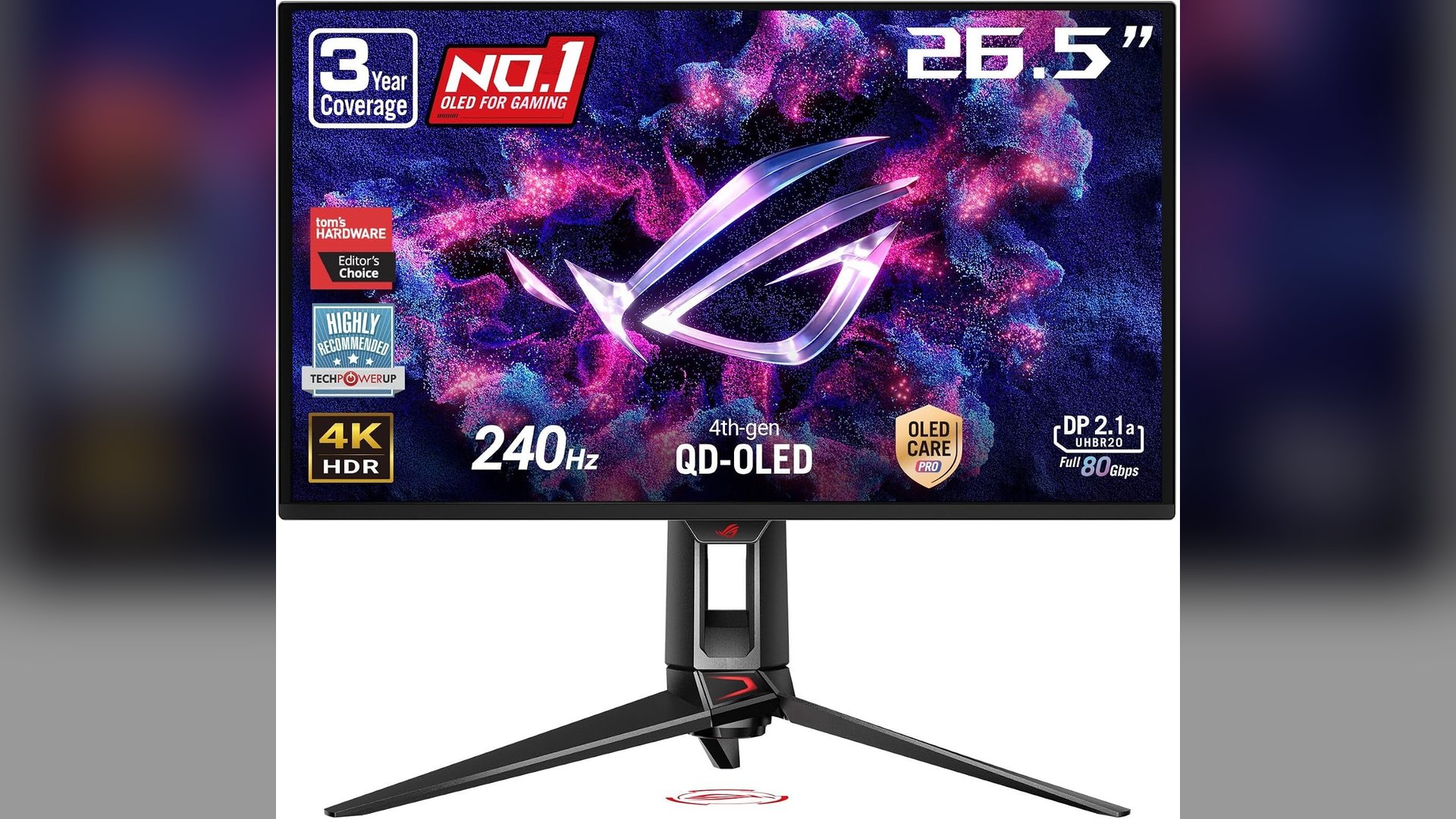
The ASUS ROG Swift OLED PG27UCDM is down to $934.00 at Amazon, while ASUS sells the same monitor for $949.00 on its own store. The genuine gap is $15.00, not the $165.00 that the $1,099.00 list price suggests.
That $1,099.00 anchor is at least real. It is the struck-through original price on ASUS's own product page, which now shows $949.00 beside it.
Amazon lists the monitor as in stock and sold by Amazon.com. The listing shows a 15 percent discount and no low-stock warning at the time of writing.
What the $934.00 price actually buys
This is the Swift model, model code PG27UCDM, and the Amazon title carries that code. It is a 4K gaming panel running at 240Hz with a 0.03ms grey-to-grey response time.
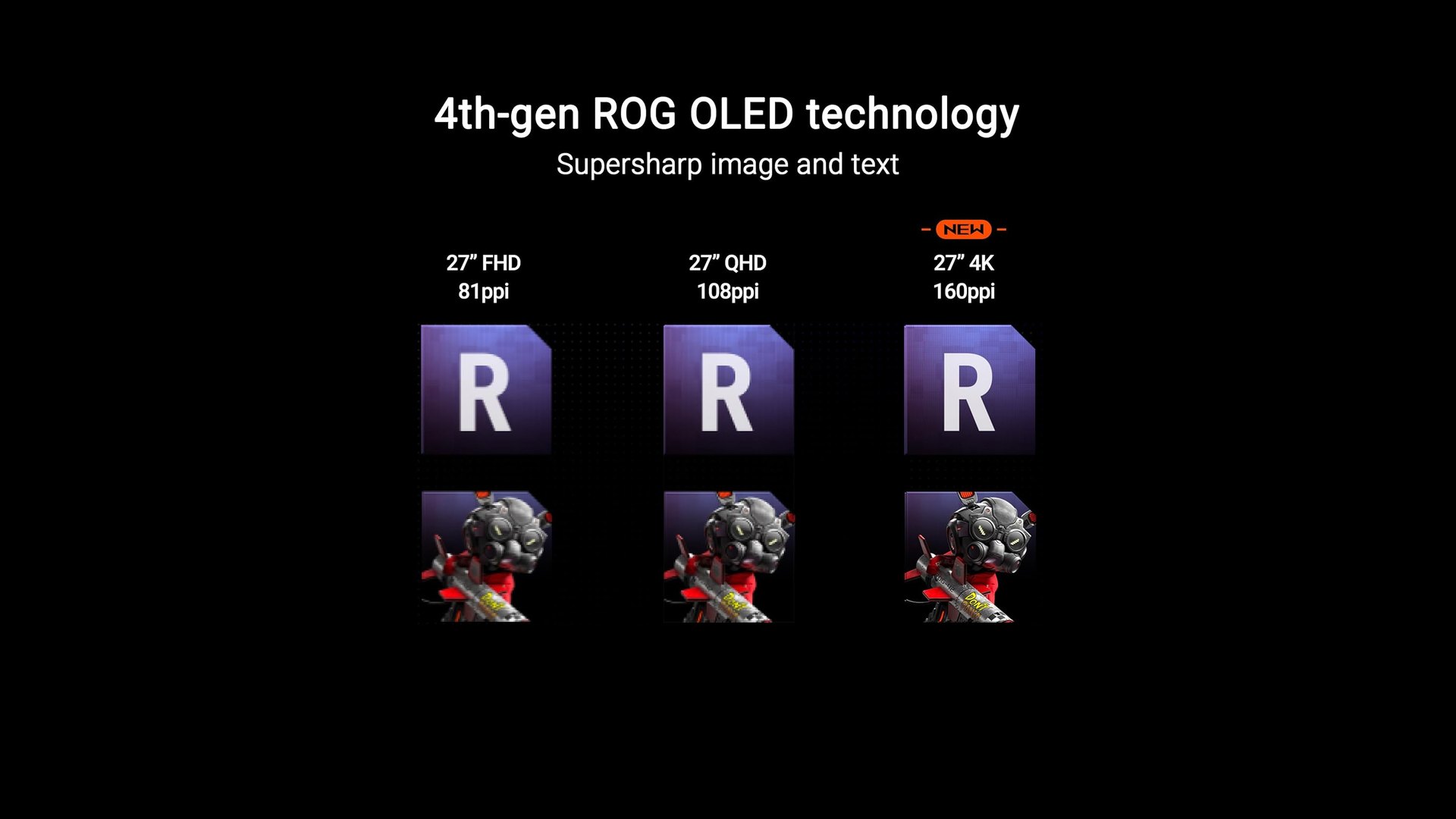
The panel is not quite 27 inches. ASUS describes it as "27-inch (26.5-inch viewable)", and the spec sheet records the panel size as 26.5 inches.
Amazon's title says 27 inch. Amazon's own bullet point, a few lines further down the same listing, says 26.5-inch.
On the generation question, ASUS is specific. The product page calls it a fourth-generation Tandem QD-OLED panel, and says the tandem structure offers greater longevity than previous OLED technologies.
ASUS sells a 32-inch member of the same line, the ROG Swift PG32UCDM, for anyone who wants the extra desktop space.
ASUS ROG Swift OLED PG27UCDM specifications
| Specification | ASUS ROG Swift OLED PG27UCDM |
|---|---|
| Panel | 26.5-inch viewable, fourth-gen Tandem QD-OLED |
| Resolution | 3840 x 2160 |
| Refresh rate | 240Hz |
| Response time | 0.03ms grey-to-grey |
| Contrast ratio | 1,500,000:1 typical |
| Peak brightness | 1,000 cd/m2 in HDR |
| Color | 99% DCI-P3, 145% sRGB, 10-bit |
| HDR | DisplayHDR 400 True Black, HDR10, Dolby Vision |
| Video inputs | DisplayPort 2.1a UHBR20, 2x HDMI 2.1, USB-C with 90W PD |
| USB and KVM | 3x USB 3.2 Gen 1 Type-A, KVM switch |
| Adaptive sync | FreeSync Premium Pro, G-SYNC Compatible |
| Warranty | 3 years, including panel burn-in |
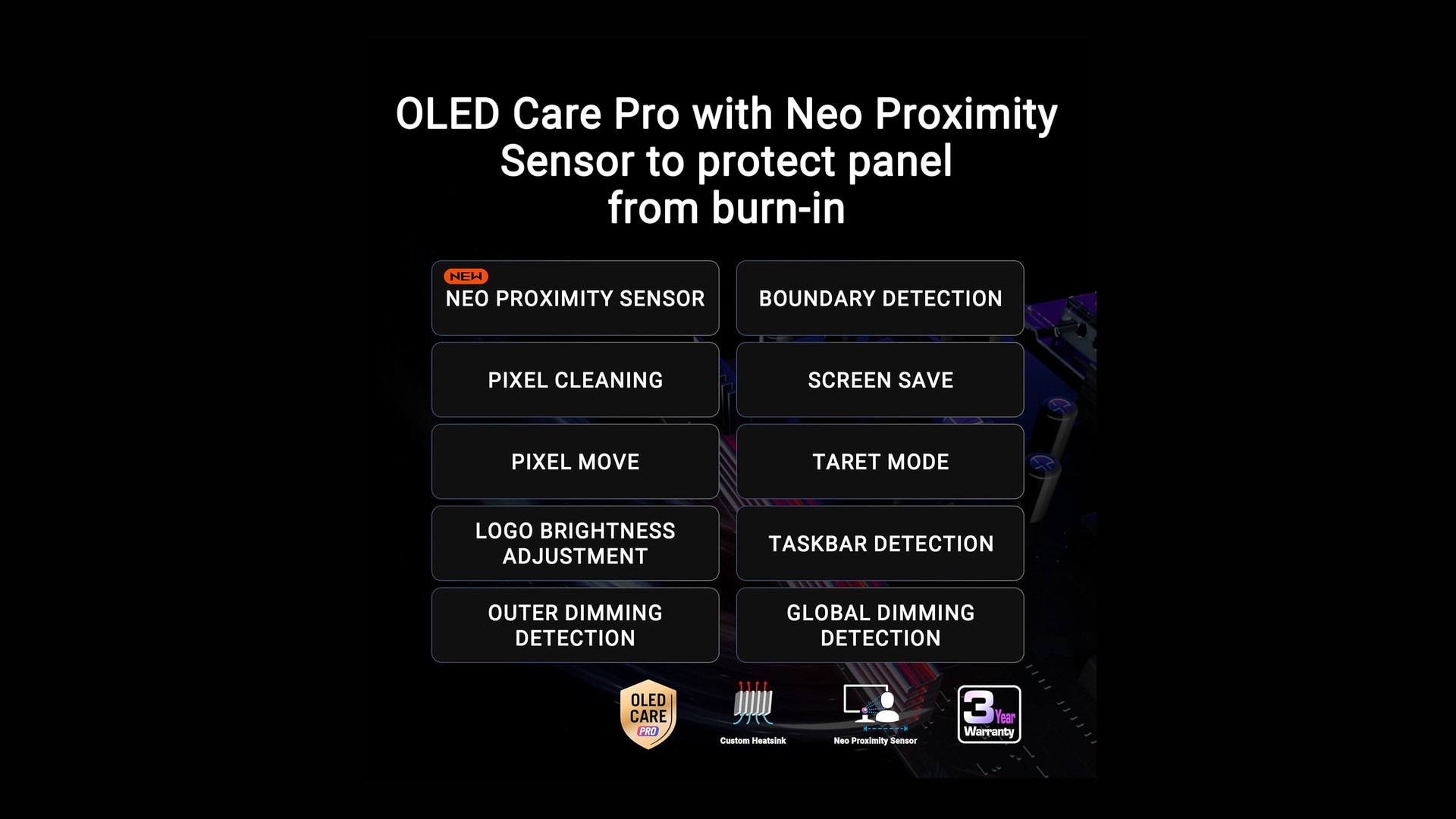
Burn-in handling is the other headline feature. ASUS says the Neo Proximity Sensor detects when a user steps away and switches the screen to black, then restores the image on their return.
The 80Gbps port separates it from the Strix XG27UCDMG
ASUS sells a second 27-inch 4K QD-OLED, the ROG Strix OLED XG27UCDMG, at $799.00 on its own store. The two monitors share a panel on paper.
Both list a 26.5-inch Tandem QD-OLED at 240Hz and 0.03ms, with 1,500,000:1 contrast, 99% DCI-P3, DisplayHDR 400 True Black, 90W USB-C and a KVM switch.
The inputs are where they part. This Swift uses DisplayPort 2.1a UHBR20 at a full 80Gbps, while the Strix uses DisplayPort 1.4 with display stream compression.
The Swift also lists Dolby Vision, which the Strix spec sheet does not. That bandwidth tier has split near-identical models before, as it did with Gigabyte's AORUS ELITE FO32U24G listing.
How it stacks up against the other discounted monitors
| Monitor | Panel | Refresh | Price |
|---|---|---|---|
| ASUS ROG Swift OLED PG27UCDM | 26.5-inch 4K QD-OLED | 240Hz | $934.00 |
| Samsung Odyssey OLED G6 (G61SH) | 27-inch QHD QD-OLED | 240Hz | $429.99 |
| Samsung Odyssey G5 | 34-inch WQHD curved VA | 165Hz | $249.99 |
The Samsung Odyssey OLED G6 at $429.99 is a 1440p panel rather than 4K. Amazon shows only 12 left in stock and names Beach Camera as the seller, not Amazon.
The 34-inch Samsung Odyssey G5 at $249.99 is a 1000R curved VA ultrawide at 165Hz. It trades panel technology and speed for width.
Other makers ship QD-OLED gaming panels of their own, among them the Acer CE270K G and Samsung's Odyssey QD-OLED G8.
What ASUS does not publish
The brightness picture is thinner than the marketing implies. ASUS gives 1,000 cd/m2 as the HDR peak and adds that peak brightness may vary due to color pre-calibration.
No window size is attached to that figure, so there is no 3 percent or 100 percent white reading to compare against rivals. ASUS publishes no SDR brightness number at all.
There is also no published price history for this listing, so $934.00 cannot be verified as a low point on the record. Neither ASUS nor Amazon says how long either discount runs, and both prices can change without notice.



Discussion (0)
Be the first to comment.