



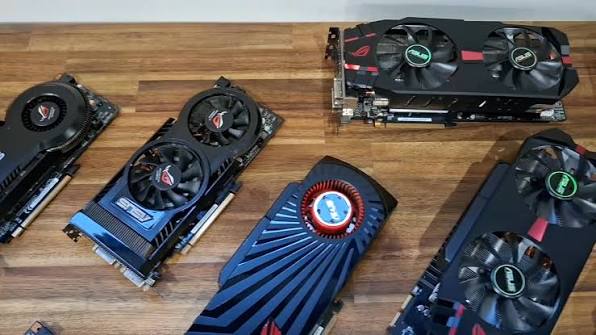
Dell CEO Michael Dell has warned that the global memory shortage could become more severe in 2027, creating a major challenge for the company's rapidly expanding AI server business.
Dell reportedly has around $95 billion worth of enterprise and AI server orders waiting to be fulfilled, the largest backlog in the company's history. The problem is that delivering those systems depends heavily on securing enough DRAM and high bandwidth memory.
Demand for generative AI infrastructure has grown much faster than the industry's ability to increase advanced memory production. AI servers require large amounts of memory alongside GPUs and other accelerators, making HBM and DRAM critical parts of the supply chain.
Dell Says Memory Constraints Could Last for Years
Michael Dell reportedly expects memory shortages to remain a problem for as long as four years.
New semiconductor factories are not expected to reach full production capacity until around 2029 or 2030, which means supply could remain tight even as demand for AI systems continues to rise.
That creates a difficult situation for companies building servers and data center hardware.
| Dell memory situation | Current position |
|---|---|
| AI and enterprise server backlog | About $95 billion |
| Main supply constraints | HBM and DRAM |
| Shortage outlook | Could worsen in 2027 |
| Potential duration | Up to four years |
| New capacity expected | Around 2029 to 2030 |
| Main affected market | AI and enterprise servers |
| Dell response | Lean inventory and long term supply agreements |
The shortage also has a direct effect on pricing.
As HBM and DRAM become more expensive, the overall cost of advanced AI servers rises as well. That can affect both Dell's margins and the prices customers eventually pay for high performance systems.
Dell Is Keeping Inventory Lean
Dell has adopted a relatively cautious inventory strategy to reduce the financial risk created by volatile memory prices.
Instead of stockpiling large amounts of DRAM well in advance, the company reportedly buys memory closer to the point when final server assembly is scheduled.
That approach limits the amount of capital tied up in inventory and reduces the risk of holding expensive components if demand suddenly changes.
It also means Dell has to maintain reliable access to suppliers, because any disruption in memory availability can quickly delay system shipments.
Long Term Agreements Help Secure Supply
Dell is also using long term supply agreements and customer commitments to improve access to advanced memory.
The company reportedly works with suppliers through arrangements that reserve future capacity, while some customers provide capital commitments in advance.
This model helps protect Dell from sudden price increases and gives memory manufacturers more confidence when allocating limited supply.
It is similar to the broader strategy used across the semiconductor industry, where large buyers increasingly secure capacity years in advance.
Engineers Are Adjusting Server Designs
Dell is not relying only on supply contracts.
Its engineering teams are also working on server designs that can support different memory configurations.
That flexibility could allow some systems to ship even when a particular memory type or capacity is difficult to obtain.
For AI servers, this can be especially important because different workloads do not always require the same amount or type of memory.
Designing around multiple configurations gives Dell more options when parts are limited.
AI Demand Is Driving the Shortage
The memory supply problem is closely tied to the rapid expansion of AI infrastructure.
Modern AI accelerators require large amounts of high bandwidth memory, while conventional server DRAM demand is also increasing as data centers expand.
That puts pressure on the same manufacturers that supply memory to PCs, servers and other electronics.
The challenge for Dell is unusual because demand is not the problem.
The company already has around $95 billion in server orders waiting to be converted into revenue. The main limitation is whether enough memory can be secured to build and deliver those systems.
If Michael Dell's warning proves accurate, 2027 could bring even tighter supply and higher costs before new manufacturing capacity begins easing the pressure later in the decade.



Discussion (0)
Be the first to comment.