



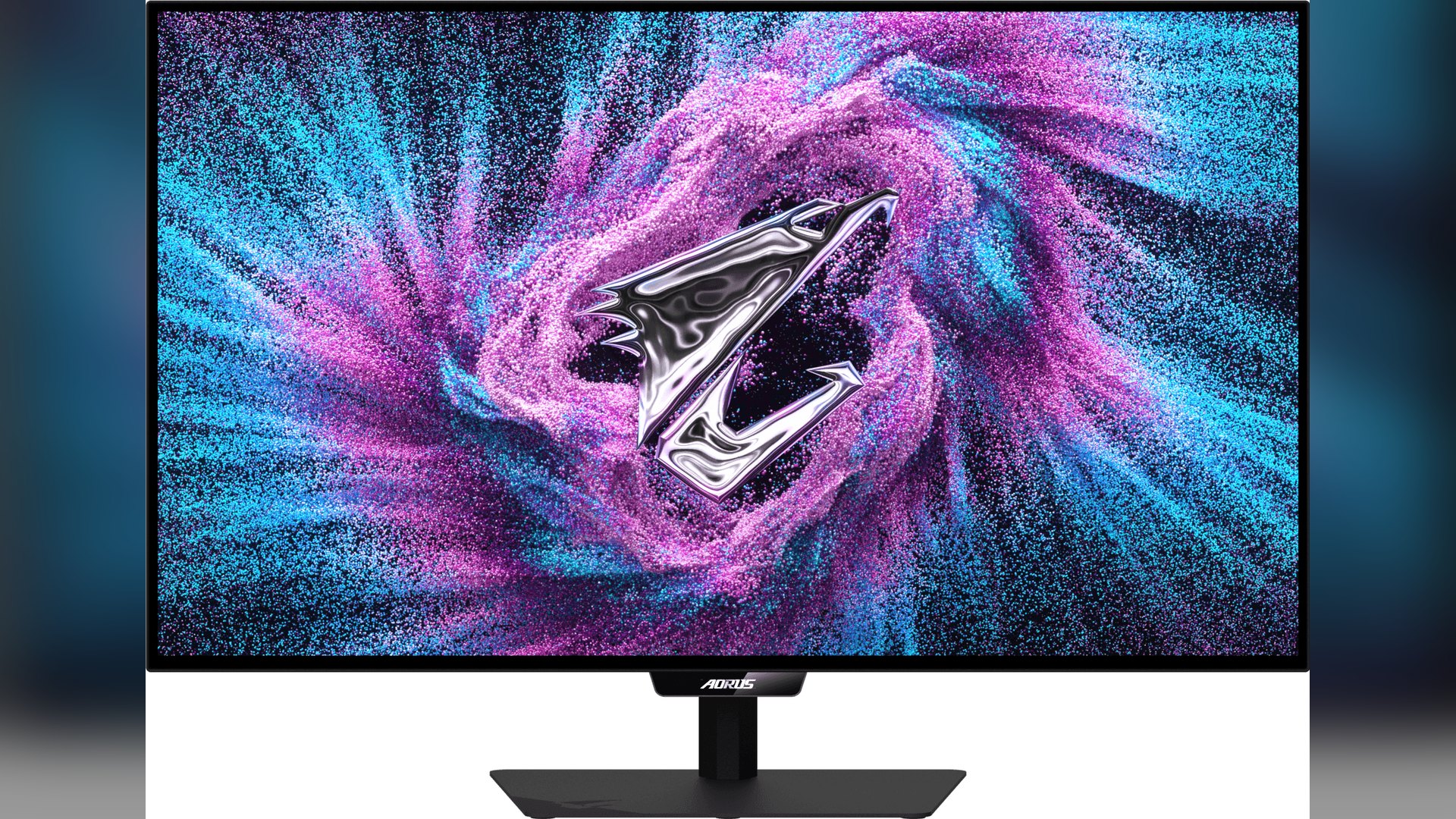
Gigabyte has published the full specification for the AORUS ELITE FO32U24G, a 31.5-inch gaming monitor built on what it calls a fourth-generation Tandem WOLED panel from LG Display. Its own spec table lists native 4K at 240Hz, a Dual Mode that swaps to FHD at 480Hz, and a 0.03 ms grey-to-grey response time.
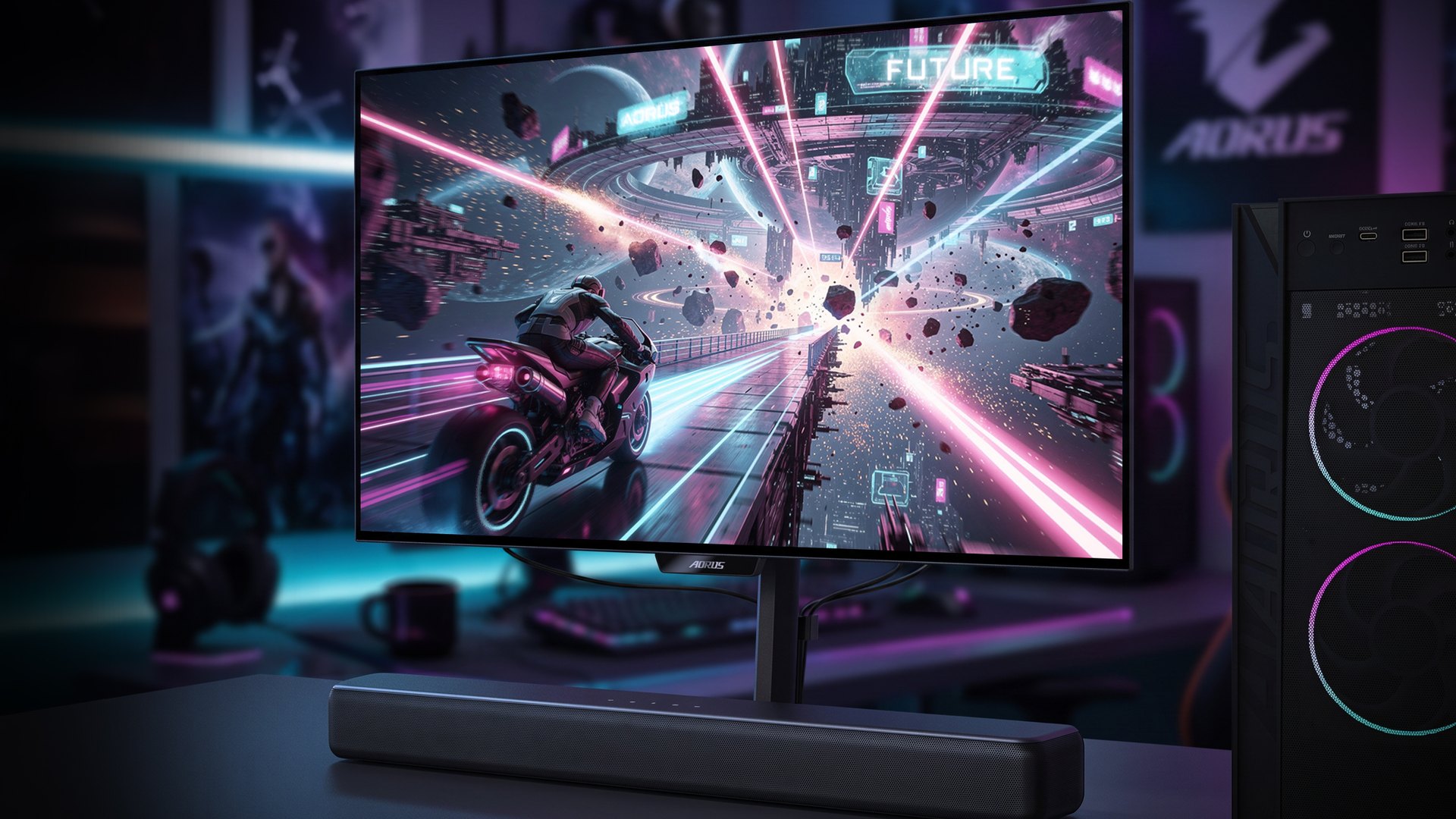
One widely quoted number does not belong to this monitor. Gigabyte's own Computex press release attaches DisplayPort 2.1 UHBR20 and 80Gbps to the FO32U24GP, a sibling model whose name differs by a single letter.
That matters because bandwidth is the part of a 4K 240Hz setup most likely to trip a buyer up. Anyone cross-shopping on the strength of an 80Gbps port needs to check the suffix first.
AORUS ELITE FO32U24G specifications
| Specification | AORUS ELITE FO32U24G |
|---|---|
| Panel | 31.5-inch WOLED, described by Gigabyte as 4th Gen and Primary RGB Tandem OLED |
| Resolution | 3840 x 2160 (UHD) |
| Refresh rate (max) | 240 Hz |
| Dual Mode | FHD at 480Hz, switched with the Tactical Switch |
| Response time | 0.03 ms (GtG) |
| Contrast (typ.) | 1.5M:1 |
| Brightness | 1500 nits (HDR peak), no measurement window stated |
| Color | 1.07B colors, 10-bit, 99.5% DCI-P3, 84% BT.2020, Delta E < 2 |
| Surface | Glossy Real Black, reflectance as low as 1.1% |
| HDR badge | DisplayHDR True Black 500 (Gigabyte's claim) |
| VRR | G-Sync Compatible |
| Speakers | 5W x 2 |
| Warranty | 3 years, terms vary by region |
Gigabyte lists the viewing area as 696.58 x 391.82 mm with a 0.1814 mm pixel pitch. The stand handles 130 mm of height adjustment, tilt from -5 to +21 degrees, 15 degrees of swivel either way and a 90-degree clockwise pivot.
Dual Mode itself is now familiar ground on high-end OLED panels, and Digital Citizen has covered the format on a rival 4K 240Hz Tandem WOLED monitor and on a cheaper dual-mode 4K model. The short version is that the panel trades resolution for refresh rate on demand.
The suffix that changes the port story
Gigabyte's June 1, 2026 press release names the GP model directly. It reads: "The FO32U24GP pushes the experience further with Dual Mode and DP 2.1 UHBR20 delivering up to 80Gbps full-bandwidth connectivity." The hero image in that release labels the FO32U24GP, not the FO32U24G.
The FO32U24G's own spec page lists "1 X DP 2.1" and stops there. No UHBR tier and no bandwidth figure appear on the product or spec pages for this exact model.
So the 80Gbps claim is not published for the plain FO32U24G. Treating the two names as one product is an easy mistake, and it changes what the display can accept over a single cable.
What it takes to drive 4K at 240Hz
Uncompressed 4K at 240Hz and 10-bit color needs far more throughput than DisplayPort 1.4 carries at 32.4 Gbps. Plain HDMI 2.1 tops out at 48 Gbps in FRL mode, which is also short of the uncompressed requirement.
In practice, both DisplayPort 2.1 at the UHBR13.5 and UHBR20 tiers and HDMI 2.1 lean on Display Stream Compression to reach 4K at 240Hz over one cable. The UHBR20 tier Gigabyte names for the sibling SKU is the one that buys real headroom.
The graphics card is the other half. Sustaining anything close to 240 frames per second at native 4K realistically means a current top-tier card. Nvidia GeForce RTX 5090-class or AMD RX 9000-series hardware is the bar, almost always with upscaling or frame generation carrying the load.
Gigabyte's pages for this monitor never address cable or GPU requirements for either mode.
Brightness, contrast and the missing window
The 1,500-nit peak is the headline brightness figure, and Gigabyte states it as an HDR peak. What the company does not publish is the measurement window behind it.
Peak OLED brightness is normally quoted against a small white patch, often 1% or 3% of the screen. Without that detail, the 1,500-nit number cannot be lined up cleanly against rival figures that do state a window.
No separate SDR or typical brightness figure is published either. Contrast is listed at 1.5M:1, color depth at 10-bit, and the DisplayHDR True Black 500 badge appears on Gigabyte's product page as the company's own claim.
Gigabyte also credits the Primary RGB Tandem architecture with cutting power consumption by 20 percent, and pairs the panel with AI OLED Care Pro, heat pipes, presence-based Auto Lock and ambient Adaptive Light. Tandem OLED panels have been spreading fast this year, including on a 27-inch 320Hz QD-OLED from a rival.
Ports, and what Gigabyte has not published
The port list is fixed and short. Gigabyte lists two HDMI 2.1 inputs, one of them with eARC, plus one DP 2.1 and one USB Type-C with DP Alt Mode and 65W power delivery. A USB Type-B upstream port, two USB-A ports and an earphone jack complete it, alongside a KVM feature and a 5-way joystick.
Gigabyte has published no price for the AORUS ELITE FO32U24G and no release date, so there is nothing to order at the time of writing. Its own pages also carry a disclaimer that specifications may change without notice, which was still the case when the pages were checked on September 26, 2026.
Also unconfirmed: the UHBR tier of this model's DisplayPort 2.1 port, the window behind the 1,500-nit peak, the exact FreeSync certification wording, and three of the five eye-care certifications Gigabyte counts but does not name.

Discussion (0)
Be the first to comment.