



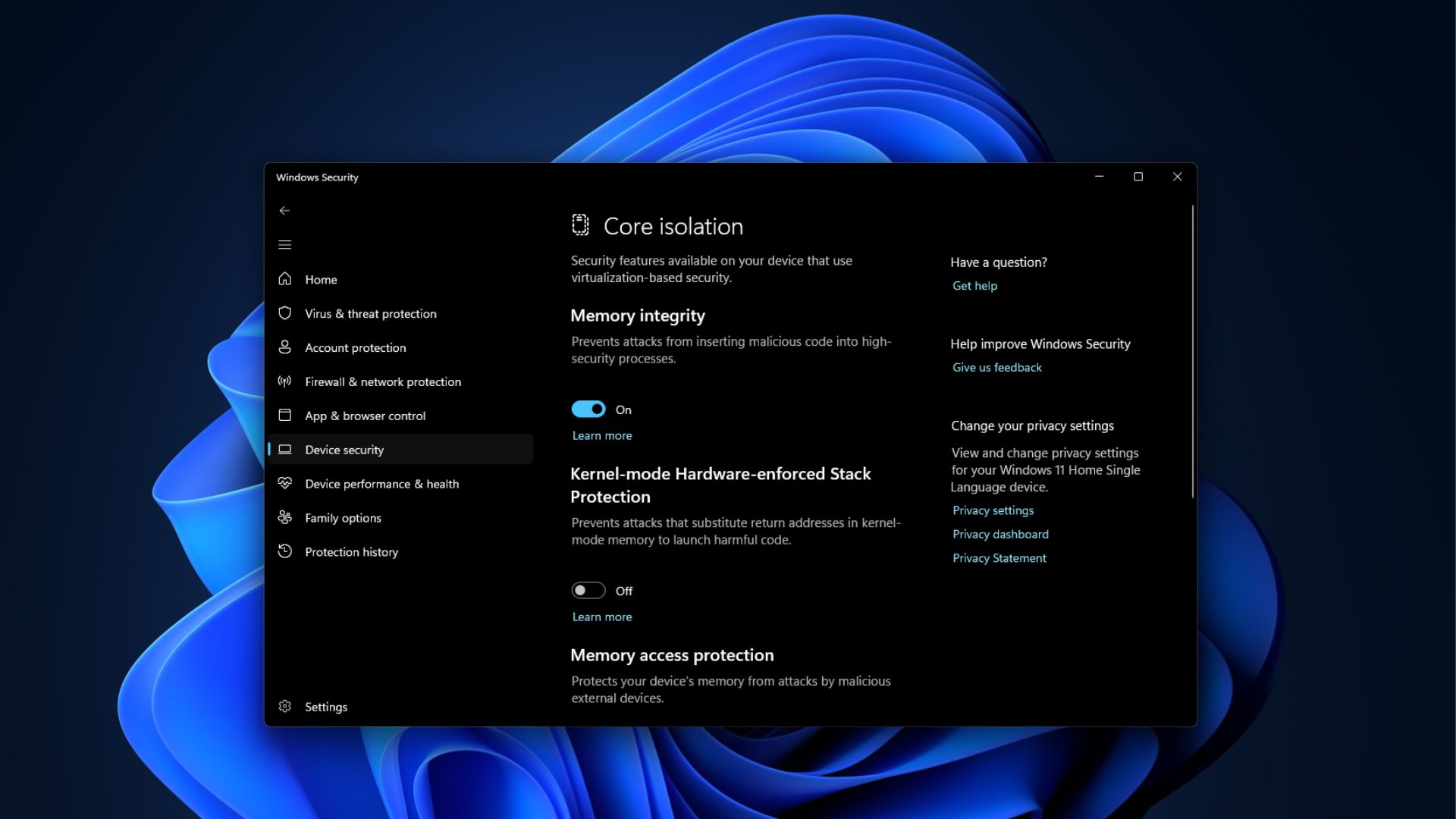
Microsoft plans to automatically enable Memory Integrity on more eligible Windows 11 PCs starting with quality updates in October 2026. The security feature is designed to better protect the Windows kernel from malicious or untrusted code, although it can also have a small performance cost on some systems.
The change will apply to compatible PCs where Memory Integrity is currently inactive. Windows may also enable Virtualization Based Security, or VBS, when required for the feature to work.
Microsoft says it will respect previous choices made by you or your system administrator. If Memory Integrity was deliberately disabled before the update, Windows should not automatically turn it back on.
What Memory Integrity does in Windows 11
Memory Integrity is Microsoft’s name for Hypervisor Protected Code Integrity, also known as HVCI. It uses virtualization to separate important security checks from the rest of the operating system.
This isolated environment helps Windows verify kernel level drivers and code before they are allowed to run. The goal is to make it harder for malicious software or compromised drivers to interfere with the Windows kernel.
| Feature | Details |
|---|---|
| Windows feature | Memory Integrity |
| Technical name | Hypervisor Protected Code Integrity |
| Related technology | Virtualization Based Security |
| Rollout begins | October 2026 |
| Automatic activation | Only on eligible compatible systems |
| Previously disabled systems | Existing choice will be respected |
| Main purpose | Protect kernel code and drivers |
Microsoft says hardware capability, software compatibility and expected performance will be considered before the feature is enabled automatically.
Gaming performance can be affected
Memory Integrity adds another security layer, but that protection uses some system resources.
Modern processors include hardware features that make virtualization based security more efficient. Older processors can depend more heavily on software handling, which may lead to a larger performance impact.
Independent gaming tests over the years have generally found performance losses in the single digit percentage range, although results vary significantly by game, processor and workload. CPU limited games can be more sensitive than titles mainly limited by graphics performance.
That performance difference is one reason some PC gamers have chosen to disable Memory Integrity when optimizing Windows for maximum frame rates.
The October change should not override those existing decisions. If you have already switched the feature off manually, Microsoft says Windows will continue respecting that configuration.
Microsoft is expanding protection selectively
The new policy does not mean every Windows 11 PC will automatically receive Memory Integrity.
Microsoft plans to evaluate whether individual systems can support the feature without unacceptable compatibility or performance problems. Eligible machines will therefore depend on processor capabilities, drivers and other hardware conditions.
The change expands the number of PCs receiving stronger kernel protection by default while leaving previously configured systems alone. For gamers and other performance focused PC owners, the important detail is that Windows should not automatically reverse an existing decision to disable Memory Integrity.



Discussion (0)
Be the first to comment.