


Samsung Electronics is reportedly running out of available memory manufacturing capacity for the next several years, with much of its production already committed to customers through 2029.
According to a new industry report from South Korea, major technology companies are seeking longer supply agreements, with some requesting contracts extending into 2031.
The growing demand comes as artificial intelligence infrastructure continues expanding, increasing the need for high bandwidth memory, conventional DRAM, and enterprise storage products.
Samsung has already confirmed that its 2027 high bandwidth memory supply is sold out. Industry sources now suggest that conventional DRAM manufacturing capacity for the same year is also effectively fully allocated.
If these conditions continue, manufacturers of consumer electronics, PCs, and servers could face prolonged competition for memory supplies.
However, the outlook varies between memory categories, and current supply commitments do not necessarily mean that prices will continue increasing throughout the decade.
Samsung Customers Are Reportedly Seeking Memory Contracts Until 2031
The latest report suggests that most of Samsung's memory production capacity between 2027 and 2029 has already been reserved through customer agreements.
Some companies are reportedly negotiating additional allocations beyond their existing contracts, reflecting concerns about future availability.
The development follows Samsung's third quarter 2026 earnings announcement, during which the company confirmed long term supply agreements with 10 major customers.
Negotiations with another 10 customers were also underway, with several reportedly approaching completion.
Samsung intends to reserve approximately 60% to 70% of its medium and long term production capacity for multiyear contracts by 2030.
These agreements provide greater revenue predictability for Samsung while giving customers more confidence about future supplies.
Some prospective contracts could extend until 2031 and may include advance payments or pricing arrangements intended to reduce exposure to sudden market changes.
However, the report does not disclose the identities of every customer, the quantities involved, or the complete financial terms.
AI Infrastructure Expansion Is Increasing Demand for HBM and DRAM
The growing use of artificial intelligence is placing substantial pressure on memory manufacturers.
Modern AI accelerators require large amounts of memory to process data efficiently, particularly when training and operating advanced language models.
High bandwidth memory is especially important because it provides the data transfer speeds needed by powerful AI processors.
However, manufacturing HBM requires considerable semiconductor production resources.
As manufacturers expand HBM output, they must allocate wafer capacity and other manufacturing resources that might otherwise be used for conventional DRAM products.
This creates additional pressure on the supply of memory used in personal computers, servers, and other electronic devices.
Samsung has previously confirmed that its available HBM production for 2027 has already been committed to customers.
The latest report suggests that conventional DRAM wafer capacity for 2027 is also nearly exhausted.
Industry sources estimate that major memory manufacturers can currently fulfill only around 60% to 70% of customer demand.
If accurate, this imbalance could become more pronounced during 2027 as additional AI data centers begin operating.
Samsung Is Increasing Long Term Agreements to Secure Production Demand
Long term supply contracts are becoming increasingly important in the semiconductor memory industry.
Historically, memory prices have experienced substantial fluctuations depending on production levels, customer demand, and inventory conditions.
Large customers may prefer multiyear agreements because they provide greater certainty about the memory available for future products.
For manufacturers, these contracts can also reduce uncertainty about production planning and expected revenue.
Samsung's reported strategy reflects those priorities.
The company aims to allocate a substantial portion of its capacity through longer agreements while retaining some flexibility to respond to changing market conditions.
The following figures summarize the reported supply situation.
| Category | Reported Situation |
|---|---|
| Samsung 2027 HBM supply | Already sold out |
| Conventional DRAM capacity for 2027 | Reportedly almost fully allocated |
| Production commitments through 2029 | Most capacity reportedly reserved |
| Customer contract requests | Some extending into 2031 |
| Confirmed major customer agreements | 10 |
| Additional customer negotiations | 10 |
| Long term contracted capacity target | 60% to 70% by 2030 |
| Estimated industry demand fulfillment | Approximately 60% to 70% |
The figures combine Samsung's previously confirmed statements with industry estimates and reports that have not been independently verified.
NAND Flash Memory Could Face Different Market Conditions
Although DRAM and HBM supplies remain under pressure, the outlook for NAND flash memory is less certain.
NAND is widely used in solid state drives, smartphones, and enterprise storage systems.
Demand from data centers has supported the market, particularly as companies expand storage capacity for AI applications.
However, recent industry projections suggest that NAND prices could begin declining during the first quarter of 2027.
The forecast is based partly on reduced enterprise SSD orders from Chinese cloud providers and increasing manufacturing output.
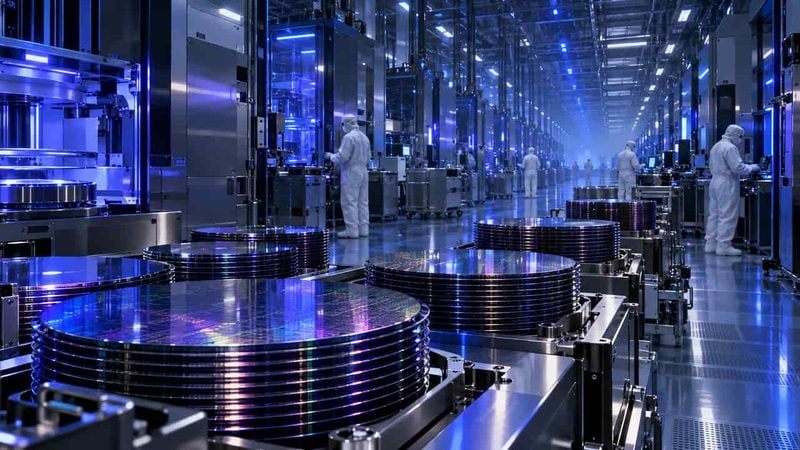
This differs from the supply constraints reported in the DRAM and HBM markets.
It also demonstrates why developments affecting one type of semiconductor memory should not automatically be applied to every other category.
DRAM, HBM, and NAND serve different purposes and have distinct manufacturing requirements.
Their prices and availability can therefore move in different directions depending on demand and production conditions.
New Memory Factories Will Not Immediately Resolve Supply Constraints
Samsung has previously warned that increasing capital expenditure does not automatically produce an immediate increase in memory output.
New semiconductor manufacturing facilities require substantial investment and can take years to construct, equip, and prepare for commercial production.
Advanced memory products also involve increasingly complicated manufacturing processes.
HBM production, for example, requires multiple memory dies to be stacked and connected through specialized manufacturing techniques.
These additional processes can limit the number of finished products manufacturers obtain from available resources.
As a result, expanding wafer production alone may not be sufficient to resolve every manufacturing constraint.
Samsung and its competitors must also manage packaging capacity, production yields, and demand for different memory products.
This helps explain why customers are seeking supply commitments several years in advance.
PC RAM Prices Could Remain Under Pressure Through 2027
For PC builders and consumers, the reported supply situation raises questions about future memory availability and pricing.
Conventional DRAM is used in desktop and laptop memory modules, including DDR5 products.
If manufacturers allocate more production capacity to high margin AI memory, supplies available for consumer hardware could become more constrained.
This may contribute to higher memory prices or reduce the availability of certain configurations.
However, the relationship between production contracts and retail prices is not straightforward.
Consumer memory pricing depends on several factors, including inventory levels, demand from PC manufacturers, overall semiconductor production, and competition between suppliers.
Long term agreements also do not guarantee that customers will continue purchasing the same quantities if market conditions change significantly.
Consequently, it would be premature to conclude that memory prices will remain elevated through 2029 solely because Samsung has reportedly reserved much of its manufacturing capacity.
Samsung's Memory Supply Outlook Reflects Growing AI Investment
Samsung's reported order commitments demonstrate how demand for artificial intelligence hardware is influencing semiconductor manufacturing decisions.
Major technology companies are attempting to secure the memory required for future AI servers and computing infrastructure several years before those systems are deployed.
For Samsung, this provides opportunities to negotiate longer contracts and plan production around expected demand.
However, maintaining flexibility will remain important because memory markets have historically experienced periods of both shortages and oversupply.
The contrast between strong HBM demand and potentially weaker NAND pricing illustrates that uncertainty.
For now, Samsung's reported capacity commitments through 2029 and customer requests extending into 2031 suggest that competition for advanced memory supplies could remain significant.
The longer term effect on consumer RAM prices, enterprise storage costs, and future PC hardware availability will depend on how quickly manufacturers can expand production and whether AI infrastructure demand continues growing at its current pace.

Discussion (0)
Be the first to comment.