


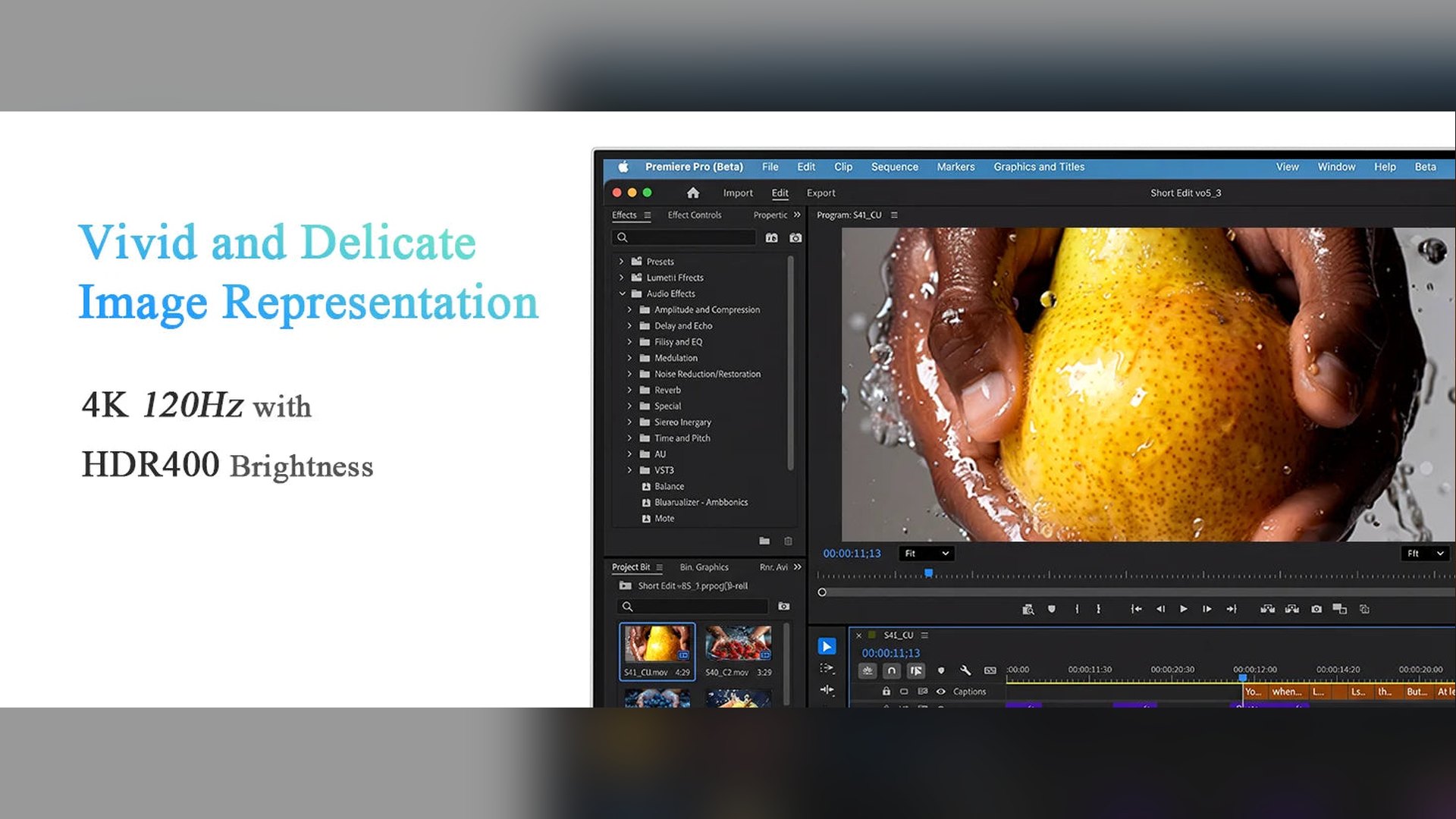
HDR400 printed on a monitor listing is usually a brightness claim, not a certificate. INNOCN badges its 32-inch CB32U1 that way, then publishes 350 nits and a 1500:1 contrast ratio in its own spec table for that model.
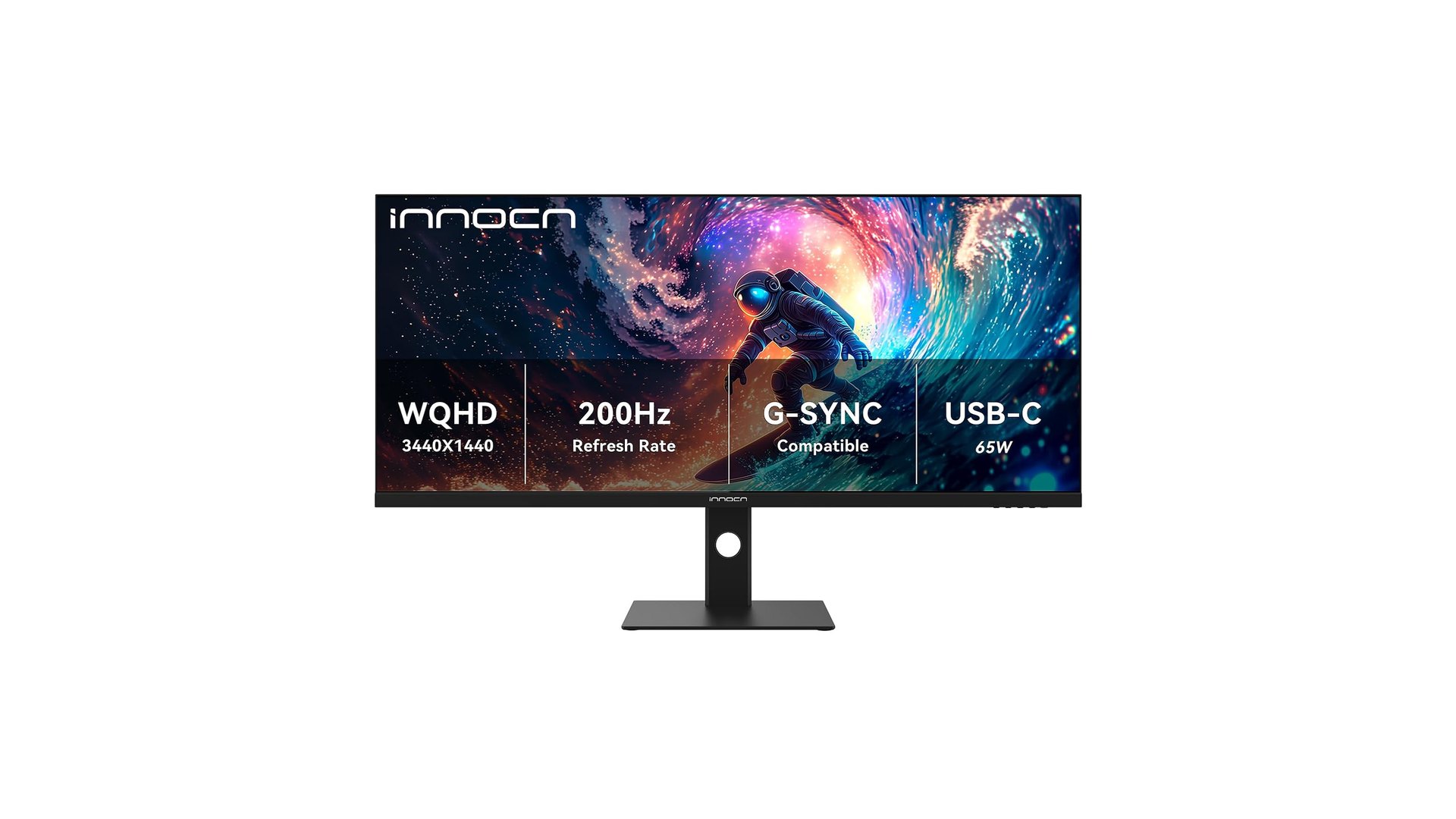
The number comes from VESA's DisplayHDR 400 tier, which is named after 400 cd/m2. The CB32U1 does not appear on VESA's certified-products list at any tier, although other INNOCN models do.
INNOCN's page for it never uses the words VESA, DisplayHDR, local dimming or peak brightness. HDR400 is the entire claim.
What DisplayHDR 400 actually requires
VESA publishes the criteria in full. Under CTS 1.2, DisplayHDR 400 asks for 400 cd/m2 on an 8% center patch against a 2% average-picture-level background.
It also asks for 400 cd/m2 on a full-screen flash test and 320 cd/m2 full screen over a long duration. Black at the screen center may be no higher than 0.4 cd/m2.
Color coverage is 99% of ITU-R BT.709, plus 90% DCI-P3 at this tier against 95% at every tier above it. The input must be a 10-bit video signal, though the driver IC may be 8-bit with 2-bit dithering.
Static contrast must reach 1,300:1 on a 1D backlight. INNOCN's published 1500:1 clears that floor, while its 350 nits sits below the figure the tier is named after.
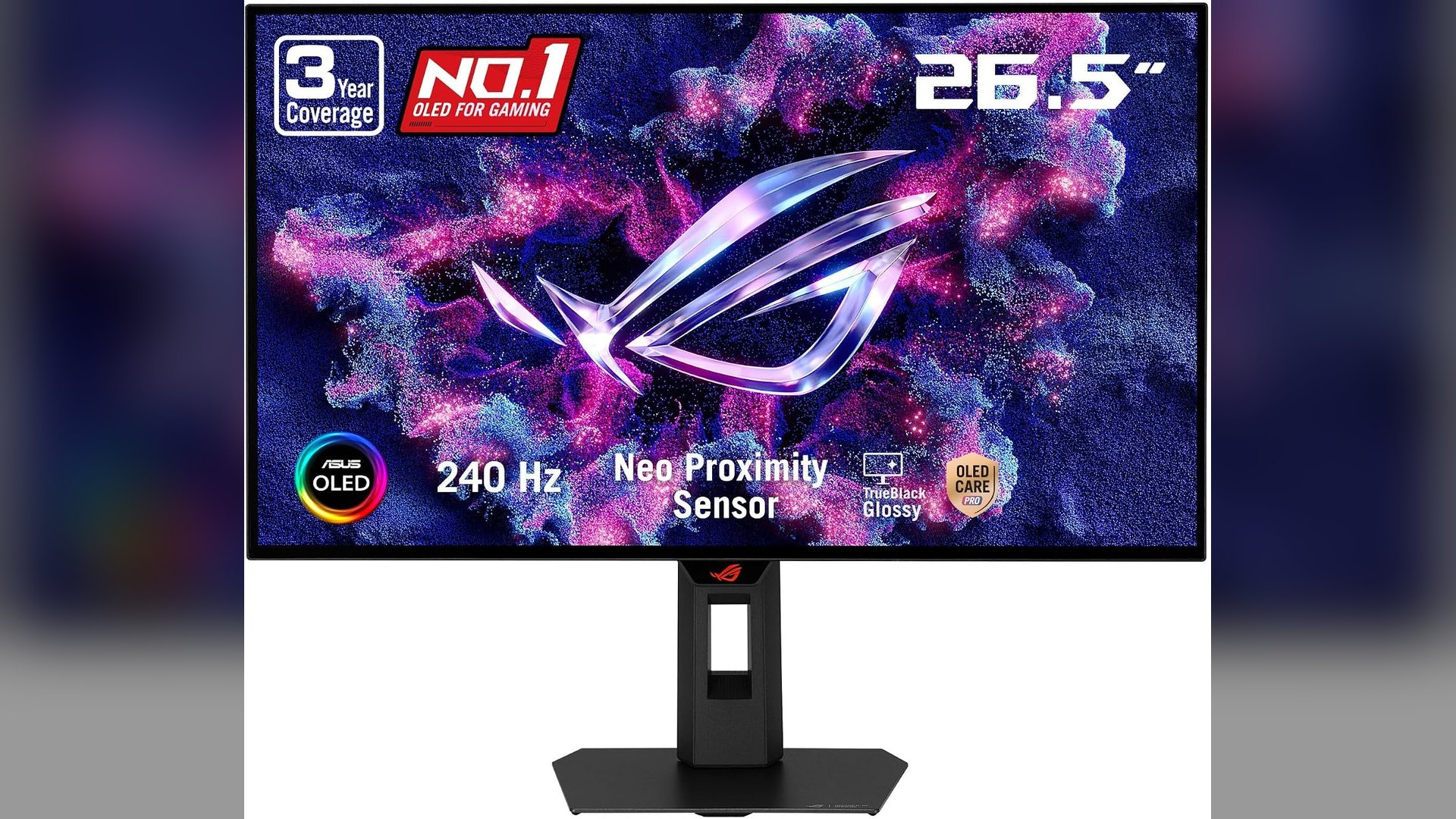
Local dimming is not part of the 400 tier
This is the part the name hides. VESA writes that its contrast test requires 1D local dimming or better for the 500 and 600 levels, and 2D local dimming or better for 1000 and above.
At 400 the wording changes. That level needs "either a substantial increase in native panel contrast ratio versus CTS v1.1, or 1D local dimming".
So a monitor can meet DisplayHDR 400 with no dimming zones at all. INNOCN publishes no zone count for the CB32U1, in the same way TCL leaves the zone count off its 75-inch QM8L.
A badge printed by a maker is not a line on VESA's list
The reverse happens too. Amazon's product information table for INNOCN's 40-inch 40C1R Max gives its model number as 40B2R.
That code appears exactly once on VESA's certified-products page, inside the DisplayHDR 600 table, as a family model of the Innocn WR40-PRO. Both the listing and INNOCN call the monitor HDR400.
VESA's list prints a CTS version beside every row, and that row reads 1.1. A certificate issued under the older criteria was measured against the older tests.
Two monitors can both say 400 and look nothing alike
True Black 400 is a separate column from plain 400, and it is the OLED one. Both ask for 400 cd/m2 on the 8% center patch.
After that they split. True Black 400 allows 250 cd/m2 on the full-screen flash test where plain 400 wants 400, and it caps center black at 0.0005 cd/m2 instead of 0.4.
ASUS shows the spread inside one brand. It publishes 1300 nits peak for the ROG Strix XG27AQDMGR and 1,000 cd/m2 peak for the XG27UCDMG, and lists both as VESA DisplayHDR 400 True Black.
Its March 2026 launch release goes further. Three ROG Strix OLEDs are rated at 1300, 1000 and 400 nits peak, and the first two carry the same 400 True Black line in the same table.
A nit figure with no window size cannot be compared
VESA's figure is tied to a test pattern. A maker's figure often is not.
MSI publishes "SDR: 200" and "HDR: 400 (Typ.)" for the MAG 272QP QD-OLED X24, with no window size on its spec page. The HDR Support row there reads HDR Ready, with no VESA tier named.
ASUS footnotes its 1300-nit figure with "Peak brightness may vary due to color pre-calibration" and gives no window size either. Neither maker says whether the number is a small highlight or a full white screen.
MSI's store gives its near-identical 274QP QD-OLED X24 the same HDR ready line. Neither model is on VESA's list, although other MSI QD-OLEDs are, including the MAG 272QPW QD-OLED X28 at True Black 400 and the MAG 272QP QD-OLED X50 at True Black 500.
How to check a badge before buying
Open VESA's certified-products list and search it for the exact model code, suffix included. Read the Family Models column as well, because that is where the 40B2R entry sits.
Then look for a window size beside any brightness figure. Without one, two numbers from two makers are not measuring the same thing.
Most of that detail stays unpublished. INNOCN gives no dimming zones or peak figure for the CB32U1, MSI gives no window size and no VESA tier for the 272QP, and ASUS publishes no sustained brightness for either OLED. Certifications can also change between revisions of the same model, so the list is worth rechecking against the exact code on the box.
Discussion (0)
Be the first to comment.