




Valve is giving game developers a better way to understand how their titles actually run on Steam Deck. A new Steamworks tool now shows average framerate data from real player sessions, giving studios more useful information than a simple “Verified” badge alone.
According to Valve, the feature is currently available for Steam Deck Verified games. Developers can see a trailing 30-day daily average framerate, based only on players who have opted in to share performance data with Valve. The company says this information is meant to help developers understand cases where players disagree with a game’s Verified rating, especially after updates or changes to a specific title.
Valve’s new Steam Deck data could help developers catch performance problems before players lose patience
Steam Deck Verified already tells players whether a game should work well on Valve’s handheld. But there is a difference between a game launching properly and a game feeling smooth every time someone plays it. A title may pass verification, then later receive an update that hurts performance. Until now, developers often had to rely on complaints, reviews, or their own testing to notice those problems.
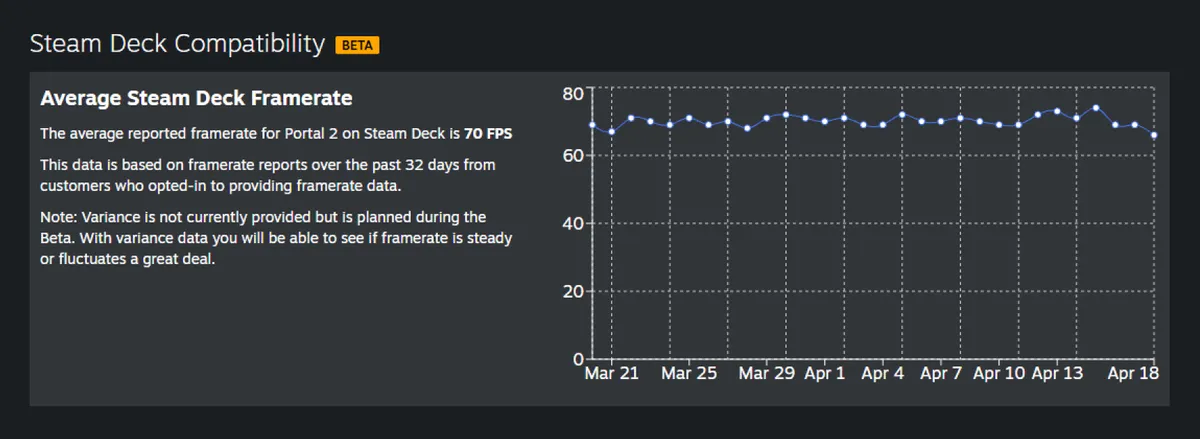
This new data should make that process easier. If a game suddenly drops in average FPS after a patch, the developer can see the change more clearly. Since Steam Deck hardware is mostly consistent from user to user, this kind of shared performance data can be very useful. It gives developers a clearer view of how the game behaves outside their own test setup.
Valve is also adding survey results from Steam Deck users. Players can say whether they agree with a game’s compatibility rating. If they disagree, they can point to issues such as performance, stability, input, legibility, or other problems. Valve says the survey data is designed to work alongside the framerate chart, so developers can connect numbers with player complaints.
| New Steam Deck tool | What it helps developers understand |
|---|---|
| 30-day average FPS chart | Whether performance is stable or getting worse over time |
| Player compatibility surveys | Why some users disagree with a Verified rating |
| Future variance data | Whether FPS is smooth or jumping around too much |
| Planned support for Playable games | More developers will be able to check handheld performance later |
The change also shows how important handheld PC gaming has become. Games made for powerful desktops do not always run well on small devices with limited power. Developers may need to adjust graphics settings, controls, interface size, or performance targets to make a game feel right on Steam Deck.
For players, the feature is not directly visible yet. But it could still improve the experience over time. If developers use the data well, more games may get better Steam Deck updates, more stable performance, and fewer surprises after patches.
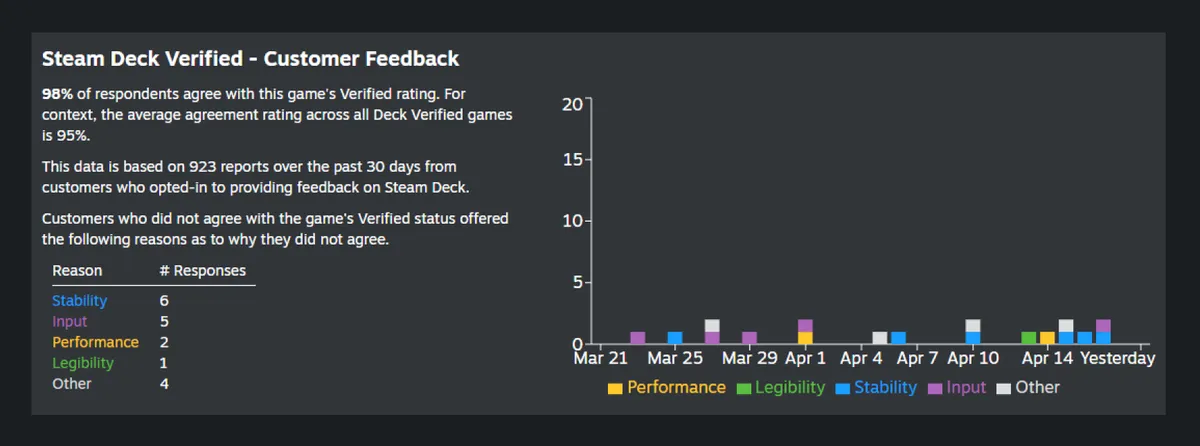
Valve says it plans to expand the data view to Steam Deck Playable games later. It also plans to add variance data in the future, which could help show whether a game is running smoothly or only hitting a decent average while still suffering from heavy dips.
This may not sound like a flashy update, but it is a smart one. Steam Deck owners often want to know more than whether a game simply runs. They want to know whether it runs well. By giving developers real performance data, Valve is taking a step toward making that answer more accurate.

Discussion (0)
Be the first to comment.