


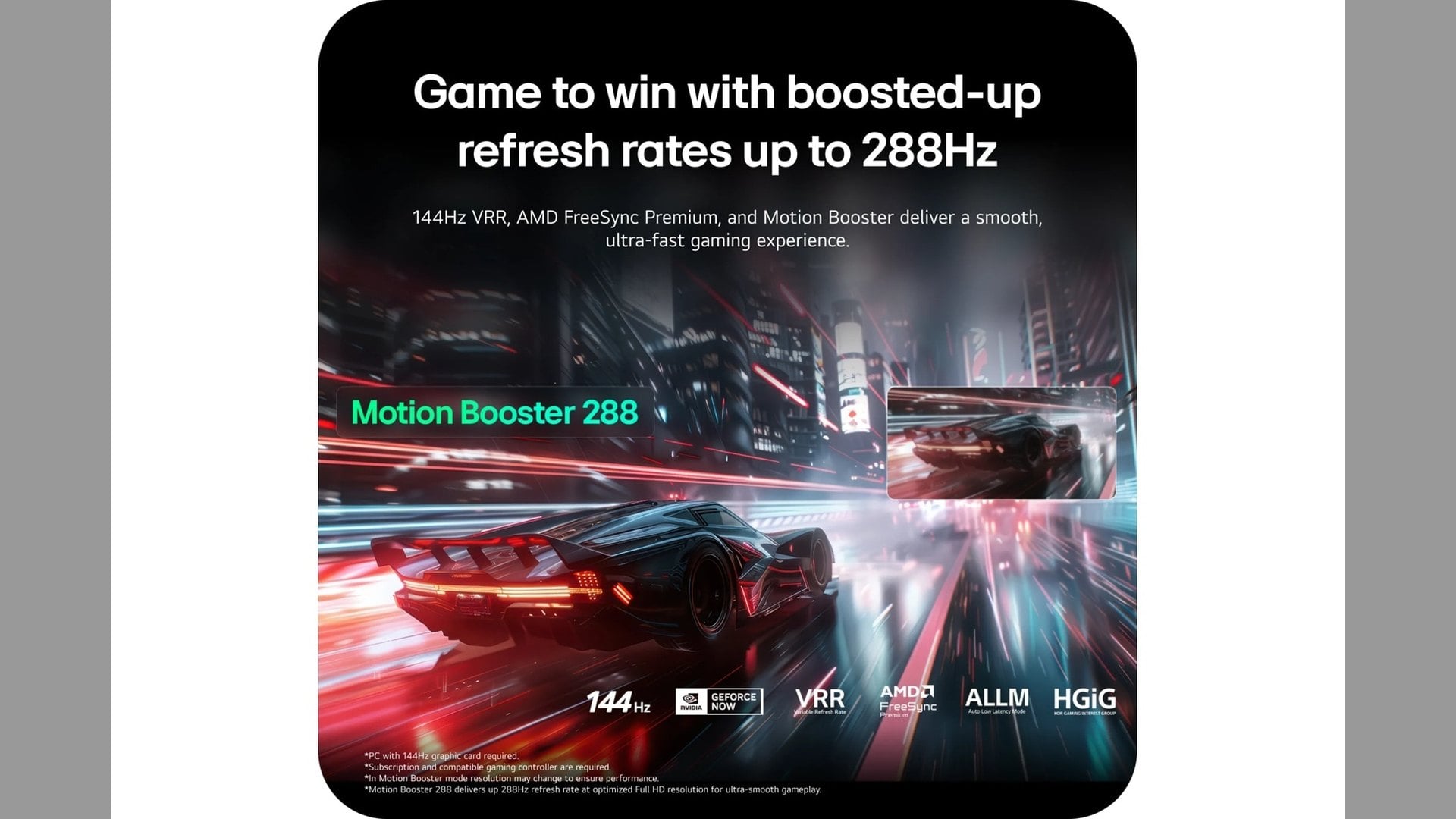
LG’s published spec sheet for the 65-inch C6 OLED gives the set’s refresh rate as "120Hz Native (VRR 165Hz)". The 165Hz that sells the television is the top of a variable refresh window, and the screen itself redraws at 120Hz.
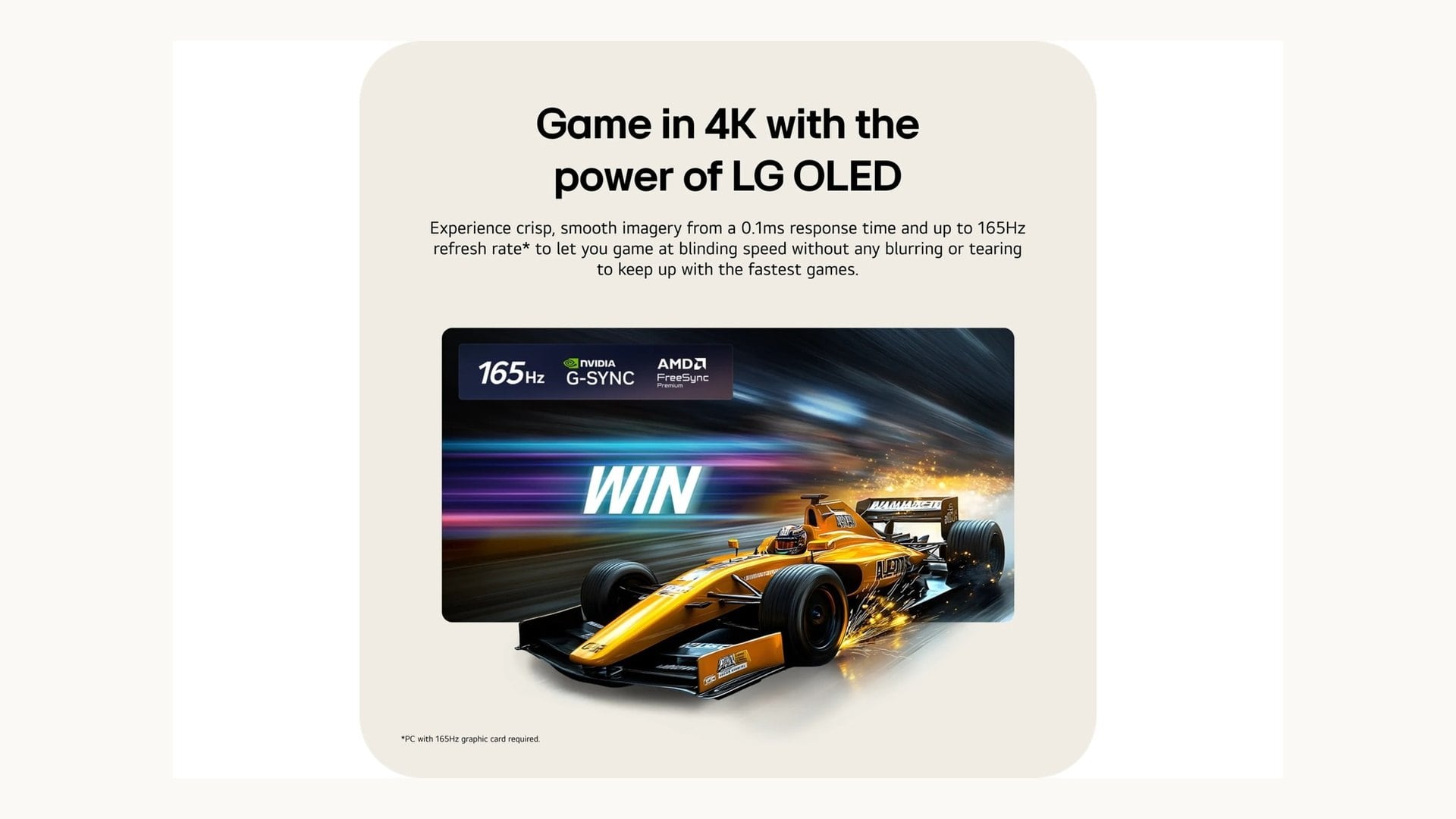
LG attaches a footnote to its own 165Hz bullet, and it reads "PC with 165Hz graphic card required". The HDMI row on the same sheet rates all four inputs for 4K 120Hz.
That gap between the advertised figure and the panel figure is now routine. It is also something a spec sheet will settle in one line, when the maker prints the line at all.
What a native refresh rate is
Native refresh is the fixed rate at which the panel redraws, with no cooperation from whatever is plugged into it. It is the rate that holds for a disc, a stream or a menu.
TCL states it most plainly. Its specification sheet for the 65-inch QM7L carries a row headed "Native Panel Refresh Rate", and the value in it is 144Hz.
LG puts both numbers in one cell instead. Samsung’s UK sheet for the 77-inch S90H gives "165 Hz VRR (100 Hz Native)", and that 100Hz is a 50Hz-region figure rather than a US one.
What variable refresh adds, and what it does not
The HDMI Licensing Administrator defines VRR as letting a source "deliver video frames as fast as it can, which in many cases is slower than the normal static refresh rate".
The feature exists for a console or a graphics card that is falling behind, not for a panel that has been sped up. The set waits for the next frame rather than repeating or tearing the last one.
So a VRR ceiling above the native rate describes a range the television will follow. It does not describe a screen that redraws faster than its own panel allows.
LG’s 65-inch QNED84B shows the same shape with different digits. Its Refresh Rate row reads "120Hz Native (VRR 144Hz)" and its gaming row reads "Yes (Up to 144Hz)".
Motion Rate and Game Accelerator are not refresh rates
TCL’s QM7L page lists Panel Refresh at 144Hz, then prints two larger numbers beside it. Motion Enhancement Technology reads "Motion Rate 480 with MEMC", and Game Enhancement Technology reads "Game Accelerator 288".
TCL calls that second one "Game Accelerator 288 VRR" in its own copy and never calls it a refresh rate. It states no resolution for the figure anywhere on that page.
LG does state one for its equivalent. Footnote 4 on the QNED84B page says "Motion Booster 288 delivers up 144Hz refresh rate at optimized Full HD resolution", which ties the 288 to a 1080p mode on a 4K set.
Hisense publishes no panel figure of any kind. Its page for the 55-inch S7 CanvasTV says only "With a Variable Refresh Rate of 48Hz to 144Hz", while the retail listing title prints a flat 144Hz.
A PC gets the headline number, a console does not
Samsung is direct about who the 165Hz is for. The disclaimer under the Motion Xcelerator feature on its Canadian S90H sheet reads "4K 165Hz is only available with PC connected games that support such specifications (PC graphic card required)".
LG’s footnote is the same requirement in fewer words. Both makers then rate the inputs themselves lower, and LG’s HDMI row for the C6 reads "4ea (supports 4K 120Hz, eARC, VRR, ALLM, QMS, QFT)".
Which socket a console lands on is a separate question, because some HDMI ports carry a lower rate than their neighbours.
The row to look for, and the row that is missing
Open the maker’s spec sheet for the exact model code, then find the refresh line. The useful ones carry the word native, or print two figures with one of them bracketed.
Samsung’s Canadian sheet gives "165 Hz (VRR Support)" and no native figure at all. Its US page for the same television publishes no refresh rate whatever, and the only Hz figure in it is a "Motion Xcelerator 165Hz" badge.
An absent row is itself information. Monitors hide the same gap under other labels, which is how an Acer 275Hz figure turned out to be an overclock and how a 240Hz mode went unlisted by the maker selling it.
Samsung states no native rate for the US S90H, Hisense states none for the 55S7SG, and TCL states no resolution for Game Accelerator 288. A set can also carry no VRR listing at all. Spec sheets are revised without notice, so the sheet for the exact model code is the only one worth reading.

Discussion (0)
Be the first to comment.