



VPN providers make a lot of bold claims when marketing their services and it can be hard to determine what’s true, false, or an exaggeration.
Fortunately, when it comes to privacy, the top VPNs seek out independent audits to verify their claims.
We took a closer look at the VPNs with the best privacy profiles that have been verified by third parties.
8 Best VPNs to Pass Independent Privacy Audits
The following 8 VPNs have all had their no-logs policies and other features verified. They also offer extra privacy features that make them stand out from the pack.
1. X-VPN – Best Privacy Audited VPN in 2026

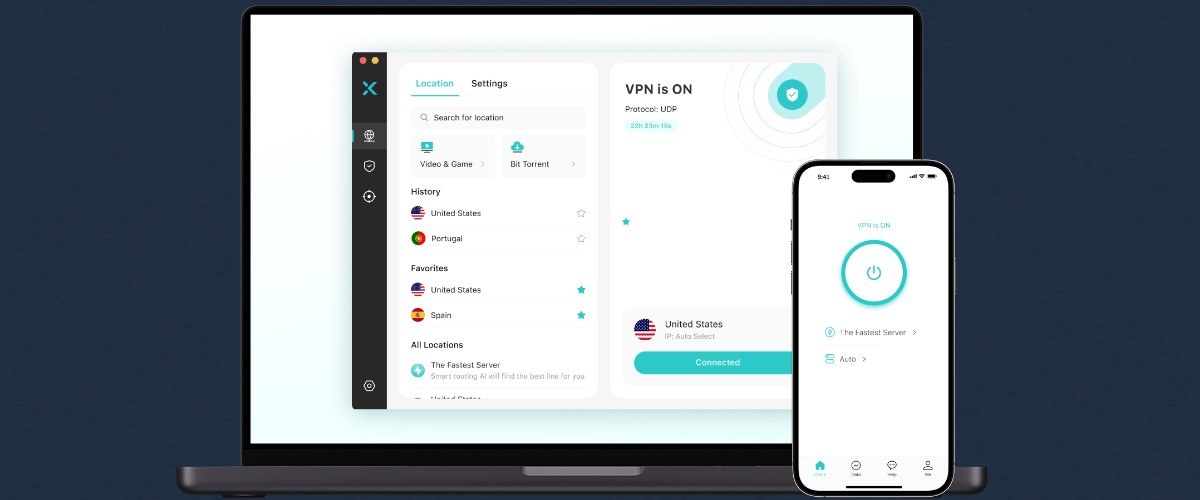
X-VPN is already one of the best VPNs on the market, offering leak-free encryption, traffic obfuscation, and fast servers across 250+ locations in 80+ countries.
It has apps for all common devices, protects up to 5 at the same time, and has all the core VPN features: global servers, kill switch, split tunnelling, and more.
Now its no-logs policy has also been independently validated through a Deloitte audit conducted under ISAE 3000 (Revised), giving further clarity about how it protects your data. Here’s everything we know about X-VPN’s privacy-first approach:
Data Sharing and Retention Laws Don’t Apply
X-VPN is headquartered in Singapore, which places it outside the Five, Nine, and Fourteen Eyes intelligence-sharing alliances.Singapore’s own private-sector data protection framework under the PDPA, giving X-VPN a distinct legal backdrop compared with providers based in traditional Five Eyes countries.
History Proves X-VPN Never Shares Data
This isn’t all just theoretical. Some 65 law enforcement requests and 239,000 DMCA takedown requests have been levied at X-VPN since it began in 2017.
The number of times it answered these requests?
Zero!
No-Logs Policy
X-VPN has an active policy of not logging your data, which is outlined in detail on its site. It states that the company does not collect data that could identify you or link you to your activity, including your real IP address, destination IP addresses, DNS queries, browsing activity, downloaded content, the VPN server used for a session, or connection timestamps. Deloitte’s independent assessment further confirmed that X-VPN’s actual operations are consistent with these disclosed no-logs commitments.
RAM-Only Servers
It’s one thing to have a policy of not logging user data, but X-VPN makes it technically impossible by ensuring its 10,000+ server network is RAM-only.
This means there are no hard drives to store data long-term. Any data required to run the server vanishes when it restarts and therefore cannot be retrieved later. Even if hacked or seized, there’s no persistent data to steal.
Anonymous Accounts
Not only does X-VPN offer a generous unlimited free plan, but you do not even need an account to access it. Just download the app for all common desktop and mobile devices, and you can connect right away.
If you opt for a premium plan (from $2.99/mo), you can pay with crypto like Bitcoin or Ethereum and use an email address without a linked identity.
Extra Browser Protection
While a VPN encrypts your connection and hides your IP, it doesn’t block trackers, cookies, or malware in your browser. You’re still vulnerable to phishing, malicious sites, and ads that follow you online.
X-VPN tackles this by including browser protection and ad blocking in its premium version.
This automatically blocks intrusive ads, trackers, and dangerous sites, while warning you of suspicious sites in search results.
2. Mullvad VPN
No-Logs Policy:
Zero activity logs of any kind, including traffic, connections, and IP addresses.
Headquarters:
Mullvad VPN is headquartered in Sweden. Although this jurisdiction falls under international data sharing agreements, there is no law that mandates the logging of VPN user data itself.
The company’s no logs policy was put to the test in 2023 when raided by law enforcement. Despite having equipment seized, no personally identifiable information was found.
Date Audited:
Mullvad’s no logs policy and other privacy features have been independently audited several times, including in 2026. In March, Assured Security Consultants verified no security vulnerabilities in the implementation of its new GotaTun WireGuard protocol.
In January 2026, X41 D-Sec confirmed its anonymous payment and account process.
Privacy Features:
Having pioneered anonymous accounts, Mullvad does not require a name or email address to register, and you can pay in crypto.
As well as an automatic kill switch, it uses quantum-resistant encryption for its VPN connections to prevent any future cracking. Moreover, multihop sends your traffic through at least two servers in different locations and separate jurisdictions.
3. IVPN
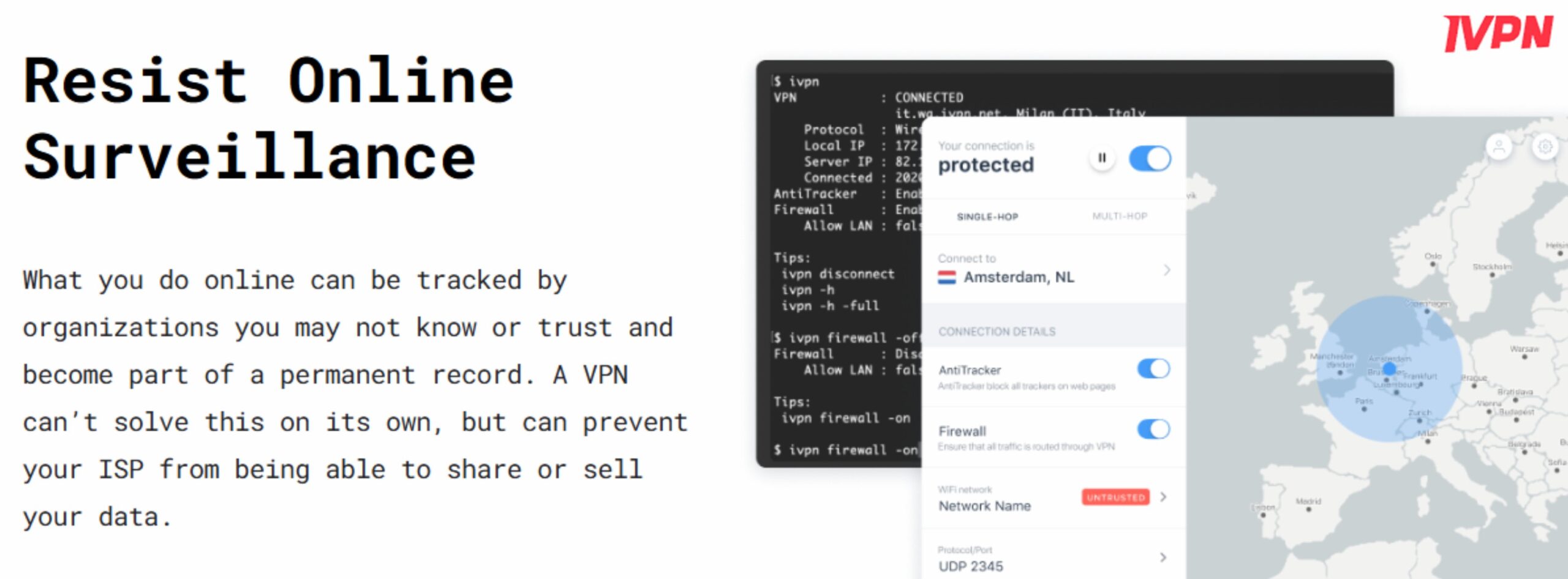
No-Logs Policy:
IVPN’s RAM-only servers do not store any logs that could be used to identify its users. This includes browsing history, DNS queries, and IP addresses.
Headquarters:
The company is headquartered in Gibraltar and has a legal base in Switzerland. Gibraltar is a British Overseas Territory, but it maintains its own legal system that is not subject to the same data retention laws as the UK.
Switzerland also does not have any mandatory data retention laws when it comes to VPNs.
Date Audited:
In March 2019, German cybersecurity firm Cure53 verified that IVPN’s privacy statements were truthful within the scope of the systems reviewed and does not store any user-identifiable connection data.
Its apps and VPN infrastructure were also audited in 2021 and 2023 respectively.
So far, there have been zero cases of IVPN user data being acquired.
Privacy Features:
IVPN offers identity-free user registration, which allows you to open an account via a random number generation rather than name, email address, and other personal info. You can also pay by crypto or even cash by post.
Privacy-focused VPN features include traffic obfuscation and multi-hop routing for double the encryption. You can also use a separate browser tracker blocker, preventing cookie-based tracking.
4. NordVPN
No-Logs Policy:
NordVPN describes its no-logs policy as a commitment to never store or monitor what you do online while connected to the VPN. It does not keep records of your browsing activity, destination IP addresses, session timestamps, bandwidth usage, or traffic contents. This is bolstered by the use of RAM-only servers, which do not have the capability to store data after rebooting.
Headquarters:
NordVPN is headquartered in Panama, which does not have mandatory data-retention laws that force VPN companies to keep records of customer internet activity. Moreover, Panama is also outside major intelligence-sharing alliances.
Date Audited:
Its no-logs policy has been independently audited multiple times, with the most recent verification completed by Deloitte at the end of 2025. It concluded that NordVPN’s systems were configured in line with the company’s public no-logs claims.
NordVPN has also been successfully audited 6 times since 2018, making it one of the most verified VPNs on the market.
Privacy Features:
As well as its strong privacy policies, NordVPN offers lots of additional privacy features. These include Double VPN and Onion Over VPN. The latter routes the VPN encrypted connection through the Tor network.
It also has an automatic kill switch and obfuscated severs, which mask VPN usage and the type of traffic from ISPs and geo-restricted sites and services.
5. Surfshark
No-Logs Policy:
Surfshark does not track, store, or monitor your browsing activity, connection timestamps, IP addresses, or bandwidth usage while you use the VPN. It only keeps limited account information such as your email address and billing details needed to provide the service. However, this can be further anonymized by paying for the account in crypto.
Headquarters:
The provider is based in the Netherlands. While this does fall within some international data sharing agreements, VPN information itself is excluded from mandatory sharing under the country’s own legal system. Surfshark has never been exposed for sharing user data with the authorities.
Date Audited:
Surfshark verified its no-logs policy in 2023 and 2025 via independent audits by Deloitte and in 2026 by SecuRing.
Privacy Features:
The VPN offers lots of privacy features, including multihop, obfuscation, and ad blocking. This prevents websites and advertisers from tracking your online activity via browser cookies.
If you pay for its more expensive premium plan, you also get a full anti-virus, dark web monitoring, and other privacy and security features.
6. ProtonVPN
No-Logs Policy:
ProtonVPN only stores the timestamp of your last successful login, which is overwritten each time you sign in and is used to help detect unauthorized account access. Its Secure Core infrastructure and RAM-based servers reduce the chance of any meaningful user data being retained.
Headquarters:
ProtonVPN is based in Switzerland, one of the strongest privacy jurisdictions in the world. Swiss privacy laws operate outside the Five Eyes intelligence alliance and do not require VPN providers to retain activity logs.
Date Audited:
Itsapps and no-logs policy have been independently audited by Securitum on multiple occasions, with the latest public security review completed in 2025. Its apps remain open source, allowing the wider security community to inspect the code as well.
Privacy Features:
ProtonVPN includes several advanced privacy tools, including Secure Core servers that route traffic through privacy-friendly countries before exiting onto the internet. It also offers Tor over VPN, a kill switch, full-disk encrypted servers, and NetShield to block trackers and malicious domains.
7. CyberGhost VPN
No-Logs Policy:
CyberGhost does not log browsing activity, traffic content, connection timestamps, or IP addresses that could identify users. The company states that it cannot associate online activity with a specific customer because its infrastructure is designed to avoid storing session-level data.
Headquarters:
CyberGhost is headquartered in Romania, which has repeatedly challenged mandatory data retention laws, making it a favorable location for privacy services.
Date Audited:
In 2022, Deloitte independently reviewed CyberGhost’s no-logs policy and confirmed that its server configuration matched its public privacy claims. The company also publishes regular transparency reports detailing legal requests and abuse complaints.
Privacy Features:
CyberGhost includes a kill switch, ad and tracker blocking, and dedicated NoSpy servers managed directly by the company in its own secure data center. It also allows cryptocurrency payments via third-party providers.
8. PIA VPN
No-Logs Policy:
PIA’s no-logs policy has gained credibility because the company has twice demonstrated in legal cases that it had no user data to hand over when authorities requested information.
Headquarters:
PIA is based in the United States, which may concern some privacy users because of its surveillance alliances. However, despite its jurisdiction, the provider has repeatedly argued that its technical no-logs setup prevents it from retaining usable customer activity data.
Date Audited:
In 2024, Deloitte audited PIA’s no-logs claims and confirmed that the provider’s systems were operating in line with its public privacy policy. Its applications have also undergone separate open-source security reviews.
Privacy Features:
PIA offers open-source apps, RAM-only servers, multihop connections, split tunneling, and MACE ad blocking. Users can also customize encryption settings for a balance between privacy and performance.
For added privacy, users can pay in crypto, while its infrastructure includes RAM-only servers that automatically erase data upon reboot.
Conclusion
Privacy claims are easy for VPN providers to make, but independent audits help separate marketing from reality. While many services promise not to log your data, the providers above have taken the extra step of allowing third-party firms to inspect their infrastructure and verify those promises.
For users who care about online anonymity, the strongest VPNs are not just those with a no-logs policy on paper, but those willing to prove it through repeated audits, transparent reporting, and privacy-focused technology. Whether you prioritize anonymous payments, RAM-only servers, or independent verification, these VPNs represent some of the most trustworthy privacy services available in 2026.

Discussion (0)
Be the first to comment.