



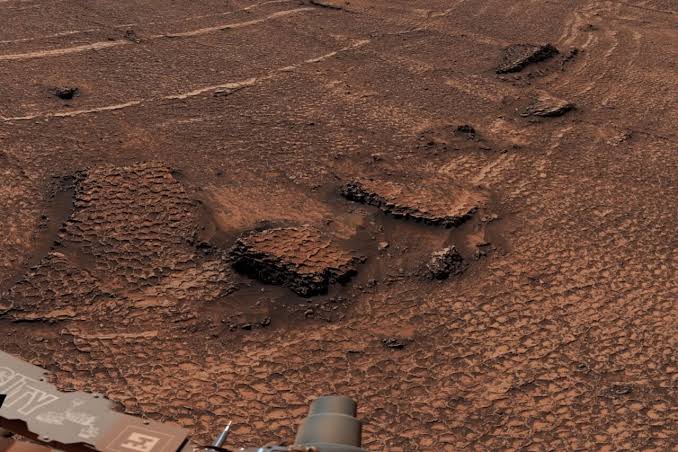
NASA’s Curiosity rover has discovered a wide field of tightly packed polygon patterns on Mars, adding new evidence that liquid water once shaped the planet’s surface.
The formations were found in Valle Grande, a Martian valley near the lower slopes of Mount Sharp inside Gale Crater. The small cells measure roughly 1.5 to 3 inches across and form a continuous network around a 20 foot rock tower known as Miraflores.
Curiosity has photographed similar cracks elsewhere during its mission, but this area contains the highest concentration recorded so far. The scale of the field gives scientists a clearer view of how repeated wet and dry periods may have changed the ancient landscape.
Around 3.5 billion years ago, streams carried mud and sediment toward a lake inside Gale Crater. As the climate shifted and the water evaporated, the wet ground contracted. That process caused the surface to split into repeated geometric shapes.
Daily changes in temperature and pressure from overlying rock may have removed additional moisture. Over time, the fractures hardened and became preserved in the bedrock.
The patterns may record repeated wet and dry cycles
The discovery is important because the polygons appear to represent more than a single drying event. Their dense and organised structure may have formed through repeated cycles in which water covered the area, disappeared, and later returned.
On Earth, similar conditions can support chemical reactions linked to the early stages of life. Wet periods allow molecules to move through water, while dry periods can concentrate those molecules in smaller areas.
This process can help simple organic compounds combine into more complex structures. Scientists are therefore interested in whether the Valle Grande formations preserve chemical evidence from a time when Mars may have supported basic biological activity.
| Discovery detail | Current information |
|---|---|
| Location | Valle Grande near Mount Sharp |
| Crater | Gale Crater |
| Polygon size | About 1.5 to 3 inches across |
| Nearby formation | Miraflores rock tower |
| Miraflores height | Around 20 feet |
| Estimated age of ancient lake activity | Roughly 3.5 billion years |
| Likely formation process | Repeated drying of wet sediment |
Wind exposed and preserved the ancient fractures
Miraflores stands beside the polygon field and helps explain how the area changed after the lake disappeared.
The rock tower was once part of a much larger layer of lakebed sediment. Over millions of years, Martian winds removed the softer material around it, leaving behind the narrow formation visible today.
The same erosion also cleared away soil that had covered the polygon cracks. This exposed the ancient patterns while the dry Martian environment helped preserve them.
The result is a landscape that records several stages of geological change. Water deposited the original sediment, drying created the cracks, and wind later revealed them.
Scientists are studying the area for signs of ancient habitability
Curiosity’s science team is continuing to examine images and spectral measurements collected in Valle Grande. These observations may reveal the minerals and chemical compounds inside the fractures.
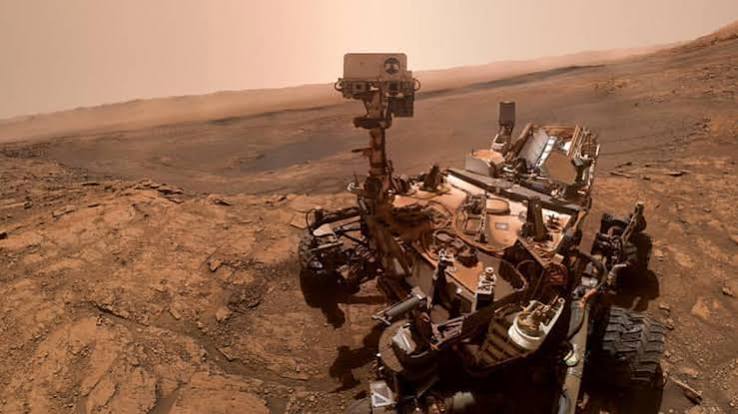
The rover has not found proof of past life in the polygon field. The discovery instead identifies an environment that may once have contained some of the conditions needed for early organic chemistry.
Researchers want to know whether the mud cracks trapped or concentrated organic materials before Mars became the cold and dry planet seen today. Any such evidence could improve understanding of how long habitable conditions lasted inside Gale Crater.
The honeycomb patterns also show why Curiosity continues to provide useful discoveries after years of exploration. Individual rocks and surface features can preserve information about water, climate, erosion, and chemistry from billions of years ago.
The Valle Grande field now gives scientists one of the clearest examples of ancient polygonal cracking found on Mars. Its unusual density suggests that water repeatedly influenced the area, creating conditions that may have been important to the planet’s early environmental history.



Discussion (0)
Be the first to comment.