



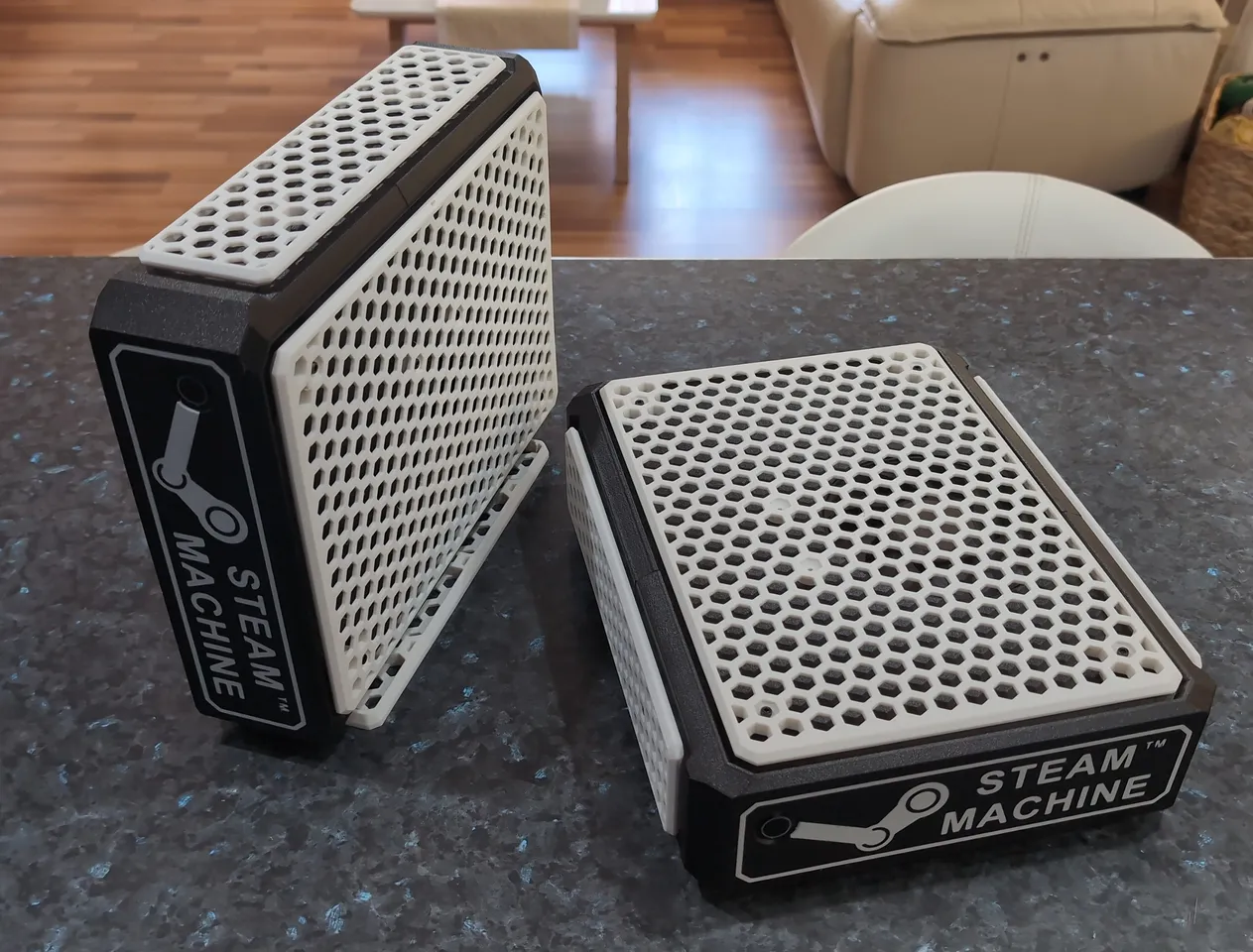
A custom 3D printed case is giving PC builders a way to create a compact Steam Machine style gaming system with standard hardware. The project, called Terk Box, uses a small custom enclosure designed around Mini ITX parts, a Flex ATX power supply, and a low profile graphics card.
The idea is simple: build a living room gaming PC that keeps the small console like look of Valve’s Steam Machine while offering more control over the internal hardware. The current build uses an Nvidia GeForce RTX 5060, AMD Ryzen 5 5500 processor, 16GB of DDR4 memory, and a 512GB NVMe SSD.
The result is not an official Valve product, but it shows how small form factor PCs can offer similar or better performance than a prebuilt Steam Machine. It also gives enthusiasts the freedom to choose their own parts, storage capacity, cooling, and operating system.
The Terk Box Uses Standard PC Parts in a Compact Layout
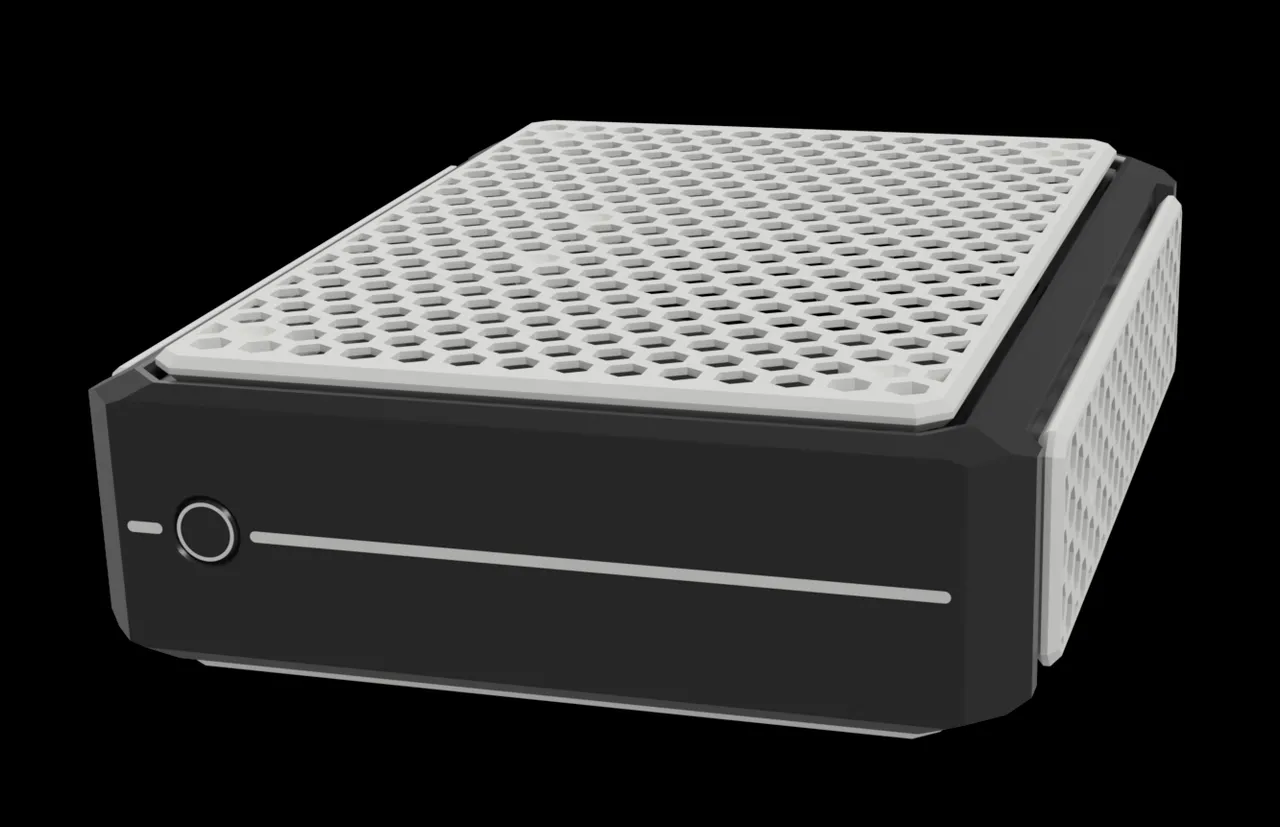
The Terk Box is based on 3D printable case files designed to fit compact PC components inside a chassis similar in size and shape to Valve’s Steam Machine.
The build uses a tilted layout for the motherboard and graphics card, helping it fit full desktop components into a limited space. This approach is useful for builders who want a small system for a television setup without relying on larger Mini ITX cases.
| Component | Terk Box hardware |
|---|---|
| Processor | AMD Ryzen 5 5500 |
| Graphics card | Low profile Nvidia GeForce RTX 5060 |
| Motherboard | Mini ITX |
| Memory | 16GB DDR4 3200 |
| Storage | 512GB NVMe SSD |
| Power supply | 400W Flex ATX |
| Case | Custom 3D printed Steam Machine style chassis |
The hardware is more flexible than a traditional console, but compact PC builds can be more difficult to assemble. Cooling, cable management, and power delivery become more important when components are placed close together.
SteamOS Support Is Still Limited for Nvidia GPUs
Valve has released SteamOS 3.8 for broader PC use, allowing people to install the operating system on compatible desktops, laptops, and handhelds. However, the official release currently supports AMD graphics cards rather than Nvidia GPUs.
That means the Terk Box cannot use the official SteamOS version with its RTX 5060 graphics card at the moment. Builders can use alternatives such as Bazzite or Windows 11 instead, but the experience may not be identical to Valve’s official SteamOS setup.
Valve is expected to add Nvidia GPU support in the future. Once that happens, small form factor builds using Nvidia cards could become more practical for people who want SteamOS without changing their graphics hardware.
The Design Still Needs Better Cooling
The current Terk Box design is still being improved. Its creator has pointed to airflow and the gap between the power supply and CPU as areas that need more work.
A later version added more ventilation around the graphics card to prevent it from being restricted inside the small chassis. That is an important change because low profile GPUs can still produce significant heat during gaming.
The project shows why DIY gaming PCs remain appealing. You may not get the convenience of a ready made Steam Machine, but you can build a compact system around the parts you want and upgrade it later. For people with access to a 3D printer and experience building PCs, the Terk Box offers an interesting alternative to buying a prebuilt living room gaming system.



Discussion (0)
Be the first to comment.