



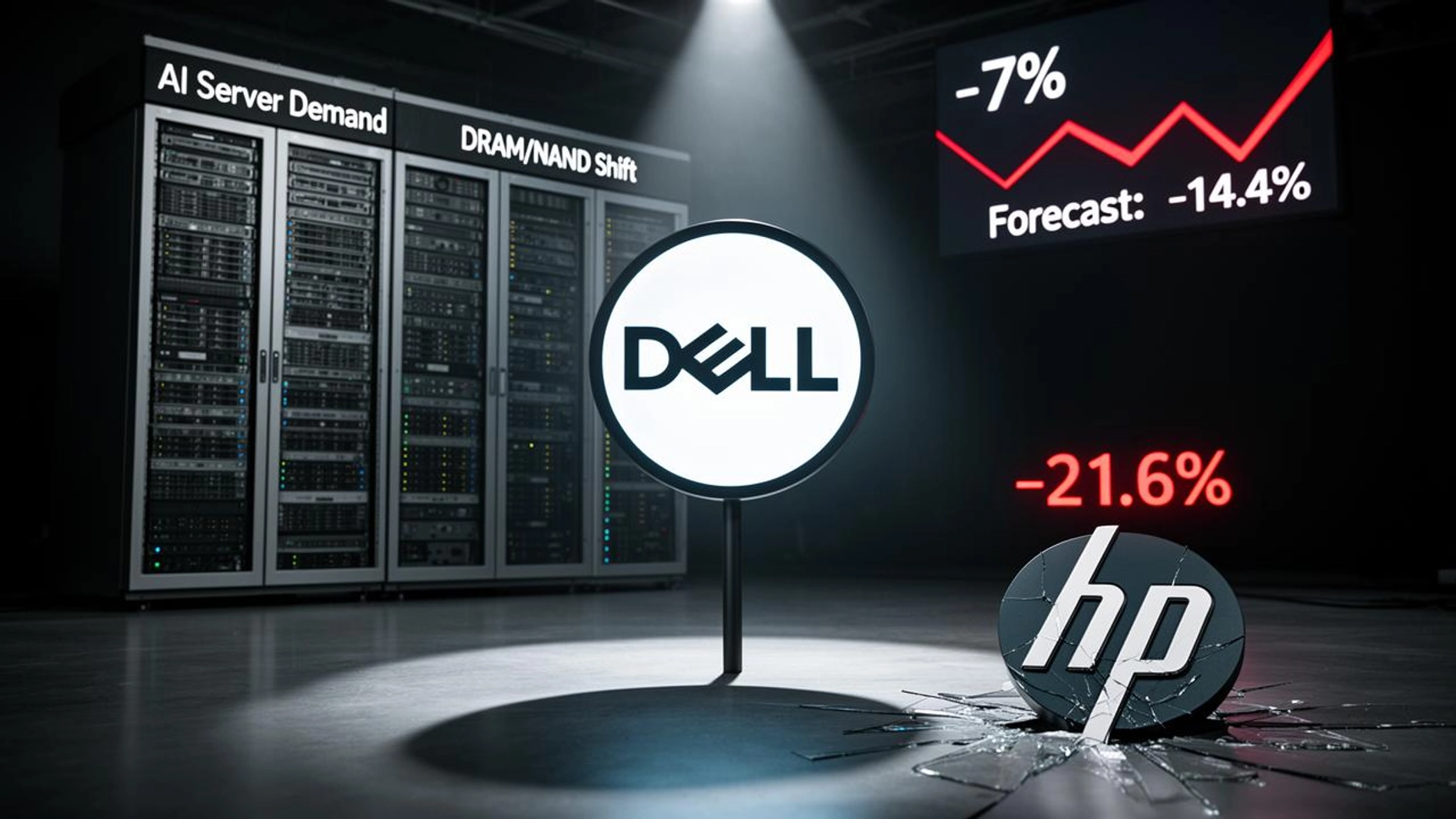
PC shipments in the United States fell 7% year over year in the first quarter of 2026, marking the market’s sharpest annual decline since late 2023. A total of 15.8 million desktops and laptops still shipped during the quarter, but rising memory and storage costs are making lower-priced systems harder to sell.
The slowdown is being driven by several problems at once. Component supplies are tight, especially for DRAM and NAND storage, while AI data centers continue to absorb a larger share of available memory. PC makers are facing higher costs, and many are passing part of those increases on to buyers.
The result is a tougher market for affordable laptops and desktops, especially models priced below $500.
Cheap PCs Are Being Hit the Hardest
Lower-cost systems are becoming less attractive for manufacturers because profit margins are shrinking. Entry-level PCs often depend on lower-priced memory and storage, but those components have become more expensive as supply shifts toward AI server hardware.
Shipments of PCs priced below $500 reportedly dropped 18.7% compared with the same period last year.
| PC market segment | Reported trend |
|---|---|
| Total US PC shipments | Down 7% year over year |
| PCs under $500 | Down 18.7% year over year |
| Average PC selling price in Q1 2026 | Up 4% |
| Expected average price rise in Q4 2026 | Up 15% |
| Full-year shipment forecast | Down 14.4% |
This means budget buyers may see fewer good options at the lowest price points. Manufacturers can still build affordable laptops, but they may need to reduce storage, memory, display quality, or other features to keep pricing low.
Memory and Storage Shortages Are Raising PC Costs
The biggest pressure point is the ongoing shortage of DRAM memory and NAND flash storage. These parts are used in nearly every laptop and desktop, but AI servers require far more memory than ordinary consumer PCs.
As AI companies expand data centers, component suppliers are prioritizing high-margin enterprise orders. That leaves PC makers competing for a smaller share of supply.
The effect can already be seen in retail pricing. Apple recently increased the starting price of its MacBook Neo from $599 to $699, showing that even entry-level systems are not fully protected from rising component costs.
| Cost pressure | Effect on PC buyers |
|---|---|
| Higher DRAM prices | More expensive memory configurations |
| Higher NAND prices | Smaller SSDs or higher retail prices |
| AI server demand | Less supply for consumer PC makers |
| Lower margins on cheap laptops | Fewer budget-friendly models |
| Retail price increases | More expensive upgrades and replacements |
The Windows 11 Upgrade Cycle Is Also Losing Steam
The market is not slowing only because of component costs. The recent Windows 11 refresh cycle encouraged many businesses and consumers to replace older systems, especially machines that could not meet newer operating system requirements.
That upgrade activity has now cooled, leaving the market with less immediate demand.
Concerns around tariffs also encouraged some companies to bring in more inventory earlier than usual. That may have temporarily increased shipments before demand weakened again.
Dell Moves Ahead of HP in US Market Share
HP saw the steepest shipment decline among major PC makers, falling 21.6% year over year. That drop allowed Dell to take the leading position in the US market.
| PC maker | US market share |
|---|---|
| Dell | 25% |
| HP | 20.5% |
| Lenovo | 20% |
| Apple | 16.9% |
| Acer | 5.7% |
| Other brands | 12% |
The outlook for the rest of 2026 remains difficult. With prices expected to continue rising and memory supply still under pressure, the PC market may not recover quickly. Buyers who need a new laptop or desktop may find that current deals are more valuable than waiting for lower prices later in the year.



Discussion (0)
Be the first to comment.