



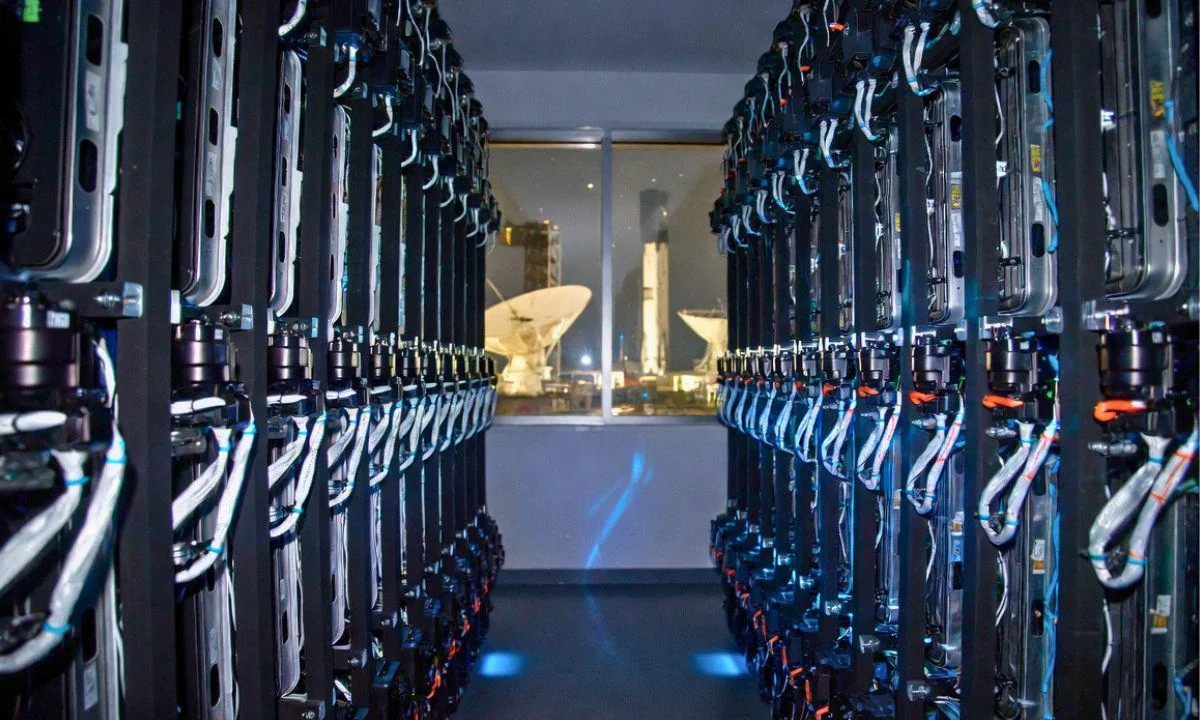
SpaceX has reportedly signed a huge cloud compute agreement with Google, giving the search giant access to part of the Colossus 1 data center after xAI moved its main training work elsewhere. The deal is valued at $920 million per month and is expected to run from October 2026 through June 2029, although either side can cancel it with 90 days of notice.
The agreement gives Google access to compute capacity equal to about 110,000 NVIDIA GPUs, along with CPUs, memory, and other related hardware. That makes it one of the largest known private AI compute deals at a time when companies are racing to secure GPU capacity for model training and deployment.
This follows a separate agreement with Anthropic, which reportedly gained access to more than 220,000 NVIDIA GPUs through SpaceX’s Colossus infrastructure. That earlier deal was said to be worth $1.25 billion per month, or about $15 billion per year.
SpaceX is turning unused AI hardware into a major revenue stream
The reason SpaceX is leasing so much compute appears to be tied to xAI’s limited use of Colossus 1. The data center reportedly used a mixed GPU setup, including H100, H200, GB200, and other NVIDIA hardware. That created a more complicated environment for training Grok at scale.
Because of that, xAI is said to have shifted major training work to Colossus 2 instead. If Colossus 1 was not being fully used, SpaceX had a strong reason to monetize the idle hardware by selling access to outside AI companies.
| Company | Reported compute access | Reported monthly value | Agreement length |
|---|---|---|---|
| Around 110,000 NVIDIA GPUs plus related hardware | $920 million per month | October 2026 to June 2029 | |
| Anthropic | More than 220,000 NVIDIA GPUs | $1.25 billion per month | Through May 2029 |
| xAI | Shifted training away from Colossus 1 | Not applicable | Moved focus to Colossus 2 |
For Google, the deal could help secure scarce AI compute without waiting for new data center capacity to come online. Even companies with their own chips and cloud infrastructure still need access to large GPU clusters, especially when AI demand is growing faster than the supply chain can comfortably support.
For SpaceX, the financial upside is obvious. A $920 million monthly deal would generate more than $11 billion per year if it runs at full value. Combined with the Anthropic agreement, SpaceX could turn Colossus 1 into an enormous cloud infrastructure business almost overnight.

That could also help the company’s future public market plans. If SpaceX can show that its compute assets are producing recurring revenue from major AI customers, it strengthens the company’s financial story ahead of any possible IPO related activity.
The deal also highlights how unusual the AI infrastructure market has become. GPUs are now treated almost like strategic assets. Companies that can access large clusters can move faster on AI training, model updates, and enterprise products. Companies that cannot secure enough compute may fall behind, even if they have strong research teams.
The situation also raises questions about planning. If xAI built or relied on a mixed Colossus 1 GPU setup that proved hard to use efficiently for Grok training, that suggests hardware scale alone is not enough. AI data centers need balanced architecture, strong networking, compatible accelerators, and software that can use the full cluster effectively.
Still, SpaceX appears to be turning that problem into an opportunity. Instead of letting Colossus 1 sit underused, it is selling the capacity to companies that can make use of it. Google and Anthropic both need massive compute, and SpaceX has hardware available.
The broader takeaway is that AI infrastructure is becoming a business of its own. GPUs, power, cooling, networking, and data center space are now as important as the models themselves. SpaceX may not be known as a traditional cloud provider, but with Colossus 1, it now appears to be acting like one for some of the biggest AI players in the market.



Discussion (0)
Be the first to comment.