



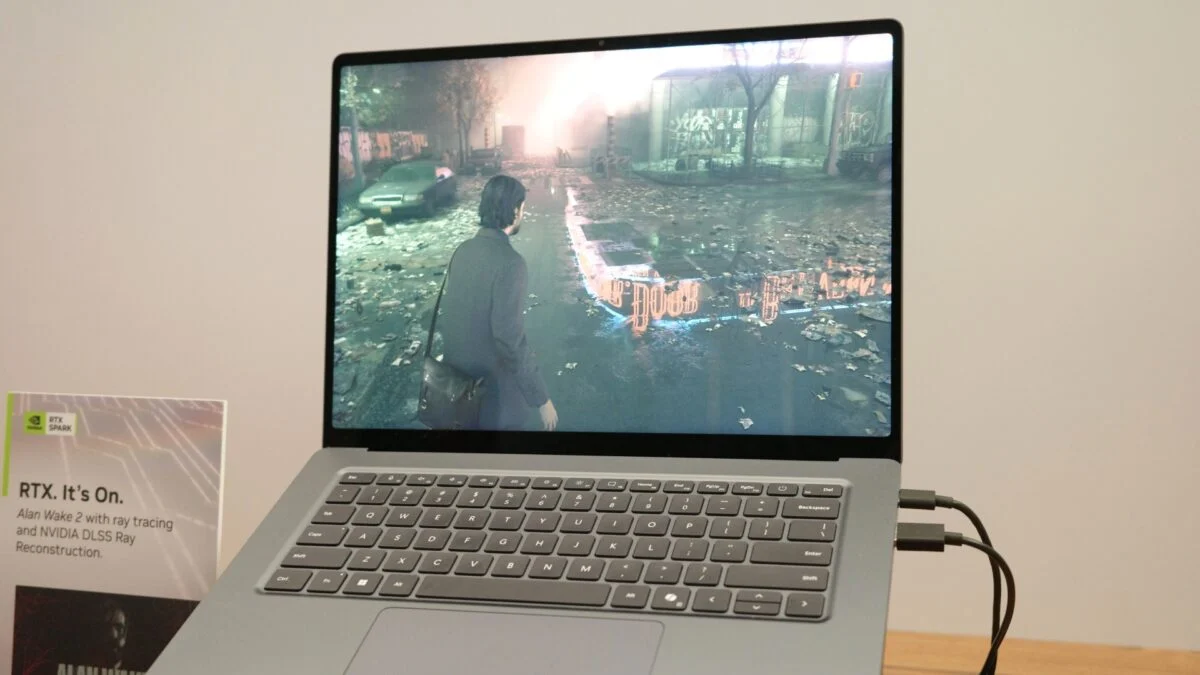
NVIDIA’s RTX Spark platform is starting to look like one of the most important Windows on Arm efforts yet, with major PC makers already preparing laptops and mini PCs around the new chip. At Computex, early RTX Spark systems from ASUS, Dell, HP, Lenovo, MSI, and Microsoft showed how broad NVIDIA’s first true client Windows SoC push could become.
RTX Spark is built as a system on chip with a 20 core Arm CPU based on NVIDIA’s Grace architecture, a Blackwell GPU, 1 PFLOP of AI performance, and 128GB of unified LPDDR5X memory. That combination makes it very different from a normal Windows laptop chip. NVIDIA is not only chasing thin laptop battery life. It is aiming at AI work, creative workloads, professional software, and gaming in one platform.
The biggest sign of confidence is the OEM support. Dell is preparing an XPS 16 Creator Edition with RTX Spark, a slim 16 inch laptop with a tandem OLED display, TrueBlack HDR 600 certification, USB Type C ports, HDMI, and a MicroSD reader. ASUS is bringing RTX Spark into its ProArt line with the ProArt P16 and ProArt P14, both aimed at creators who want strong local AI and high quality OLED displays.
| Brand | RTX Spark system shown |
|---|---|
| Dell | XPS 16 Creator Edition and XPS mini PC |
| ASUS | ProArt P16, ProArt P14, and ProArt mini PC |
| HP | OmniBook Ultra 16, OmniBook X 14, and desktop mini PC |
| Lenovo | Yoga Pro 9n |
| MSI | Prestige N16 Flip AI Plus and EdgeMesa N AI mini PC |
| Microsoft | Surface Laptop Ultra |
HP is also going hard on thin AI PCs. Its OmniBook Ultra 16 is described as the world’s thinnest RTX Spark AI PC at 15.73mm, while the OmniBook X 14 is even thinner at 13.53mm. Both use OLED displays and compact 140W GaN Type C chargers. HP also appears to be paying close attention to cooling, using slim blower fans and heatpipes that move heat toward the rear.
Lenovo’s Yoga Pro 9n brings RTX Spark into a 15 inch OLED design with front facing speakers, a large trackpad, and strong port selection. MSI is taking a different approach with the Prestige N16 Flip AI Plus, a 16 inch convertible with a 360 degree hinge, aluminum chassis, 99.9Wh battery, vapor chamber cooling, and quiet fan tuning.
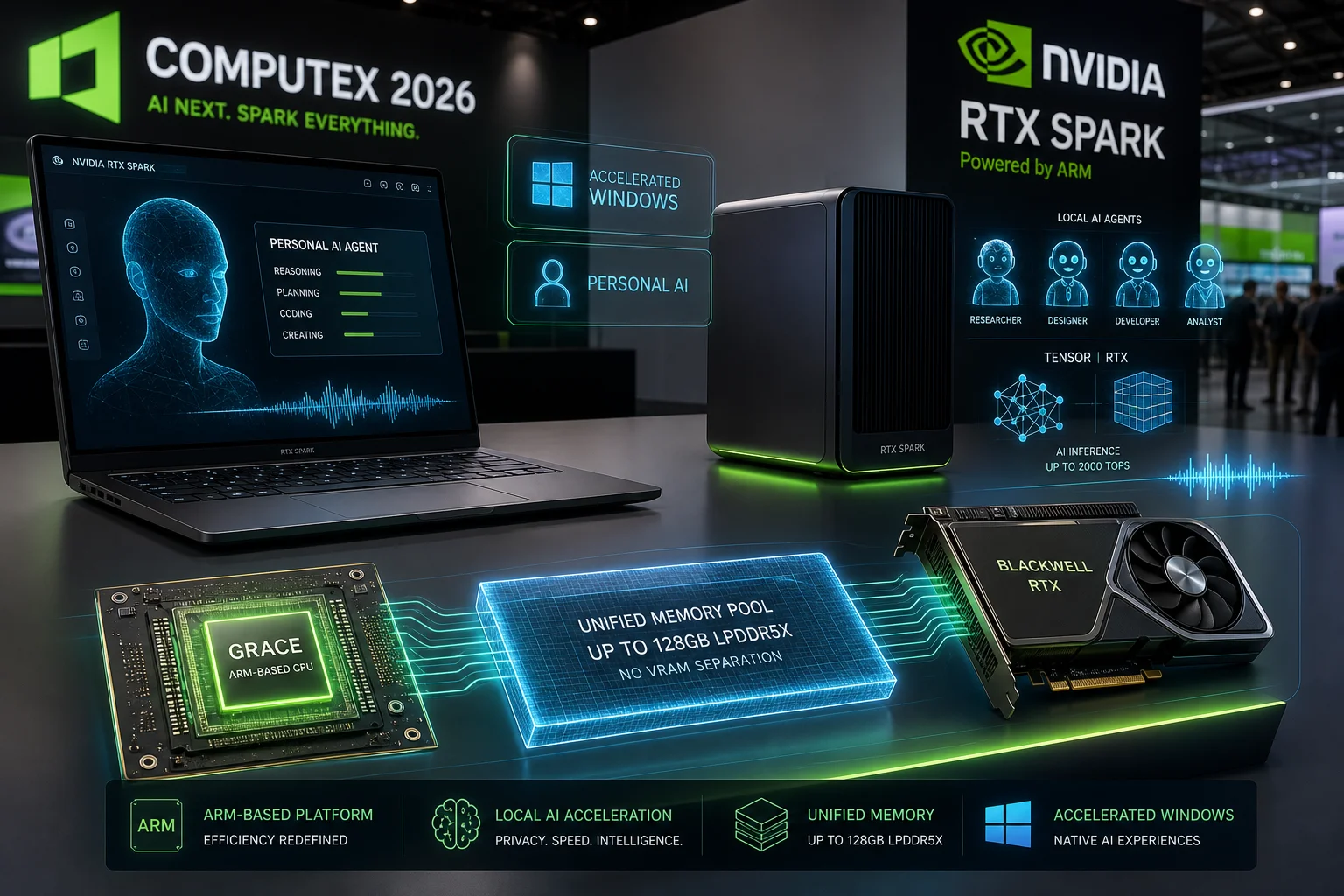
Microsoft’s Surface Laptop Ultra may be the most symbolic device in the group. It shows Microsoft is directly backing NVIDIA’s Windows on Arm push, not only allowing partners to experiment from the outside. The device includes 128GB of onboard memory, an OLED display, and more ports than many competing premium laptops.
Mini PCs are also part of the plan. ASUS showed a ProArt Mini PC with 128GB of memory, 10GbE LAN, PCIe Gen5, USB connectivity, and a compact 150 x 150 x 51mm chassis. Dell, HP, and MSI also showed RTX Spark mini PCs with USB Type C, HDMI, Ethernet, and cooling focused chassis designs. These systems could appeal to developers, AI researchers, creators, and people who want a compact workstation.
The early demos focused mostly on AI and content creation. RTX Spark handled generative AI and professional apps such as SolidWorks, Blender, and Unreal Engine smoothly in the hands on session. Gaming was also shown through titles like Alan Wake II, Indiana Jones and the Great Circle, Pragmata, and Fortnite, although settings, power draw, frame rates, temperatures, and battery life were not shown.
That missing data matters. RTX Spark supports Blackwell features such as DLSS 4.5, ray reconstruction, and multi frame generation, so smooth demos with upscaling and frame generation enabled are expected. The real test will be independent reviews that measure native performance, battery life, thermals, app compatibility, and Windows on Arm behavior.
Still, RTX Spark looks more serious than past Windows on Arm attempts. NVIDIA has major OEM support, Microsoft involvement, strong AI hardware, Blackwell graphics features, and a clear focus on creators and developers. The company is also working with Microsoft on Windows 11 26H1 scheduler improvements to make the Windows on Arm ecosystem stronger before launch.
The first RTX Spark platforms are expected this fall. If performance, compatibility, and battery life hold up, NVIDIA could finally give Windows on Arm the kind of high performance platform it has been missing for years.



Discussion (0)
Be the first to comment.