



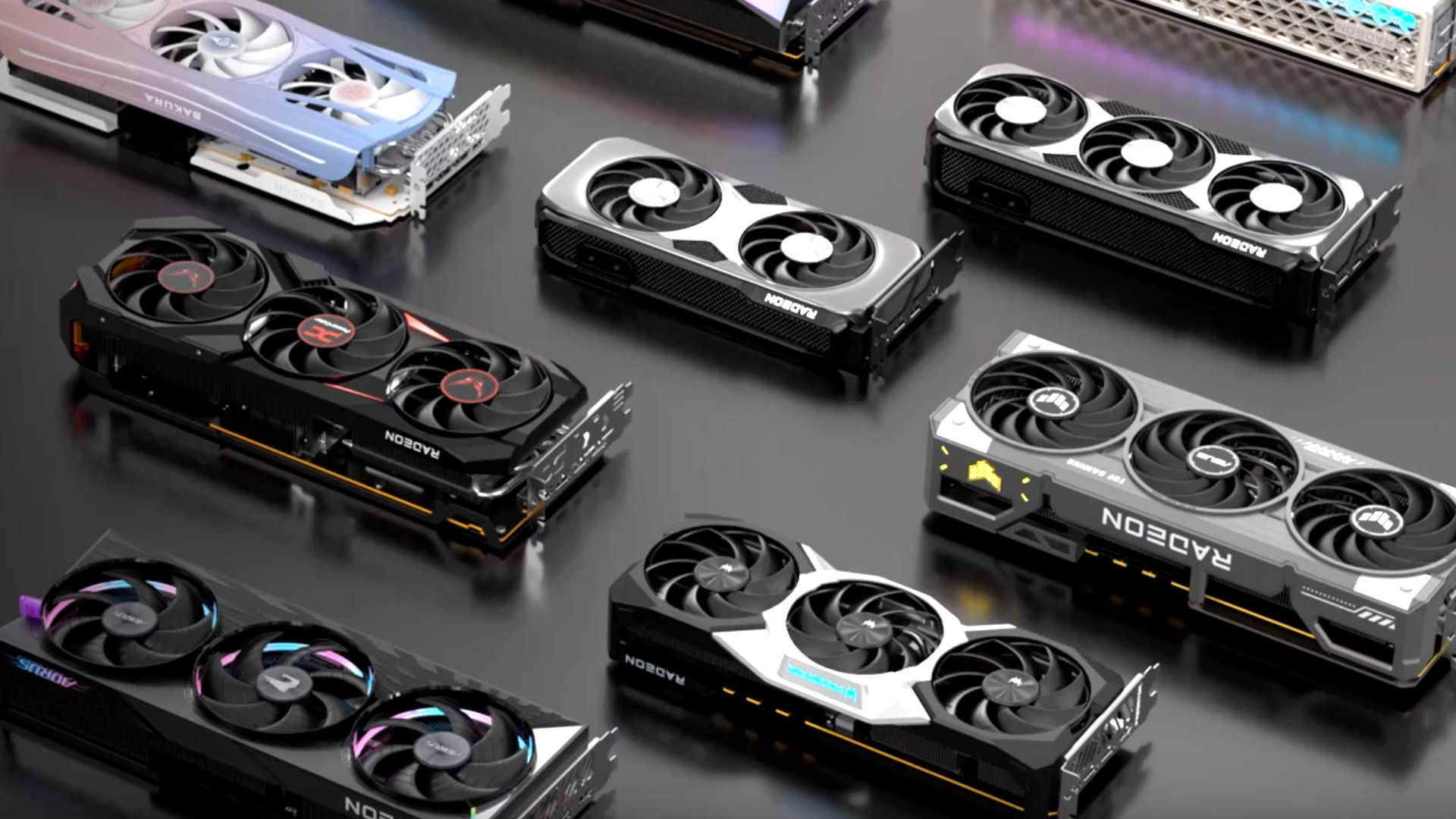
AMD wants to rebuild Radeon around the same idea that made Ryzen successful: strong value, practical features, and a closer relationship with PC gamers. The company knows it cannot match NVIDIA’s full GPU ecosystem overnight, but it believes Radeon can grow over multiple generations by focusing on what buyers actually want from a gaming graphics card.
That message came as AMD discussed its broader Radeon strategy at Computex. The company recently launched the Radeon RX 9070 GRE, a 12GB graphics card based on the Navi 48 RDNA 4 GPU. It carries a $549 MSRP and targets the high end gaming segment, although pricing remains difficult because memory costs are rising across the market.
AMD’s position is simple. Radeon needs to offer compelling value while also improving the overall gaming experience. That means better upscaling, stronger game support, more useful software features, and hardware that is easier for PC builders to live with.
AMD knows Radeon cannot copy Ryzen’s success in one generation
David McAfee said AMD wants Radeon to follow a similar story arc to Ryzen. Ryzen did not beat Intel overnight. It grew through several generations by giving customers more performance, more cores, better platform longevity, and stronger value. AMD wants Radeon to build that same kind of trust with gamers.
The company also admits that the perfect Radeon platform is still generations away. That honesty matters because NVIDIA currently dominates discrete graphics. Its GeForce RTX lineup covers far more price points, from mainstream cards to ultra expensive flagships, while AMD’s current RDNA 4 lineup is much smaller.
| Area | AMD’s current Radeon focus |
|---|---|
| Value | Offer better performance per dollar where possible |
| Features | Improve FSR, game support, and new GPU technologies |
| Community feedback | Listen more closely to what gamers want |
| Platform experience | Build a stronger Radeon ecosystem over time |
| Hardware design | Keep cards friendly for DIY PC builders |
NVIDIA still has the stronger software stack. DLSS, ray reconstruction, frame generation, AI features, and broad game support give GeForce cards a major advantage beyond raw performance. AMD is trying to close that gap through FSR updates, including FSR 4.1 support for older RDNA GPUs such as Radeon RX 7000 and RX 6000 cards. It is also working on future technology such as FSR Diamond.
That kind of backward support is important. Gamers do not want features locked only to the newest cards when older hardware is still capable. By supporting more generations, AMD can strengthen goodwill with existing Radeon buyers and give people a reason to stay inside its ecosystem.
AMD also wants to keep Radeon attractive for PC builders. The company is still leaning on practical design choices such as standard 8 pin power connectors, support for modern display standards, and platform features that fit normal gaming PCs. That contrasts with some frustration around NVIDIA’s 16 pin connector issues and increasingly complex high end GPU designs.
Still, AMD has a difficult challenge. NVIDIA’s market share is huge, and Radeon has fallen far behind in discrete desktop GPUs. Even when AMD offers a strong card, it often lacks the same ecosystem depth, mindshare, and product variety. A good RX 9070 XT or RX 9070 GRE can compete in specific segments, but it does not automatically rebuild the whole Radeon brand.
The comparison with Ryzen is useful, but it also shows how much patience AMD needs. Ryzen succeeded because AMD delivered year after year. Each generation improved performance, compatibility, and platform value. Radeon will need the same consistency. One good generation will not be enough.
The company’s best path may be to avoid chasing NVIDIA only at the extreme flagship level. Most gamers do not buy $2,000 GPUs. They want cards that deliver smooth gaming at fair prices, with reliable drivers, good upscaling, and enough memory to last. If AMD can own that value focused space while improving features, Radeon can become more relevant again.
The RX 9070 GRE shows both the opportunity and the problem. It gives AMD another high end option, but its $549 price also reflects the new reality of rising DRAM costs. Value is harder to deliver when memory prices are moving up. That means AMD must compete not only through pricing, but through the full experience.
For Radeon to have its Ryzen moment, AMD needs more than one strong product. It needs a wider lineup, better software, stronger launch execution, faster feature support, and a clear reason for gamers to choose Radeon even when NVIDIA has the bigger ecosystem.
AMD seems to understand that. The company is not claiming the job is done. It is saying the work has started. If Radeon keeps improving over the next few generations, AMD may eventually build the kind of loyal, enthusiast driven platform that Ryzen enjoys today. But for now, the company is still climbing, and NVIDIA remains far ahead.



Discussion (0)
Be the first to comment.