



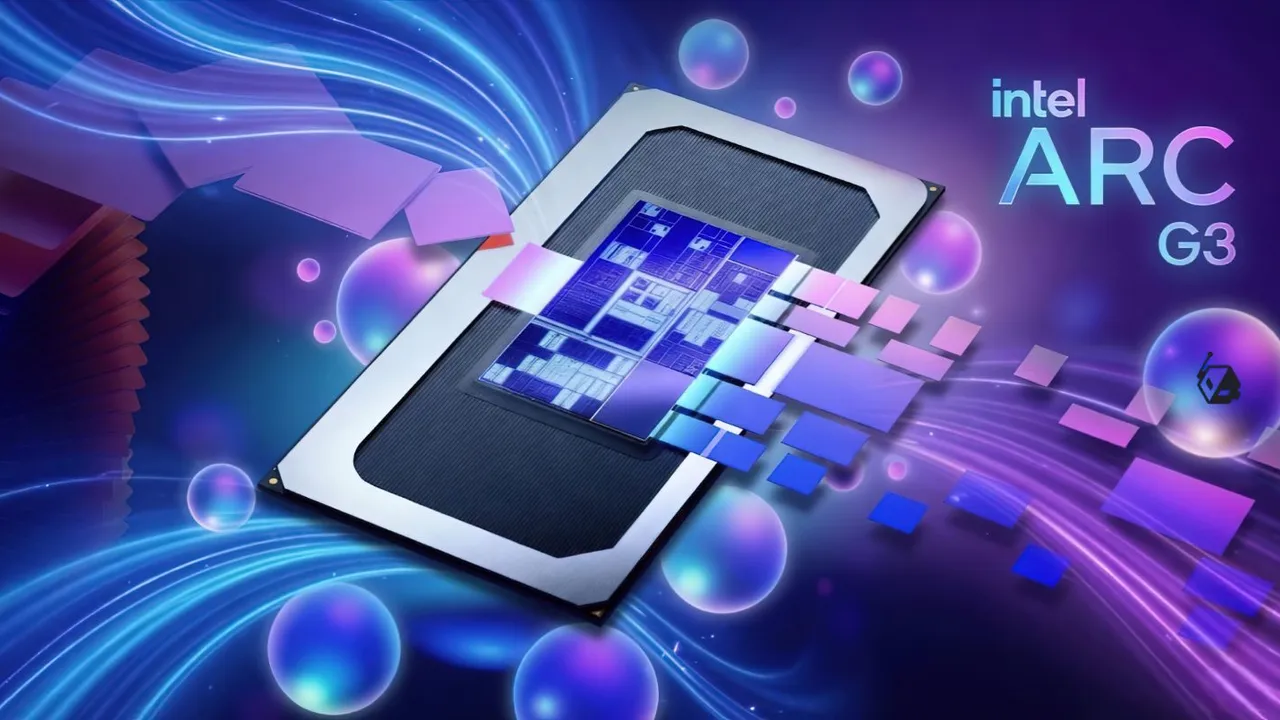
Intel is making a serious push into handheld gaming PCs with its new Arc G3 Extreme chip, and early benchmark claims suggest AMD’s Ryzen Z2 Extreme may have real competition. The new Arc G3 series is built for portable gaming devices rather than being a repurposed laptop chip, which could give Intel a stronger position in one of the fastest growing PC gaming categories.
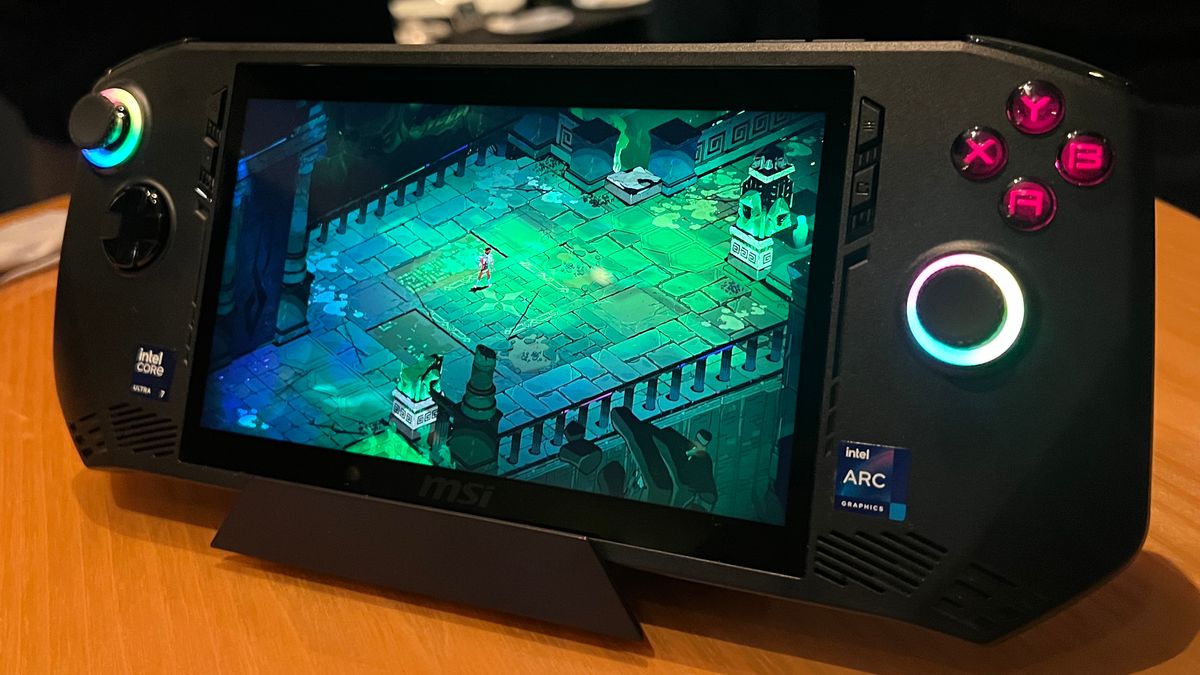
Intel showed the chip at Computex inside several upcoming handhelds, including the MSI Claw 8 EX AI Plus, OneXPlayer 3, and Acer Predator Atlas 8. More devices are expected later, including lower cost Arc G3 models.
The big promise is simple: more performance at lower power. Intel claims the Arc G3 Extreme is 44 percent faster on average than its previous Core Ultra 7 258V handheld class chip at peak power. Even at 17W, the new chip is reportedly 24 percent faster than the older Intel part.
The comparison with AMD is more important. At 35W, Intel says Arc G3 Extreme is 42 percent faster on average than AMD’s Ryzen Z2 Extreme across several games. At 17W, Intel still claims a 24 percent lead. At 12W, the gap reportedly grows to 37 percent, with Arc G3 Extreme keeping many games above 30 FPS while the Z2 Extreme falls below that mark in some tests.
| Comparison | Intel’s claimed advantage |
|---|---|
| Arc G3 Extreme vs Core Ultra 7 258V at peak power | 44 percent faster on average |
| Arc G3 Extreme vs Core Ultra 7 258V at 17W | 24 percent faster on average |
| Arc G3 Extreme vs Ryzen Z2 Extreme at 35W | 42 percent faster on average |
| Arc G3 Extreme vs Ryzen Z2 Extreme at 17W | 24 percent faster on average |
| Arc G3 Extreme vs Ryzen Z2 Extreme at 12W | 37 percent faster on average |
| Arc G3 Extreme at 17W vs Z2 Extreme at 35W | Similar performance at about half the power |
The efficiency claim may be the most important part. Intel says Arc G3 Extreme can deliver similar performance at 17W to AMD’s Z2 Extreme at 35W. If that holds up in independent testing, it could mean longer battery life without sacrificing smooth gameplay.
Battery life is still the biggest weakness of powerful Windows handhelds. Many devices can perform well when plugged in or running at high wattage, but they drain quickly. A chip that can keep playable frame rates at lower power would be a major win for handheld players.
Intel is leaning on XeSS, frame generation, and power tuning
Intel is also pushing its software stack hard. Arc G3 Extreme supports XeSS 3, including super resolution, frame generation, and multi frame generation up to 4x modes. In Cyberpunk 2077 at 1080p High, Intel claims the chip can reach 199 FPS with XeSS 3 multi frame generation, compared with lower results from AMD’s current FSR support on the Z2 Extreme.
That matters because AMD’s newer FSR 4 and FSR 4.1 features are not currently available on RDNA 3.5 based integrated graphics. Intel is using that gap to argue that its handheld platform has a better upscaling and frame generation story right now.
Intel has also added handheld specific power features. Intelligent Bias Control 3.5 can prioritize GPU frequency, shift power more smoothly between CPU and GPU, and park performance cores at 12W or below. Since handheld gaming is usually GPU limited, giving more power headroom to the graphics cores can improve performance at low wattage.
Endurance Gaming Mode is another useful feature. It lets players choose frame limits such as 30, 40, or 60 FPS, then uses hardware level frame pacing and power controls to reduce power use. Intel claims this can nearly double playtime in some games, with Forza Horizon 6 reaching almost six hours compared with around three hours when the mode is disabled.
Precompiled Shader Distribution is also coming to Arc G3 handhelds. Intel says the driver can automatically download precompiled shaders, reducing shader compilation delays and improving game launch times. The company claims average launch time improvements of more than 3x, with some games seeing much larger gains.
These features show that Intel is not only trying to win through raw graphics power. It is trying to solve the everyday problems handheld players care about: battery life, smooth frame pacing, shader stutter, load times, and consistent performance at lower wattage.
The hardware itself is also tuned for handhelds. Intel reduced some parts of the chip to fit the power target, including using two performance cores instead of four and cutting some display and Thunderbolt resources. But it kept 12 Xe3 graphics cores because gaming handhelds depend heavily on GPU performance.
Intel still needs independent reviews to prove these claims. Company supplied benchmarks are useful, but real world testing across different devices, cooling systems, drivers, and battery sizes will decide how strong Arc G3 Extreme really is.
Still, this looks like Intel’s most convincing handheld gaming move yet. The first MSI Claw had a rough time against AMD powered rivals, but Arc G3 Extreme appears much more purpose built. If the performance and efficiency claims hold up, AMD’s dominance in handheld chips may no longer be safe.
For players, that would be good news. More competition should lead to better handhelds, better software, and hopefully more reasonable pricing. Intel had a slow start in gaming graphics, but Arc G3 Extreme may be the chip that finally makes people take its handheld ambitions seriously.



Discussion (0)
Be the first to comment.