



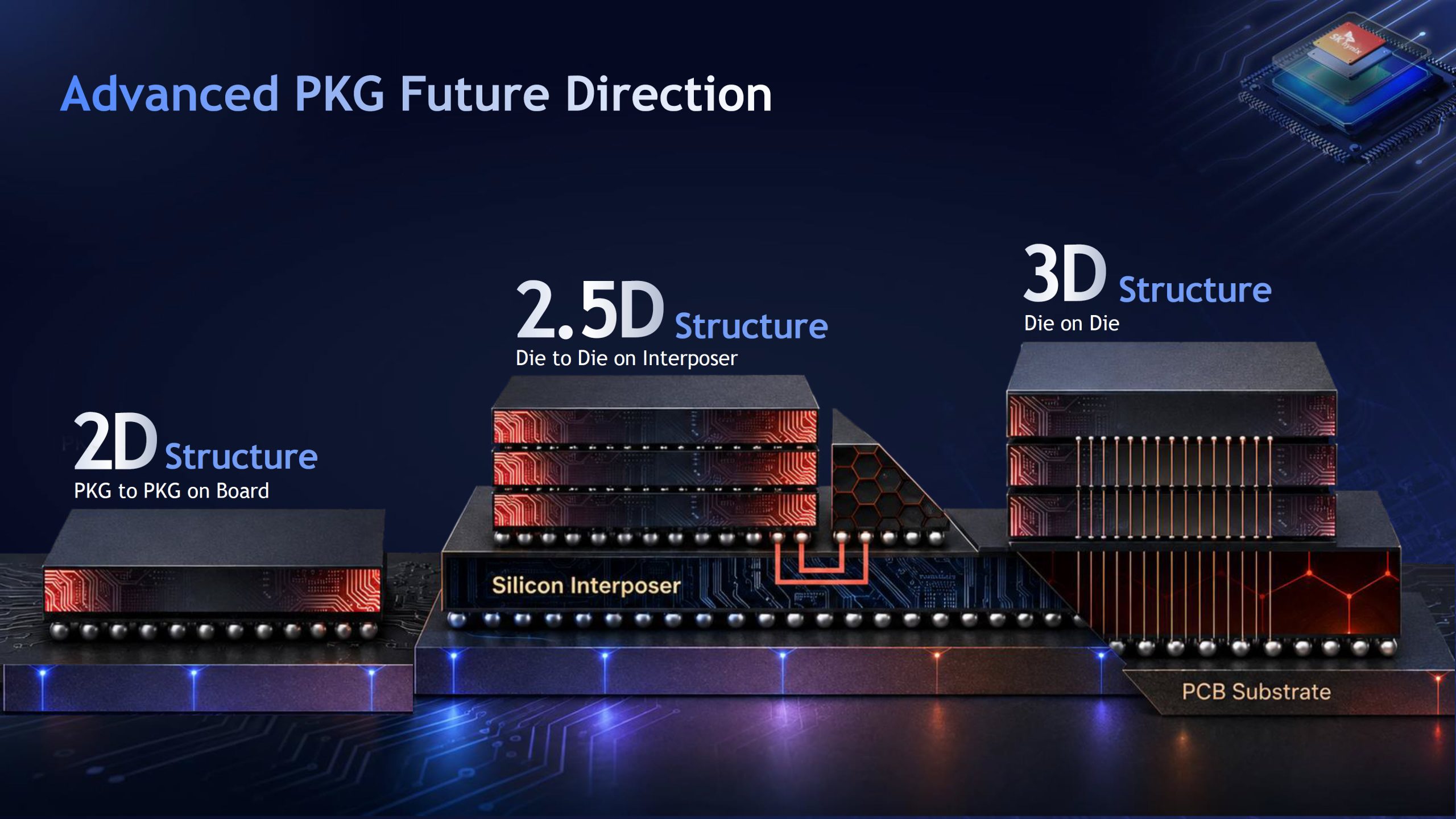
SK Hynix has outlined how it plans to scale future high bandwidth memory as rising power, thermal density and packaging complexity make current HBM designs harder to extend.
The company is exploring several advanced packaging technologies, including hybrid bonding, localized cooling structures, denser TSV layouts and broader use of 2.5D interconnect technologies such as Intel EMIB. It is also looking further ahead to 3D integration where HBM could eventually be stacked directly above accelerators.
HBM scaling is creating new thermal and packaging limits
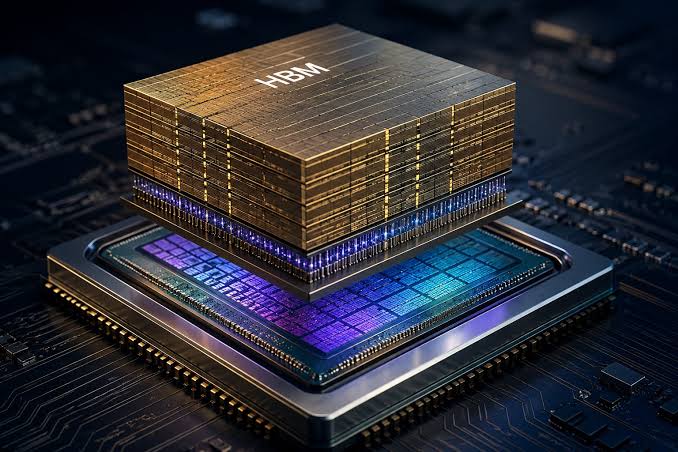
Modern HBM already uses a complex 3D stack of DRAM dies connected to a base die through TSVs. Current designs can scale to 16 high stacks, while the memory and accelerator are typically placed together on a silicon interposer using 2.5D packaging.
SK Hynix says its HBM4 roadmap includes up to 2,048 I/O bits, speeds of up to 8Gbps per pin and more than 2TB/s of bandwidth per stack. The company also highlights higher capacities, more TSVs and a larger physical package compared with HBM3E.
| Area | HBM4 detail |
|---|---|
| I/O width | 2,048 bits |
| I/O speed | Up to 8Gbps |
| Bandwidth | More than 2TB/s |
| Capacity | Up to 48GB |
| Production stack | 12 high |
| Qualification target | 16 high |
| Package height | 775 microns |
| Base micro bumps | 16,148 |
| TSV count | More than 20,000 |
As bandwidth rises, power and thermal pressure increase with it. SK Hynix says a near doubling of bandwidth every two generations can create about 2.2 times more thermal burden for existing packaging methods.
Hybrid bonding could push HBM beyond 16 layers
One of the main technologies being studied is hybrid bonding.
Compared with conventional MR MUF packaging, hybrid bonding can support finer pitches and better thermal behavior. SK Hynix says the approach can enable a TSV pitch below 18 microns while also allowing thicker core dies.
The company claims hybrid bonding can reduce thermal resistance by 35% even as the number of stacked layers increases.
That could become important as HBM moves toward 16 high and potentially 20 high configurations.
I HBM adds a dedicated heat path near the PHY
SK Hynix is also developing a thermal technology called I HBM.
The design places a highly thermally conductive but electrically insulating cooling structure close to the die to die PHY hotspot.
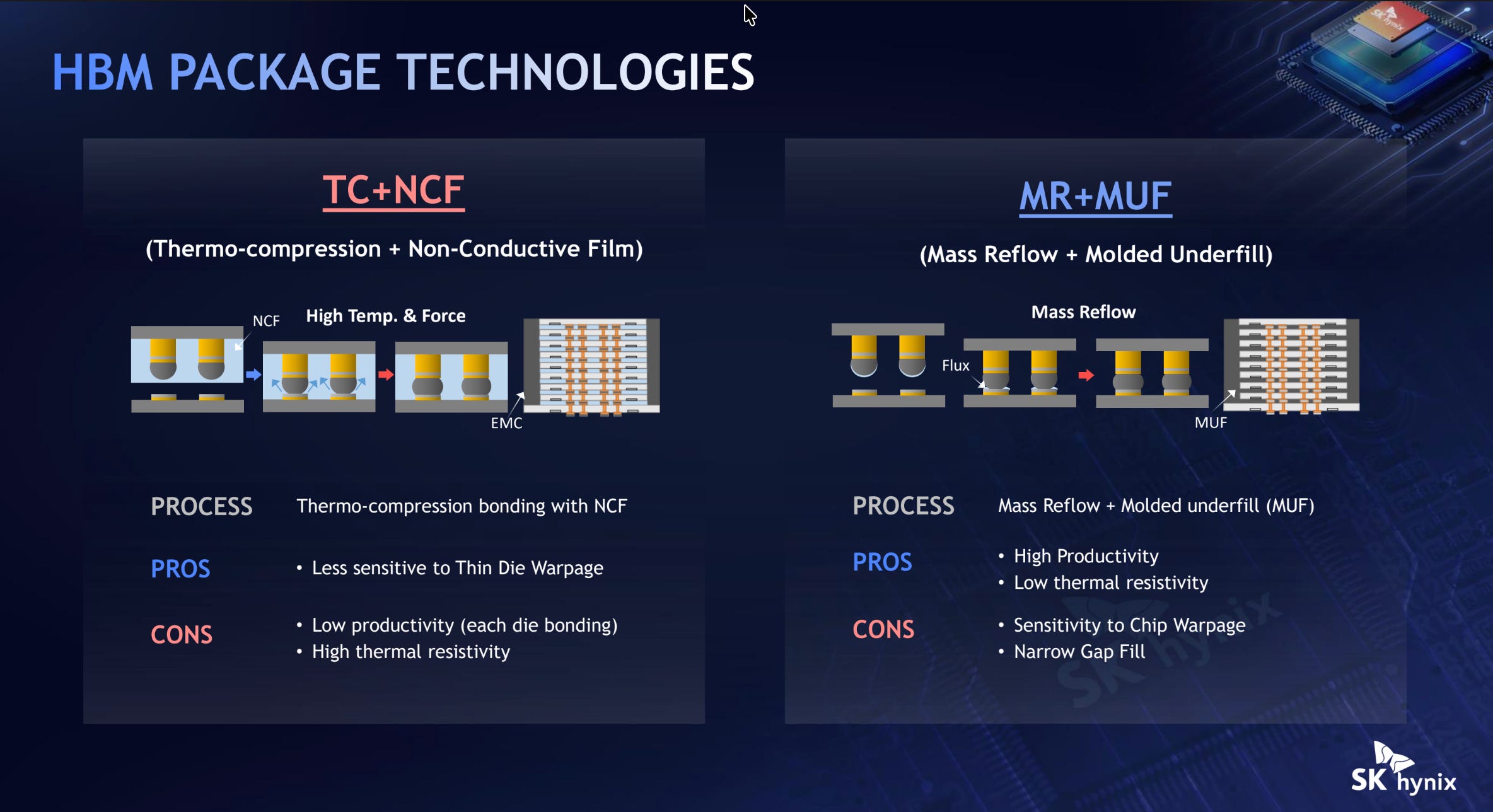
According to the company, this creates a more direct path for heat removal and can reduce thermal resistance by more than 30%.
This type of localized cooling could become increasingly useful as pin speeds and logic integration increase power density inside future HBM packages.
Intel EMIB appears in SK Hynix packaging plans
SK Hynix also showed Intel EMIB alongside TSMC CoWoS variants in a presentation covering future 2.5D HBM packaging options.
The slide included EMIB together with CoWoS L, CoWoS R and CoWoS S, indicating that SK Hynix is evaluating multiple interposer and bridge based approaches rather than relying on a single packaging ecosystem.
The presentation itself does not confirm a specific commercial SK Hynix product using EMIB, so the mention should be treated as a technology roadmap signal rather than a finalized customer deployment.
3D integration is the longer term target
SK Hynix is ultimately looking beyond conventional 2.5D packaging.
The company says future architectures could move toward stacking HBM directly on top of accelerators once logic processes and advanced packaging technologies are mature enough.
That approach could shorten interconnect distances and improve bandwidth density, but it would also make power delivery and thermal management significantly more difficult.
SK Hynix says future HBM scaling will require tighter co optimization across memory design, materials, customer processes, interposers and logic integration.
The broader direction is clear. Higher HBM bandwidth can no longer depend only on faster I/O and taller stacks. Future generations will need new bonding methods, stronger cooling paths and more advanced packaging if memory suppliers want to keep increasing capacity and bandwidth without letting power and temperature become the main bottlenecks.

Discussion (0)
Be the first to comment.