



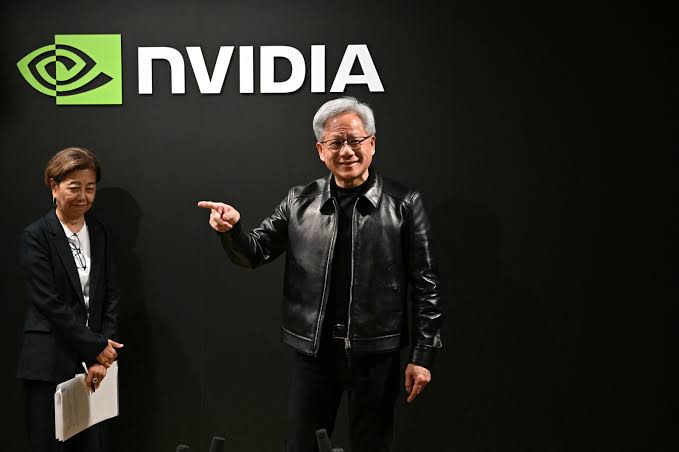
NVIDIA is reportedly preparing a deal worth about $7 billion involving AI startup Poolside, a move that could strengthen the company’s position in open weight AI models while expanding its business beyond selling GPUs and infrastructure.
According to the supplied report, NVIDIA would pay about $6 billion to license Poolside technology and hire most of its engineers. It would also invest another $1 billion in the company at a reported $12 billion valuation.
The deal has not been officially confirmed in the supplied material, so the financial terms and strategic implications should be treated as reported rather than final.
Poolside could strengthen NVIDIA’s Nemotron models
| Area | Reported detail |
|---|---|
| Technology licensing and hiring | About $6 billion |
| Additional investment | $1 billion |
| Poolside valuation | About $12 billion |
| Main strategic focus | Open weight AI models |
| NVIDIA model family | Nemotron |
| Reported goal | Improve AI model capability and compete more directly in the model layer |
Poolside specializes in AI systems for software development, making its technology and engineering staff potentially useful to NVIDIA as it develops its Nemotron model family.
NVIDIA introduced Nemotron 3.5 Lightning earlier in August and claimed the model could generate tokens about four times faster than similarly sized alternatives.
However, the supplied report notes that faster token output did not translate directly into equally large gains for full agentic workloads. Actual agentic task performance improved by about 30% in the cited comparison, suggesting that orchestration and other non generation stages remain important bottlenecks.
Poolside’s technology could therefore help NVIDIA improve not only raw token generation but also broader coding and agent based workflows.
NVIDIA is moving deeper into the AI software layer
The reported transaction would also represent another step in NVIDIA’s expansion beyond processors, networking and complete AI server systems.
NVIDIA already develops foundation models, AI frameworks, inference software and enterprise software around its hardware.
A larger investment in Poolside could accelerate that strategy by giving the company more engineering resources and intellectual property for open weight model development.
That would place NVIDIA in closer competition with companies that operate primarily at the model level, including major AI labs, rather than limiting its role to infrastructure.
The report suggests NVIDIA wants to strengthen Nemotron partly in response to the increasing availability of capable open weight models from Chinese AI developers.
The idea of NVIDIA becoming its own GPU buyer is an interpretation
One of the broader arguments in the supplied article is that expanding NVIDIA’s internal AI model operations could give the company another destination for its own GPUs if external accelerator demand weakens.
That should be treated as analysis rather than an announced NVIDIA strategy.
A stronger internal model business would naturally require substantial computing capacity, and NVIDIA could use its own hardware for that work. However, the reported Poolside transaction does not by itself prove that NVIDIA is preparing to absorb excess GPU supply or act as a formal buyer of last resort.
The more concrete takeaway is that NVIDIA appears interested in controlling a larger portion of the AI technology stack.
AI infrastructure costs are also moving higher
The reported Poolside deal arrives as NVIDIA customers may face higher hardware costs.
Separate reports suggest the company could increase pricing on Grace Blackwell and Vera Rubin systems by around 15% to 17% for some 2027 shipments.
A single Vera Rubin NVL72 rack could reportedly approach $8 million under those estimates, while the added infrastructure cost for a one gigawatt AI data center could reach roughly $5 billion.
Those price changes have been linked partly to rising memory and semiconductor manufacturing costs.
Sam Altman comments highlight uncertainty around adoption
The supplied article also points to recent comments from OpenAI CEO Sam Altman, who reportedly acknowledged that he had expected AI adoption across the wider economy to happen faster than it has.
That does not necessarily imply weaker demand for AI infrastructure, but it does highlight uncertainty around how quickly investment in AI will translate into broad economic use.
For NVIDIA, expanding from hardware into open weight models and agentic AI software could diversify where the company creates value.
If the reported Poolside deal proceeds on the stated terms, it would be one of NVIDIA’s clearest moves yet toward becoming a major model developer alongside its dominant position in AI compute infrastructure.


Discussion (0)
Be the first to comment.