



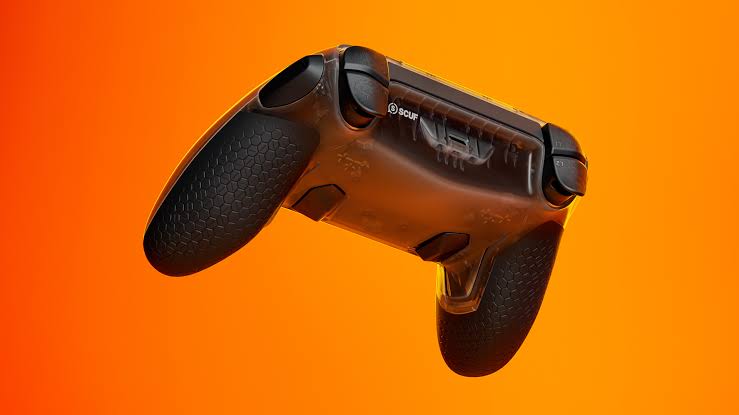
The Scuf Omega is a premium controller designed for both PC and PlayStation 5, with a familiar DualSense inspired shape, TMR thumbsticks, mechanical buttons, wireless support, and a large number of customizable inputs. It is comfortable to use and offers plenty of flexibility, but its $220 price makes several limitations difficult to overlook.
The biggest issue is value. The Omega reaches up to 1,000 Hz polling on PC and 250 Hz on PS5, while some competing premium controllers now offer much higher polling rates, stronger construction, or charging docks for less money.
Scuf Omega specifications
| Feature | Scuf Omega |
|---|---|
| Layout | Symmetrical |
| Thumbsticks | TMR |
| Connectivity | Wired, Bluetooth, 2.4 GHz |
| Platforms | PC, PlayStation 5 |
| Maximum polling rate | 1,000 Hz on PC, 250 Hz on PS5 |
| Battery life | About 15 to 20 hours |
| Weight | 254 g |
| Extra controls | Four rear paddles, two side buttons, five lower buttons |
| Switches | Omron mechanical switches |
| Price | $220, £210 |
Familiar DualSense style with many extra controls
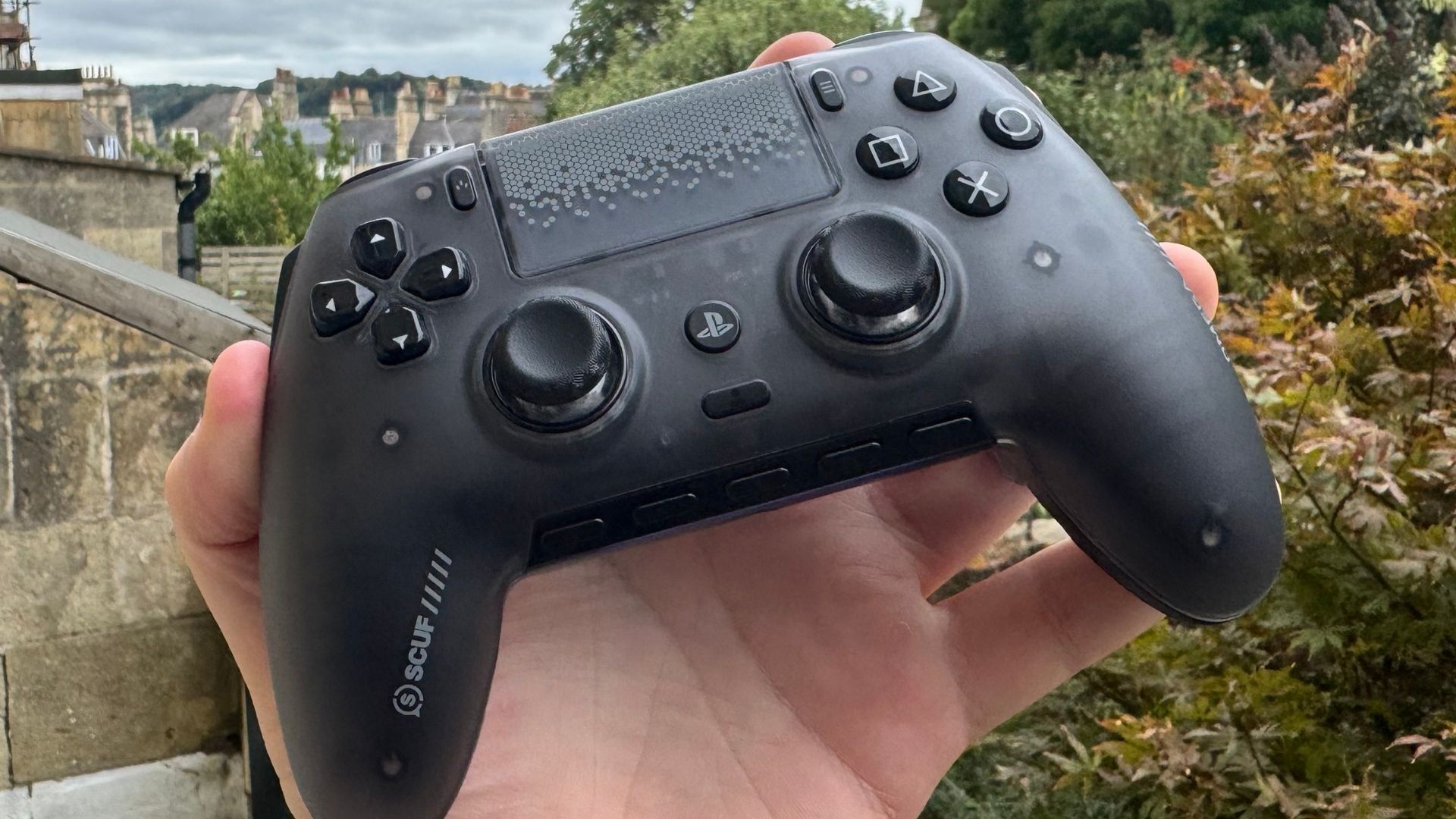
The Omega is officially licensed for PlayStation 5 and closely follows the shape and feel of Sony's DualSense controller. Its curved grips, symmetrical stick layout, central touchpad, and overall proportions make it immediately familiar.
Scuf adds considerably more inputs, however. There are four paddles on the rear, two buttons along the sides, and five additional controls along the lower front edge. The faceplate can also be removed, while blanking plates let you cover some of the extra controls if you want a simpler layout.
The controller uses TMR thumbsticks, which are designed to improve durability compared with conventional potentiometer based sticks. Scuf also includes three alternative thumbsticks in the box.
Comfort is one of the Omega's strongest points
The Omega weighs 254 grams and feels light and comfortable during longer sessions. Its buttons are easy to reach, while the D pad and triggers provide clear, responsive feedback.
The large number of extra controls can be useful in games that benefit from quick access to actions. Rear buttons can reduce the need to move your thumbs away from the sticks, while the side controls provide another option for frequently used commands.
There is a tradeoff. With so many buttons placed around the shell, it can be difficult to find one grip position that makes every control equally easy to reach. Some players may therefore use only a selection of the available inputs.
Performance falls short of the premium price
The Omega supports up to 1,000 Hz polling on PC. That is more than enough for most players, but it looks less competitive beside premium controllers offering 8,000 Hz polling.
The limitation stands out because the rest of the controller is clearly aimed at demanding players. Omron mechanical switches, extensive remapping options, multiple paddles, and TMR sticks all point toward competitive gaming.
PlayStation 5 operation is limited to 250 Hz. Battery life is around 15 to 20 hours, which is respectable but falls behind some competing premium models.
Switching between PC and PS5 is also less convenient than it could be. Only one wireless receiver is included, and changing connectivity requires removing the faceplate to access the selector.
Build quality does not fully match the price
The Omega feels comfortable, but its construction is not as rigid as some other expensive pro controllers. The shell can produce a slight rattle when shaken, and the materials do not feel as substantial as some competing models in the same price range.
That does not mean the controller feels fragile during normal use. The concern is simply that a $220 controller faces much higher expectations for fit and finish.
The Smoke version uses a dark semi transparent shell with restrained branding and an RGB strip along the lower edge. That lighting also serves a practical role by helping identify the five lower controls.
Mobile software handles customization
Scuf manages the Omega through a mobile app rather than desktop software. The app allows you to change button assignments, polling rate, RGB brightness, SOCD settings, calibration, and firmware.
Pairing is straightforward, and the interface is easy to navigate. However, PC players may find it inconvenient to reach for a phone whenever they want to change controller settings.
Strong competition makes the Omega difficult to recommend
The Scuf Omega offers good ergonomics, TMR sticks, mechanical buttons, extensive customization, and official PC and PS5 support. These are useful features, particularly if you want one premium controller for both platforms.
Its $220 price remains the main obstacle. Other premium controllers offer stronger construction or higher polling rates at similar or lower prices, while cheaper models can provide TMR sticks, extra buttons, and even charging docks for far less.
The Omega is therefore best suited to players who specifically want its DualSense style shape, PlayStation 5 compatibility, and unusually large number of programmable controls. For PC players who do not need PS5 support, the competition offers stronger value.


Discussion (0)
Be the first to comment.