



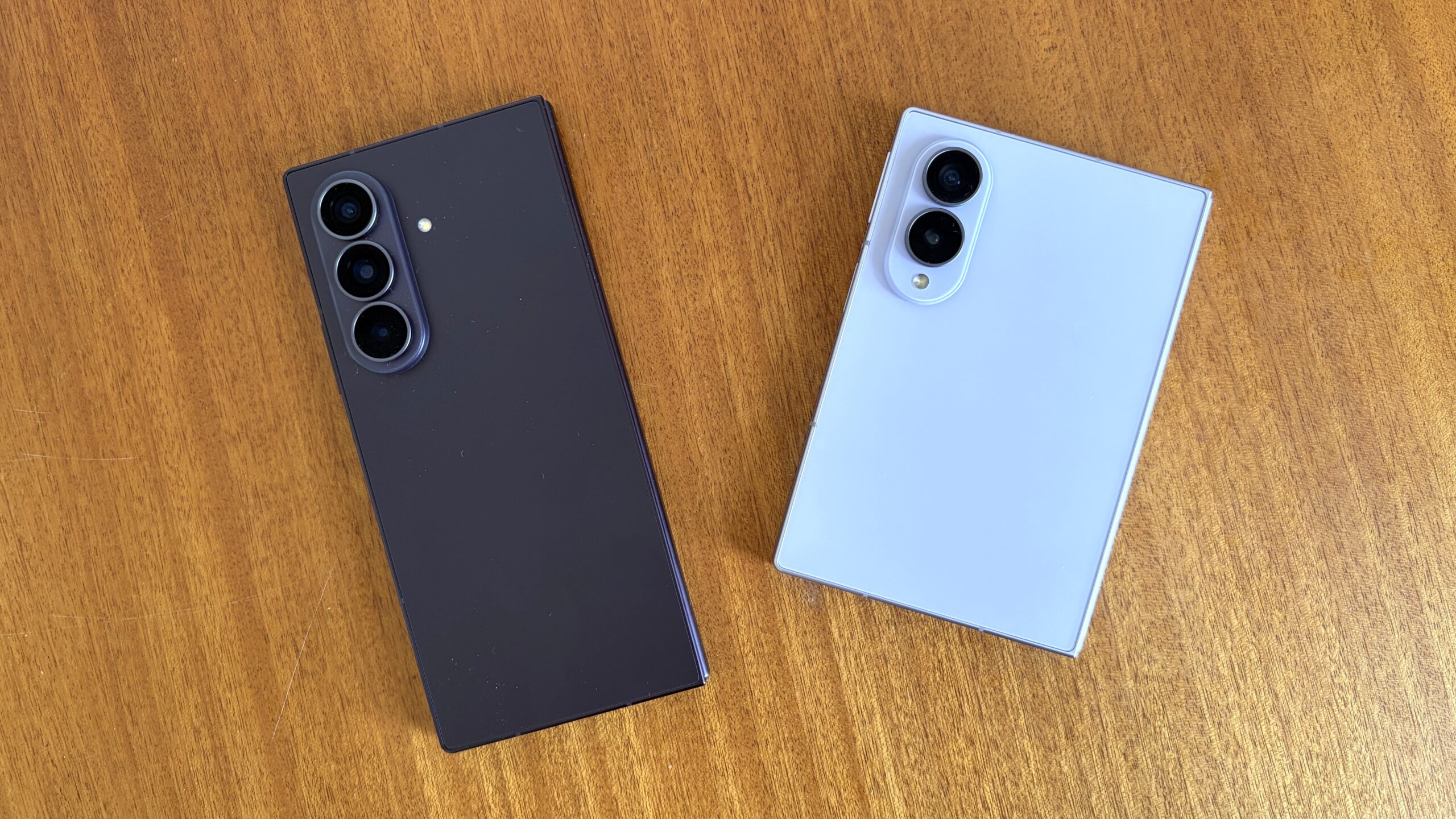
Samsung’s Galaxy Z Fold 8 brings back several qualities that made Microsoft’s Surface Duo distinctive, including a short and wide body, a roomy outer display, and a more comfortable typing experience than many narrow foldable phones.
The comparison is not exact. The Surface Duo used two separate screens connected by a 360 degree hinge, while the Galaxy Z Fold 8 combines an external cover display with one flexible inner panel.
Even so, Samsung’s latest foldable comes close to the shape and usability that helped the Surface Duo stand apart. Its proportions give applications more horizontal space, make the keyboard feel less cramped, and create a tablet-like experience when opened.
The Fold 8 is also much lighter, has smaller bezels, and provides better cameras. However, Microsoft’s abandoned device still offers a more natural approach to running two applications at once.
Galaxy Z Fold 8 Uses a Shorter and Wider Design
The Galaxy Z Fold 8 is smaller than the original Surface Duo, but its usable display area is surprisingly similar.
Its outer screen measures 5.5 inches, compared with the 5.6 inch individual displays on the Surface Duo. Both devices are wide enough when folded to make typing feel more comfortable than on narrower phones.
| Specification | Microsoft Surface Duo | Samsung Galaxy Z Fold 8 |
|---|---|---|
| Design | Two separate displays with 360 degree hinge | Flexible inner display with cover screen |
| Folded dimensions | 145.2 × 93.3 × 9.9mm | 123.9 × 81.9 × 9.7mm |
| Unfolded dimensions | 145.2 × 186.9 × 4.8mm | 123.9 × 161.4 × 4.5mm |
| Weight | 250 grams | 201 grams |
| Main display | Two screens forming an 8.1 inch layout | 7.6 inch flexible display |
| Outer or individual display | Two 5.6 inch panels | 5.5 inch cover screen |
| Inner aspect ratio | 3:2 combined | 4:3 |
| Pen support | Supported | Not supported |
The Surface Duo looks physically larger mainly because of its thick borders and the gap between its two panels. Samsung uses thinner bezels and a nearly continuous folding display, allowing the Fold 8 to provide a similar working area in a smaller body.
At 201 grams, the Fold 8 is also 49 grams lighter. That difference should make it more comfortable to hold for long periods and easier to carry throughout the day.
The Wider Screen Improves Typing and App Layouts
Many conventional smartphones use tall and narrow displays. This keeps devices easy to hold in one hand, but it can make keyboards feel cramped and reduce the amount of horizontal information shown on screen.
The Fold 8 takes a different approach. Its shorter and wider cover display gives the keyboard more room, which may reduce thumb strain during longer messages.
Applications can also display longer lines of text, wider images, and more interface elements without feeling as compressed.
The Surface Duo offered similar benefits. Its individual 4:3 panels were unusually wide for a phone, making each side feel closer to a small tablet than a traditional handset.
Samsung’s cover screen is slightly taller and narrower, but the overall experience remains close enough to appeal to people who preferred Microsoft’s proportions.
Samsung’s Inner Display Looks More Refined
The Fold 8 has a 7.6 inch flexible inner display with a 4:3 aspect ratio and a resolution of 1848 × 2448.
The Surface Duo used two separate 5.6 inch screens that formed an 8.1 inch combined workspace with a resolution of 2700 × 1800. A physical hinge and visible gap divided the content in the centre.
Samsung’s design avoids that interruption. Its foldable panel provides a nearly continuous surface, making it better suited to large images, videos, documents, and applications that stretch across the full display.
| Display characteristic | Surface Duo | Galaxy Z Fold 8 |
|---|---|---|
| Inner screen structure | Two separate panels | One flexible panel |
| Centre interruption | Physical hinge gap | Folding crease |
| Combined size | 8.1 inches | 7.6 inches |
| Best use | Two applications side by side | One large app or manual multitasking |
| Outer display | None | Dedicated 5.5 inch screen |
The remaining crease is less disruptive than the large centre gap on the Surface Duo. Smaller bezels also give the Fold 8 a more finished and modern appearance.
Placed side by side, Microsoft’s device now looks closer to an early concept. Its design remains distinctive, but Samsung has delivered a more polished version of the same general idea.
Surface Duo Still Handles Multitasking Better
The Surface Duo’s main advantage is its software approach to multitasking.
Because it had two independent screens, the operating system treated them as separate workspaces. Opening a link from a messaging application could automatically launch the browser on the other display while keeping the conversation visible.
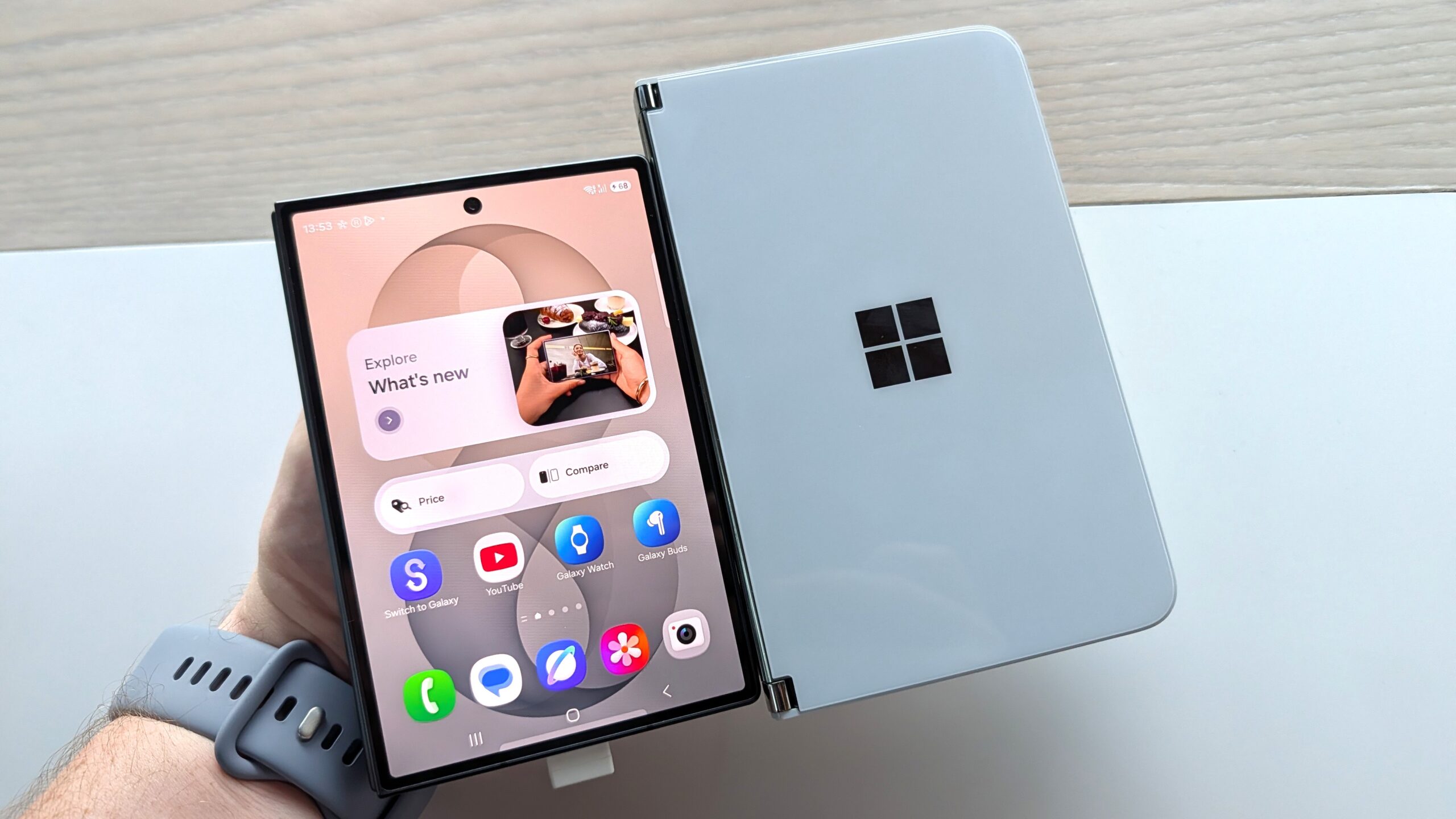
Popups and applications could move between screens based on context, allowing multitasking to happen without requiring the owner to arrange everything manually.
The Galaxy Z Fold 8 can run multiple applications at once, but you normally need to start split screen mode yourself and choose where each application appears.
| Multitasking task | Surface Duo | Galaxy Z Fold 8 |
|---|---|---|
| Open link beside current app | Often automatic | Usually manual |
| Run two apps side by side | Central part of the design | Supported but optional |
| Separate app workspaces | Two physical displays | Software divided screen |
| Move content between panels | Designed into the interface | Requires multitasking controls |
| Use one large continuous app | Limited by centre gap | Better suited |
This difference affects behaviour. People may use multitasking frequently when the device handles it automatically, while ignoring the feature when it requires several deliberate steps.
Samsung could improve the experience by adding an optional mode that automatically opens related applications beside the current one. That would bring the Fold 8 closer to the Surface Duo’s most useful software feature.
Fold 8 Improves the Everyday Hardware
Samsung’s foldable provides several practical improvements over Microsoft’s discontinued phone.
Its cameras are better, the body is substantially lighter, and the bezels are much thinner. The cover display also allows the device to work like a normal smartphone without opening it.
The original Surface Duo lacked an external screen. To use it as a standard phone, you had to fold one display behind the other.
Microsoft’s 360 degree hinge made that possible and also allowed the device to close with both screens protected. The Fold 8 cannot reproduce those postures because its outer panel remains exposed.
The Samsung model also lacks pen support, while the Surface Duo could work with a compatible stylus. That may disappoint people who used Microsoft’s device for handwritten notes or drawing.
For buyers who rarely use a pen, the lighter weight and better cameras may matter more.
Microsoft Abandoned the Form Factor Too Early
Microsoft released the original Surface Duo in 2020 and followed it with the Surface Duo 2 in 2021.
The company stopped meaningfully developing the line before releasing a third generation. Reports later indicated that a possible Surface Duo 3 would have moved away from two separate panels and adopted a conventional flexible folding display.
That concept would have placed Microsoft in the same category Samsung now occupies with the Fold 8.
The new Galaxy model shows that the short and wide foldable format can work when paired with mature hardware, slim bezels, capable cameras, and refined industrial design.
Microsoft’s early devices had important weaknesses, including high prices, software problems, dated cameras, and inconsistent support. However, their shape and multitasking model offered genuine advantages.
Ending the project after two generations prevented Microsoft from addressing those problems and turning the Duo into a more competitive product.
Galaxy Z Fold 8 Is a Spiritual Successor
The Galaxy Z Fold 8 is not a direct replacement for the Surface Duo.
It lacks the 360 degree hinge, separate screens, automatic two app behaviour, and ability to close with every display protected. Those were central parts of Microsoft’s design.
Samsung’s phone still captures much of what made the Duo appealing. It is wide enough for comfortable typing, compact when folded, spacious when opened, and lighter than Microsoft’s original hardware.
Its 4:3 inner display may also be better suited to modern foldable software than the Duo’s divided 3:2 workspace.
| Galaxy Z Fold 8 strengths | Remaining Surface Duo advantages |
|---|---|
| Lighter body | Automatic multitasking |
| Better cameras | Two clearly separated workspaces |
| Thinner bezels | 360 degree hinge |
| Nearly seamless inner display | Screens protected when closed |
| Practical external screen | Pen support |
| More polished design | Distinctive dual screen behaviour |
The Fold 8 costs $1,899, placing it firmly in the premium category. Its value will depend on whether you regularly use the larger inner display and appreciate the wide outer screen.
For former Surface Duo owners, it may be the closest available successor. It modernises the hardware and keeps the proportions that made Microsoft’s phone comfortable, even though Samsung has not fully recreated its automatic multitasking experience.
The Galaxy Z Fold 8 ultimately shows that the Surface Duo’s core ideas were not misguided. Microsoft may simply have ended the project before the hardware and software were ready to reach their potential.



Discussion (0)
Be the first to comment.