



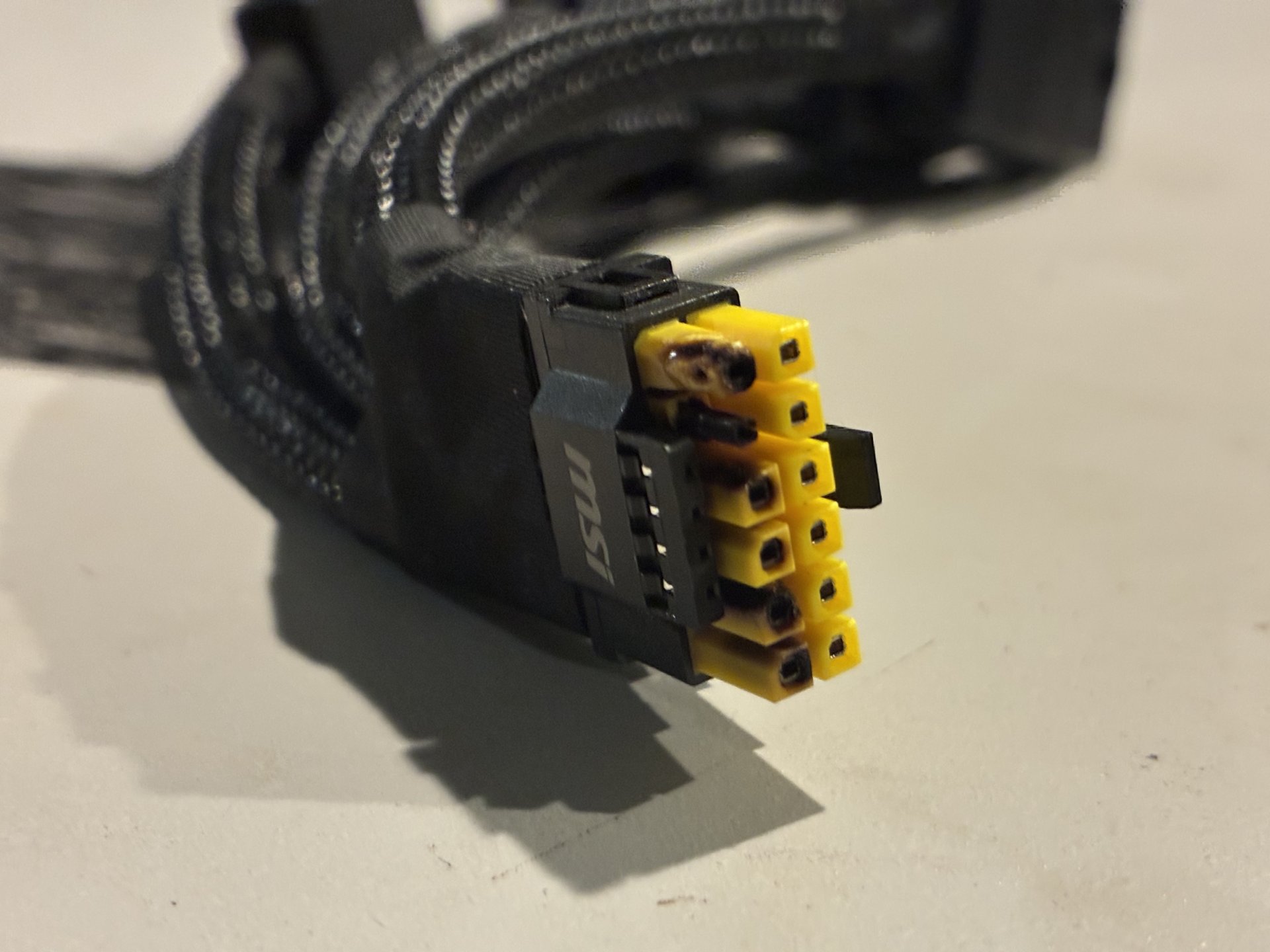
An RTX 5090 owner has reported a melted 16 pin power connector after testing Nvidia's DLSS 5 neural rendering in NBA 2K27, raising fresh questions about the feature's heavy power requirements.
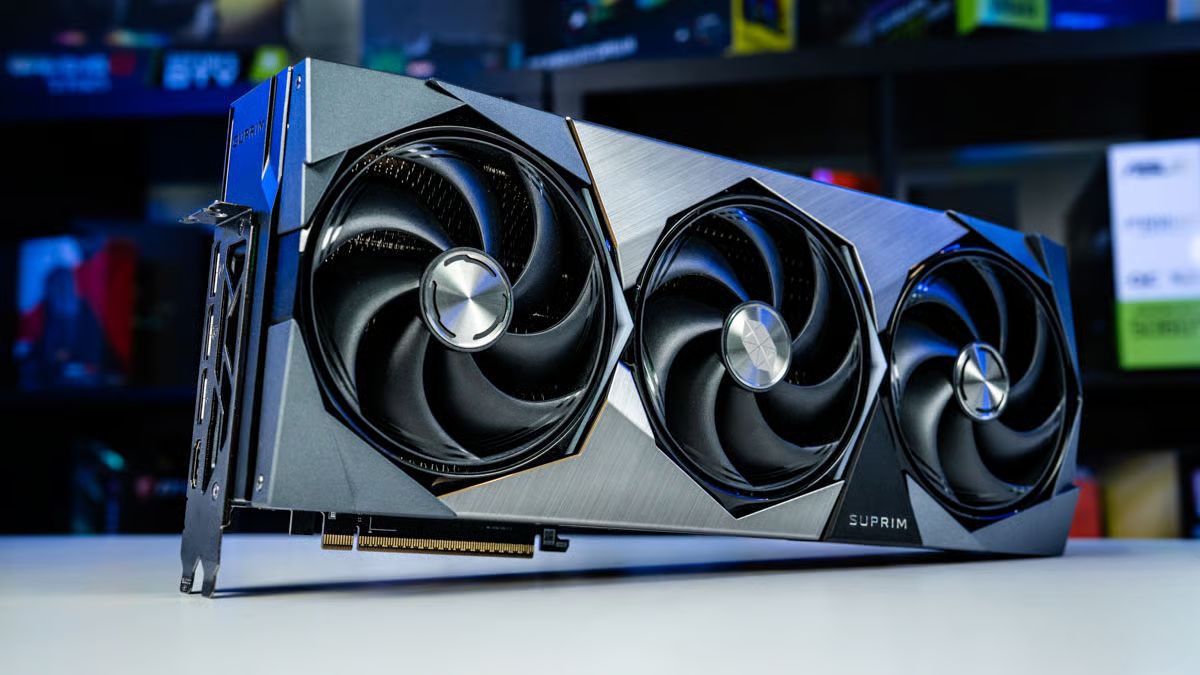
The incident involved an MSI RTX 5090 Gaming Trio OC, which is rated at 575W. According to the owner, the card normally consumed around 450W during gaming but climbed above 610W while DLSS 5 was active. Shortly afterward, the system became unstable, the graphics card stopped working, and the owner noticed a burning smell.
Inspection reportedly showed severe heat damage around the power connection. Several pins on the cable were scorched, while part of the plastic housing had melted and bonded the cable to the graphics card connector.
It is important to note that the incident does not prove DLSS 5 caused the connector failure. RTX 5090 connector damage has been reported under other workloads as well, and poor cable seating or uneven electrical resistance can also contribute to overheating.
DLSS 5 can sharply increase GPU power use
Separate testing indicates that DLSS 5 neural rendering can significantly increase graphics card power consumption.
| Test configuration | Without DLSS 5 | With DLSS 5 | Increase |
|---|---|---|---|
| MSI RTX 5090 Gaming Trio OC, reported gaming load | Around 450W | Above 610W | More than 150W |
| RTX 5090 Lightning Z, Control | 691W | 800W | 109W |
| RTX 5090 Lightning Z, Hogwarts Legacy | 480W | 720W | 50% |
| RTX 5090 Founders Edition, Hogwarts Legacy | 417W | 547W | About 31% |
The Lightning Z used for testing is not a normal retail power configuration. It carries two 16 pin connectors and was running a 1,000W extreme overclocking BIOS, so its absolute figures should not be directly compared with a standard RTX 5090.
The Founders Edition results are more relevant to typical single connector designs. In Hogwarts Legacy, enabling neural rendering reportedly increased consumption from 417W to 547W.
The connector itself may not have carried the full GPU load
A 16 pin 12V power connector is designed to deliver up to 600W, while the PCIe motherboard slot can provide additional power to the graphics card. This means a GPU reporting more than 600W total board power does not necessarily indicate that more than 600W passed through the cable itself.
Even so, sustained high power places greater stress on the connector, cable and electrical contacts. Small increases in contact resistance can create considerable heat when current levels are high.
The failed MSI card reportedly used a yellow tipped power cable designed to make incomplete insertion easier to identify. That does not establish whether the cable was correctly seated before the failure, and the precise cause remains unconfirmed.
DLSS 5 remains demanding on current hardware
DLSS 5 uses neural rendering in addition to Nvidia's existing upscaling technologies. That extra processing can improve image quality, but current testing suggests it also places a substantial additional workload on the GPU.
NBA 2K27 is currently the main officially supported DLSS 5 title, while much of the wider experimentation with the technology has come through community tools and modified games.
The reported connector failure therefore remains a single unverified case rather than evidence of a broader DLSS 5 hardware problem. What is clearer from available testing is that neural rendering can cause unusually large increases in GPU power consumption, including increases of around 30% to 50% in some workloads.
That makes power behavior an important part of evaluating DLSS 5 alongside its image quality and performance benefits, particularly on graphics cards already operating close to their normal power limits.



Discussion (0)
Be the first to comment.