In 2016, TP-LINK has entered the smartphone market by launching several smartphones under their new Neffos brand. One of their best smartphones is the TP-LINK Neffos C5 Max. It's a Dual-SIM device with a screen size of 5.5", an octa-core processor, and 16GB of storage space, at an affordable price. We received this device for testing before the winter holidays and, after more than two weeks of use, this is our opinion:
Hardware specifications and packaging
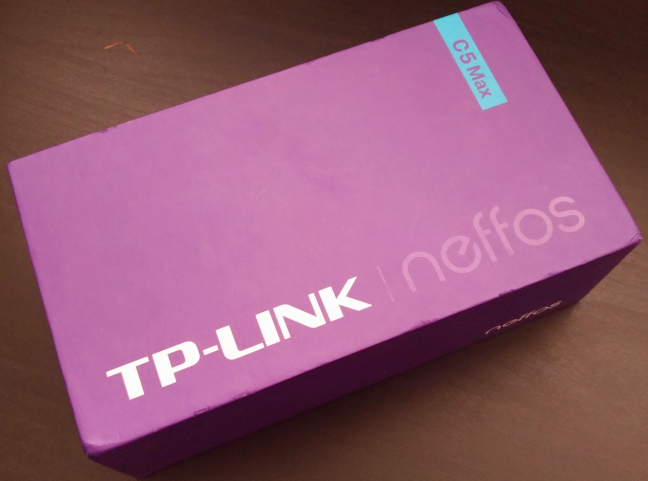
TP-LINK Neffos C5 Max comes in a pink box with the name of the device written on the top side. On the back of the box, you will find the main hardware specs.
TP-LINK Neffos C5 Max
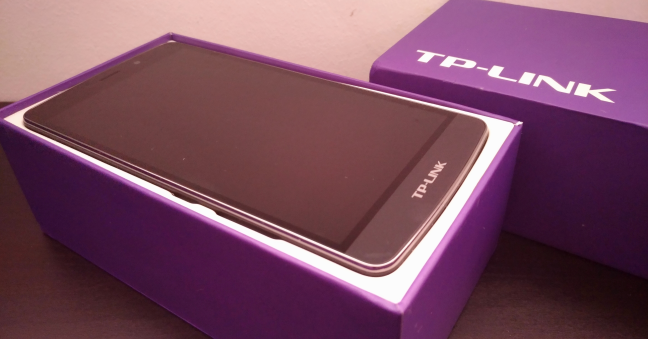
When you open the box, you immediately see the smartphone itself. As you can see in the picture below, it is quite large, with a screen size of 5.5 inches that is protected by Corning Gorilla Glass. The display has a resolution of 1080x1920 pixels and it uses an IPS panel with a density of 403.4 Pixels per inch (PPI).
TP-LINK Neffos C5 Max
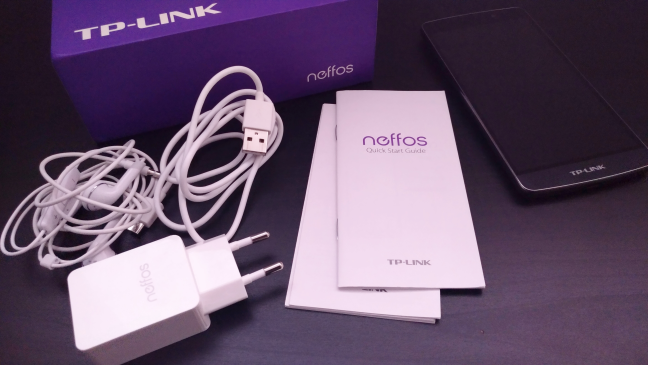
Inside the packaging you will also find the charger, a USB cable, the quick start guide, the warranty and a pair of headphones. Everything is packaged in a neat, good looking manner and you will enjoy your unboxing experience.
TP-LINK Neffos C5 Max
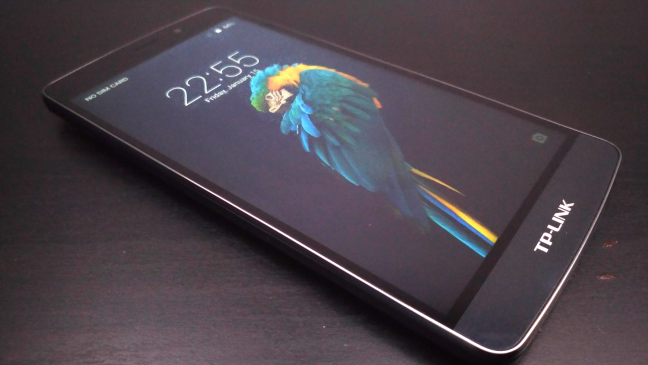
This smartphone comes in two variants: Pearl White and Dark Grey. We received for testing the Dark Grey variant and we found it strange that its bundled accessories are white, fitting for the Pearl White version.
TP-LINK Neffos C5 Max
TP-LINK Neffos C5 Max is powered by a MediaTek MT6753T processor with eight cores, running at a 1.3GHz frequency, and it has 2GB of RAM memory. In terms of storage, it packs 16GB of space that can be expanded using a microSD card with a maximum size of 32 GB. This is a dual-SIM smartphone that works in a Dual SIM Dual Standby implementation, which means that you have two active SIM cards, but they are both active only as long as you're not using them. Once you take a call on one of the SIM cards, the other becomes inactive. This is not ideal but the technology is less expensive and more widespread in today's smartphones. A positive that some users will appreciate is the fact that the microSD slot is separate from the slots for the two SIM cards, meaning that you can extend your storage space even when you are using two SIMs.
TP-LINK Neffos C5 Max
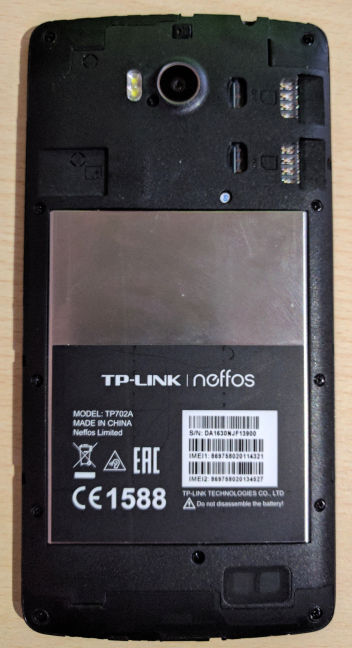
Even though the back cover can be removed, it seems that the 3045 mAh battery on this smartphone is not removable, which may be a downside to some users.
As far as the cameras are concerned, this smartphone has a 13-megapixel primary camera on the rear, with autofocus, Dual LED flash and an F2.0 aperture that allows more light in. The primary camera can record 1080p videos at 30 frames per second. The front camera has 5 megapixels.
Regarding connectivity, TP-LINK Neffos C5 Max offers a Bluetooth 4.0 chip and support for wireless networks using the 802.11 b/g/n standards. You can't connect to networks on the 5 GHz wireless frequency, meaning that modern 802.11ac networks won't be detected by this smartphone.
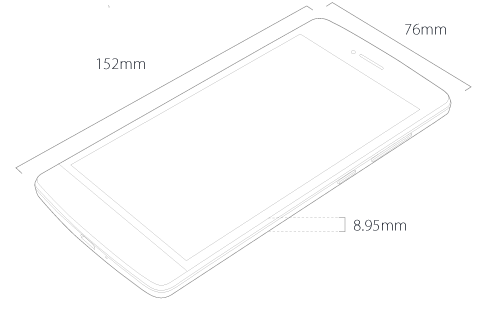
In terms of size, Neffos C5 Max has 5.9 inches or 152 mm in height, 2.9 inches or 76 mm in width and 0.35 inches or 8.95 mm in depth. It also weighs a total of 5.6 ounces or 161 grams.
TP-LINK Neffos C5 Max
If you would like to see the official specifications of this smartphone, visit this page: Neffos C5 Max specifications.
Design and build quality
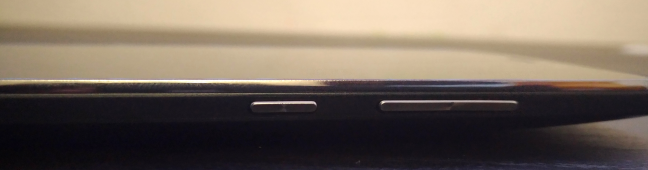
TP-LINK Neffos C5 Max looks and feels like an average, affordable smartphone. There's nothing spectacular about it. Its body is made of plastic and it weighs less than you would expect. I found it quite light for its size. All the buttons on this smartphone are found on its right side and they can be used for turning the phone On and Off and for controlling the volume. These buttons are placed so that you can press them with ease, even when using the smartphone with just one hand. The three buttons on the bottom of the screen (Back, Home and Overview) are software buttons and they can be seen and used only after you turn on the smartphone.
TP-LINK Neffos C5 Max
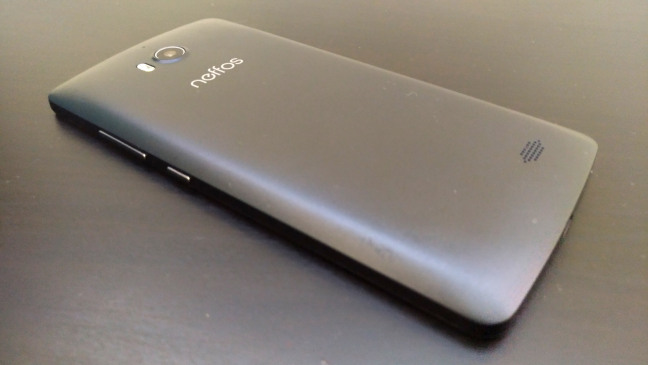
On the back cover you will find the rear camera, the Dual LED flash and the speaker. On the bottom side you have the micro USB port, while on the top, you'll find the audio jack for plugging in the headphones.
TP-LINK Neffos C5 Max
One aspect that you will appreciate about the build quality of the TP-LINK Neffos C5 Max is that it is quite sturdy. It is pretty difficult to bend this smartphone and it seems quite capable of taking some degree of abuse without malfunctioning.
The smartphone experience on the TP-LINK Neffos C5 Max
First of all, let's discuss about the quality of the basic phone experience. When it comes to phone calls, you will be able to hear the person you are talking with quite clearly. However, the people that are near you will also hear your conversations. In my phone calls, the people that I talked with told me that my voice sounded louder and less natural than when using other smartphones.
The headphones that are shipped with this smartphone are quite OK. They work perfectly well for phone calls and video chat. They also work very well with the FM Radio app that's preinstalled. However, when it comes to listening to music, the sound is a bit shallow, lacking bass and depth. The external speaker is decent but definitely not great. The overall sound level is not high and when pushed to the maximum, distortions are very evident. TP-LINK Neffos C5 Max is definitely not a smartphone for audiophiles.
We were pleasantly surprised by the outdoor visibility of the screen. While indoors, the screen is not very bright and we were expecting poor results when we took it outdoors. Fortunately, this is not the case and its 1600:1 contrast ratio does a good job.
TP-LINK Neffos C5 Max
If you don't multitask a lot, TP-LINK Neffos C5 Max offers a good user experience and your apps will be generally snappy and responsive. However, once you increase the number of opened apps to more than 3 or 4, the smartphone will be slower to respond to your commands and you have to close some apps in order to improve your user experience.
We mentioned earlier that this smartphone has 2GB of RAM. For modern mobile games this is not a lot, especially if you play 3D games. Expect more complex games to load rather slowly and your playing experience won't be as fluid as it is on smartphones with more RAM.
TP-LINK Neffos C5 Max
Regarding battery life, the 3045 mAh battery on the Neffos C5 Max should easily last you for a day. If you don't do a lot of multitasking, it might even last for a day and a half to two days.
TP-LINK Neffos C5 Max is capable of delivering all the basics you need from a smartphone, without being great at anything. In the end, we are talking about an affordable smartphone with average specs so it can't deliver an outstandingexperience, but not everyone needs a super gamer phone so this phone may be just fine.
Go to the next page of this review to find out more about the camera experience, the software installed TP-LINK Neffos C5 Max, its performance in benchmarks and our final verdict.
The camera experience on the TP-LINK Neffos C5 Max
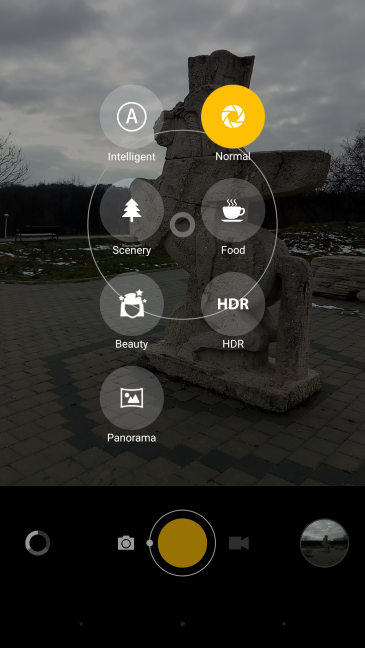
Unfortunately, the camera experience offered by TP-LINK Neffos C5 Max is a weak spot of this smartphone. First of all, the Camera app is very basic and rather dated. You do get several filters, a couple of shooting modes and some editing options but other smartphones offers more modern apps with more configuration options.
TP-LINK Neffos C5 Max
The quality of the pictures is average at best and pictures tend to be blurry and the contrast is low. Also, in days with little sunlight and especially during night shots, the colors look pale and washed out. You can also see noise in low-light scenes and contours are blurry. The front camera for selfies is even worse and you will have to work a lot harder in order to obtain good quality shots. To get a clear perspective of the results you get with the two cameras on the TP-LINK Neffos C5 Max, browse the gallery below. The selfies you see are made with the front camera.
When shooting video, the rear camera lacks auto stabilization features and this shows in all the videos you record. Also, in some of the shots we recorded we noticed a strange bug with the dynamic range of the colors. They are changing drastically when the phone is moved. The video below demonstrates this issue very well.
Another issue is that moving objects lose their focus while shooting and regain it again seconds later. Here's another video with several moving objects being the focus of the recording.
We are not pleased with the camera experience offered by TP-LINK Neffos C5 Max. It has many bugs and issues. Many smartphones with similar prices canoffera better camera experience.
Android 5.1 Lollipop and bundled apps
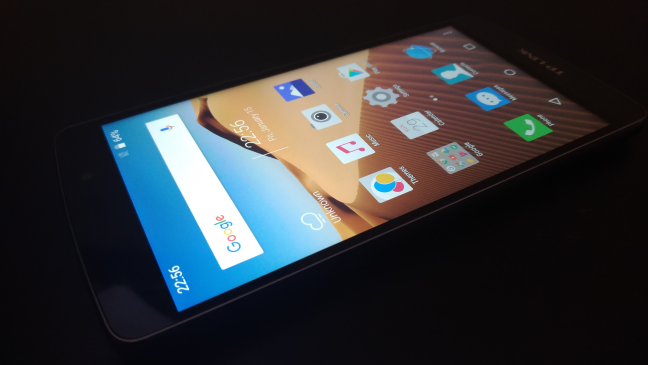
Unfortunately, TP-LINK Neffos C5 Max comes with the dated Android 5.1 Lollipop distribution installed. Most probably, this phone will not get Android version 6, not to mention 7, and it will be stuck with this old distribution. However, the good news is that the operating system doesn't have much in terms of bloatware. The apps that are installed by the manufacturer are not many and most of them are useful, even though many of them are very basic. On our test device, we found the following apps alongside the standard apps that come with Android:
Compass - useful if you need to know where North is, or other cardinal directions.
Flashlight - your average flashlight app that's useful when you need some light from your phone.
FM Radio - a small radio player that can use your headphones as an antenna for the radio signal.
Gallery - a basic clone of Google Photos that displays the pictures that are stored on your smartphone. It can also be used to make basic enhancements to your pictures.
Mirror - this app works as a mirror by using the front camera on your smartphone.
Music - a basic music player that can play locally stored songs
Feedback - this app allows you to give feedback to TP-LINK about your smartphone. You can also report system issues and attach system logs.
Photo Editor - a basic picture editor which you can use to enhance your pictures.
Sound Record - your average sound recorder.
System Update - you can use this app to check for updates for your phone and install them when available.
System Management - a basic system management app that allows you to analyze and remove installed apps, save some storage space, enable battery saving features, as well as data saving features. The downside for this app is that it has very low ratings on Google Play and many negative reviews from frustrated users.
Video player - a very basic app that you can use to view the videos that you record with your smartphone.
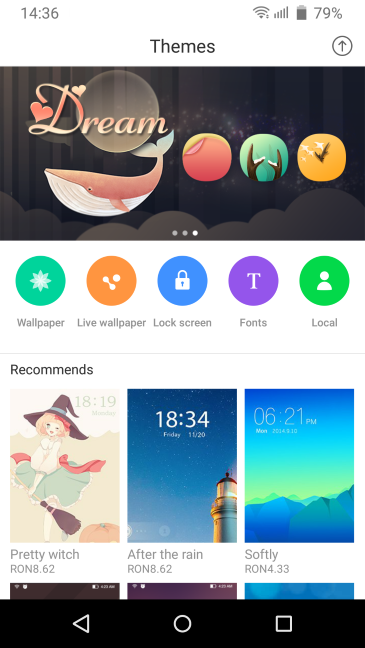
Themes - a collection of both paid and free themes for your smartphone that you can quickly download and apply.
TP-LINK Neffos C5 Max
Another important aspect to mention is that, while TP-LINK leaves most of the standard Android user interface unchanged, it did remove the app drawer. This means that you can view and access your apps only by swiping between the different home screens.
It's good to see that TP-LINK did not choose to bundles lots of bloatware. However, it should invest in providing an update to Android 6 Marshmallow.
Performance in benchmarks
To put some hard numbers between our impressions and to be able to compare it with other smartphones in terms of performance, we ran several benchmarks on the TP-LINK Neffos C5 Max.
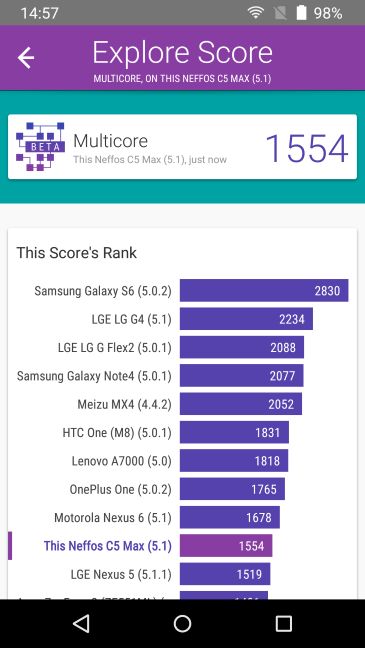
The first benchmark we ran was Vellamo Multicore, a series of tests designed to measure the processor performance when running multiple tasks at the same time. We got a good score of 1554 points, which is close to what you get from LG Nexus 5 and ASUS ZenFone Max.
TP-LINK Neffos C5 Max
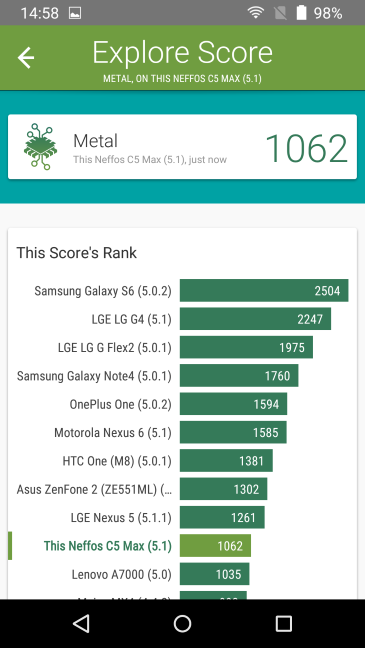
Next, we checked how it fares in single core operations. We used Vellamo Metal, a benchmark that runs a series of tests designed to measure the performance offered by the processor when only one of its cores is used. There are many apps in the Play Store that still don't know how to use more than one core at a time, so this test is quite important. TP-LINK Neffos C5 Max managed to score 1062 points, which places it somewhere between LG Nexus 5 and ASUS ZenFone Max.
TP-LINK Neffos C5 Max
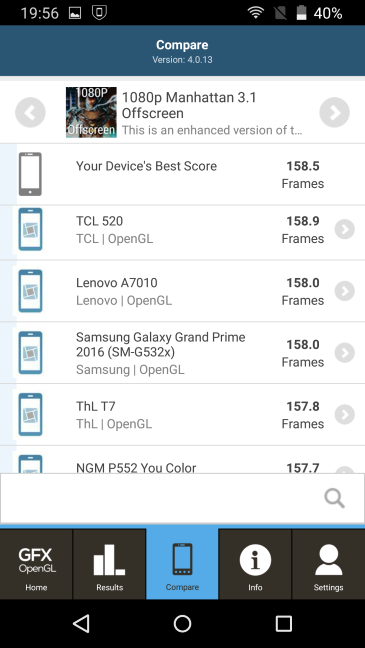
Then we moved on to the gaming tests. After all, many people use smartphones for gaming too. To measure the performance offered in games, we used the Manhattan and T-Rex tests offered by the GFXBench GL Benchmark app. We usually take into consideration only the 1080p Offscreen versions of these tests because they are run at the same resolution on any device, regardless of their native display resolutions. This makes more sense when you compare the results you get with those from other devices. In the Manhattan Offscreen test, the TP-LINK Neffos C5 Max rendered only 158.5 frames, which is a very low score.
TP-LINK Neffos C5 Max
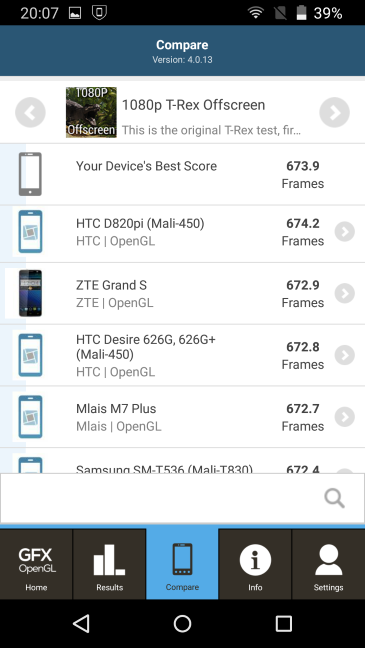
The next gaming test, the T-Rex Offscreen, ended with another poor result: this smartphone managed to render 673.9 frames. The results in the GFXBench GL Benchmark prove that TP-LINK Neffos C5 Max is not a smartphone for gamers.
TP-LINK Neffos C5 Max
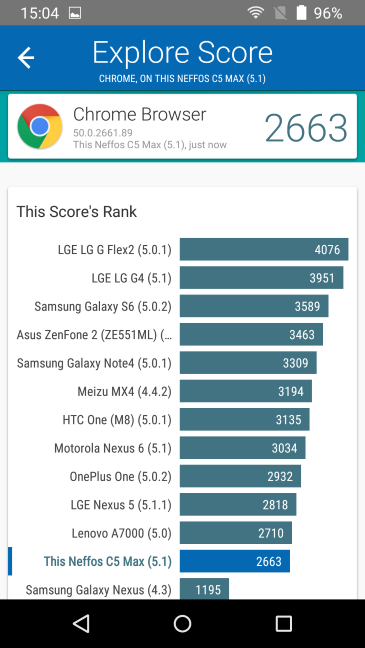
Going further, we wanted to see how well it fares in a more mundane activity: browsing the web. We turned to Vellamo again and we ran its Browser tests. This test measures the performance offered by the device when rendering websites coded with HTML5 and CSS3, as well as when running all kinds of scripts. TP-LINK Neffos C5 Max got 2663 points in Google Chrome, which is good score which places it again, somewhere between LG Nexus 5 and ASUS ZenFone Max.
TP-LINK Neffos C5 Max
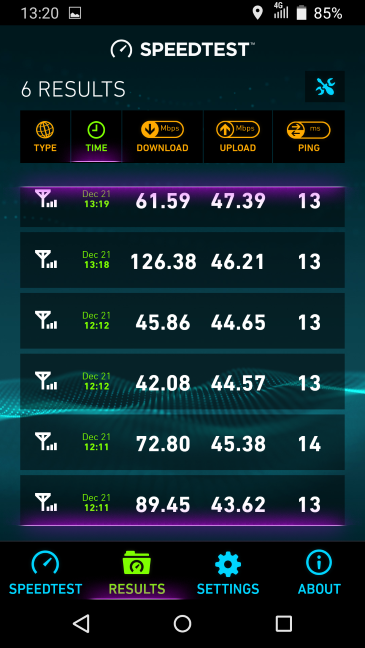
TP-LINK Neffos C5 Max offers 4G LTE data connections and we wanted to measure how fast it is, in an area with very good network coverage. The cellular network we used is Vodafone Romania. In the screenshot below you can see the results we obtained with SpeedTest - an app that tells you how fast your internet connection is. While we received some great results, they varied a lot more than with other smartphones. For example, we obtained a download speed anywhere between 42.08 Mbps to 126.38 Mbps. We do see variations with other smartphones too but not this high. Luckily, the upload speed was rather constant and it got close to the maximum we've ever received in the same area of 50 Mbps.
TP-LINK Neffos C5 Max
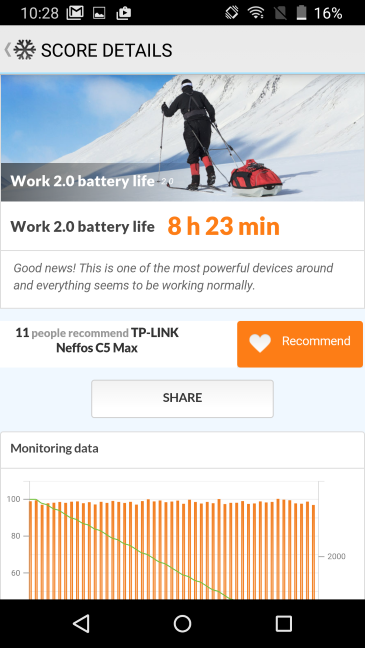
Lastly, we ran the battery test. The Work battery life series of tests from the PCMark app ended with a battery life of 8 hours and 23 minutes, which is a solid score. It confirms that this smartphone should not have any issues lasting at least a day of use.
TP-LINK Neffos C5 Max
Our benchmark results show that TP-LINK Neffos C5 Max is a mid-range smartphone with mid-range performance. Also, it's definitely not a smartphone for gamers but for casual usersthatneed an affordable smartphone with decent performance levels.
Pros and cons
Here are the positives that we identified about the TP-LINK Neffos C5 Max:
It's affordably priced
The outdoors visibility of the screen is better than what you would expect
There's little bloatware on this smartphone
It's a Dual SIM smartphone that has a separate microSD card alongside the two SIM slots
The autonomy is good for a smartphone in its price range
There are also some important negatives to consider:
The camera is below what competitors have to offer in the same price range
It uses Android 5.1 Lollipop instead of Android 6 Marshmallow
It's good for the usual smartphone apps but not for gaming
Its bundled apps are very basic and you are better served by other apps from the Google Play Store
Product rating3/5
Verdict
TP-LINK Neffos C5 Max is a decent smartphone with reasonable specifications and hardware that is good enough for the smartphone user who is looking for a device with an affordable price. Yes, it has several positives, like the good outdoors visibility of the screen, the little bloatware that it has installed or the fact that it has a microSD card alongside two SIM cards, which isn't something you see often on Dual SIM smartphones. However, it's also a very boring device, with dated software, that doesn't stand out from other smartphones with similar prices. It's affordable, it does the job it is supposed to do and that's it!
I think that this review, while generally quite accurate, ignores the most important aspects of the phone as a mobile phone – its bands and reception capability on both SIMs.
1. I bought this phone specifically because it is the only reasonably priced phone I could find which has 4G capability on both SIMs [or 4G and at least 3G on SIM 2], plus the aforementioned separate SD card slot [not a hybrid SIM/SD slot]. I was looking in the A$150-$250 price range, not A$500 and up.
2. Australia has gradually shut down the 2G GSM networks over the last 2 years, so the Dual SIM phones [3 so far] I have used to date became basically single SIM phones, because almost all phones were 3G on SIM 1, and 2G on SIM 2. Until I could find a 4G/3G phone, I had to use my 2 old phones separately, which is awkward.
3. I have found it EXTREMELY DIFFICULT to ascertain the reception capabilities, particularly on SIM 2. In their ads and spec sheets, most manufacturers trumpet “4G/LTE” on SIM 1, but don’t detail or obfuscate the SIM 2 capability, which is usually 2G, or reverting to 2G after determining which SIM is used for 4G. Many don’t answer communications.
4. I bought this from Malaysia, after ensuring that the model purchased was suitable for Australian networks [There are 4 C5A Max models, each with different bandwidth and frequency capabilities]. Luckily, I received the 702B [my desired model], because the retailer told me that they were prepackaged, and they did not know which model was boxed.
So far, it appears to do what it promised, although I still have to transfer 1 existing SIM after data backup, and see how well it works.
4. Another aspect which I am dissatisfied with with is the inability to remove and replace the battery, which, even if of reasonable quality, invariably needs replacement after about 1-1.5 years, whereas my phones have always functionally lasted 2-3 years. Unfortunately, it appears that most manufacturers are trying to force people to “upgrade” their phones when the battery loses charging capacity or dies, and don’t have replaceable batteries.
I hope this helps!
Anonymous ·
Than you very much Danny for sharing your experience. I’m sure others will find it useful. 😉












Discussion (2)
I think that this review, while generally quite accurate, ignores the most important aspects of the phone as a mobile phone – its bands and reception capability on both SIMs.
1. I bought this phone specifically because it is the only reasonably priced phone I could find which has 4G capability on both SIMs [or 4G and at least 3G on SIM 2], plus the aforementioned separate SD card slot [not a hybrid SIM/SD slot]. I was looking in the A$150-$250 price range, not A$500 and up.
2. Australia has gradually shut down the 2G GSM networks over the last 2 years, so the Dual SIM phones [3 so far] I have used to date became basically single SIM phones, because almost all phones were 3G on SIM 1, and 2G on SIM 2. Until I could find a 4G/3G phone, I had to use my 2 old phones separately, which is awkward.
3. I have found it EXTREMELY DIFFICULT to ascertain the reception capabilities, particularly on SIM 2. In their ads and spec sheets, most manufacturers trumpet “4G/LTE” on SIM 1, but don’t detail or obfuscate the SIM 2 capability, which is usually 2G, or reverting to 2G after determining which SIM is used for 4G. Many don’t answer communications.
4. I bought this from Malaysia, after ensuring that the model purchased was suitable for Australian networks [There are 4 C5A Max models, each with different bandwidth and frequency capabilities]. Luckily, I received the 702B [my desired model], because the retailer told me that they were prepackaged, and they did not know which model was boxed.
So far, it appears to do what it promised, although I still have to transfer 1 existing SIM after data backup, and see how well it works.
4. Another aspect which I am dissatisfied with with is the inability to remove and replace the battery, which, even if of reasonable quality, invariably needs replacement after about 1-1.5 years, whereas my phones have always functionally lasted 2-3 years. Unfortunately, it appears that most manufacturers are trying to force people to “upgrade” their phones when the battery loses charging capacity or dies, and don’t have replaceable batteries.
I hope this helps!
Than you very much Danny for sharing your experience. I’m sure others will find it useful. 😉