



TP-LINK Archer C7 has been launched for more than a year and it's one of the few wireless routers with a strong reputation on the market. This is the reason why we wanted to test it, so late after its launch. Its price has plunged in recent months and it's one of the most popular wireless routers in the 100 USD price-range. We tested the TP-LINK Archer C7 for two weeks, we made lots of measurements and now we want to share our opinion about this router, in this review. There's a lot of ground to cover, so let's get started:
Unboxing the TP-Link Archer C7 AC1750 Wireless Dual Band Gigabit Router
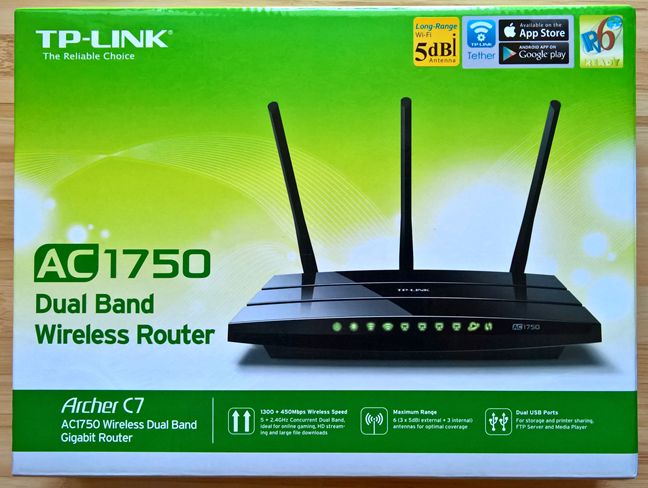
TP-LINK's Archer C7 comes in a green package which features a picture of the device on the front, as well as some of its most important specifications.
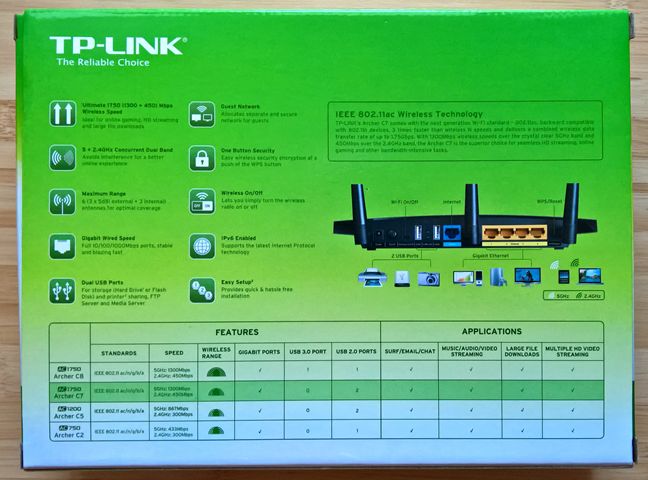
On the back cover, you can find more detailed specifications, you can see all the ports that are available on this wireless router, as well as a comparison with other routers made by TP-Link.
When you open the box, you will find the following items: the TP-LINK Archer C7 wireless router, 3 detachable antennas, the power supply unit, a resource disc, an Ethernet cable, the quick installation guide, as well as the warranty and other leaflets.
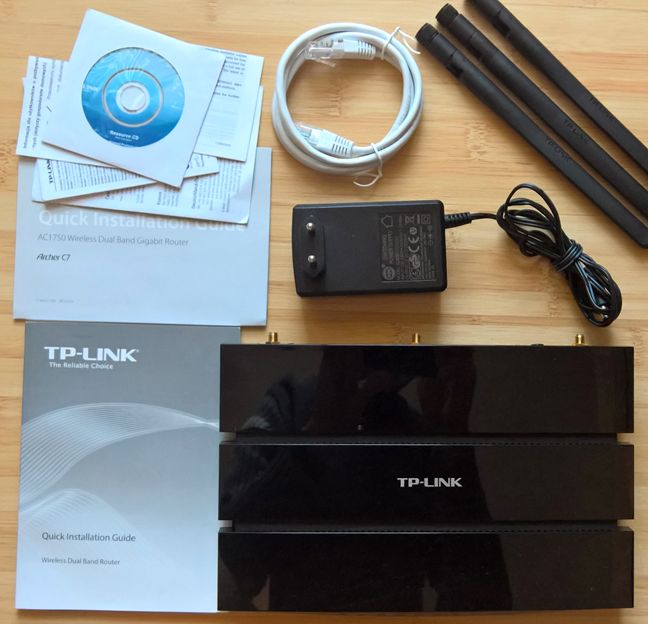
As you can see, the unboxing experience is not that spectacular. In the end, we are talking about an affordable device which costs around 100 USD or the equivalent.
Hardware specifications
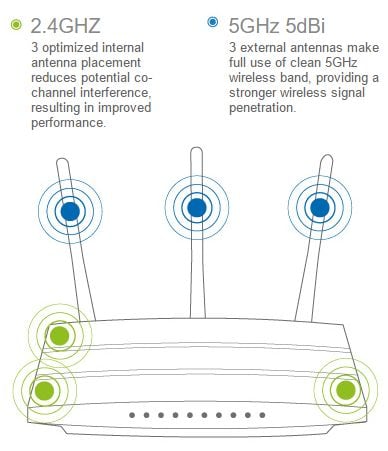
TP-LINK Archer C7 has a Qualcomm Atheros QCA9558 processor, running at 720 MHz, with 128 MB of RAM memory and 16 MB of storage space. It offers support for all the modern networking standards, including 802.11ac, which means that this router offers two wireless networks: one for the 2.4 GHz frequency and one for the 5 GHz frequency. The maximum theoretical bandwidth is of 450Mbps on the 2.4 GHz frequency and 1300Mbps on the 5 GHz frequency, leading to a total of 1.75Gbps. One aspect that is not exactly obvious is that this wireless router has a total of 6 antennas. There are three external antennas for the 5 GHz wireless frequency and 3 internal antennas for the 2.4 GHz frequency. You can see their positioning in the diagram below.
On the back side of the router you will find a WPS button, 5 Ethernet ports (one of which is for the Internet connection), two USB 2.0 ports, LEDs indicating the activity of the two USB ports, a switch for turning the wireless network On and Off, a button for turning the router On and Off, and the power jack.
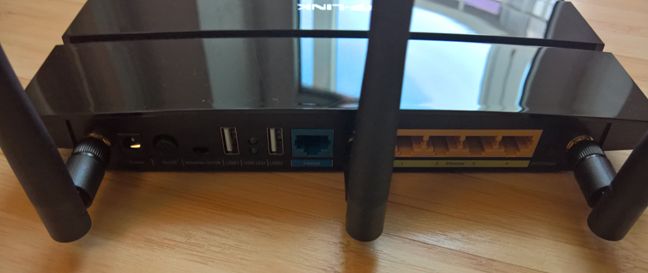
If you want to see the official specifications of this router, read this page: TP-LINK Archer C7 HARDWARE FEATURES.
Setting up & using the TP-Link Archer C7 AC1750 Wireless Dual Band Gigabit Router
As we mentioned , TP-LINK Archer C7 is not a new wireless router. Therefore, we were not surprised to see that the user interface offered by TP-LINK is a bit old-school and different from what we've seen on the Archer C9, for example .
Luckily, the quick setup wizard is easy to use and it can be started from any web browser.
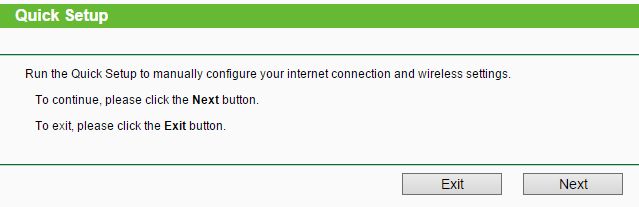
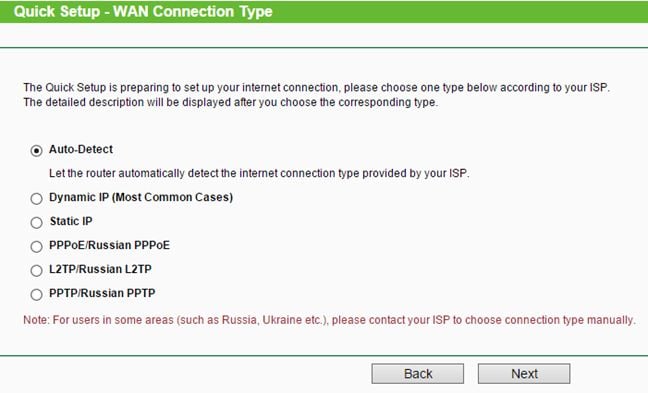
When you start it, it asks what kind of Internet connection you have. In the screenshot below you can see the types of Internet connections the TP-LINK Archer C7 can work with.
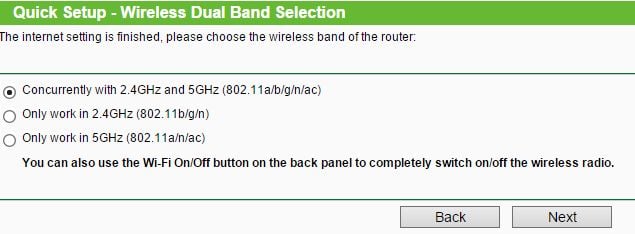
Once the router connects to the Internet, you get to set the wireless networks that it broadcasts. You can enable only one of the two bands that are available or both of them.
Once the wireless networks are configured, you have to reboot your router. And this is one of the very few quibbles we have with TP-LINK Archer C7: each time you change an important system setting, like how your wireless network works, you have to reboot the router in order for the change to be applied. This is especially frustrating when you setup your network for the first time and you have to make many changes to the default settings of this router. Also, the restart procedure takes quite a bit of time.
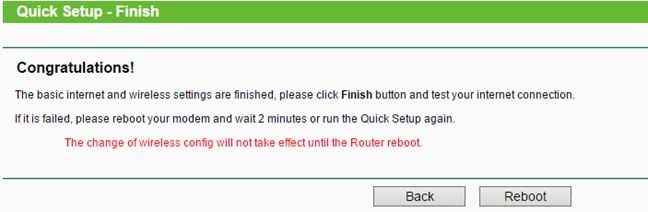
After the router has rebooted, you can start using your network. However, you should not stop here with your initial configuration. First of all, you should change the default username and password for managing your router. The defaults are admin/admin and anyone can hack your router once they connected to your network.
The user interface is available only in English and it's split into three areas:
- On the left you have a column with all the settings organized by groups
- When you click a group of settings, all the settings in that group are loaded in the middle of the screen
- On the right there is a column which explains the settings that are shown in the middle of the screen. This column functions like the Help files you're accustomed with when using Windows applications.
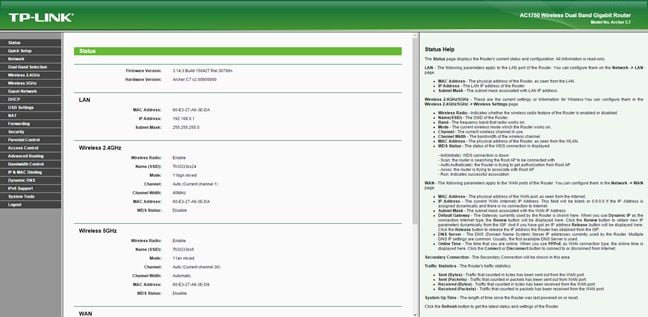
The language used by TP-Link is on the technical side of things, so casual users will have some issues understanding everything. Luckily, the Help documentation is generally well done and explains most things that you need to know. Also, the more advanced features are difficult for casual users to set up and understand. You will need some networking knowledge, on top of the available documentation.
One aspect that users will appreciate is how fast and responsive the user interface is. All settings load almost instantly and browsing through all the sections takes very little time. The only downside is that the router has to reboot in order to apply your changes.
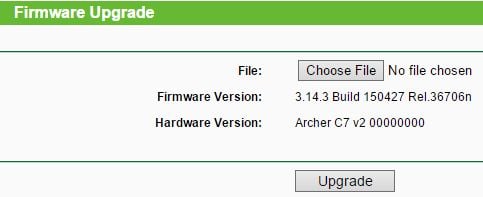
When we tested this router, we used the latest firmware version available at the time: 3.14.3 Build 150427 Rel.36706n. We had no performance issues during our test s. However, we did encounter a few stability issues, especially with the 5 GHz wireless network. Once or twice a week, the 5 GHz wireless network would just drop and it wouldn't recover without a reboot of the router.
Other than that, we were satisfied with the speed of the network and how well things like network sharing and streaming worked. But more about the performance of this router, later in this review.
One of the more practical aspects of using the TP-LINK Archer C7 is that this router is designed for wall mounting. There are two mounting holes with slots that allow you to use screws that will fit in the holes and then slide the unit down. This feature is not available on the more expensive TP-LINK Archer C8 and Archer C9 models.
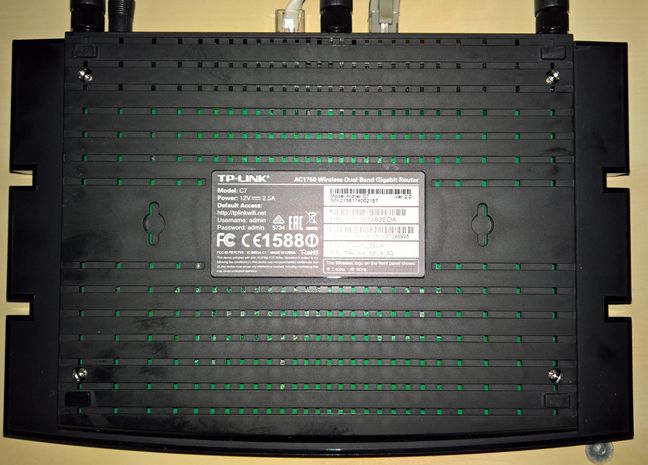
As you can see in the picture below, TP-LINK Archer C7 has a glossy smooth casing. Unfortunately this is a dust and fingerprint magnet and you will need to clean it regularly.
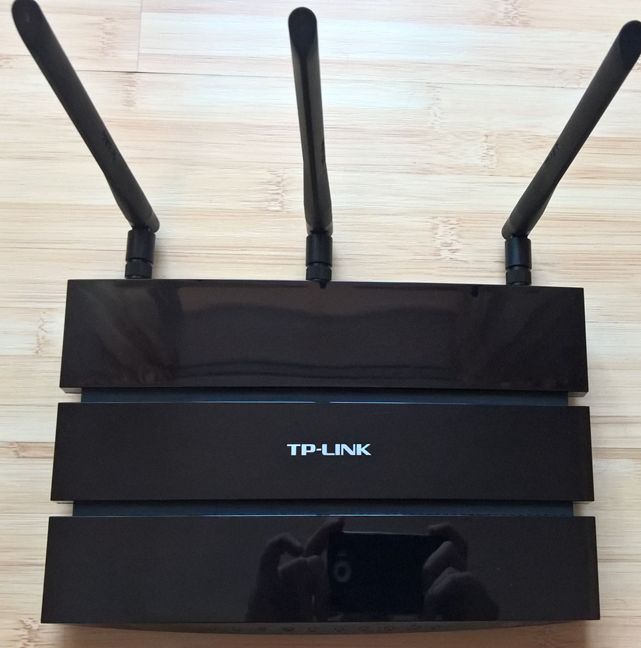
One minor aspect that may annoy some users is that the status LEDs on this router blink all the time and they can't be turned off. Depending on where you place this router, this may be annoying to you, especially during the night.
Overall, the TP-LINK Archer C7 offers a positive user experience, especially when you consider its affordable price. While it has some downsides, its positives generally overcome the negatives.
Wireless network performance
First, let's take a look at the apartment that was used in our testing and how it is set up. You can see that the router is placed in the living room.
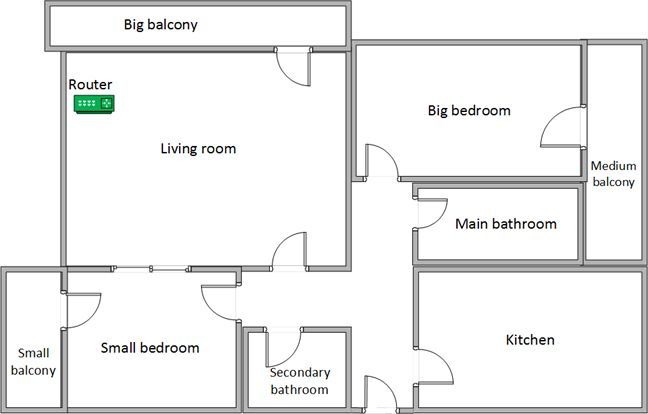
Our testing was done using a fast 1 Gigabit Internet connection that's capable of uploads on the Internet of up to 200 Mbps. We used a Microsoft Surface Pro 3 for all our measurements and several software tools. To get a better perspective of the performance offered by TP-LINK Archer C7 , we compared it with TP-LINK Archer C8 ( its more expensive brother) and ASUS RT-AC56U - a competing router at a similar price.
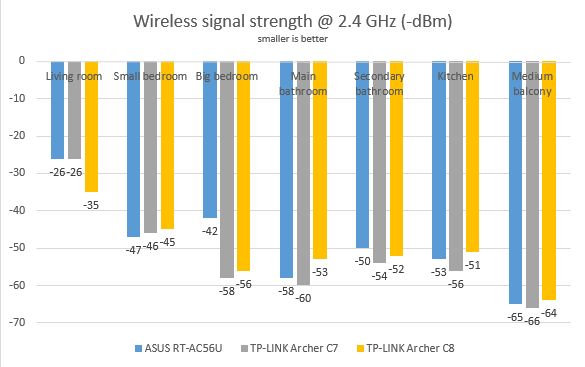
First, we evaluated the 2.4 GHz wireless network and measured the signal strength offered in each room, using a tool named inSSIDer. As you can see in the graph below, the signal strength was slightly worse than that of the other two routers in the rooms that are farther away from the router.
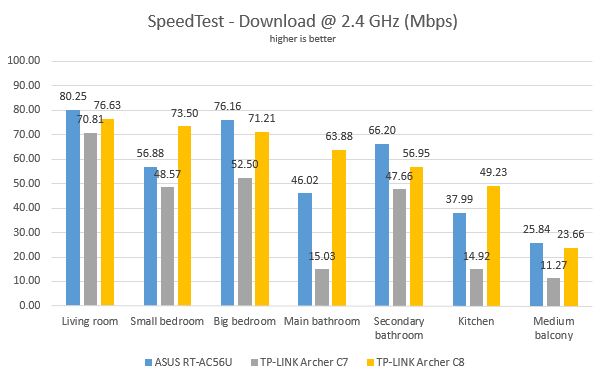
Next, we used SpeedTest to measure how fast the Internet connection offered by this router is. In t he download test, TP-LINK Archer C7 was outperformed by the other two routers in all the rooms of our test apartment.
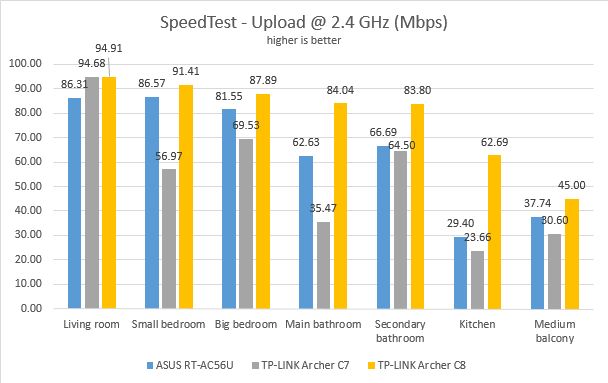
The same trend was noticed when we measured the upload speed, with one exception: in the living room (the room where the router was placed) TP-LINK Archer C7 was just as fast as its more expensive brother - TP-LINK Archer C8.
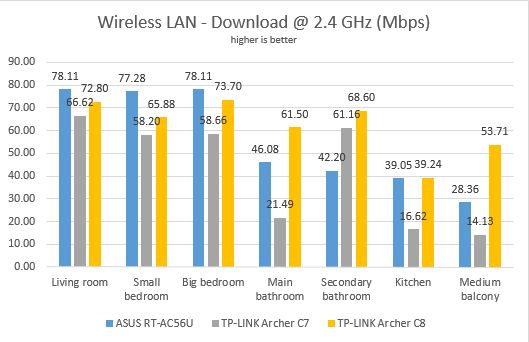
For the last set of measurements on the 2.4 GHz wireless network, we used LAN Speed Test Lite to measure downloads and uploads when transferring a 350MB file between two computers connected to the network. Again, TP-LINK Archer C7 was outperformed by the other two routers.
When we measured the upload speed, the same trend was noticed. However, there was one room where TP-LINK Archer C7 outperformed the other routers, as you can see below.
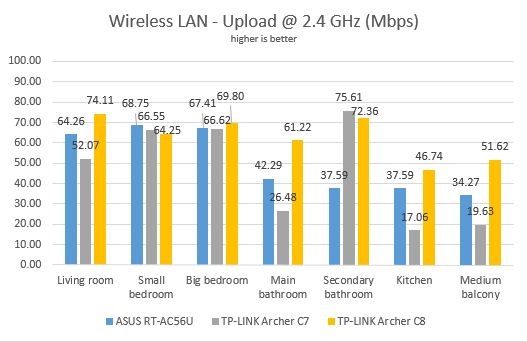
If there is a conclusion to draw from our measurements on the 2.4 GHz wireless network it is that the speed offered by TP-LINK Archer C7 is good in the rooms that are closer to the router. However, if you have a large home or apartment, the wireless routers we compared it to, tend to perform better in the more remote rooms.
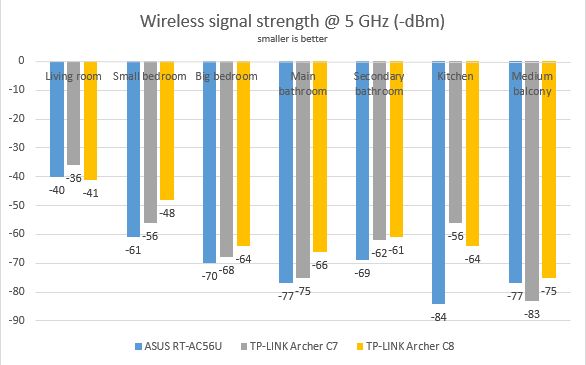
Next, we analyzed the performance offered by the 5GHz wireless network. First, we looked at the evolution of the signal strength, from room to room. TP-LINK Archer C7 performed well in all rooms except the one furthest away from the router, as you can see below.
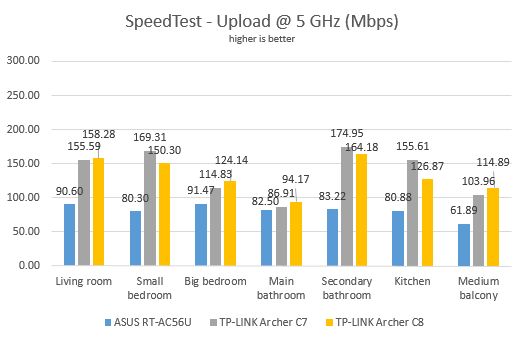
We moved to SpeedTest , to measure the speed of the Internet connection on the 5GHz wireless network. The download speed we obtained was great in the rooms that were closer to the router. In the rooms that are farther away from the router, the download speed decreased below the level offered by other routers.
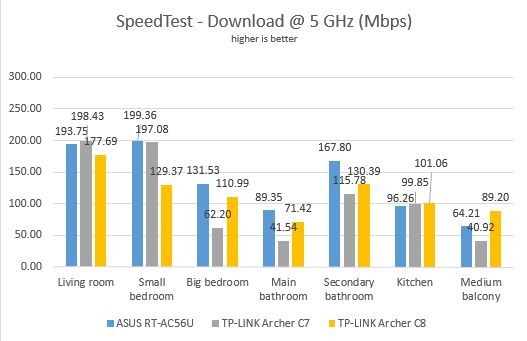
When measuring the upload speed, TP-LINK Archer C7 faired surprisingly good, offering very fast uploads, close to those offered by its more expensive brother - TP-LINK Archer C8.
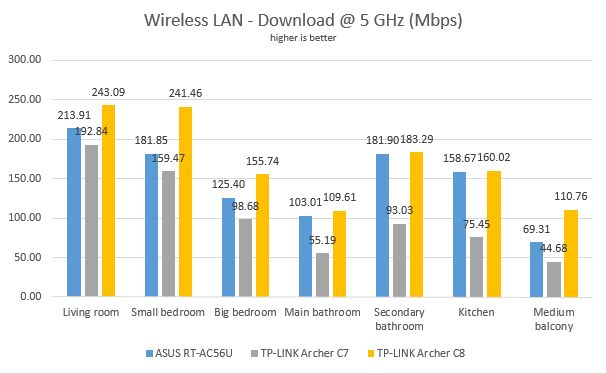
Lastly, we used LAN Speed Test Lite to measure downloads and uploads when transferring a 350MB file between two computers connected to the network. When looking at the download speed, we noticed that TP-LINK Archer C7 performed well in the rooms that are close to the router and less well in those which are farther away from it.
The same trend was noticed when we measured the upload speed over the wireless network.
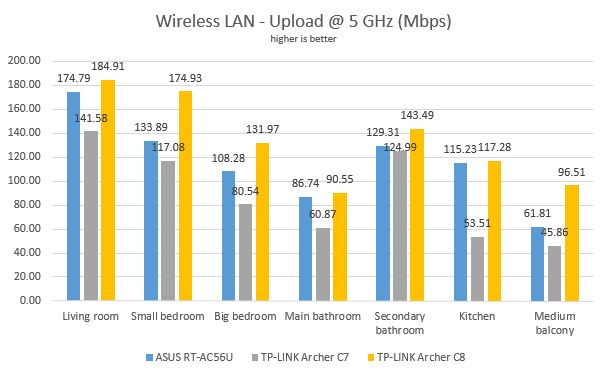
TP-LINK Archer C7 is capable of offering fast downloads and uploads when using the 5GHz wireless network but only in small to medium apartments. If you have a large home or apartment, the speed you will get in the rooms that are farther away from the router will not be very satisfying.
Wired network performance
In order to test the quality of the wired Ethernet connection, we used a desktop PC, equipped with an Intel Core i5 4460 processor, running at 3.20GHz, 16GB of RAM and a very fast Samsung 850 Pro 512GB SSD and a Microsoft Surface Pro 3 with an Intel Core i5-4300U processor, running at 1.9 GHz, 8 GB of RAM and a fast 256 GB SSD drive from Samsung.
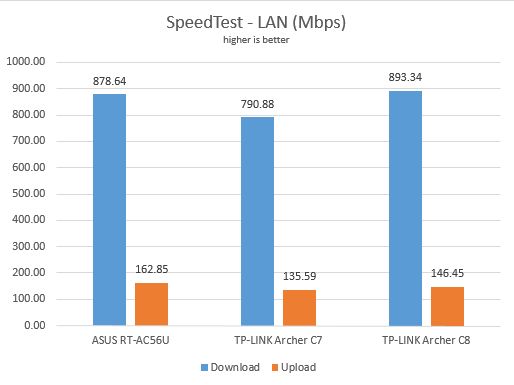
First, we measured the download and upload speeds using SpeedTest. As you can see below, TP-LINK Archer C7 is able to deliver a maximum download speed of 790.88 Mbps, which is good, but it's not the Gigabit it promises. Our ISP doesn't allow uploads which are faster than 200 Mbps. TP-LINK Archer C7 was able to deliver a maximum upload speed of 135.59 Mbps.
For the last measurement, we transferred an 883 MB file between the same two c o mputers connected to the network, both of which were using an Ethernet cable. This time, TP-LINK Archer C7 performed better, delivering downloads and uploads at 900 Mbps.
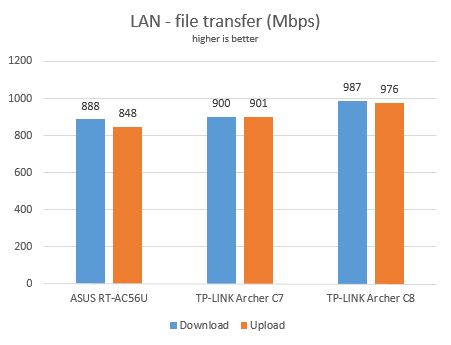
In our testing, TP-LINK Archer C7 delivered fast Ethernet connections but they were not close enough to the 1 Gbps that it promises.
Extra features
TP-LINK Archer C7 offers a couple of extra features alongside the standard that you expect in any wireless router:
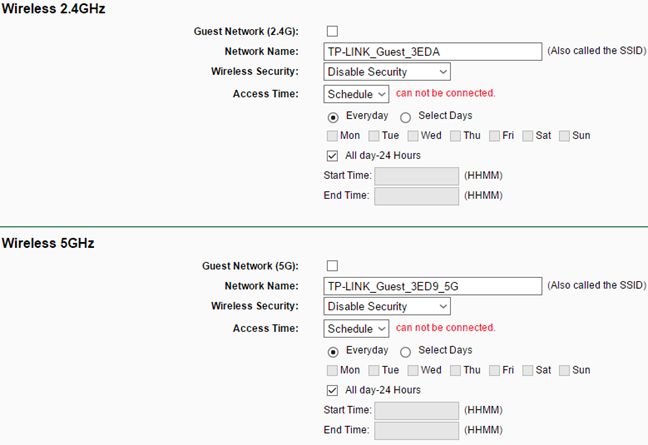
- Guest Network - you can create a maximum of two wireless networks for your guests, which give Internet access but don't give access to other devices in your network. We liked the fact that you can also set a schedule for each Guest network.
- Parental Control - a basic set of controls which allow you to control the Internet access for the devices that are used by your children. We found it relatively hard to configure when compared to routers made by other manufacturers.
- Access Control - this router offers the ability to create all kinds of advanced rules that apply to the traffic on your network. Again, this feature is rather hard to configure for novice users.
- Secondary Connection - this feature is available only for PPPoE connections. If your ISP provides an extra connection type such as Dynamic/Static IP to connect to a local area network, then you can check the radio button of Dynamic/Static IP to activate this secondary connection.
- TP-LINK Tether - this iOS or Android app allows you to manage the router from your smartphone. You can see the status of your router, who is online and what their privileges are. Unfortunately, there is no version for Windows Phone.
These extra features are useful but they are relatively hard to configure for casual users who don't know much in terms of networking.
Verdict
TP-LINK Archer C7 is not a new wireless router by any means. It's been on the market for quite a long time and it has a pretty solid reputation. Most of it is well deserved. For a router that costs about 100 USD, you do get generally good performance that you can count on and a router that's easy to mount on walls. However, other wireless routers are able to deliver either better coverage in larger areas or slightly faster transfers.
Discussion (1)
Just bought this router thanks to your review and it is as you said. Money well spend 😀 Thank you and have a nice day!